Commercial roofing in San Diego.
Commercial roofing runs on different rules: longer spans, tighter code, and uptime that a multi-day tear-off can disrupt. We connect restaurants, retail, office, medical, and light industrial businesses with licensed independent commercial roofers. Ask that contractor what maintenance, after-hours work, and lender paperwork they actually offer.
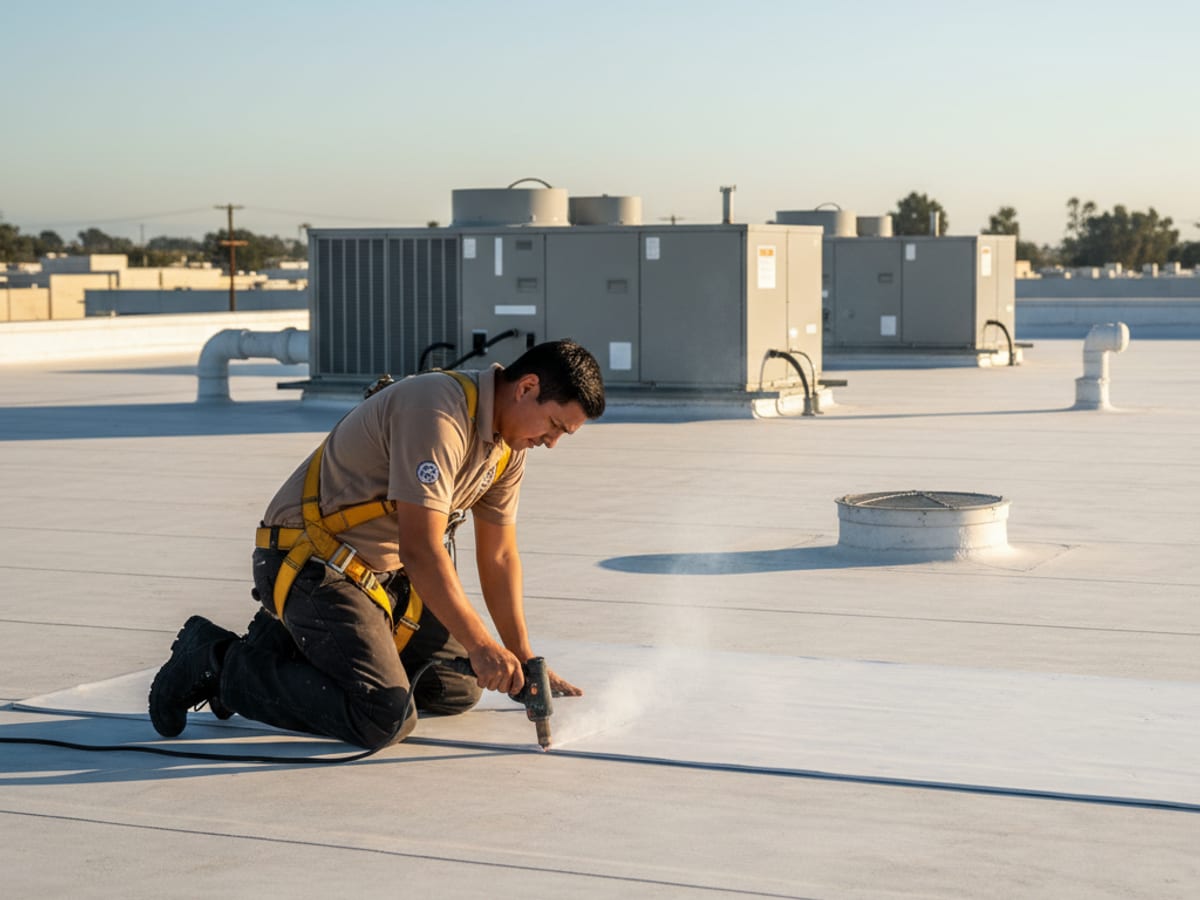
What's included in this service?
- TPO single-ply membrane (the volume commercial option)
- PVC single-ply (chemical-resistant, good for restaurants, commercial kitchens)
- Modified bitumen (torch-down and self-adhered)
- Built-up roofing (BUR) for historic commercial
- Spray polyurethane foam (SPF) roofing
- Silicone and acrylic coating systems for life extension
- Maintenance contracts with quarterly and annual inspections
- Emergency tarp and repair to keep operations running
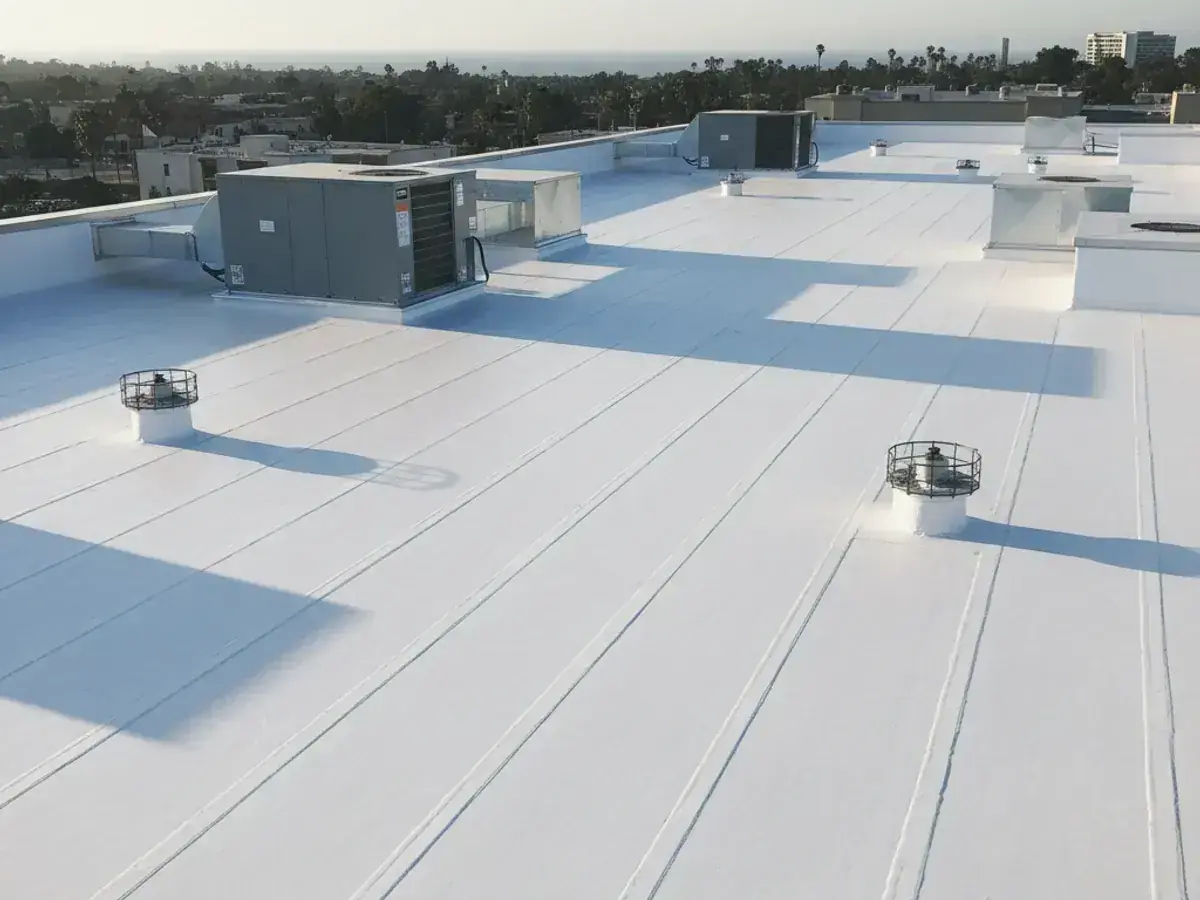
When do you need this service?
- Existing commercial flat roof is past end-of-life
- New tenant improvement or building expansion
- Ponding water, open seams, or visible membrane failure
- Interior ceiling staining or active leaks affecting operations
- Insurance or annual inspection flagged the roof
- Life extension via coating instead of full replacement
Commercial roofing in San Diego: what changes when the stakes are higher
Why commercial roofing is different from residential, and what that means for pricing
Commercial roofing is not residential roofing at larger scale. The differences are systematic. Code requirements are more complex: California Title 24 governs insulation, reflectance, and SRI of the roofing system. A commercial reroof that does not meet Title 24 will not pass inspection. Mechanical penetrations are heavier: HVAC units, exhaust fans, grease ducts, electrical conduit, gas lines, and access hatches. Each is a leak point and each needs flashing coordinated with other trades. Drainage design is structural: larger areas, drain sizing, overflow scuppers, and ponding prevention are code-required. Tenant and operations impact drives scheduling: a restaurant that cannot open during a multi-day tear-off has revenue at stake. The matched licensed independent roofer can quote after-hours, phased, or weekend work when that is what the building needs. Compare quotes by mobilization, penetration complexity, after-hours labor, and code compliance, not a single per-square-foot number. Confirm permit, warranty, and method in writing before you sign.
TPO vs. PVC vs. modified bitumen: choosing the right system for a San Diego commercial building
Each commercial membrane has a niche, and getting this wrong creates a maintenance problem that does not go away. TPO (thermoplastic polyolefin) is the default: white, heat-welded seams, good UV reflectance for Title 24 on most commercial, competitive pricing. Right for general commercial, office, retail, industrial, and warehouse. PVC is the right choice when chemical exposure is present: restaurant rooftops with grease exhaust, solvent fumes, commercial kitchens where exhaust vapor breaks down TPO. PVC resists that chemical degradation. Modified bitumen is the reliability choice when seam quality is the dominant concern. Multi-layer modified asphalt is harder to fail-install than heat-welded TPO, and it gives a redundant waterproofing layer that single-ply does not. Common on older commercial buildings and historic retrofits where the structure cannot handle BUR dead load. Spray polyurethane foam (SPF) can be sprayed as a continuous, self-flashing, insulating layer over existing sound roofing without tear-off, then top-coated (silicone or acrylic) against UV. It needs a skilled applicator and a maintained top coat. We match you with a licensed independent roofer. Confirm system, seam method, permit, and warranty in writing.
Commercial roof maintenance contracts: what they include and why they pay off
A commercial roof without a written inspection plan is a liability the owner is ignoring. In San Diego's climate, commercial flat roofs accumulate debris at drains and scuppers (slowing drainage), have HVAC service technicians walking on and occasionally puncturing the membrane without reporting it, and experience slow seam and flashing degradation that's invisible from below until the first interior leak event. By the time interior damage occurs, the repair is usually much larger than it would have been at first detection. Ask the matched licensed independent commercial roofer what a maintenance visit actually includes: drain and scupper cleaning, surface membrane check, seam and flashing inspection, HVAC unit base inspection, and a written report with photos. Ask whether they offer a deeper annual visit with a moisture scan to catch wet insulation before it becomes a deck problem. Emergency response is not automatic; get after-hours policy in the contract. Insurance documentation: carriers often ask for evidence of regular maintenance. Inspection reports can supply that paper if the carrier asks. Compare the cost of catching a seam early against wet insulation and deck damage later. Ask for visit count, what is included, and what is extra, in writing. This brand does not sell a maintenance contract.
San Diego commercial roofing by business type: what we see most often
Commercial roofing in San Diego County clusters in a few high-density areas, each with its own needs. North County retail and office (Escondido, San Marcos, Vista, Oceanside): older strip centers and office parks with TPO or built-up systems aging into the replacement window. High heat load, aging HVAC equipment creating penetration failures, and tenant turnover that has added unauthorized penetrations over the years. Common scope to ask for: full TPO re-roof with a penetration survey, then updated drain sizing. South Bay industrial (Chula Vista, Otay Mesa, National City): light industrial and logistics buildings with large flat sections, TPO dominant, heavy HVAC loading. After-hours scheduling matters for manufacturing tenants. Ask whether they can phase a re-roof, update drains, and coordinate HVAC so operations stay open. East County retail (El Cajon, Santee, Lakeside, La Mesa): older strip retail on 20 to 30 year roofing systems. High UV exposure accelerates membrane degradation. Ask for a coating assessment first: if the membrane is sound and dry, a coating can be a life-extension option; if it is not, replacement belongs on the same quote. Do not treat a coating as a guaranteed fraction of replacement cost. Central SD restaurant and hospitality (Hillcrest, North Park, Gaslamp, Mission Valley): PVC is often the right ask where grease exhaust is present, plus night-and-weekend scheduling and landlord permit coordination. Coastal commercial (Coronado, Pacific Beach, Carlsbad, Del Mar): ask for salt-rated drain bodies, stainless hardware, and a white TPO or PVC spec for reflectance and salt resistance.
C-PACE and SBA 504 financing for commercial roofing: what San Diego owners should know
Large commercial reroofs in California are sometimes financed through energy-improvement programs that were not common a decade ago. C-PACE (Commercial Property Assessed Clean Energy) is a California program that can let property owners finance eligible energy and water improvements, including some cool-roof and insulation work, through a property assessment repaid over a long term. The financing attaches to the property, not the owner, which can matter at a sale. Eligibility, eligible line items, and how much of a reroof a lender will fund are set by the program and the property, not by this referral brand. San Diego County owners typically start with a CAEATFA-approved lender or another PACE provider the county actually lists. SBA 504 can fund owner-occupied commercial real estate improvements, including roofing when it is part of a larger capital project. The classic 504 split is 50% conventional, 40% SBA, 10% owner; roofing-only jobs often miss the 504 threshold. Ask the lender what documents they need, then ask the matched licensed independent roofer whether they will supply license, insurance certificates, itemized scope, and a milestone payment schedule in that format. We do not sell financing. Call (760) 750-5557 to request a commercial match.
What do homeowners ask about Commercial Roofing?
What is the difference between commercial roof repair, maintenance, and replacement?
Commercial roof repair fixes a specific failure: an open seam, a failed drain collar, a punctured membrane. Commercial roofing maintenance is the scheduled version, where a crew clears drains, checks seams and penetrations, and logs the roof's condition so small problems get caught before a tenant reports a leak. Ask that contractor how often they visit. Replacement is the call once the membrane is past its service life or repairs stop holding. Most commercial roofing services start with an inspection that tells you honestly which of the three you need.
Do you offer a commercial roof maintenance program?
Ask. Some commercial roofers sell scheduled maintenance; others do not. A useful visit covers drain and scupper clearing, seam and lap inspection, penetration checks, and a written condition report with photos. Confirm visit count, storm-check policy, and price in the contract.
Do you work after hours?
Ask that contractor. Some can schedule nights, Sundays, or phased sections so a restaurant or retail space stays open. Others cannot. After-hours work usually costs more. Get the schedule in writing.
What is the best commercial roof system?
Depends on use. TPO is a common commercial membrane with good reflectance. PVC is often chosen where grease or chemicals are present. Modified bitumen is used when seam reliability is the main concern. Foam can suit irregular shapes or a recover over existing. Ask the matched roofer which system they recommend for that building and why.
Can you just coat our existing flat roof instead of replacing?
If the membrane is structurally sound and dry, a coating can be an option. It is not an option if there is ponding, membrane failure, or wet insulation. Ask the roofer to assess moisture and to put expected remaining service life in the quote. Do not treat a coating as a guaranteed fraction of replacement cost.
Do you do maintenance contracts?
Ask that contractor. Some commercial roofers sell scheduled maintenance; others do not. Confirm visit count, what they check, and the price in the contract. History of inspections can help with insurance documentation if the carrier asks for it.
Can you handle SBA 504 or C-PACE financed projects?
Ask the lender what contractor documents they need, then ask the roofer whether they will supply licensing, insurance, scope, and payment milestones in that format. C-PACE and SBA eligibility is set by the program and the property, not by this referral brand.
Where do we offer Commercial Roofing in San Diego County?
We connect homeowners with commercial roofing pros in every city and community in San Diego County. Pick your city for local climate notes and service specifics.
See commercial in all 67 cities
Need commercial in San Diego County?
Call and we'll match you with an independent local roofer.