Gutter installation and repair in San Diego.
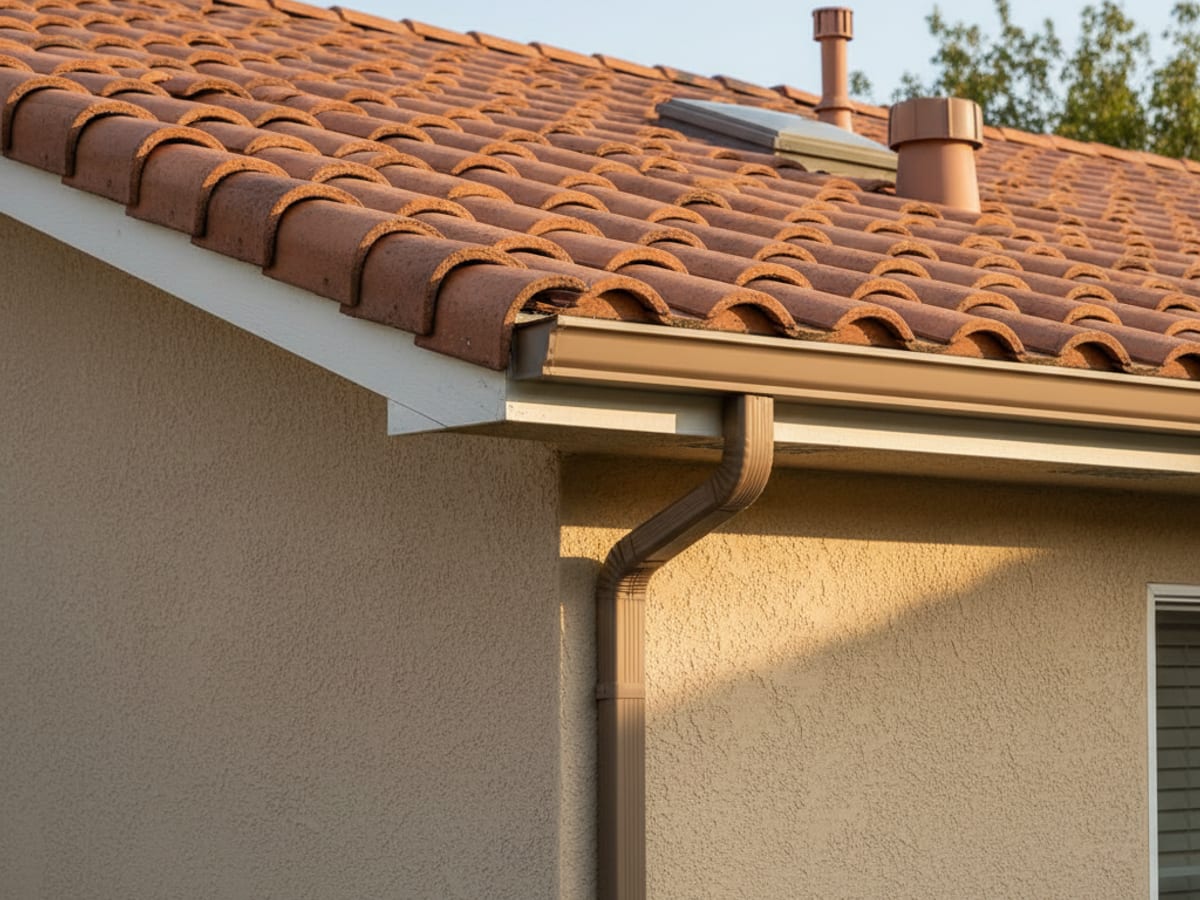
Gutters are the part of the roof people notice only when they fail. Done right, they keep roof water off fascia, foundation, and planting beds during San Diego's concentrated winter rain. Seamless aluminum is the common residential choice; copper for estate looks. Ask the matched roofer which metal they specify for your house.
What's included in this service?
- Seamless aluminum gutters, 5" and 6" K-style and half-round
- Copper gutters for estate and historic homes when that material is in the bid
- Steel gutters for high-capacity and commercial applications
- Downspout installation with proper slope and splash blocks
- Leaf guard / gutter guard install (mesh, foam, or reverse-curve)
- Gutter repair, seam leaks, hanger failures, downspout separation
- Fascia repair and replacement where rot is present
- Gutter cleaning service (bundled with inspections)
When do you need this service?
- Water pouring over gutter edges during rain (clogged or undersized)
- Visible sag or separation from the fascia
- Fascia board rot visible below the gutter
- Landscape erosion at the base of downspouts
- New construction or new roof install needs matched gutter system
- Switching from sectional to seamless for leak reduction
- Estate home wanting copper to match architecture
What to know before installing or replacing gutters in San Diego
Sectional vs. seamless: why seamless wins for most homes
Older San Diego homes often have sectional gutters: short pre-cut aluminum sections joined with connectors and sealant. Every joint is a future leak point. Once the sealant fails, water drips behind the fascia and starts rotting wood. Seamless gutters are formed on site from a continuous coil of aluminum. The only seams are at corners and downspout outlets, which means far fewer leak points and no every-few-years sealant maintenance. For a full gutter replacement, seamless is the usual right answer. The on-site forming machine also means custom lengths cut to your fascia rather than awkward joint placement. We match you with a licensed independent contractor. Confirm sectional versus seamless, material, and method in writing before anyone starts.
Sizing: when 5-inch is enough and when you need 6-inch
Standard residential gutters come in 5-inch K-style (handles most San Diego roofs) and 6-inch K-style (larger capacity for high-volume situations). The sizing math depends on roof drainage area and roof pitch, not just total square footage. A typical single-family home with a moderate pitch and several downspouts is often fine with 5-inch. Step up to 6-inch when: the roof is large, the pitch is steep (water fills the gutter faster), multiple valleys converge into a single run, or you live in a high-rainfall pocket (Julian, Mt. Laguna). Half-round gutters (traditional profile) are a third option for estate or historic homes: similar capacity, better match for Spanish, Mediterranean, and craftsman architecture. Ask the matched licensed independent contractor to calculate drainage area before quoting, not after, and to put size and downspout count in writing.
Downspout placement: the overlooked half of the system
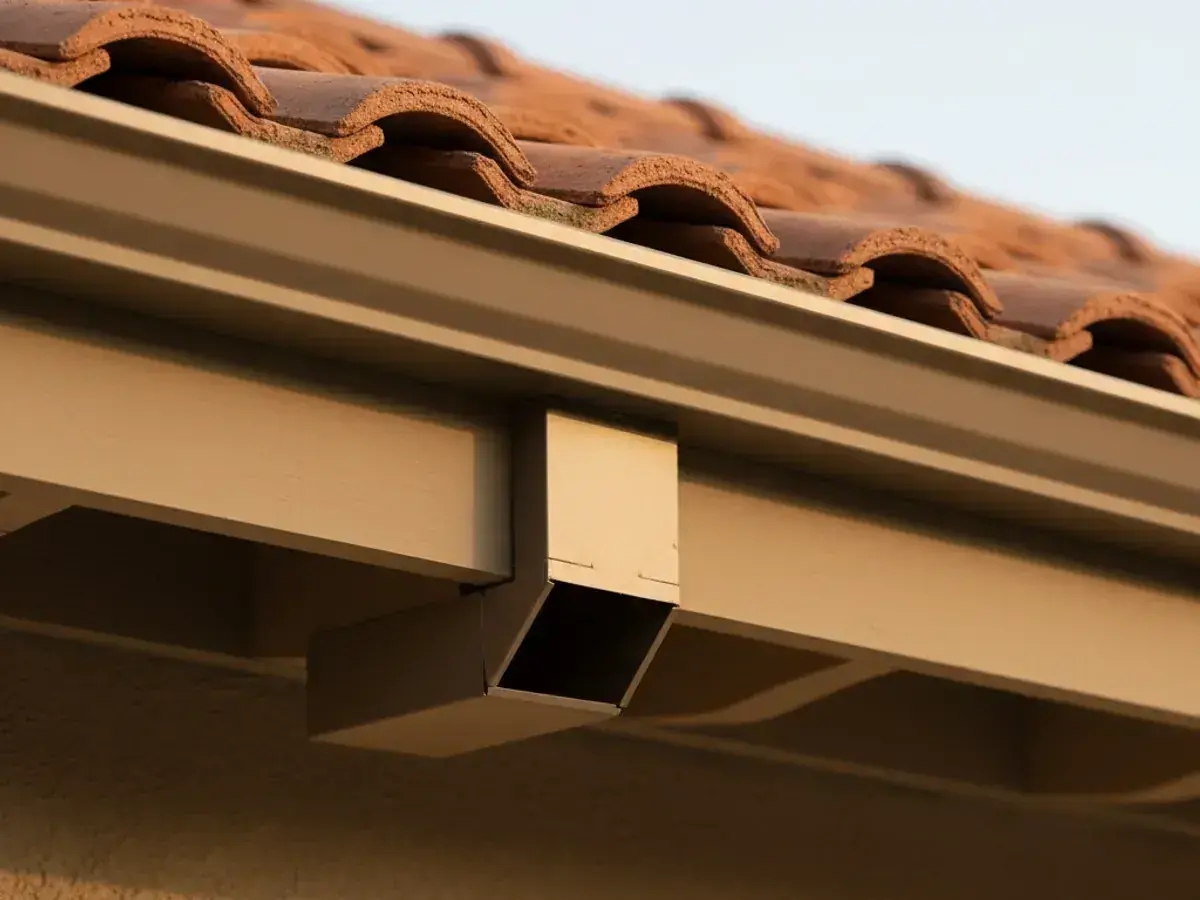
Gutters catch water. Downspouts move it away from the foundation. Most gutter failures are actually downspout failures: too few downspouts for the roof area, downspouts that dump water against the foundation, or downspouts that have separated at the elbow. Rule of thumb: one 2x3 downspout per 600 sq ft of roof area, or one 3x4 downspout per 1,200 sq ft. Place them at corners and any spot where two gutter runs converge. Discharge should be at least 4 to 6 feet from the foundation. Use splash blocks, decorative leader extensions, or buried PVC running to a curb drain. For San Diego homes on hillsides, downspouts should never discharge uphill of the foundation; route them to the downhill side. Foundation water damage from poor downspout placement is the most expensive consequence of a bad gutter install, often invisible for years until cracks show up in interior drywall.
Gutter guards: which ones work, which ones are a scam
Gutter guards split into four categories with very different performance. Mesh screens (micro-mesh stainless) such as GutterGlove, Raptor, or LeafFilter: they handle fine debris if the mesh is actually stainless, and they last when they are cleaned the way the manufacturer specifies. Ask the bid to name the brand, the mesh, and the cleaning method. Reverse-curve guards such as LeafGuard or Gutter Helmet: water follows the curve into the gutter and debris sheds off. They need a professional install and a named warranty from that installer, not a snap-in grate. Foam inserts: cheaper on the bid, but UV degrades them, debris sits on top of the foam, and they need replacement on a shorter cycle. Ask how often they get replaced before you treat foam as a solution. Plastic snap-in grates from home improvement stores: debris collects on top and clogs faster than open gutters. Skip them. The useful comparison: guards are worth considering if you have heavy tree coverage within 30 feet of the house, especially pine, eucalyptus, or palm. Minimal tree coverage, a written annual cleaning plan is often the better maintenance path. Ask the matched licensed independent contractor to line-item the guard type separately from the gutter itself.
The San Diego debris problem: eucalyptus, palm, and seed pods
San Diego's tree mix creates specific gutter challenges. Eucalyptus is the worst offender: long curving leaves that bridge across gutter guards, bark that flakes year-round, and tannins that stain stucco below downspouts. Palm fronds (queen palm, Mexican fan palm) drop seed clusters that look like grapes and clog downspouts immediately on the first heavy rain. Carrotwood and jacaranda drop sticky seed pods and flowers that ferment in standing gutter water. Italian cypress drops fine needles that build into a felt-like mat. Any San Diego home with mature versions of these trees within 30 feet needs either heavy-duty gutter guards (micro-mesh stainless) or a written twice-yearly cleaning plan. Inland homes in older neighborhoods (Mission Hills, Kensington, La Mesa, North Park, La Jolla canyons) carry the heaviest debris load. Coastal homes with minimal trees can go much longer between cleanings. Ask the matched contractor which of those two maintenance paths they are bidding. See gutter repair cost in San Diego and gutter replacement cost in San Diego for how to compare scope, not a number from this page.
What do homeowners ask about Gutter Installation?
How much does gutter installation cost in San Diego?
Price depends on material, linear footage, and downspout count. Ask the matched roofer to measure those on site and line-item leaf guards separately. Compare that scope, not a per-foot number you saw online.
Are leaf guards worth it?
Depends on your tree coverage. Heavy pine or eucalyptus near the house is a reason to consider a guard. Minimal trees: maybe not. Ask the matched roofer which guard type they install and how it is maintained. Named brands in a bid are theirs to warrant, not this referral brand.
What size gutter do I need?
Ask the matched roofer to calculate drainage area during the estimate, not guess from the street. Size and downspout count should come from that measurement.
Why are my gutters leaking at the seams?
Sectional gutters join with connectors and sealant. Seamless gutters are formed on site from a coil, so they have fewer joints. If several sectional seams are leaking, ask the matched roofer to quote seamless replacement versus resealing, and compare those two scopes.
How long do aluminum gutters last?
It depends on the metal, the install, and how often they are cleaned. Ask the bid to name the metal and the maintenance plan. This brand does not guarantee a gutter lifespan.
Where do we offer Gutter Installation in San Diego County?
We connect homeowners with gutter installation pros in every city and community in San Diego County. Pick your city for local climate notes and service specifics.
See gutters in all 67 cities
Need gutters in San Diego County?
Call and we'll match you with an independent local roofer.