Emergency roof tarp and leak repair in San Diego.
If water is coming through the ceiling, stay off the roof and contain the water indoors. Call the line and we will try to match you with a licensed San Diego County roofer who can tarp when they have capacity. Arrival time, documentation, and permanent-repair scheduling belong to that contractor, not a guaranteed dispatch desk.
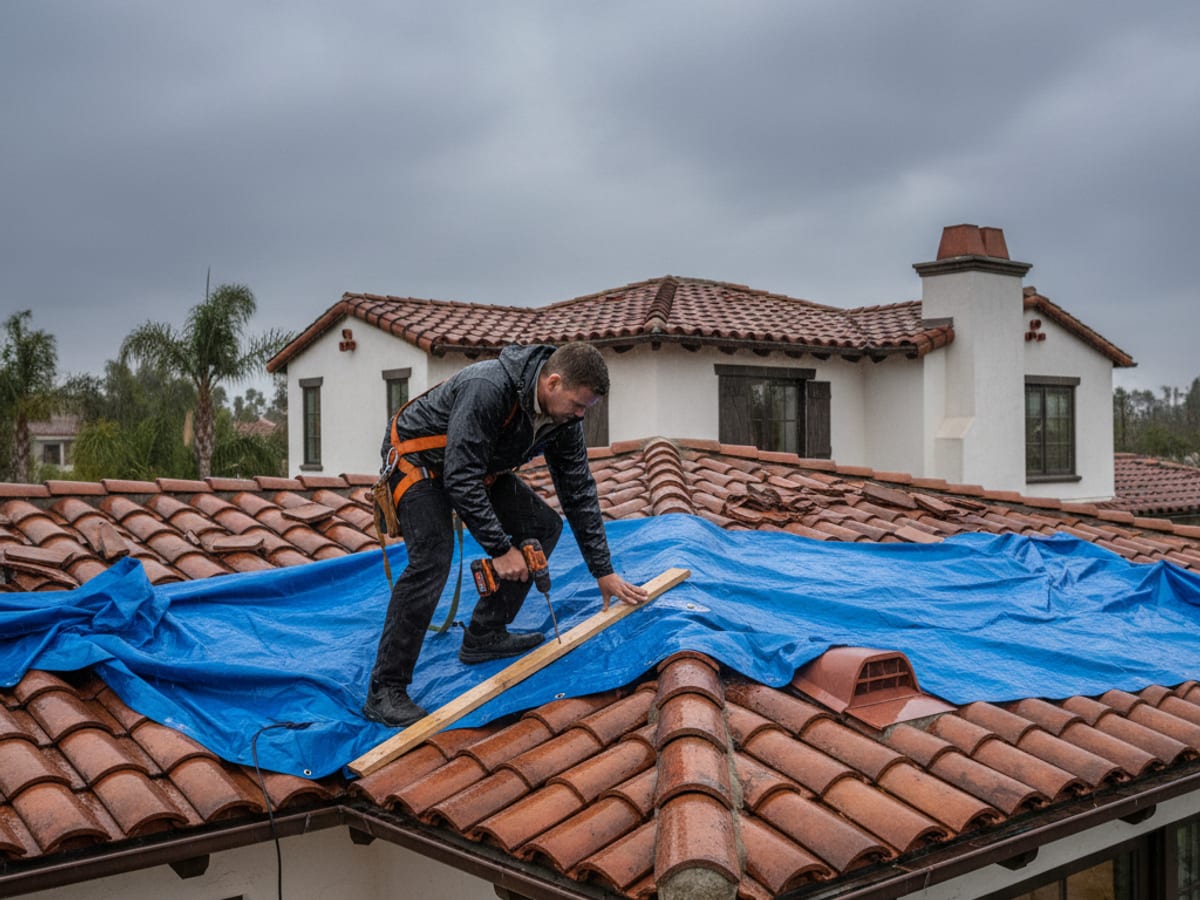
What's included in this service?
- Emergency tarp install for active leaks and damaged sections
- Storm damage assessment with insurance-claim documentation
- Fallen tree or limb damage response
- Wind-lifted shingle, tile, or metal panel re-secure
- Broken skylight and glass emergency cover
- Interior water damage mitigation coordination
- Mobile moisture meter scan to determine water intrusion extent
- Follow-up permanent repair or replacement scheduling
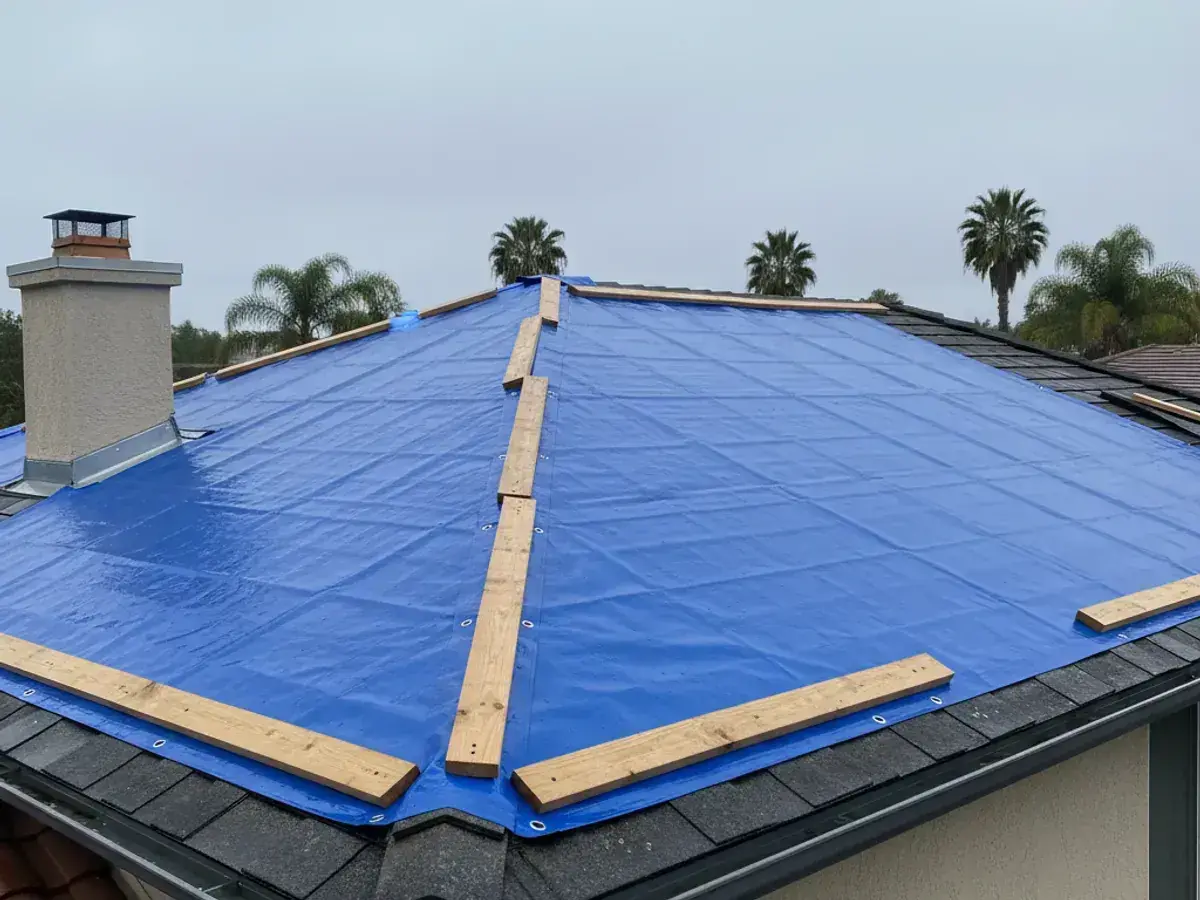
When do you need this service?
- Active water coming through a ceiling during or after a storm
- Tree or large limb fell on the roof
- Wind event lifted or tore off roofing material
- Broken skylight glass with open to weather
- Hail or storm damage and you need insurance documentation
- Roof damage discovered at end of day and you cannot wait for morning
How emergency roof response actually works in San Diego
Emergency response: what actually happens when you call
Most San Diego roofing companies advertise 24/7 emergency service. Fewer actually staff for it. A real emergency response means someone who answers after hours and a licensed independent on-call roofer with a truck stocked with commercial-grade tarps, roofing nails, lath strips, sealants, and replacement materials. Response time depends on the service area, current call volume, and time of day. Central San Diego (San Diego, Chula Vista, La Mesa, Coronado, National City) is generally quicker to reach than coastal North County (Carlsbad, Encinitas, Oceanside, Solana Beach, Del Mar) or East County and mountain communities (Ramona, Alpine, Julian, Valley Center, Jamul), given the drive. Any contractor promising a fixed response time anywhere in the county is overpromising. Call (760) 750-5557 and we will try to match you with a licensed independent on-call roofer. Ask that contractor for an ETA based on where you are and whether they can actually take the job. See emergency roof repair in San Diego for the process.
Tarp first, full fix later: why that's the right sequence
During active rain or storm damage, the right move is tarp first, full repair later, not skip the tarp and try a wet-weather patch. Two reasons. First, a real repair done in wet conditions usually fails: sealants do not bond to wet substrates, asphalt mastic will not cure, replacement shingles or tiles cannot seat properly on saturated underlayment. Second, tarping quickly stops interior damage from getting worse while the permanent repair waits for dry weather. A proper emergency tarp uses commercial-grade reinforced poly (not a hardware-store blue tarp that tears in the next wind), edge-fastened with lath strips and roofing nails at the perimeter (not just weighted with sandbags), and extends over the ridge when possible to prevent wind-lift. See emergency roof tarp in San Diego. The tarp buys a weather window while permanent repair is scheduled and materials are sourced. Confirm fastening method, material, and price with the matched licensed independent roofer before anyone climbs.
Storm damage vs. age-related leak: which one insurance covers
California homeowners policies generally cover sudden, accidental damage: wind, hail, fallen trees, hurricane, fire, hurled debris. They generally do not cover gradual wear and tear: aged shingles, cracked pipe boots from UV, failed underlayment, ponding water damage. The trigger event matters more than the visible damage. A pipe boot that cracked over 15 years and started leaking during last night's rain is not a storm claim, it's age-related and on you. A pipe boot torn loose by a tree branch falling during the same storm is a storm claim. See does homeowners insurance cover roof leaks in California and roof storm damage insurance claim. When an emergency roofer arrives during an active event, the documentation they create (date, time, weather conditions, photos of the trigger, photos of the damage) is what determines whether the claim is approved. See the step-by-step California roof insurance claim guide.
When to call right now vs. when to wait for morning
Not every roof issue is a 2 a.m. call. Call immediately when: water is actively coming through a ceiling and you can't catch it with buckets, water is reaching an electrical fixture or breaker (turn off that circuit first), a tree or large limb is on the roof, you have visible holes open to the sky, or wind has lifted significant roofing material that's flapping and creating more damage. Wait until morning when: there's a stain on the ceiling but no active drip, you see a missing tile or shingle from the ground but no interior damage, water in the attic that isn't reaching the ceiling, or a known minor leak that's tarped and stable. The cost difference is real: after-hours dispatch costs more than a scheduled next-day inspection. Ask whether it can wait when you call (760) 750-5557. This brand matches; it does not dispatch a crew or set after-hours rates.
Insurance documentation: what to capture before the contractor arrives
If your roof damage is storm-related and you'll be filing a claim, the time between calling and the contractor arriving is when you create the strongest documentation. Photograph everything: interior ceiling damage with timestamps, water levels on the floor, any furniture or electronics affected, the attic if you can safely access it (don't if water is near wiring), and the exterior of the roof from ground level showing the damage. Save the weather report for that day from a public source (Weather.com, NOAA). Move undamaged belongings out from under the leak. Failure to mitigate further damage can reduce a claim. Don't climb on the roof yourself. When the matched licensed independent roofer arrives, ask them to add their own documentation: moisture meter readings, roof photos, a written assessment with cause and scope, and a recommendation for permanent repair. That packet is what the adjuster can actually review. Coverage, dollar amounts, and approval are the insurer's call, not this referral brand's. See storm damaged roof in San Diego: next steps and what not to say to a roof insurance adjuster.
What do homeowners ask about Emergency Roof Repair?
Can you tarp my roof tonight?
Only if a matched roofer accepts the job and can get there safely. We can tell you whether anyone is available when you call. There is no promised county-wide night arrival time.
How much is after-hours emergency service?
After-hours dispatch costs vary by roofer for nights, weekends, and holidays. Tarp price depends on area, access, and time. Ask for the number before they climb.
Will insurance cover my roof damage?
Coverage is policy-specific. Sudden storm, wind, tree, and fallen-object damage is often treated differently from wear. Ask your insurer what they need. A roofer can photograph damage and write what they saw; they cannot promise approval or run an appeal for you.
Can you meet with my insurance adjuster?
Ask the matched roofer whether they will meet the adjuster. Some will. They can point out what they see. They do not speak for the insurer, and we do not advocate claims.
What do I do before you arrive?
Move furniture and electronics out from under the leak. Put a bucket or towel under active drips. Photograph everything for your own records. Don't climb onto the roof. If water is reaching electrical fixtures, shut off the breaker to that area.
Where do we offer Emergency Roof Repair in San Diego County?
We connect homeowners with emergency roof repair pros in every city and community in San Diego County. Pick your city for local climate notes and service specifics.
See emergency service in all 67 cities
Need emergency service in San Diego County?
Call and we'll match you with an independent local roofer.