Flat and low-slope roofs in San Diego.
Flat roofs are low-slope, and they live or die on drainage and seam quality. Mid-century modern homes throughout San Diego have flat sections. We match you with licensed independent roofers who can quote TPO, modified bitumen, or PVC after they inspect. Ask how they will create slope toward drains or scuppers.
What's included in this service?
- TPO (thermoplastic polyolefin) when that membrane is the quoted system
- Modified bitumen (hot-mopped or torch-applied), traditional flat roof
- PVC, premium, chemical-resistant, good for commercial kitchen exhaust areas
- Built-up roofing (BUR), rare now, still viable on some historic flat roofs
- Coating systems, silicone and acrylic over existing BUR for life extension
- Scupper, drain, and overflow drain installation per code
- Parapet wall flashing and counter-flashing
- Internal drain systems for deck-over-living-space situations
When do you need this service?
- Mid-century modern home with a flat or low-slope section
- Commercial building with a flat roof past end-of-life
- Addition or accessory dwelling with a low-slope roof
- Existing flat roof has bubbling, ponding, or open seams
- Interior ceiling staining from a flat section of roof
- Flat roof is aging, with bubbling, ponding, or open seams
Flat and low-slope roofing in San Diego: membranes, drainage, and warranty math
TPO vs. modified bitumen vs. EPDM vs. PVC: which membrane for which job
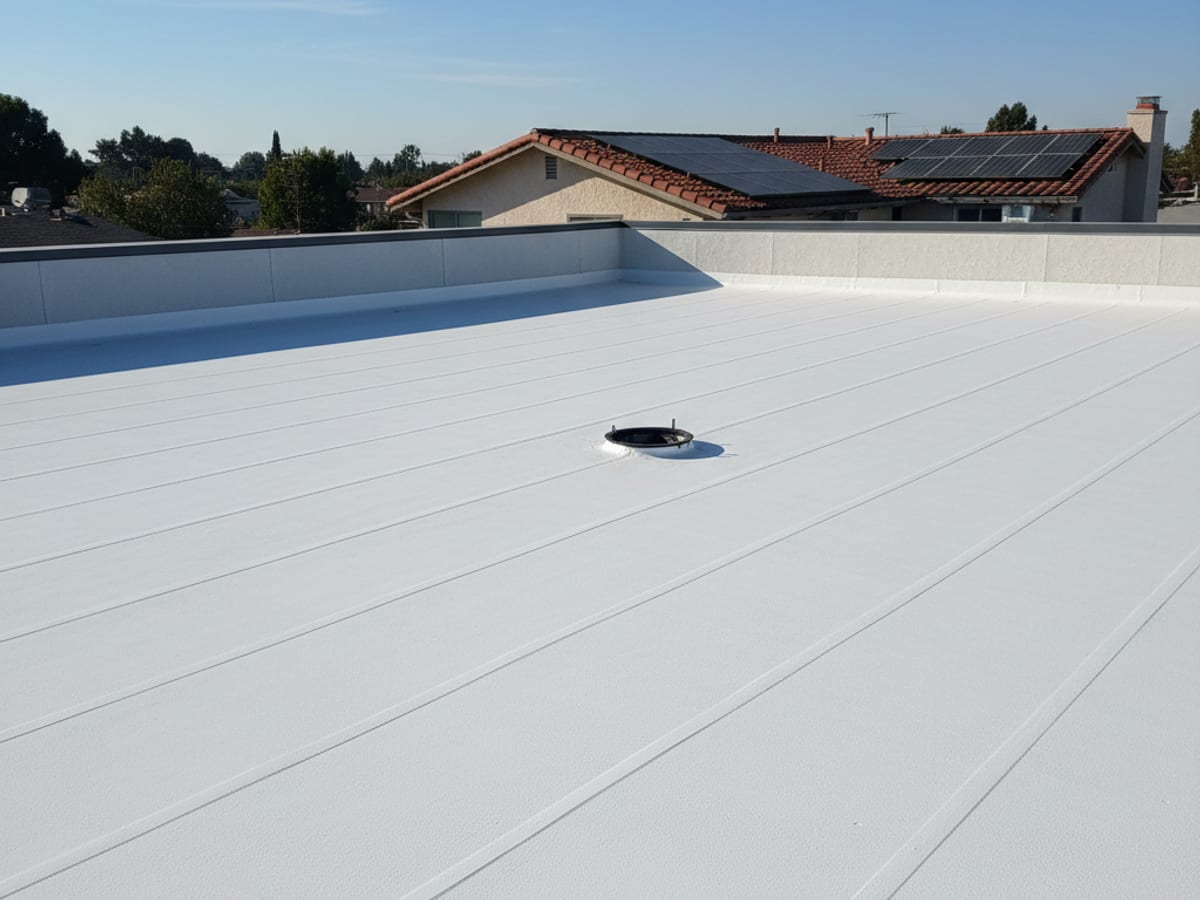
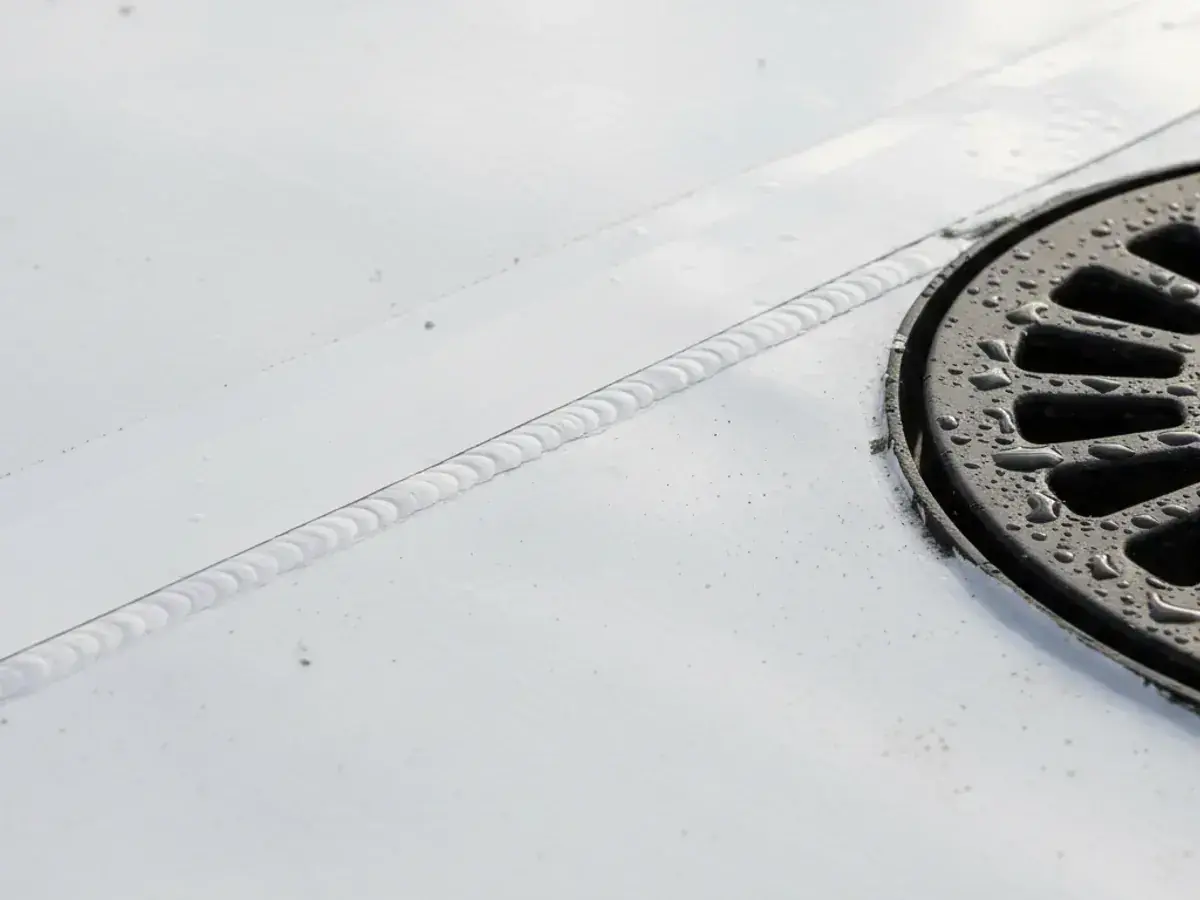
Four membrane systems dominate San Diego flat roofs. TPO (thermoplastic polyolefin) is the modern default: white reflective surface, heat-welded seams, and usually the best balance of cost, performance, and Title 24 cool-roof compliance. Modified bitumen (torch-down or self-adhered) is the traditional asphalt-based system, black or with a granulated cap sheet, still viable where the look needs to match older asphalt builds. EPDM (rubber) is older single-ply: black, glued seams, cheaper, harder to repair than TPO, and not cool-roof compliant in a dark color. See EPDM roofing in San Diego. PVC is the premium choice for chemical-exposure environments (commercial kitchens, light industrial): it resists grease and oils better than TPO. See TPO vs. modified bitumen for flat roofs for the comparison. We match you with a licensed independent roofer. Confirm membrane type, seam method, permit, and warranty in writing before you sign.
The San Diego ponding water problem
Flat roofs aren't actually flat. Ask the permit office and the matched C-39 what slope toward drains or scuppers this job needs. Most San Diego flat-roof leak calls trace back to ponding water that should not be there: incorrect original slope, deck sag from age, or a blocked drain. Ponding is hard on the wet spot. The fix during a replacement is tapered insulation that re-establishes slope before the new membrane goes down, even if the deck itself sags. Tapered insulation adds cost, but it treats the cause. See flat roof ponding water in San Diego for diagnostic details. We match you with a licensed independent roofer. Any quote that puts new TPO over a known ponding area without addressing slope is selling a short roof. Confirm slope correction, permit, and warranty in writing.
Warranty: what the manufacturer covers vs. what the contractor covers
Flat-roof warranties have two separate pieces that buyers often confuse. The manufacturer membrane warranty (Carlisle, GAF EverGuard, Versico, Firestone) covers material defects. Ask for the current sheet and whether an enhanced system needs a manufacturer inspection before the warranty issues. The contractor labor warranty covers the install workmanship. Most flat-roof failures aren't material defects; they're seam issues, flashing details, or penetration leaks, all workmanship items. Read both terms side by side. A long membrane term with a short labor term is weaker than it looks. For commercial installs at scale, ask whether the project qualifies for a No-Dollar-Limit (NDL) warranty, where the manufacturer covers material and labor together. NDL requires manufacturer-certified installers and a pre-install inspection. Confirm every term in writing.
Commercial vs. residential flat-roof differences in San Diego
Same membrane material, very different jobs. Commercial flat roofs are typically much larger, scheduled around business operations (after-hours or phased to keep tenants open), and often warranted under commercial-grade No-Dollar-Limit (NDL) systems with manufacturer pre-inspection. Ask the matched licensed independent roofer for a written per-square-foot or lump-sum quote; do not use a dollar-per-square-foot range from this page. They also carry uptime expectations: a multi-day tear-off that closes a restaurant can cost the owner more than the roof itself. Residential flat roofs are usually small sections of larger pitched systems (a mid-century modern flat-section addition, a deck-over-living-space, a small ADU roof). Ask for a written start and finish window on a small section, and keep the warranty conversation on labor as well as membrane. The two markets share membrane manufacturers but use different contractor networks. Ask for residential or commercial reference projects in the category you need.
When coating instead of replacement is the right call
Not every aging flat roof needs full replacement. Silicone or acrylic coating systems can extend a structurally sound flat roof when the existing membrane is dry. Silicone generally handles ponding better than acrylic. Ask the matched licensed independent roofer for a written coating quote next to a replacement quote; this brand does not publish a coating-to-replacement ratio. The deciding factor: what is underneath the membrane. If the existing membrane is dry, structurally intact, and free of seam failures, coating can make sense. If there is wet insulation underneath, active membrane delamination, or visible ponding-related deck damage, coating just paints over the problem. A proper inspection should include a moisture scan (infrared or capacitance meter) to map any wet zones before quoting a coating job. See roof coating vs. replacement in San Diego and silicone vs. acrylic roof coatings for the decision framework. Top Pro Roofing SD matches homeowners with licensed independent C-39 roofers; we do not install.
What do homeowners ask about Flat Roofing?
How long does a TPO roof last?
Ask the matched roofer what remaining-life language they will put in writing for your membrane, slope, and ponding. Drainage and seam quality usually matter more than the brand name. This brand does not guarantee a TPO lifespan.
Why does my flat roof have ponding water?
Common causes are weak original slope or deck sag. Ponding is hard on membrane. Ask the matched roofer to check drains, scuppers, and slope, and to say whether tapered insulation belongs in the quote. Confirm current slope rules with that contractor and the permit office.
What is the difference between TPO, PVC, and EPDM?
TPO is a common white heat-welded single-ply. PVC is often quoted where grease or chemicals are a concern. EPDM is an older rubber system with glued seams. Ask the matched roofer which membrane fits your use, drainage, and warranty paperwork.
Can I put a deck or solar on a flat roof?
Ask. Solar and decks both need a written method: ballast, flashed mounts, or a structural review. Most residential flat roofs are not automatically rated for a live-load deck. The matched roofer should say who coordinates an engineer if one is needed. We do not install the deck or the array ourselves.
What about silicone coating instead of replacement?
A coating can make sense when the existing membrane is sound. It is the wrong answer over ponding, open seams, or wet deck. Ask for a moisture check before anyone paints a coating over a leak. This brand does not quote a coating-to-replacement ratio.
Where do we offer Flat Roofing in San Diego County?
We connect homeowners with flat roofing pros in every city and community in San Diego County. Pick your city for local climate notes and service specifics.
See flat roofs in all 67 cities
Need flat roofs in San Diego County?
Call and we'll match you with an independent local roofer.