Comparing metal roofing contractors starts with one rule: make every proposal describe the same roof. A low total means little when the systems, materials, or included work differ. Top Pro Roofing SD is a referral service. We do not install metal roofs or issue workmanship warranties. Call (760) 750-5557 when proposals disagree and you want a licensed independent local roofer to write a comparable scope.
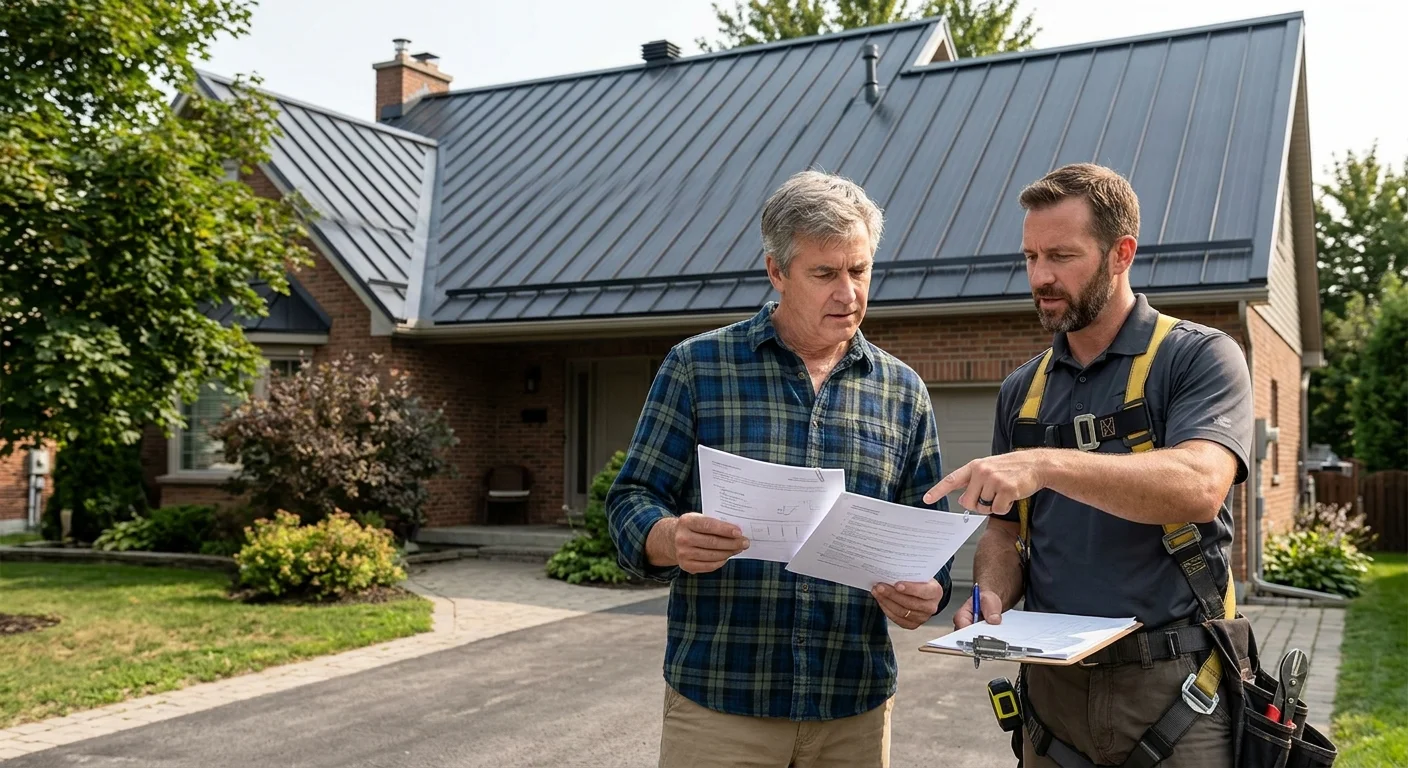
Start with the metal roof system being proposed
“Metal roof” is not one system. Ask each contractor to name the panel profile, attachment method, substrate, finish, underlayment, trim, and flashing products. The proposal should state whether fasteners will be exposed or concealed.
Standing seam, exposed-fastener panels, and stone-coated metal are different assemblies. They cut, flash, and ventilate differently. If one bid is standing seam and another is a through-fastened panel, you are not comparing the same job. Ask each bidder to keep or convert to one named system so the line items match.
Begin with the existing roof. Each contractor should say whether it stays or comes off. The scope should address the deck, visible damage, and what happens if concealed damage appears. It should list any areas excluded from the proposal.
For City of San Diego jobs, start with Information Bulletin 123. Read the current bulletin for how existing layers are treated. That city rule does not establish what applies in Chula Vista, Encinitas, El Cajon, or an unincorporated county area. Ask the property’s permitting jurisdiction what it currently requires.
Identify every roof area: attached garages, patio covers, dormers, low-slope sections, and small transitions. Confirm whether the same system covers each area. If not, request a roof plan showing where each material begins and ends.
An Oceanside proposal should address salt, fasteners, and finish. An El Cajon or Ramona proposal should address heat, Wildland-Urban Interface listing if the parcel is in a designated area, and drainage on a different geometry. “Ideal for San Diego” without product sheets is not a reason.
Our metal roofing installation service connects homeowners with licensed independent local roofers. If the roof’s present condition is unclear, arrange a separate roof inspection before comparing replacement proposals.
Verify the contractor and written scope
California’s C-39 classification covers metal roofing systems. Verify each contractor through the CSLB license check before signing. Search the exact person or business named in the proposal.
Review classification, license status, complaint history, and bond information. Confirm workers-compensation status on the live CSLB record. Read current Business and Professions Code Section 7125 rather than this blog. Check the public record. Do not rely on a proposal logo.
The CSLB name should match who takes payment and who accepts responsibility. If a salesperson presents the proposal, the contracting business still needs to be named.
Ask for current insurance documentation and confirm it with the listed provider. Our CSLB guide for San Diego homeowners explains the fields. The roofing contractor selection guide covers additional hiring questions.
Compare the written scope line by line:
- Existing roofing removal or retention
- Disposal of removed materials
- Roof deck inspection and concealed-damage handling
- Underlayment and water-shedding components
- Panels, trim, flashing, fasteners, and sealants
- Vents, skylights, pipes, chimneys, and solar attachments
- Gutters or drainage components affected by the work
- Permit responsibility and inspection coordination
- Cleanup and final project documentation
Permit rules depend on jurisdiction and project details. For City of San Diego jobs, start with Information Bulletin 123. Read the current bulletin. Do not restate its triggers from memory. Ask the AHJ and the matched C-39 whether this scope needs a permit. Other cities and the unincorporated county write their own counters. We do not print a permit fee.
Compare panels, finishes, fasteners, and penetrations
Contractors cannot be compared when one names a product line and another says “metal panels.” For every panel, request manufacturer, product line, profile, base material, thickness or gauge designation, finish, and color. Attach the current manufacturer product sheet.
Do not treat an unfamiliar technical term as proof of better performance. Ask for the manufacturer document supporting any statement about corrosion, wind, energy, fire, or product life. If that documentation is missing, the claim is unconfirmed.
Fasteners get their own line. Exposed or concealed. Manufacturer, model, material, finish, and placement instructions. Which installation document controls the work. Coastal chloride attacks cheap plated fasteners. Inland heat and UV punish sealant washers on exposed systems. Put the fastener spec in the contract, not in a hallway conversation.
Then map every penetration: plumbing pipes, vents, skylights, chimneys, electrical equipment, and solar attachments. Ask how each opening will be flashed and which accessory products will be used. State whether an existing component remains, gets replaced, or needs another trade.
Roof edges and transitions need the same attention: valleys, ridges, eaves, rakes, sidewalls, end walls, and changes between systems. Request drawings when words do not make the detail clear.
Some San Diego County properties sit in designated Wildland-Urban Interface areas. Confirm the parcel. Ask the AHJ whether Chapter 7A items and a listed Class A covering apply to this scope. Metal shingles or sheets can qualify as Class A materials, but the material name alone does not confirm the proposed assembly. Do not treat Chapter 7A or Class A as a countywide fact. Request the applicable product listing.
Check ventilation and drainage
Ask each contractor to inventory existing intake and exhaust openings. The proposal should show what remains, what changes, and which products are proposed. Ask whether any vent will be covered, relocated, or replaced. When layouts differ, request the calculation or manufacturer instruction behind each recommendation.
Do not accept “metal takes care of ventilation.” Ask how the assembly works with the attic or enclosed roof space at this property. If a contractor says ventilation is not needed, ask for the controlling design document.
Drainage starts with the roof plan: valleys, roof-to-wall transitions, gutters, downspouts, scuppers, and lower roof sections. Ask where runoff leaves each plane. If the work changes an edge or gutter, the proposal should state who handles that change.
Look up the CEC climate zone for this address. Confirm slope and whether a listed cool-roof product applies with the AHJ and the California Energy Commission. Do not treat typical San Diego steep-slope work as a cool-roof default. We will not freeze aged-reflectance, emittance, or SRI cutoffs here. Request product documents showing the proposed material’s aged values.
A mixed roof may need separate conversations for steep and low-slope areas. Have contractors label those areas instead of one general description.
Read manufacturer and workmanship documents
Request current installation instructions, approved accessories, owner responsibilities, registration steps, transfer terms, maintenance conditions, and stated exclusions. A brochure is not a warranty.
If a contractor claims manufacturer certification, verify it with the manufacturer. A logo on a truck is not current status.
Workmanship documents come from the independent contractor. Top Pro Roofing SD does not perform roofing work and does not issue workmanship warranties. Ask each contractor for terms in writing: contracting business, covered work, coverage period, exclusions, claim process, remedy, and whether coverage transfers.
Ask what happens if a proposed detail differs from the manufacturer’s instructions. Get written answers when the sales talk adds something the contract does not include.
Use one comparison sheet. One row per contractor. Columns for system, product documents, scope completeness, exclusions, permitting, ventilation, drainage, penetrations, and warranty terms. Mark missing items as “not confirmed.”
The strongest proposal is the one that identifies the contractor, system, work, documents, and unresolved conditions. It is not automatically the longest or the shortest.
When to call us
Metal replacement, structural changes, and detailed penetration work need a licensed roofing professional. Contact us when proposals describe different systems or leave scope unanswered. Call (760) 750-5557 and we will connect you with a licensed independent local roofer.