TL;DR
If the attic is short of current Title 24 R-value, do the insulation in the same window as the reroof. The deck is open, bypasses are visible, and you avoid a second attic circus later. Ventilation balance comes before blown-in or batts. Rebate dollars, if any, live on current SDG&E pages, not in this article.
Top Pro Roofing SD refers licensed roofers. Most C-39s coordinate an insulation sub rather than blowing cellulose themselves. We do not install. Call (760) 750-5557.
We will not invent per-square-foot insulation prices, a “labor savings” dollar, or a printed SDG&E check amount. Ask for insulation as its own line on the reroof bid.
Cool-roof money vs code: cool roof rebates and SDG&E. Title 24 covering: cool roof Title 24. Roof vs attic as systems: roof vs attic insulation.
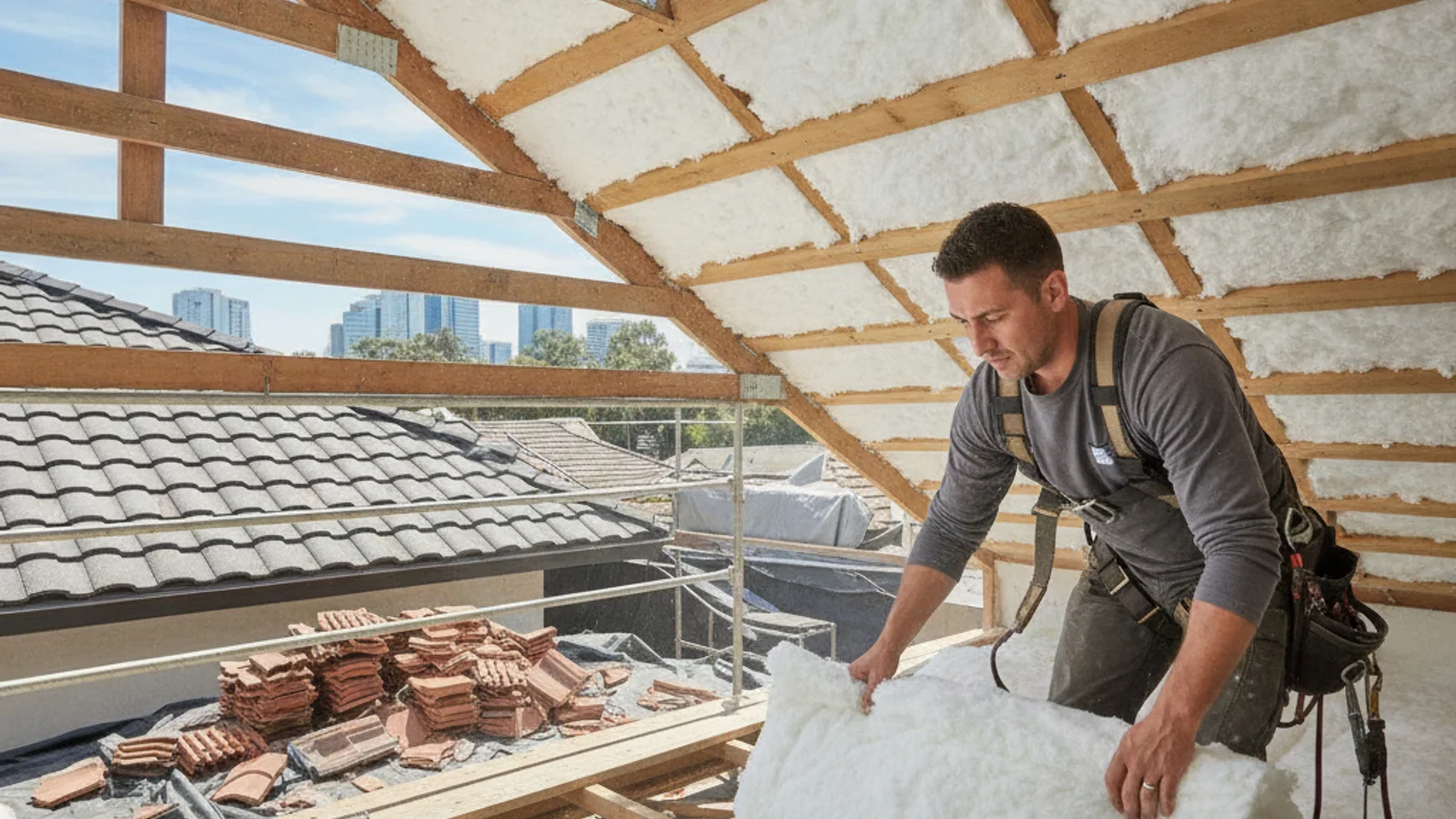
Why a reroof is the right moment
Most San Diego attics were insulated to the code year the house was built. If the house is a couple of decades old, the attic is often below what the current Energy Code wants for that climate zone.
Tear-off strips the deck. Crews can see sheathing, wet plywood, and holes around pipes and cans. A standalone insulation visit pays extra for access and still cannot see the roof deck from above. Combining scopes means one mobilization and one chance to replace bad sheathing before you bury it in cellulose.
Title 24 looks at the building as a system. A new covering with an attic that is still short of the current energy package can be a messy inspection story. That shortfall is not, by itself, an illegal covering swap. One permit package that includes the energy forms is cleaner than two surprise visits. Confirm with the AHJ. Do not waive insulation permits because someone said “it’s just blown-in.”
What Title 24 wants: look up the zone, do not guess
San Diego County is not one climate zone. Do not treat a coastal vs inland guess from this article as the zone for your house. Confirm the CEC climate zone for this address with the California Energy Commission tools. The licensed energy consultant or contractor should cite the current table for attic / ceiling insulation on the CF-1R, not a blog.
Older houses commonly show thin batts. If you can see joist tops, you are usually short. Exact R-value per inch depends on the product (fiberglass batt vs cellulose vs mineral wool). Measure depth, read the bag, and compare to the code table for your zone.
An under-insulated attic in inland summer is a comfort and HVAC load problem. Coastal marine-layer streets see fewer brutal attic days. Code and a future buyer still care.
Blown-in vs batt
Both can meet code. The attic geometry picks the method.
Blown-in (loose-fill)
Cellulose or fiberglass that fills odd bays, around wires, and over existing material when you are adding R-value. Best when access is one hatch and the framing is a maze.
Batt
Pre-cut fiberglass or mineral wool in clean, open bays. Best when old batts are wet, compressed, or coming out entirely.
Spray foam on the underside of the deck is a different system: it can change whether you still use ridge and soffit vents. That is a design choice, not a “thicker batt.” Price both only if a qualified installer is on the bid. We will not invent a foam premium.
Payback is not a printed year
Inland (El Cajon, Santee, Escondido, Ramona) attics run hotter. Comfort and A/C hours move more. Coastal (La Jolla, Point Loma, Encinitas, Carlsbad) bills move less. Do not sign because a flyer promised a five-year payback. Sign because the attic is short of code, the reroof already opened the house, or a live utility program actually applies.
SDG&E: read the live program, do not use a blog dollar
Start at SDG&E rebates and follow what is open the week you bid. Income-qualified paths such as Energy Savings Assistance and ESA Whole Home have their own rules, zip lists, and contractor networks. They are not “every reroof gets a check.”
Whole-home / home-performance programs often want a participating contractor, air sealing, and a target R-value that may be above the Title 24 minimum. If the roofer’s insulation sub is not on that list, you may still get a legal attic and still get zero utility money. Confirm enrollment before tear-off.
We will not print a rebate range. Programs open and close.
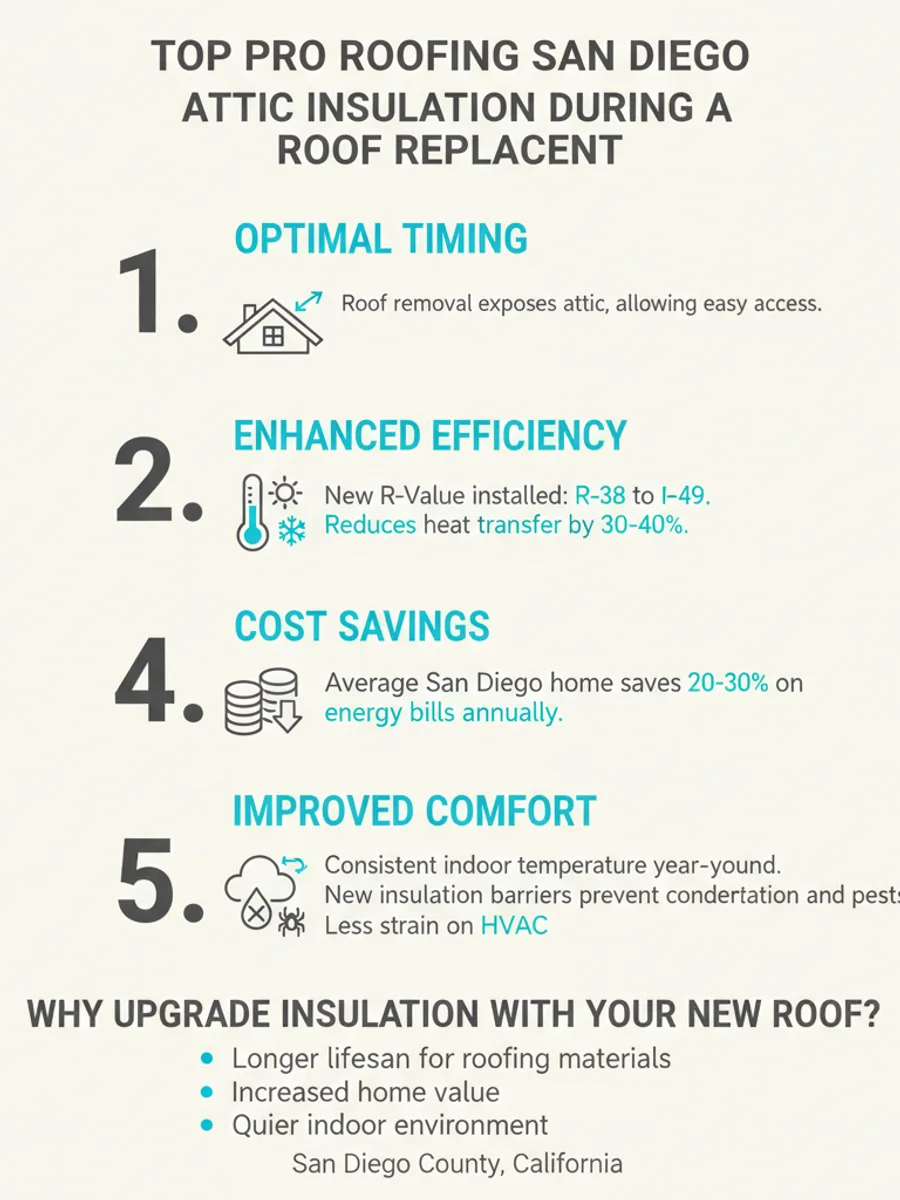
Sequence during a reroof
Insulation goes in after the new deck is sound, underlayment is on, and ventilation is confirmed. Do not blow cellulose against a deck that still needs plywood.
Typical order:
- Tear-off and deck / framing inspection
- Replace damaged sheathing
- New underlayment
- Ridge and intake balance (or a documented unvented-foam design)
- Air seal at the attic floor: stacks, cans, chases
- Insulation to the target R-value
- Finish the covering
Air sealing is the step standalone “fluff the attic” jobs skip. With the hatch busy and the roof open, it is the time to close bypasses.
Insulating a poorly vented attic traps moisture at the deck. That is mold and rot, not efficiency. Ventilation primer: roof ventilation and attic heat.
What to put on the estimate (without a fake total)
Ask for separate lines:
- Insulation method and target R-value (and climate zone cited)
- Air sealing
- Ventilation work, if any
- Who holds the insulation license / Home Performance enrollment, if you want a utility program
Compare those lines to a standalone insulation quote. The combined job should be cheaper in disruption, even when the paper total is not a magic discount we can invent.
Frequently asked questions
Does attic insulation during a reroof need its own permit?
Often it rides on the building / energy package. Sometimes the AHJ wants a separate energy form. The licensed contractor files it. Unpermitted insulation shows up in a sale and in moisture problems. Do not skip it.
How do I know if the attic already has enough?
Measure depth. Compare to the product R per inch and the current Title 24 table for your CEC zone. Joists showing, or a thin dirty batt, means you are almost certainly short.
Will insulation make the new roof last longer?
Indirectly. A saner attic temperature and a drier deck are easier on the covering. Ventilation still has to work. Insulation is not a substitute for a ridge vent.
What R-value should I aim for?
The code minimum for your climate zone, then any higher target a live SDG&E program requires. Do not copy a neighbor in a different zone. The contractor should write the number on the bid.
Can the roofing contractor install the insulation?
Some coordinate a licensed insulation sub. Confirm C-2 / insulation scope and, for rebates, program enrollment before the dumpster arrives.
Is spray foam a good reroof add-on?
It can be, on a full tear-off with a complex deck, if someone designs the unvented or semi-conditioned attic correctly. It is not a drop-in for blown-in. Get both approaches specified, not a hallway opinion.
When to call us
Call (760) 750-5557 when you want a reroof bid that includes attic R-value, air sealing, and vents as written scope. We connect you with a licensed local roofer. You contract with them. Countywide.