Water inside a commercial building plus a wrinkled or open-looking seam is an inspection problem, not a circle-and-patch problem. A visible seam on a single-ply membrane (TPO, PVC, and similar) is where to start. It is not proof of the entry path.
Top Pro Roofing SD is a referral service. We do not inspect commercial roofs, we do not weld seams, we do not issue warranties, and we do not certify roofs. Call (760) 750-5557. We will introduce a licensed independent C-39. You contract with that roofer.
What a seam symptom can and cannot tell you
A changed seam tells the crew where to look first. It does not name the cause, the membrane type, or how much of the assembly is involved.
Record facts that do not need a diagnosis yet:
- Exact room, ceiling bay, wall, or equipment zone that showed moisture
- When staff first saw it, and whether it grew
- Wide and close interior photos, plus any older photos
- Roof photos that include a drain, curb, parapet, or labeled RTU so you can find the same place later
Ask the report to keep three columns separate:
- What building staff reported
- What the roofer saw
- What conclusion they drew, and from which photos
Words such as “open,” “raised,” “wrinkled,” or “stained” should describe the picture. They should not quietly become “this seam caused that leak.”
Confirm the membrane from records and from the roof. A file that says TPO and an invoice that says “single ply” are not the same identification. Overview of systems: membrane roofing for building owners. This visit still has to name this building’s assembly.
Tracing water past the nearest seam
A useful investigation ties the interior stain to roof evidence. It should not stop at the closest wrinkle.
Give the roofer labeled, dated records: plans, prior reports, repair proposals, photos, and staff notes. Old paper describes past work. It is not today’s condition.
Ask them to map interior vs roof. If those spots do not line up on the plan, the report should say how the search area grew and why.
This page cannot pick one test method for every membrane. Ask for the proposed steps, the area they cover, and what evidence each step should produce. Check any product-specific procedure against current manufacturer documents for the identified system.
“Observed moisture at this interior location” is an observation. “This seam caused that moisture” needs a written basis. If the basis is incomplete, the report should say so.
Coastal North County, central San Diego, and East County buildings do not share one climate. Those differences should show up as site notes, not as filler.
Service path: commercial roofing. Low-slope options: flat and TPO. The matched roofer still has to confirm what is on the roof.
Drains, curbs, and penetrations as separate checkpoints
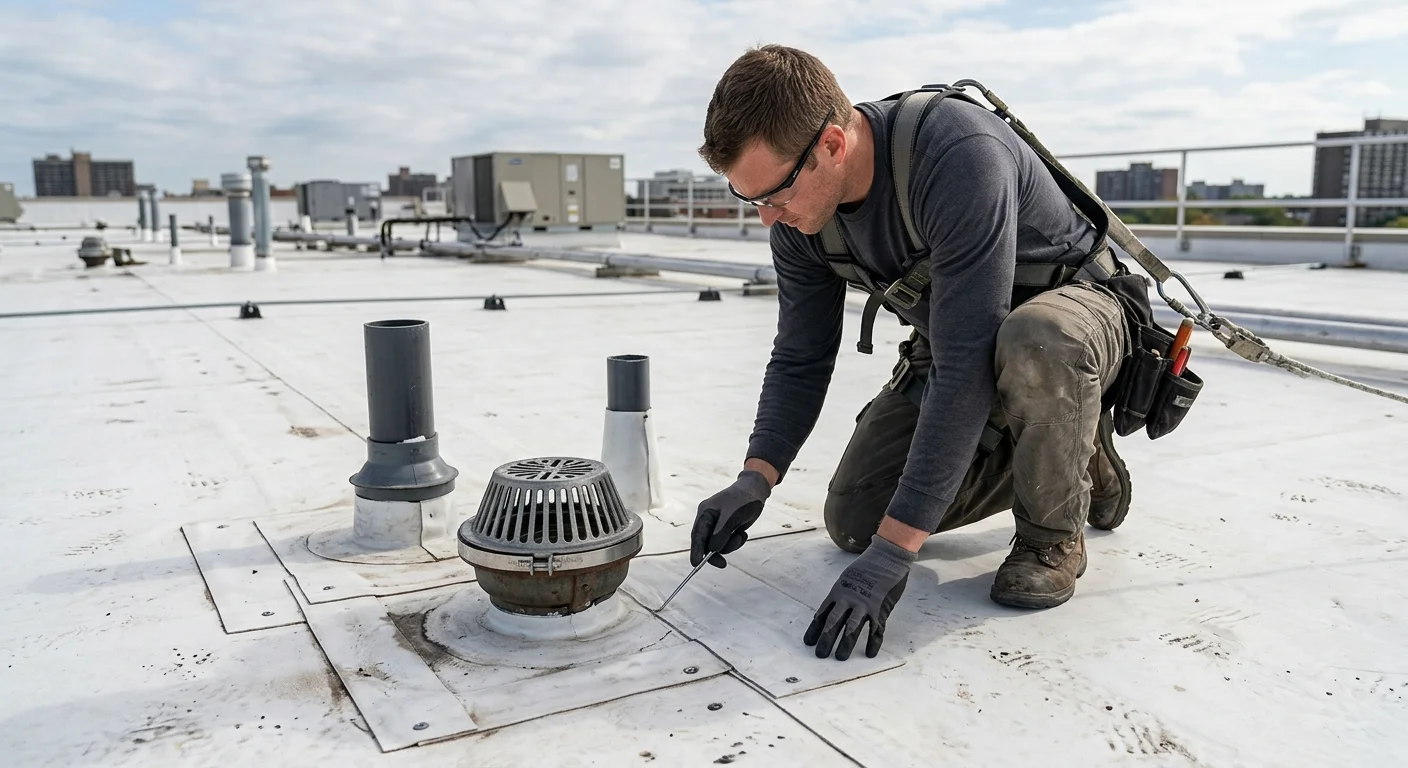
Seams, drains, curbs, penetrations, and parapets are separate line items on a competent roof record. Presence is not cause.
Ask for a marked plan or image. Every photo should point back to it (“Photo 4, north side of curb”), not a folder of unnamed close-ups.
For each checkpoint:
- Was it inspected?
- What was observed?
- Where is it relative to the interior stain?
- What evidence includes or excludes it?
- What stayed inaccessible?
A drain still gets its own notes when a seam first caught someone’s eye. Same for equipment curbs. Use the building’s existing equipment labels so managers, tenants, and the next contractor can find the same unit.
Standing water on a low slope is its own observation. Do not glue it to the seam by default. Flat-roof ponding in San Diego.
When the inspection has to get wider
A narrow patch is only honest when the evidence supports a narrow boundary. Expand the walk when:
- Moisture showed up in more than one interior area
- Several roof conditions are unexplained
- Project records are thin
- Cause and location still do not line up
Those signs do not prove a full replacement. They prove a one-seam proposal may be under-supported.
Ask what “broader review” means here: more roof area, more interiors, or more of the file. Name the boundary and the decision that extra work is supposed to support.
If the recommendation moves from local repair to covering renewal, permitting can enter. For City of San Diego jobs, start with Information Bulletin 123. Read the current bulletin. Do not restate exemption classes from this page. Other cities and unincorporated county areas have their own counters. Ask the matched C-39 to name the AHJ and confirm there.
Look up the CEC climate zone for this address. Low-slope cool-roof rules can apply to qualifying replacements. Confirm the current requirement for this building with the California Energy Commission and the local permit desk. We do not invent reflectance numbers for your bid.
California C-39 covers roofing and membrane work. Verify status at CSLB.
What the repair proposal should actually say
A circle on a photo plus “fix seam” is not a scope you can compare.
The proposal should name the roof area, nearby fixed features, and the matching interior observation, with the photos or plan marks that support that diagnosis. It should say what is in, what is out, and what new evidence would change the job.
Ask it to document:
- Membrane identification used for the recommendation
- Observed condition being addressed
- Evidence tying that condition to the reported leak
- Exact area in the work
- Nearby drains, curbs, and penetrations already reviewed
- Unresolved or excluded areas
- Who is responsible for permits on this property
- Attached records
Repair method belongs to the licensed roofer after the assembly is identified. This page cannot bless a weld, tape, or cover strip as universal. Ask them to cite current product documents.
Do not assume a warranty applies. Top Pro Roofing SD does not perform the work and does not issue warranties. If the independent roofer offers terms, they belong in that contract. Existing coverage comes from the original issuer’s documents, not from this site.
Ask what finding would change the scope mid-job, and that any revision is written before you approve added work.
When to call
Interior moisture plus a visible membrane change is enough to stop guessing from the parking lot. Call (760) 750-5557. We match you with a licensed local commercial roofer who can document the condition and propose work. We do not certify the roof.