TL;DR
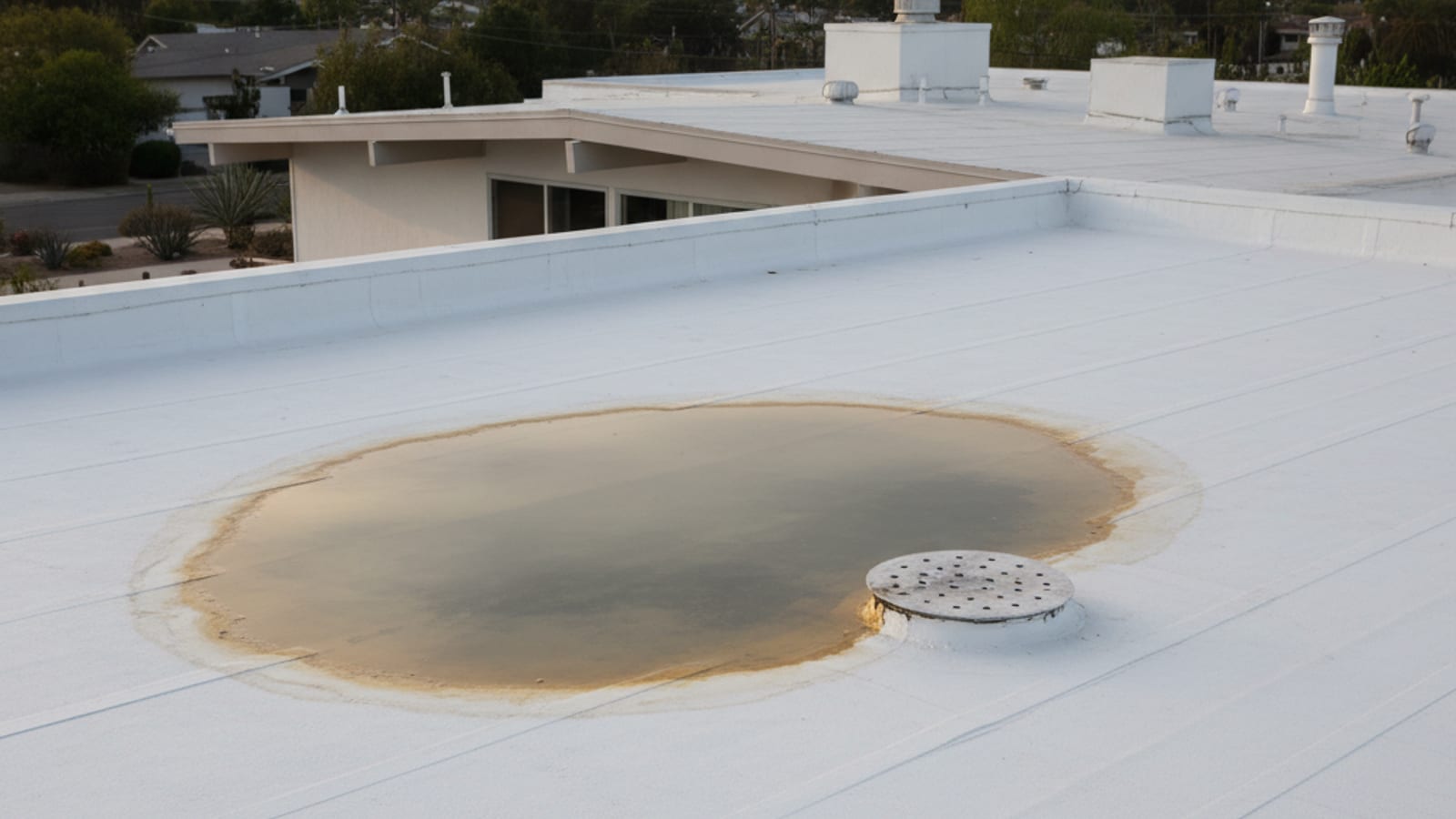
Ponding is water that is still on the roof after rain stops and the surface should have drained. Confirm the definition that applies to this permit and the membrane warranty.
Start with drains and scuppers. A clog looks like a slope problem until someone clears it. Isolated dips can take tapered insulation and a membrane patch. Roof-wide low spots usually need a reroof with designed slope, new drains, and overflow. A coating does not create slope.
Water is heavy. A 10 by 20 foot pond two inches deep is about 2,080 pounds (water is about 62.4 lb per cubic foot). We will not invent drain, taper, or reroof prices. Top Pro Roofing SD refers. We do not install. Call (760) 750-5557.
If you have a mid-century or other low-slope section and water is still sitting after rain should have drained, that is the problem this page is about. Replacement path and ranges live on flat roof replacement cost in San Diego. Membrane choice is TPO vs modified bitumen.
What is ponding water?
Water that remains on a roof surface after rainfall ends and the roof should have drained. Treat leftover puddles as ponding until the contractor and the AHJ say otherwise.
Many older San Diego flat roofs pond, especially mid-century pads built before current drainage details. Common is not the same as acceptable. The water is working on the membrane the whole time it sits.
Why standing water hurts TPO, PVC, modified bitumen, and EPDM
Those membranes are meant to shed water, not hold a pond.
UV and heat. Water sits as a lens and a thermal load. Ponded patches often look chalked, wrinkled, or a different color than the dry field. They fail first.
Seams. Heat-welded TPO and PVC seams, and torch or adhesive seams on modified bitumen, take constant head of water. Weak welds and old laps open there first. Seam failure is a common leak path on low-slope roofs.
The stack under the sheet. Moisture that gets through pinholes or laps wets the cover board or insulation. Once that layer is wet, the membrane can blister or delaminate. You cannot see that from the curb.
Load. Water weighs about 8.34 pounds per gallon, or about 62.4 pounds per cubic foot. A 10 by 20 foot pond two inches deep is about 33 cubic feet, about 2,080 pounds. On an older wood deck that is a real extra load, not a cosmetic puddle.
Biology. Persistent wet spots grow algae. Interior mold is a separate issue if water has already reached the deck. Standing water can also breed mosquitoes in warm months.
What drainage rules usually ask for
Confirm the current code and the authority having jurisdiction for the address. Typical low-slope expectations in California adoptions of IBC/IRC include:
- Positive slope toward drains. Confirm the slope the permit and the membrane maker require on new work.
- A primary drain path plus overflow (scuppers or a second drain)
- Drains at actual low points, not only where a pipe was convenient
Older mid-century homes often do not meet that package. Existing conditions can stay until a qualifying reroof. A full reroof is when the building department usually requires current drainage. Permit notes: roof permit process in San Diego.
How to fix ponding, in order
1. Clean drains and scuppers
Do this first. Leaves, gravel, and HVAC lint turn a working drain into a dam. After a storm, look at the strainers. If water drops once they are clear, you had a maintenance problem, not a framing problem.
Annual drain service belongs in a flat-roof maintenance plan. Ask the matched roofer what they include and how they document it. We do not set that fee.
2. Correct a local low spot
If the field generally drains but one dip holds water, a C-39 contractor can often cut the membrane, add tapered insulation to restore slope, and weld a new patch. That only works when the rest of the roof already has a path to a drain.
It does not fix a roof that is dish-shaped from eave to eave.
3. Reroof with tapered insulation and new drains
Roof-wide ponding, missing overflow, or a membrane that is already tired in the ponds usually means replacement, not another patch. A proper job:
- Tears off the failed membrane and wet insulation
- Installs tapered insulation (often polyiso) to create designed slope to drains
- Installs a new TPO, PVC, or modified-bitumen field
- Puts drains and scuppers where the new low points actually are
- Coordinates rooftop HVAC and electrical disconnects with the licensed trades those units require
That is roof replacement on a low-slope assembly, not a coating day. Service page: flat and low-slope roofing. Repair types: flat roof repair.
Can you just add a drain at the puddle?
Sometimes, if three things are true:
- There is a real pipe path below the low point.
- The membrane around the new penetration can be flashed to the same standard as the field.
- The rest of the roof still has enough life that you are not reroofing in a few years anyway.
A new drain is a new hole. It does not reverse the aging already done in the pond. Ask for that as a line item with flashing detail, not as a verbal maybe. We will not invent a per-drain price.
Does a silicone coating fix ponding?
A coating can restore surface waterproofing on a membrane that still has slope. It can add reflectance. It does not create the required slope. Water still sits. It just sits on coating.
If the problem is drainage, skip coating as the fix. If the problem is a tired but draining field, coating is a time-buy the contractor has to justify on this roof, with remaining slope measured, not assumed.
What a useful flat-roof inspection includes
Ask for roof inspection language that covers:
- Membrane, laps, and flashings
- Drain and scupper function (not just “drains exist”)
- Slope checks at more than one point
- Moisture scan (infrared or capacitance) when the contractor offers it
- Core cuts only when they are needed and written into the scope
Get photos with locations and a written recommendation: clean, taper, coating, or reroof. Inspection charges are set by the professional. Ask before they climb.
When to treat it as urgent
- Water still there after rain should have drained
- Ceiling stain under a flat section (roof repair)
- Open laps, splits, or blisters in the ponded area
- Ponded patches a different color than the dry field
- An aging membrane that has not been walked with a report
Repair vs replace framing: roof repair vs replace. Lifespan context: how long roofs last in San Diego.
FAQ
How much standing water is too much?
Any water that remains after rain should have drained is ponding. Depth still matters for load. Ask the matched roofer what that pond weighs on your deck; we will not invent a pound figure here.
Can I coat instead of replacing?
Only if slope already works and the contractor can show remaining membrane life. Coatings do not fix dish-shaped roofs.
How often should a flat roof be inspected?
Ask the matched roofer how often they want this roof walked, and after a major storm. Ask for drain tests and a moisture scan when the roof is older or already ponding.
What causes ponding?
Clogged drains, settled framing, undersized or misplaced drains, and original slope that never met current practice. Clean first. Measure slope second. Do not start with a coating bid.
Service area
Flat roof inspection, repair, and replacement matching across San Diego County, including mid-century stock in Rancho Bernardo, Poway, La Mesa, Escondido, and central San Diego. Hiring notes for inland: how to find a roofing contractor in Escondido.
Call (760) 750-5557. We match you with a licensed independent roofer. You contract with that professional.