Inspect your roof from the ground
You can catch most roof problems from the sidewalk with a pair of binoculars.

What you'll learn
- What missing, curled, or cracked shingles actually look like from the ground
- How to spot sagging rooflines that indicate decking problems
- Why flashing around chimneys and vents is where most leaks start
- When photo documentation is worth the effort
Step by step
- Walk the perimeter with binoculars. Look for missing, curled, or cracked shingles or slipped tiles.
- Check the rooflines, any sag indicates structural or decking issues.
- Scan flashing around chimneys, vents, and skylights for rust, lifting, or gaps.
- Inspect gutters for granules (shingle wear), debris, or pulling from fascia.
- Look at eaves and soffits for staining, peeling paint, or rot.
Safety note
Take photos every 6 months from the same spots. When something changes, you'll see it. Small fixes beat full replacements every time.
Rather have a pro handle it?
We connect you with an independent local roofer across San Diego County. A real roofer picks up.
More guides
Keep learning.
Maintenance · Guide
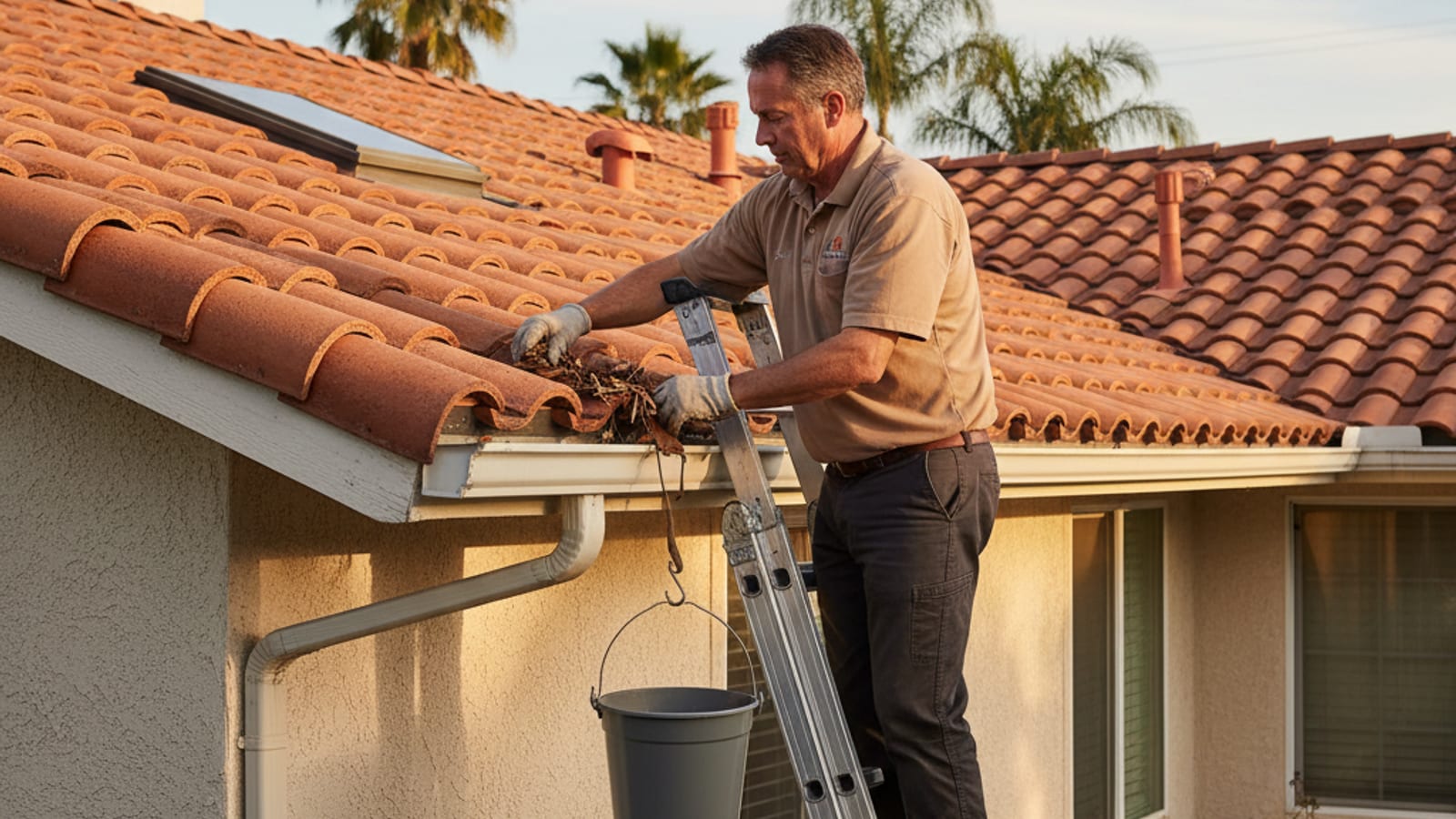
Clean your gutters safely
Clogged gutters cause more roof leaks than almost anything else.

Troubleshooting · Guide
Spot storm damage after a Pacific storm
After any storm over 40 mph, your roof deserves a 10-minute check.
Maintenance · Guide
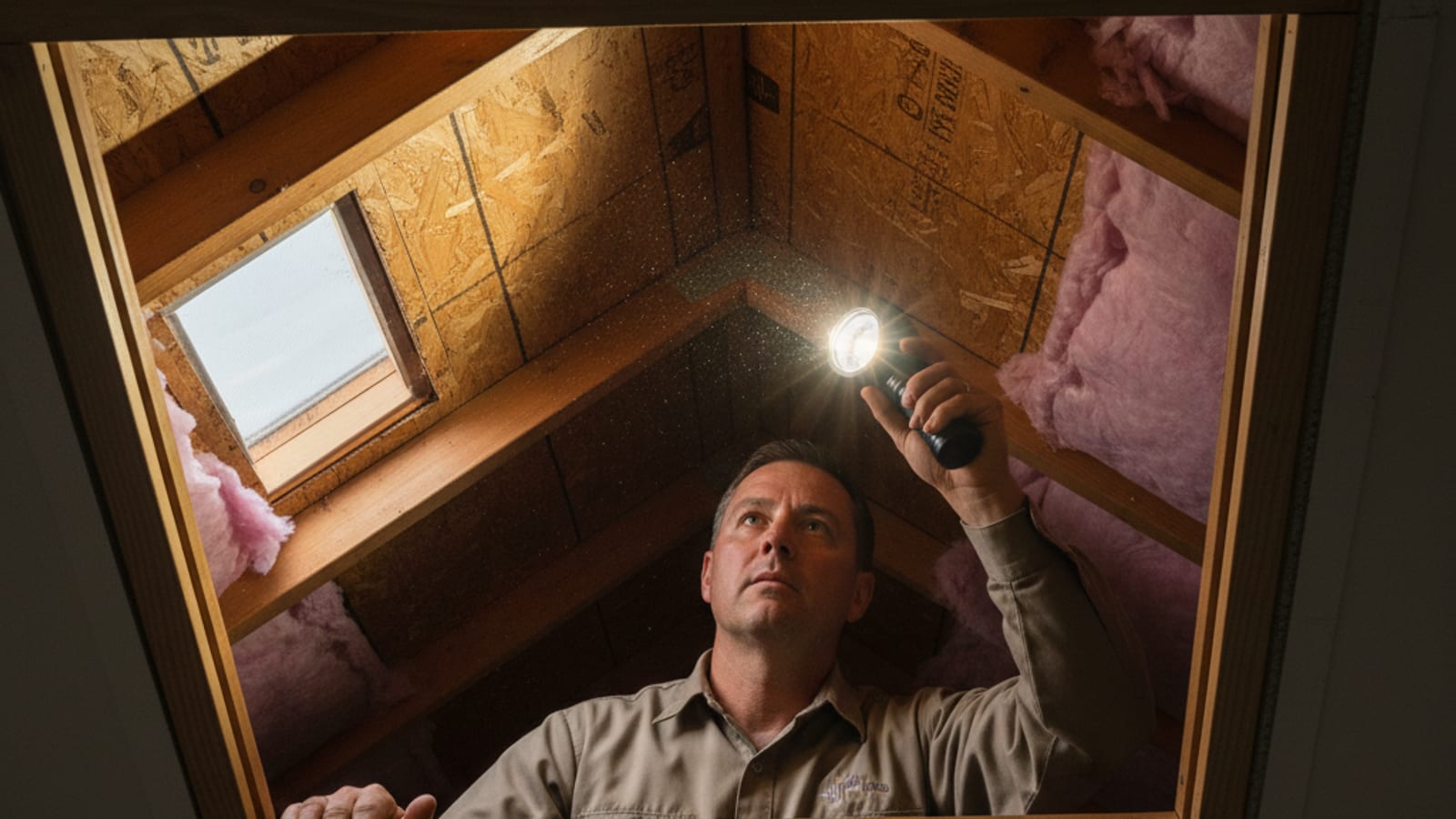
Check your attic ventilation
Bad attic ventilation cooks your shingles from underneath and drives up your cooling bill.