Two commercial roof coating proposals can describe very different scopes. A useful proposal identifies the existing roof, preparation, detail work, exact products, exclusions, supporting documents, and how scope changes get written after the crew is on the roof. Those details let you compare what each independent roofer actually proposes.
Top Pro Roofing SD is a referral service. We do not coat commercial roofs or issue warranties. Call (760) 750-5557 when you need a licensed independent local roofer to inspect the building and write a property-specific scope.
Start with the existing roof condition
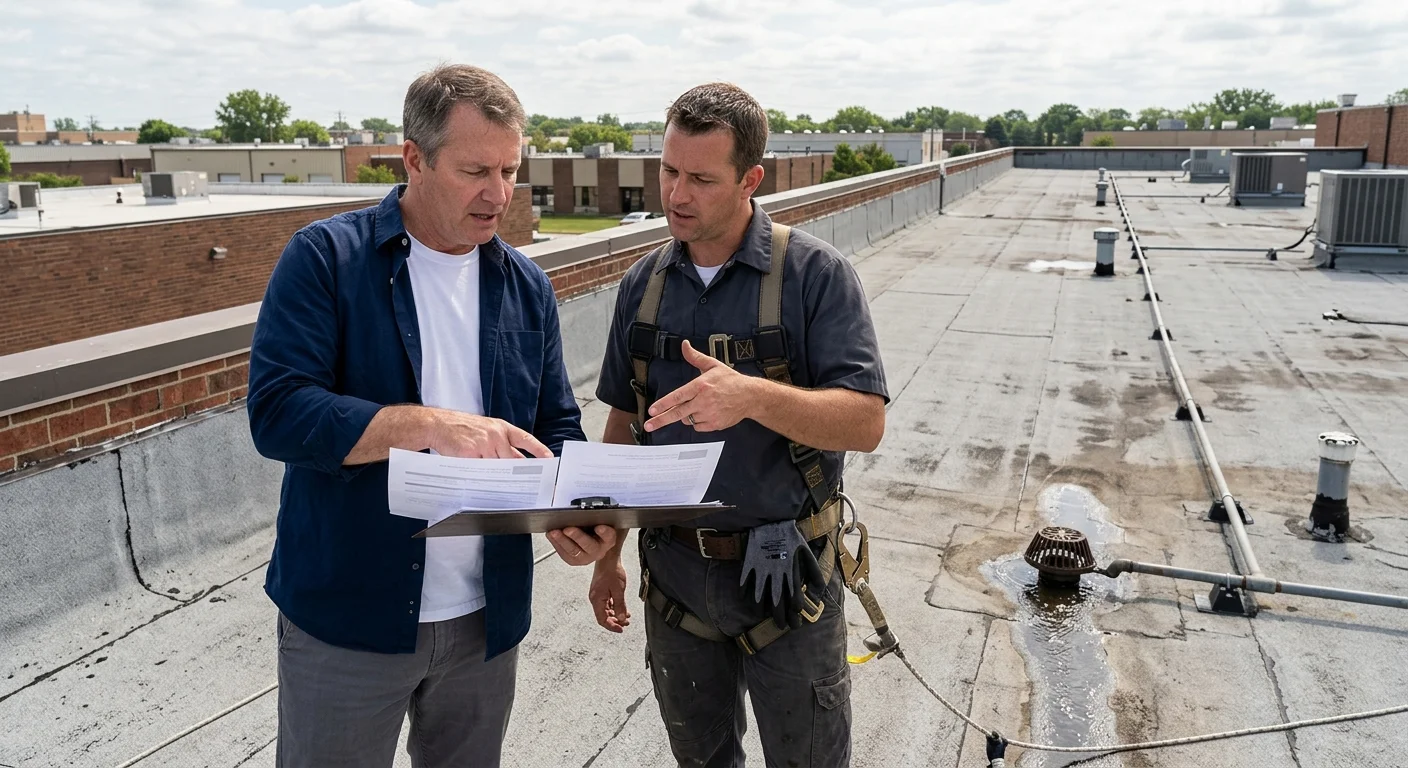
A proposal should begin with the roof that exists today. Look for roof type, approximate measured area, accessible sections, and visible conditions. Photos should connect those observations to specific locations.
The written assessment should address:
- Previous coatings, patches, or repairs
- Open seams or separated transitions
- Cracks, blisters, splits, or loose material
- Staining and suspected moisture locations
- Ponding areas or blocked drainage paths
- Damaged flashing around roof edges
- Rooftop equipment and abandoned penetrations
- Sections that were not accessible during inspection
These observations do not prove a coating will work. They show what the roofer saw and what the proposed scope addresses. If one bid says only “coat entire roof,” you cannot tell whether damaged areas were included.
Ask how the roofer identified the existing assembly. If that identification is uncertain, the proposal should say so and explain what further inspection or core cuts are needed before a final system is selected.
A warehouse in Kearny Mesa may have different penetrations and additions than a retail property in Chula Vista or a low-slope office in Mission Valley. Each proposal should describe the actual building.
Separate coating work from repairs in the text. You need to see which observed problems are included and which require another decision. Our commercial roofing service can connect building owners with licensed independent roofers who prepare property-specific scopes.
Check how drains, seams, and penetrations are handled
The field is only one part of the proposal. Drains, seams, walls, edges, curbs, and penetrations need their own scope language. A single line about “sealing details” leaves too much open.
Ask each roofer to identify included details:
- Roof drains, scuppers, and drainage paths
- Seams, laps, joints, and transitions
- Pipes, vents, conduits, and equipment supports
- HVAC curbs and other raised openings
- Parapet walls, coping, and roof edges
- Skylights, hatches, and access points
- Expansion joints and changes between roof sections
- Connections to adjacent roof materials
State the planned treatment for each relevant condition: cleaning, repairing, replacing, reinforcing, priming, coating, or leaving the item untouched. The correct choice belongs in the written scope and the manufacturer’s documents.
Ask whether drain components or blocked paths are included. If standing water was observed, the proposal should mark its location and explain whether the coating scope addresses the underlying condition. Do not assume the coating line item includes drainage changes.
Find out who handles disconnected, abandoned, or active equipment. The bid should identify work assigned to the roofer and work left to another trade.
If the existing assembly may need more than coating, review flat and low-slope roofing and roof coating versus replacement.
Compare preparation and excluded work
“Prepare roof” is not a usable scope. The proposal should name the preparation steps tied to the observed condition.
Look for written answers:
- What surfaces will be cleaned?
- What cleaning method is proposed?
- How will loose material be handled?
- Which existing patches stay or come out?
- What repairs happen before coating begins?
- Are seams and penetrations treated separately?
- Is primer included, excluded, or subject to testing?
- What conditions could change the final scope?
Ask each commercial roofer to support its method with the current manufacturer instructions for the proposed products. Product requirements depend on the exact roof and system.
Then read the exclusions: owner responsibilities, other trades, hidden conditions, equipment work, interior damage, drainage changes, deck repairs, or inaccessible sections. The document should divide included work from excluded work in plain language.
Pay close attention to allowance language. A roofer may discover concealed wet insulation or failed cover board after work begins. The proposal should explain how that discovery will be documented, photographed, and approved before extra work proceeds.
Ask for assumptions in writing: access, water or power, equipment schedules, tenant coordination, or clear roof areas. These are project conditions, not footnotes.
Compare scopes line by line before comparing totals. A shorter proposal may exclude repairs listed elsewhere. A longer proposal may still use unclear descriptions. Build a comparison sheet with rows for preparation, repairs, detail work, products, documentation, exclusions, and owner responsibilities.
Document scope changes and supplementals before the crew starts
Coating jobs change when the roof is opened or when moisture survey results arrive late. If the proposal is silent on that, you will argue about it on the roof.
Ask each bidder to attach a change-order method that answers:
- Who can authorize extra work, and in what form (email, signed ticket)?
- How unit quantities will be measured (square feet of wet insulation, lineal feet of seam, number of penetrations)
- How photos and marked roof plans will be attached to a supplemental
- Whether manufacturer inspection or additional testing is required before a product change
- How the closeout package will list original scope versus approved extras
A verbal “we’ll take care of it” is not a supplemental. If two proposals differ only in how they handle unknowns, that difference is the comparison. Put the same change-order rules on every bid so you are not rewarding the company that left wet areas out of the first number.
Do not invent unit prices in the contract yourself. Ask the independent roofer to propose units in writing, then keep those units when a supplemental appears.
Identify the exact coating system proposed
“Roof coating” is a category. The proposal should name manufacturer, product line, system components, and finish color, plus which roof sections receive that system.
Generic terms such as silicone or elastomeric are not enough. Ask for exact product names and current manufacturer documents. Primer, reinforcement, sealant, base, and finish each belong in the scope if they are part of the system.
Ask the roofer to show where the manufacturer approves the proposed assembly and preparation method. If testing or manufacturer review is needed, the document should identify who handles it and when.
Do not accept an unlabeled product substitution clause. If substitutions are permitted, require written approval and updated product documents before the material changes.
For framing questions on two broad options, read silicone versus acrylic roof coating. Manufacturer documents still control product-specific claims.
Look up the CEC climate zone for this address. If a roofer presents a coating as part of a cool-roof compliance path, ask for the project-specific basis and documented aged performance values. The California Energy Commission and the AHJ are the authority for current Title 24 requirements. Do not treat Title 24 as a default. A product name or color alone is not a compliance record.
Identify who verifies any compliance claim. Separate manufacturer statements from the roofer’s own scope commitments.
Read product and workmanship documents
Ask for current product data sheets, written system specification, installation instructions, and sample warranty documents. Confirm claims through the manufacturer.
Read the warranty sample: issuer, covered system, owner obligations, exclusions, and claim procedure. If the proposal mentions coverage, match that sentence to the actual document. Top Pro Roofing SD does not issue warranties. Any warranty comes from the independent roofer or product manufacturer under its own terms.
Workmanship terms should be separate and written. Ask who provides them, what work they apply to, and how final project documents will identify completed areas.
The closeout section should state what you receive: final product records, approved changes, completed-scope photos, and applicable warranty documents. Those deliverables belong in the agreement before you sign.
The company named on the proposal should match the company expected to perform the work. Roofing work is C-39. Verify status through the CSLB license check.
Permit language needs care. We could not confirm one countywide rule covering every commercial roof coating project. The City of San Diego has its own Development Services requirements. Properties outside the city may fall under another jurisdiction. Ask the roofer to identify the project authority and who will verify current permit requirements. We do not print a countywide fee.
Before selecting a proposal, request one revised scope that captures every clarification. Emails help. The signed agreement should reflect the scope you approved, including the supplemental method.
When to call us
Call when you need a licensed commercial roofer to inspect the building and prepare a property-specific coating scope. Call (760) 750-5557 and we will connect you with a licensed independent local roofer.