You’re managing a commercial property in Chula Vista and the roof is failing or near the end of a documented service life. Bids arrive with acronyms, warranty pages that read like a lease, and numbers that are not comparable. This guide is for that comparison. We will not invent per-square-foot prices, coating-vs-replace percents, or a bid-size cutoff.
Top Pro Roofing SD is a referral service. We connect owners and managers with licensed local commercial roofers. We do not install, we do not hold a C-39, and we do not register manufacturer warranties. Call (760) 750-5557.
Related: roof repair in Chula Vista, TPO roofing for Chula Vista commercial, TPO vs modified bitumen, flat roof replacement cost, commercial roofing, flat and low-slope TPO, roof inspection checklist, roofing in Chula Vista.
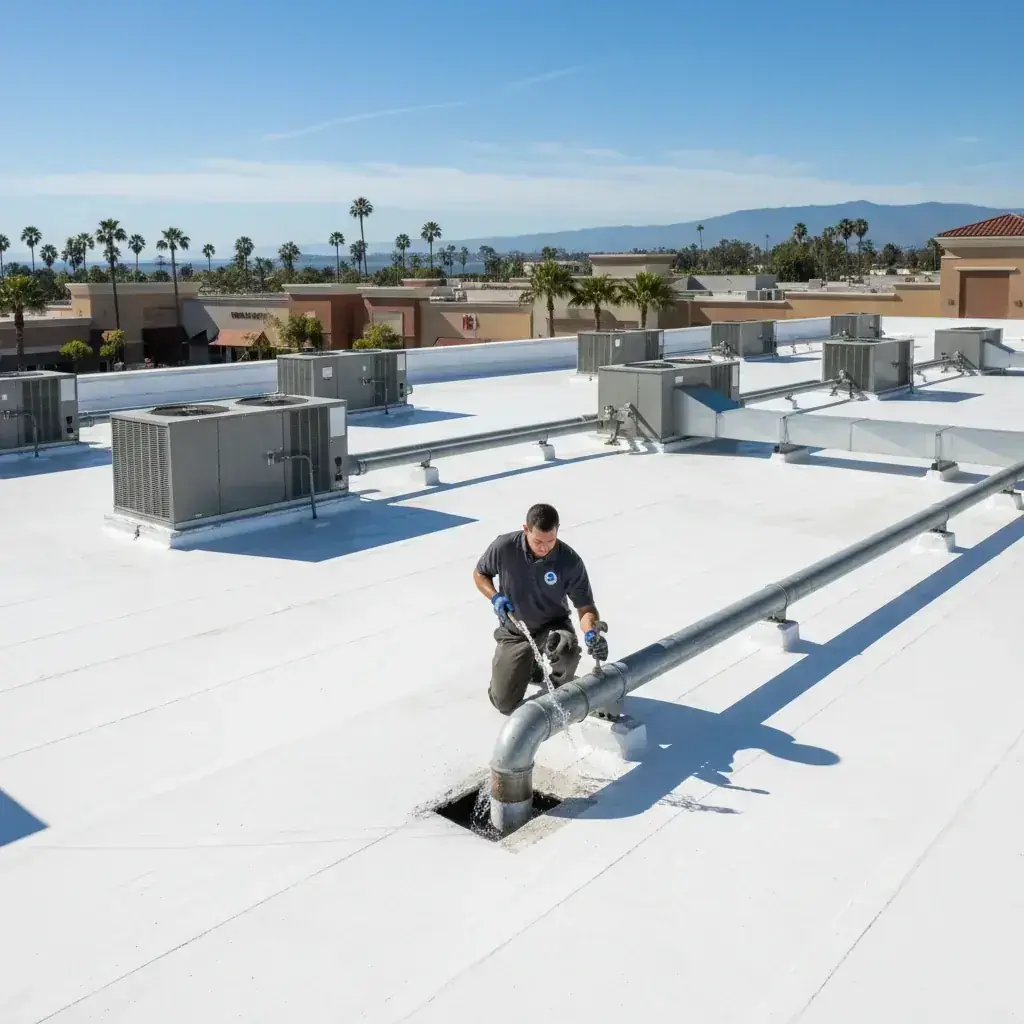
What property managers in Chula Vista actually install
Chula Vista commercial stock is strip malls, light industrial, medical offices, and mixed-use pads, a lot of it decades old. The dominant profile is low-slope or flat, from small pads to larger retail fields.
Walk Broadway or Third Avenue and you mostly see TPO, modified bitumen, and older built-up roofing that has been patched. PVC shows up on restaurant rooftops and buildings with heavy grease exhaust because it handles chemical runoff better than many TPOs.
The system choice is driven by:
- Slope. Anything under about 2:12 needs a waterproof low-slope assembly, not shingles.
- Substrate. Wood, concrete, or steel changes attachment and weight. The engineer owns load, not a blog.
- HVAC penetrations. More rooftop equipment means more flashings. That is where most leaks start.
- Title 24. The California Energy Commission publishes building energy efficiency standards. Read the current live text for this Chula Vista address, slope, and project type. Do not treat Title 24 cool-roof rules as a default. Reflectivity is a permit question for the AHJ.
If the building is in an older corridor, the current roof may already have more than one layer. Confirm layer count and the AHJ’s recover limit before anyone bids an overlay. This page will not restate a two-layer overlay ban. A contractor who sells a recover without checking the AHJ is selling you a failed inspection. County vs City of Chula Vista depends on the parcel. Start with County PDS only if that is actually the AHJ.
TPO, PVC, and modified bitumen
These three cover most new commercial roofing installs in Chula Vista.
TPO
Thermoplastic polyolefin is the common white or light-gray single-ply. Heat-welded seams, when they are real welds, hold up in South Bay UV. Common commercial sheets are 45, 60, or 80 mil. Thicker is not automatically better if the welds and flashings are sloppy. Manufacturer warranty length is a listed-assembly question, not a blog year count.
TPO quality varies by mill. Ask for the manufacturer’s certified-installer paperwork if they are selling a registered warranty. Off-brand sheet plus a generic warranty speech is a flag.
Attachment (ballasted, mechanically fastened, fully adhered) belongs on the bid. See flat and low-slope TPO.
PVC
PVC is the chemical-resistance conversation. Kitchen exhaust, grease vents, and some industrial discharge can degrade TPO in ways PVC is specified to resist. It is often bid higher than TPO. We will not invent a percent. Chula Vista winters are mild, so “cold flexibility” is a smaller driver here than in mountain East County.
Modified bitumen
SBS (rubberized) or APP (plasticized) asphalt in multiple plies. Torch, cold adhesive, or self-adhered. Thickness and puncture resistance are why it still shows up where HVAC techs walk constantly. Ask the AHJ and the matched C-39 whether a listed reflective cap or coating is on this Title 24 path. Do not treat Title 24 as a default. Comparison: TPO vs modified bitumen.

Roof coatings as an extension play
If the existing roof is structurally sound, insulation is dry, and leaks are at the surface, a fluid-applied coating can extend service life. Ask the coating maker for the current warranty class when the prep is real. That is not a substitute for a failed deck. We will not invent a coating-as-percent-of-replace figure.
Acrylic. Water-based, reflective, common on mod-bit and metal. Ponding is the enemy. If water stands more than about 48 hours after rain, coating alone will not save the field. See flat roof ponding.
Silicone. More tolerant of ponding than acrylic when the manufacturer lists that use. UV-stable. Still not a repair for open flashings.
Polyurea or polyurethane hybrids. Higher tensile, used where traffic or flashings need reinforcement. Spray application by a trained crew.
A coating over unresolved wet insulation, open seams, or rotten substrate traps moisture. A legitimate coating contractor cores suspicious areas before quoting. ENERGY STAR roof products and CRRC listings belong to specific SKUs. Ask for the sheet on the permit. Rebate programs change. Confirm current programs at quote time. We do not enroll rebates.
What warranties really cover (and what voids them)
Two separate warranties on every job. Most managers mix them until something leaks.
Manufacturer material warranty covers listed defects in the membrane: delamination, some seam failures tied to the product, premature degradation in the listed sense. Length depends on product tier and registration. Fine print typically requires:
- Installation by a manufacturer-certified contractor
- Registration within the window the program states (often weeks, not a year later)
- Inspections or maintenance the program names
- No unapproved alterations
Contractor workmanship warranty covers install errors: bad welds, poorly terminated flashings, missed adhesion. Length varies. A one-year workmanship promise on a long manufacturer sheet is a signal. Read it.
Common voids
- HVAC techs walking without walk pads
- New penetrations (conduit, dishes) without notifying the warrantor
- Ignoring ponding in the first rainy season
- Unlicensed repairs
Verify an active California C-39 at the CSLB license check before you sign. Calling us is not that check.
Manufacturer warranties are often non-transferable unless you notify the manufacturer on their timeline after a sale. If you are buying a building, ask for the certificate and transfer rules before close.
Getting bids: what to demand in writing
Get more than one bid on the same scope. Bids are only comparable if they name the same job.
System specification. Not just “TPO.” Brand, mil, attachment, insulation R-value if new iso is included. Vague spec means cheaper substitutions later.
Tear-off scope. Full removal or overlay? How many existing layers? Who dumps, and is dump in the price?
Flashing details. Every penetration, parapet, HVAC curb, and drain. This is where leaks start and where bids diverge.
Permit responsibility. The contractor should pull the permit. “Owner to pull permit” is a walk-away on a commercial reroof.
Warranty documentation. Named manufacturer tier (including whether it is NDL or material-only) and the workmanship term.
Payment schedule. Ask for a written schedule tied to milestones. Be cautious of large upfront asks. Home-improvement deposit rules in California are not the same as every commercial contract. Read the contract. We do not hold retainage.
The NRCA contractor-selection guidance is a useful checklist if you manage multiple properties.
City page: roofing in Chula Vista.
When to call us
New systems, coatings, and multi-layer tear-offs need a licensed C-39 who understands Title 24 and the actual AHJ. They are not parking-lot jobs.
If the Chula Vista commercial roof is old, staining ceilings, or you just took over a property with no documents, get a professional assessment.
Call (760) 750-5557 and we will connect you with a licensed independent local roofer. We do not dispatch 24/7 crews. Availability is the contractor’s calendar.