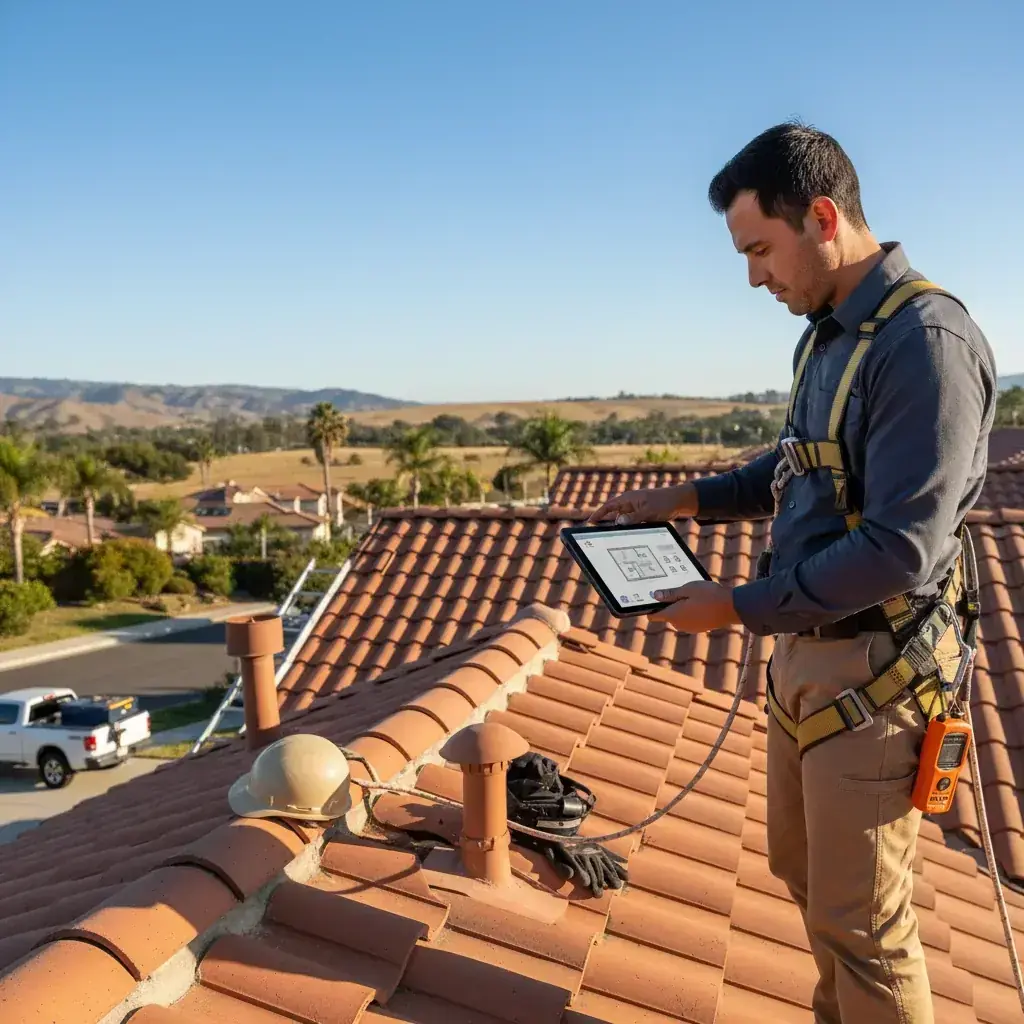
In California, a homeowners policy generally pays to replace a roof when a sudden, accidental covered peril damaged a roof that was still serviceable. Wind, hail, a fallen tree, fire, vandalism. It does not pay to replace a roof because it is old, because granules are thin, or because you skipped repairs.
The 2026 catch is settlement type. Many California files now pay roofs at Actual Cash Value (depreciated) once the covering crosses an age or condition line in the endorsement. Replacement Cost Value pays like-kind new materials, usually in two checks, minus the deductible. Those words on the declarations page matter more than a blog’s guess about State Farm or Farmers this month.
Top Pro Roofing SD is a referral marketplace. We connect San Diego County homeowners with CSLB-licensed roofers who can photograph and write what they see. We are not an insurer, a public adjuster, or a law firm. We do not quote claim payouts. Call (760) 750-5557.
Filing sequence: California roof insurance claim guide.
Full replacement vs a patch
Scope and “matchability” decide more than a viral percentage rule.
Replacement is more likely when:
- Damage from a covered peril is widespread, not one isolated shingle
- A repair would leave the rest of the roof unable to perform
- The shingle or tile line is discontinued and a patch would be a checkerboard (common on older clay and retired asphalt colors)
- The manufacturer would void remaining warranty if you splice a new product into the field
- The city requires tear-off once the deck or underlayment is opened (ask the AHJ and read the current covering-renewal bulletin for this jurisdiction; we will not paraphrase that list)
Repair is more likely when:
- One slope or one strike zone took the hit
- Matching material is still available
- The rest of the roof has remaining life
- Repair restores pre-loss condition
If the product on your house is gone from the market, have the C-39 put that in writing with photos of the stamp or the bundle wrapper. That letter is what moves some files from a square of patch to a full slope or a full roof. It is not automatic.
Covered perils vs excluded wear
HO-3 and HO-5 language still turns on sudden and accidental. Typical split for San Diego County:
| Cause | Usually in play | Usually out |
|---|---|---|
| Santa Ana wind | Covered peril | |
| Hail | Covered (more East County than the beaches) | |
| Fallen tree or limb | Covered | |
| Fire or smoke | Covered | |
| Vandalism | Covered | |
| Vehicle into a garage roof | Covered | |
| Lightning | Covered | |
| Age, granule loss, UV on underlayment | Excluded wear | |
| Salt-air flashing rust | Maintenance / wear | |
| Algae or moss | Maintenance | |
| Damage you already knew about and left | Pre-existing | |
| Animals in the attic | Often excluded or a different coverage | |
| Slow leak, then mold | Wear / seepage | |
| Earthquake | Needs a CEA policy | |
| Flood | Needs NFIP or equivalent |
Atmospheric rivers since 2022 are where many denials land: the storm arrived, the roof was already finished, the carrier calls it wear the rain revealed. Same wet ceiling. Different check.
If the weather event is real, document in the first two days: storm damage claim notes.
ACV vs RCV
Read the roof settlement line before you file, if you still can change anything at renewal.
Replacement Cost Value: pays the cost to install like kind and quality today, minus deductible. Often an ACV check first, then recoverable depreciation after the work is done and invoiced.
Actual Cash Value: replacement cost minus depreciation for age and condition, minus deductible. No second “holdback” check.
On an old asphalt roof, ACV can leave you paying most of a new roof yourself. We will not invent a San Diego replacement total or a depreciation spreadsheet on this page. Your contractor’s estimate and your policy math are the real numbers.
Look for phrasing like “Coverage A: Replacement Cost” versus “Actual Cash Value Loss Settlement” on the roof. Dwelling RCV with a roof ACV endorsement is common now.
Age cliffs and the FAIR Plan
Carriers have been rewriting roof endorsements since the 2023-2025 California market crunch. Thresholds move. Asphalt often hits ACV sooner than tile or metal. The California FAIR Plan is residual market coverage. Many of those policies settle older roofs at ACV even when the peril is named. Read your roof endorsement. Do not memorize a blog’s carrier chart.
If the non-renewal letter already names roof age, insurance non-renewal and roof age.
Prior claims sit on a CLUE report for years. That affects shopping a new policy as much as it affects this claim.
California Department of Insurance consumer material: residential insurance guides.
How to give a covered claim a fair shot
-
Photograph every slope from the ground, interiors with dates, and debris. NOAA Storm Events is a free weather log for the loss date. Do not climb a broken roof for a hero shot.
-
Get a written C-39 inspection before you rely on the adjuster’s first walk. Hidden underlayment, flashing, and code items belong in that report.
-
Notice the carrier in the time your policy requires. “Reasonable” is not a calendar you invent.
-
Ask the roofer to be there when the adjuster is there. Matching, code, and concealed damage get missed on a solo carrier visit.
-
If the estimate skips ice-and-water shield, drip edge, or other items the current California residential code requires on a tear-off, the contractor can supplement with line items. Read the live code path the AHJ names. That is documentation, not a fight for sport.
-
Do not sign assignment-of-benefits papers you do not understand. California is not Florida, but AOB still appears.
-
For a denial or a messy scope, a licensed public adjuster or the policy’s appraisal clause may be next. Fees are a contract between you and that licensee. We do not take a cut of claims.
-
Keep receipts for reasonable emergency tarping. Mitigation is often payable. DIY patches that hide the cause are how files die.
Full timeline: claim guide. Public adjuster role: when to hire a PA.
What kills a claim
- Wear labeled as the whole story, even if a storm was the last event
- Roof already past the endorsement’s RCV age line, so the check is ACV and feels like a denial
- No photos, no prior inspections, no invoices (neglect narrative)
- Late notice
- Old unrepaired damage in the same field
- You repaired first and called later, so the “scene” is gone
- Cosmetic-only hail language on some policies
- Wood shake or some low-slope assemblies excluded in the form
- Roof age on the application that does not match the house (rescission risk)
The roofer’s job vs ours
A C-39 who has actually sat with California adjusters writes a different estimate than a one-page “reroof, one price.” You still own the claim file. The contractor does not “guarantee insurance will pay,” and anyone who offers to waive your deductible is a problem. That pitch is a California insurance-fraud red flag. Verify the C-39 at the CSLB license check. Ask for liability and workers’ comp certificates from the contractor, not from us.
If the claim is approved, roof replacement is the work path. Cost ranges for planning, not for a claim proof: San Diego roofing cost.
Frequently asked questions
Will insurance cover a 20-year-old roof? For a sudden covered peril, maybe. Ask the carrier whether settlement is actual cash value or replacement cost on this covering. The declarations page wins. Replacing before a non-renewal is a budget decision, not a claim trick.
What is ACV vs RCV in one sentence? RCV aims at today’s install cost minus deductible (often split across two checks). ACV subtracts depreciation first.
Does the FAIR Plan replace roofs? It covers named perils on the FAIR form. Older roofs on that plan are often ACV. Wear and slow leaks are still out.
Storm vs wear: how do they decide? Age and condition at loss, prior damage in the same spot, whether that day’s weather could cause that pattern, and whether the pattern looks like impact or like widespread aging. A contractor report that answers those four points is useful. It is not a verdict the carrier must copy.
Can I appeal a denial? Yes. Get the denial in writing. Request the photos and any engineer report. You can complain to the California Department of Insurance, hire a public adjuster or counsel, or invoke appraisal if the policy allows it. We do not run those processes.
Should I file a small leak? Compare repair cost to deductible, then remember CLUE. A claim that barely clears the deductible can cost more at renewal than paying the C-39 yourself. Large sudden damage is a different math.
What to do next
If you can see damage, photograph it today. If the roof is old and renewal is close, get a C-39 inspection so you know whether you are arguing a claim or shopping a reroof.
Call (760) 750-5557 or contact us. We connect you with a licensed independent San Diego roofer. The inspection fee, if any, is between you and that contractor. You contract with the matched roofer. Confirm any fee with them.
- Does homeowners insurance cover roof leaks in California?
- California roof insurance claim guide
- Storm damage claim playbook
- Non-renewal because of roof age
- Public adjuster for a roof claim
Outside this site: