TL;DR
- Get a licensed C-39 to document the roof in writing before you treat the adjuster’s first number as the whole job. We do not promise a free inspection or a higher approval rate.
- Wind, hail, falling trees, and fire are often listed as covered perils on California homeowners forms. Wear, maintenance, and pre-existing damage are often excluded. Your form wins.
- RCV vs ACV is on the declarations page. Depreciation math is carrier-specific. We will not print a percent of replacement cost as if it were California law.
- Avoid “free roof” storm-chaser pitches. Inflated scopes can be fraud, and the policyholder can be left in it. Use a local C-39 you can find after the storm.
Related: what not to say to a roof insurance adjuster, California roof insurance claim guide.
Top Pro Roofing SD is a referral marketplace. We connect San Diego County homeowners with CSLB-licensed roofers who can document what they see. We are not an insurer, a public adjuster, or a law firm. Call (760) 750-5557.
A winter rain or Santa Ana event can leave missing shingles, a leak, or a limb through a skylight. Here is the claim sequence that still belongs to your contract.
What does homeowners insurance cover for roof storm damage?
Two questions: is this a covered peril? and how will they pay if it is?
Often listed as covered on many California homeowners forms (still read yours):
- Wind: lifted or missing shingles, torn metal, loose tile. Many HO-3 forms include wind without a separate “hurricane” rider. Some policies add a separate wind deductible. Check the declarations page.
- Hail: less common at the coast, still a listed peril on many forms when it happens.
- Falling tree or limb: often covered when the fall is from a covered cause. Taking the tree off the house and hauling yard debris can be limited. Read the form.
- Fire: typically under the fire coverage on a California homeowners policy.
- Water through an opening caused by a covered peril: more likely than a leak from age. Sudden vs gradual: does homeowners insurance cover roof leaks.
Limbs off the roof before storm season is still the cheapest prevention. Branch Pro San Diego is a separate trade for overhang, not a roofing warranty.
Usually not covered:
- Wear, UV aging, and a shingle that finally leaked after ordinary service life
- Skipped pipe boots and gutters
- Damage that predated the policy or the claimed event
- Earthquake (often CEA or a separate endorsement)
- Flood from ground water (typically NFIP), which is not the same as rain through a storm-opened roof
How a roof storm-damage claim works, step by step
Step 1: Document immediately
Before you argue coverage:
- Photograph damage from the ground and any safe vantage. Do not climb an unsafe roof.
- Photograph interior stains, wet walls, and damaged belongings.
- Save weather records for the date: NWS San Diego is the archive that matters locally.
- Move belongings out of the leak path and photograph that too.
- If lightning or wet house wiring is in play, a licensed electrician is the right trade before you power everything back up.
The adjuster will ask. Having files dated helps.
Step 2: Get a roofer’s written scope before you lock in the first adjuster number
A C-39 can:
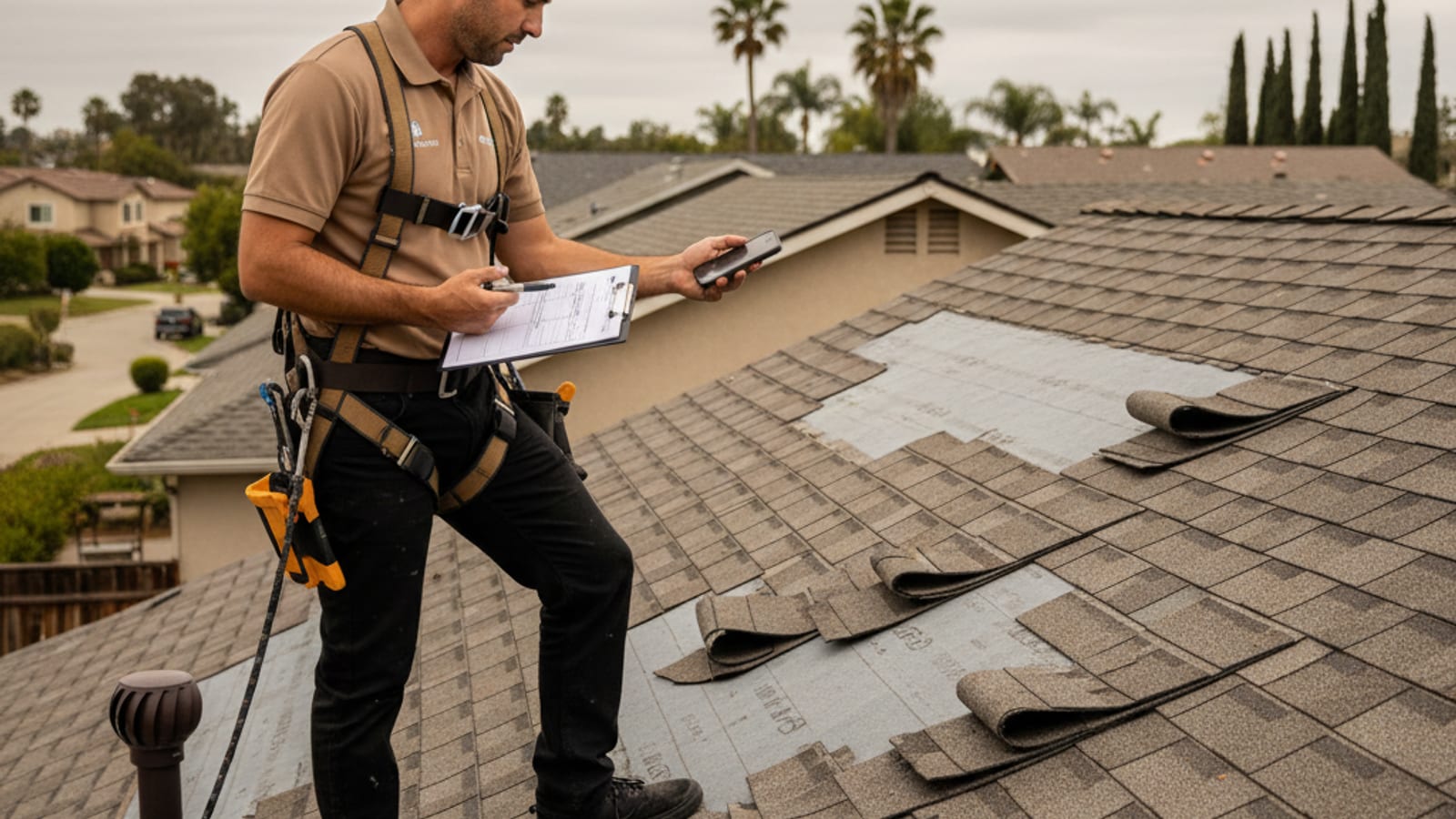
- Document the covering with photos and a written scope
- Note wet decking or insulation if they take moisture readings
- Separate storm openings from wear (some damage is not a claim)
- Price repair vs replacement as their bid, not as the carrier’s check
We will not invent an inspection fee. Ask whether any fee is credited if you hire that firm. The written scope is something you can compare to the adjuster’s estimate. It does not create coverage.
Step 3: File the claim
Call the carrier’s claims line. Typical intake: policy number, date of loss, description, interior damage, habitability. They assign an adjuster and a claim number. Save both.
When you must give notice is in your policy (Duties After Loss). We will not invent a statewide clock. The California Department of Insurance and the Legislature publish the form and Insurance Code text that may apply to a California homeowners contract. Start at CDI and California LegInfo. Read the current text and your policy. We will not restate those duties here.
Step 4: Adjuster visit
The carrier schedules a visit. Timing varies. The adjuster (or a drone) documents the roof, writes a scope, and issues an initial estimate.
Having the independent C-39 there, if you can, means someone who has already walked the roof can point to openings the first pass might miss. Independent roofers in our referral network will meet adjusters when the homeowner hires them for that work. We do not attend as the insurer.
Step 5: Compare scopes and supplements
Line-item gaps we see homeowners argue about (not a promise you will win):
- Visible tabs only vs underlayment and deck under those tabs
- Matching repair vs slope or full replacement (color, discontinued product, code)
- Interior moisture the first estimate skipped
- Unit prices that do not match what local C-39s are actually bidding
The contractor can submit a supplement. The carrier accepts, partially accepts, or denies. That is their file.
Step 6: Decision and payment
- Approved: payment terms depend on RCV vs ACV. Many RCV forms pay actual cash value first and recoverable depreciation after you complete the work and send invoices. Read your form.
- Partial: they pay what they accepted. You decide on the rest out of pocket.
- Denied: internal appeal, then CDI. We are not your advocate at CDI.
Step 7: The repair
You authorize a licensed contractor. They pull the permit, do the work, pass inspection, and you send completion paperwork if the policy requires it for recoverable depreciation.
What’s the difference between ACV and RCV roof insurance?
On the declarations page:
- Replacement Cost Value (RCV): the form is written to pay replacement cost for covered loss, usually with recoverable depreciation held back until work is done.
- Actual Cash Value (ACV): replacement minus depreciation. On an older roof that can be a large gap. The percent is not a number this site will invent.
Some California policies put older roofs on ACV or a roof-surface limitation automatically at a stated age. Read the PDF. If you have ACV and the covering is aging, replacing before a claim is a budget decision, not a slogan.
How do you spot a storm-chaser roofing contractor?
After a named event, out-of-area crews promise a “free roof.” Related: does insurance cover roof replacement in California.
Red flags:
- They want to “run the claim” and inflate the scope (fraud risk sits with you)
- No California C-39, or the license does not match the contract name
- Out-of-state plates, no local address you can verify
- No permit
- They vanish when punch-list items appear
Hire a C-39 with a local record you can check on CSLB.
Can insurance refuse to cover your roof because of age?
Carriers can non-renew, require a roof certification, or add a roof limitation at renewal. Those are underwriting decisions, not the same as a storm-claim denial. Proof of remaining life or a replacement is a conversation with the carrier. Roof replacement. Remaining-life letters are carrier-specific. Ask yours what they will accept.
Frequently asked questions
Does homeowners insurance cover roof storm damage in San Diego?
Wind, hail, falling trees, and fire are often covered perils. Wear and maintenance usually are not. Document the event date and get a C-39 scope. Coverage is still the policy.
What’s the difference between RCV and ACV roof insurance?
RCV is written toward replacement cost (often with a holdback). ACV deducts depreciation. Check the declarations page. We will not print a statewide percent.
Should I get a roofer out before the insurance adjuster?
A written independent scope before you accept the first estimate is useful. Approval rates are not a statistic we measured. Ask about any inspection fee in writing.
How do I spot a storm-chaser roofing company?
Door-knock after a storm, “free roof,” no local C-39, and “we’ll handle insurance.” Inflated scopes can be fraud.
Service area
Storm documentation and repair referrals across San Diego County, including Poway, Escondido, Chula Vista, Carlsbad, and Santee. Winter rain and Santa Ana events are when this page gets used. The matched C-39 meets the adjuster if you hire them for that work.
Deeper California rules: California roof insurance claim guide. If the roof is open tonight: emergency tarping.
Roof inspection, emergency roof repair, roof leak repair, or call (760) 750-5557.