Water through a ceiling, a torn-off section after wind, or a branch through the cover is an emergency. A dry stain that stopped when the rain stopped is usually a next-day inspection. Top Pro Roofing SD is a referral service. We match you with licensed independent C-39 roofers who take emergency tarp work when they can accept it. We do not climb your roof, and we do not promise a 24/7 crew or a fixed arrival time. Call (760) 750-5557.
Read the current live California Department of Insurance Residential Property Claims Guide and your policy. This page will not restate notice windows, photo duties, or other claim holdings.
What counts as a true roofing emergency
Treat it as urgent if:
- Water is actively coming through a ceiling during or right after rain
- Wind lifted or tore off a visible section of cover
- A tree or large limb is on the roof with visible damage or an active leak
- A puncture, broken skylight, or open hole is letting weather in
- A sudden sag looks like a structural risk (evacuate if the house feels unsafe)
It is usually not an after-hours emergency if a small stain appeared and stopped, shingles or tiles are missing with no water inside, or you found damage and no rain is in the forecast. Those still need a licensed inspection. They do not need someone on a wet roof at midnight. Related: emergency roof tarp and storm-damaged roof, first 48 hours.
What to do before anyone arrives
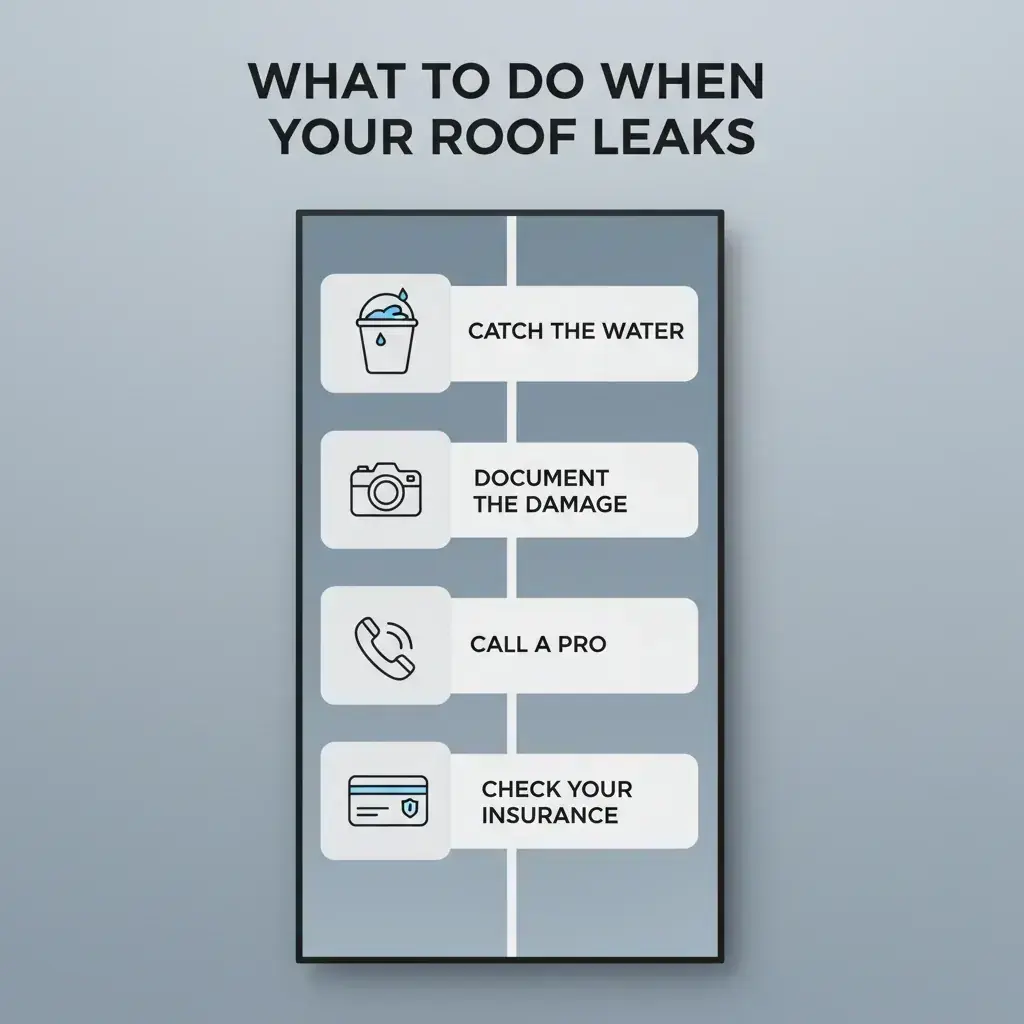
Stay off the wet roof. Wet tile and composition are how people fall.
- Safety. Work from inside. If water is near wiring, shut that circuit. If you smell burning or see sparking, that is an electrician, not a roof question.
- Contain the water. Buckets, towels, a tarp on the floor. A heavy ceiling bulge can be drained with a small hole at the lowest point into a bucket.
- Move valuables. Electronics, paper, fabric.
- Photograph. Interior drips, affected rooms, and any damage you can see from the ground. Keep timestamps.
- Call with facts. Address, one story or two, roof type if you know it, whether water is still coming in. We connect you with a roofer who can give an honest ETA for that part of the county. Drive time to Julian or Valley Center is not the same as central San Diego.
Notify your insurer when you are ready. You do not need a full scope to open a claim. Do not sign an Assignment of Benefits at the door.
Temporary tarping, without invented prices
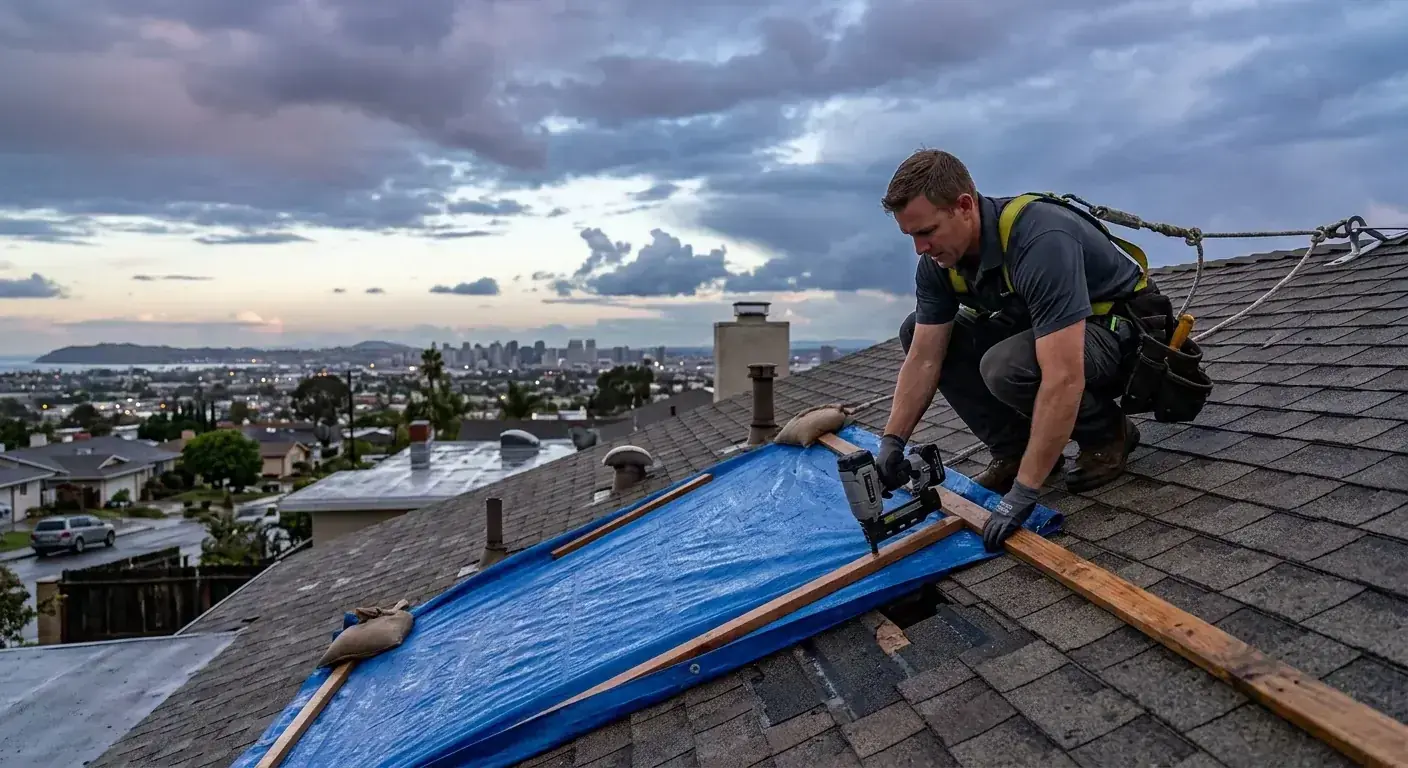
A commercial tarp with wood strapping into the deck is mitigation. Hardware-store blue sheets with bricks fail in wind. After-hours dispatch, trip charges, and whether temporary work is later credited to a permanent repair are the matched roofer’s terms. We will not invent a tarp invoice or a county-wide range. Get those lines in writing.
Ask on the phone:
- Estimated arrival for this address, not a slogan
- Whether they tarp, and how they fasten
- CSLB C-39 number (verify at cslb.ca.gov)
- After-hours or weekend terms, in dollars they will put on paper
- What they photograph for you and for an insurer
- What happens after the storm: inspection, then a written permanent scope
Service page: emergency roof repair. Permanent repair after the opening is closed: roof repair.
Finding a roofer who actually serves this neighborhood
“24/7 roof repair San Diego” on a homepage is advertising. Availability is a live question: who answers, who has a truck, and how far they are from you. Central San Diego is a different drive than coastal North County or East County hills. Anyone promising a fixed response time anywhere in the county is overpromising.
Verify the license yourself. Match the legal name on the proposal to the CSLB record. Ask for recent work in your city, not a county-wide slogan. Hiring process: how to choose a roofing contractor in San Diego.
Permanent repair after the tarp
The tarp is not the repair. After access is safe:
- Full inspection of the system, not only the hole
- Written diagnosis, materials, and exclusions
- Permit responsibility for this jurisdiction
- Insurance paperwork if you filed: photos, scope, change orders. The contractor does not decide coverage
- Cleanup and a named workmanship document from the independent company, not from this referral brand
Wind-rated products are a spec question for later, not an emergency promise: 150 mph wind-rated shingles.
When to call us
Active water, an open roof, or a tree on the cover: call. We match you with a licensed independent local roofer who can accept the job. Call (760) 750-5557.