Water through a ceiling in a winter system is the call. Top Pro Roofing SD is a referral service. We match you with CSLB-licensed C-39 roofers who take emergency tarp work when they can accept it. We do not climb your roof. Call (760) 750-5557.
Do not climb. Wet tile, wet composition, and a two-story eave in Carlsbad or La Mesa are how people fall. Stay inside. Catch the water. Photograph. Call.
What counts as a roofing emergency
Call for emergency response if:
- Water is actively coming through a ceiling during or right after rain
- A tree or large limb is on the roof with visible damage or an active leak
- Wind lifted or tore off a visible section of cover
- Skylight glass is broken and open to weather
- Hail with an active leak (uncommon here, still possible)
- Visible sagging or other structural concern that looks unsafe
It is not an after-hours emergency if:
- A small stain appeared and stopped when the rain stopped
- Missing shingles or tiles, no water in the house
- You found damage and there is no rain in the forecast
- Gutter overflow or exterior damage with no roof opening
After-hours dispatch, trip charges, and whether temporary work is applied later to a permanent repair are the matched roofer’s terms. We will not invent a dispatch fee or a tarp invoice. Get those lines in writing. Non-urgent work: roof repair.
What to do before anyone arrives (from inside)
1. Move what you can
Electronics, paper, fabric, boxes, and anything that soaks. Pull it out of the drip path.
2. Catch the water
Buckets under active drips. A towel in the bucket cuts splash. Empty before they overflow.
3. Kill wet circuits
If water is at a light, outlet, or a smoke detector that looks wet, shut that circuit at the panel. Water on live wiring is worse than a stain. If you smell burning, see sparking, or cannot tell which breaker, that is an electrician, not a roof question.
4. Photograph
Interior damage, wet rooms, affected belongings, and the date. Phone metadata usually holds the time. That helps a claim later.
5. Call with facts, not a climb report
(760) 750-5557. Address, what happened (active leak, tree, wind), whether water is still coming in, stories (one vs two), and roof type if you know it. We connect you with a roofer who can give an honest ETA for that part of the county. Drive time to Julian or Valley Center is not the same as central San Diego. Finding a contractor is the slower vetting guide; tonight is the phone.
What the roofer should do on site
- Safety. Whether the roof is safe to access (wet, steep, damaged structure).
- Photos and a moisture check of the damaged area.
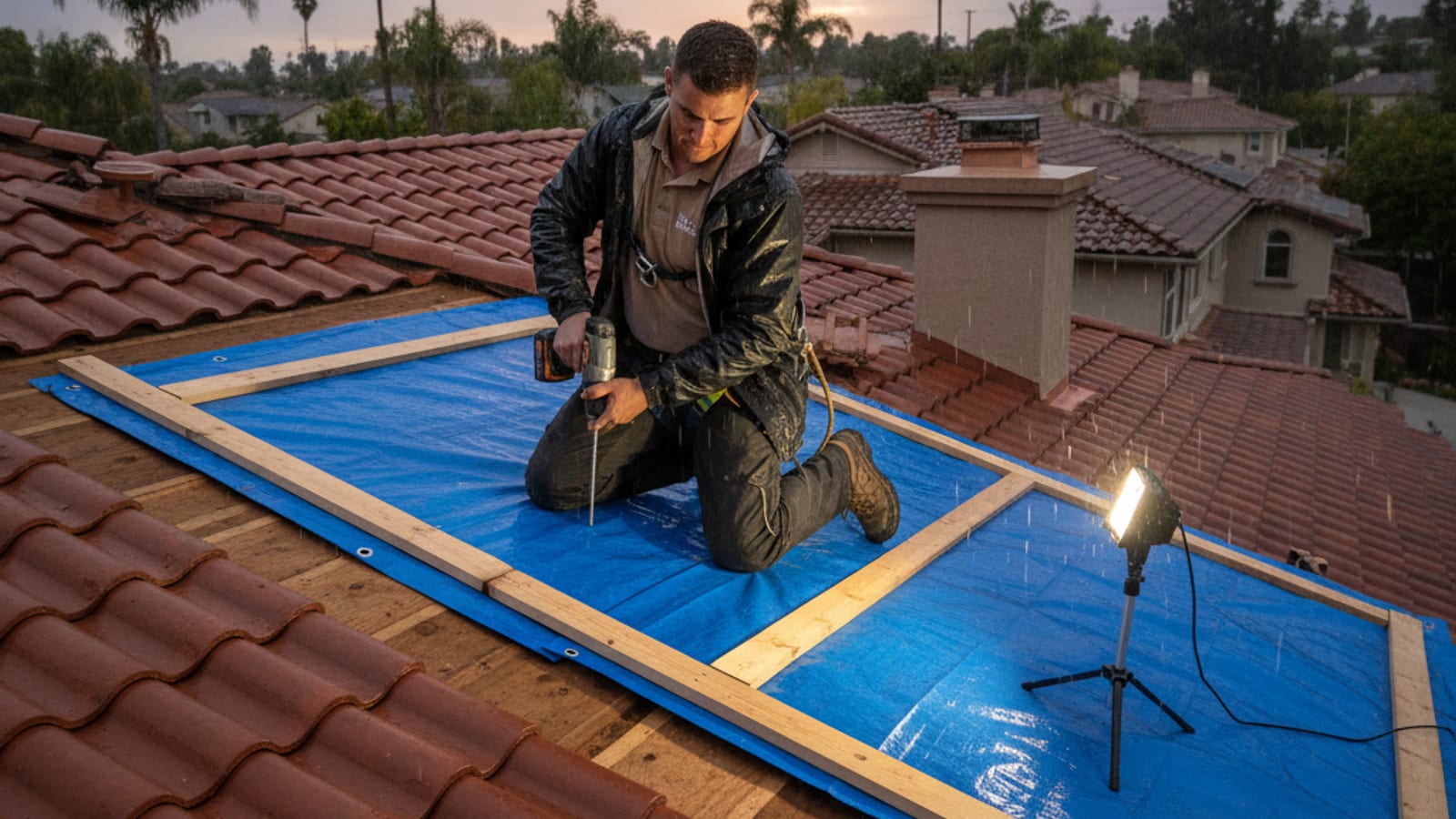
- Tarp over the opening, fastened into the deck with proper strapping, not bricks.
- Interior water. They may point you to a water-damage contractor. That is a separate trade.
- Permanent repair. After the system passes and access is safe, a full roof inspection and a written fix.
On-site time varies with size and weather. Ask when they arrive.
Why hardware-store blue tarps fail
Thin polyethylene, grommets only at corners, little UV package, and a product meant for the ground. Wind shreds the corners. The next gust puts water back in the house.
Commercial roof tarps are heavier, edge-reinforced, UV-stabilized, and fastened with wood 1x4s (or equivalent) screwed into the deck at the right locations. Installed that way, they can last through later storms for weeks, not overnight. That is why the person on the roof should be a C-39 with the right material, not you with a blue sheet and bricks.
Cost (what we will not invent)
We will not publish small, medium, large, or full-roof tarp prices, or claim a tarp “credits to zero” against a later repair. Ask:
- What is on tonight’s invoice
- Whether that amount is applied if you hire the same company for the permanent work
- What the tarp does not cover (interior drywall, contents, mold)
Insurance and mitigation
Read current California Department of Insurance residential claims guidance for temporary-repair and documentation steps after a covered event. Hiring a licensed roofer to tarp can be that step. Climbing yourself is not required. This page is not the policy.
Coverage still depends on cause and the policy. Wear, age, and skipped maintenance are often excluded. Save the invoice. Photograph before and after. Storm claims: storm damage insurance and the California roof insurance claim guide.
Tarp now, or wait for a scheduled repair
- Water through the ceiling right now: tarp. Stay inside. Call.
- Damp spot, rain has stopped: morning call, regular repair unless more rain is already on the doorstep
- Cover damage, no leak, rain in a couple of days: schedule soon, usually regular hours
- Damage, dry forecast for many days: scheduled repair, not an emergency dispatch
We triage on the phone. We do not send a crew.
Frequently asked questions
Does insurance cover emergency roof tarping?
Often as mitigation after a covered event, if you document it. Not a promise. Cause still decides. Save the invoice.
How long does a professional roof tarp last?
A commercial tarp with proper strapping can last weeks through later weather. A blue hardware-store sheet often fails in the next wind. Ask the installer how they fastened it and when they want it replaced.
Can I tarp my own roof during a storm?
No. Do not climb. Wet roofs are slick. Blue tarps tear. Bricks and sandbags are not a fastening system. Stay inside, catch water, shut wet circuits, call a C-39.
Is the tarp billed separate from the repair?
Sometimes. Ask whether temporary work is applied to a later permanent job with the same company. Get it in writing. We do not set that policy.
Service area
We connect homeowners with roofers who take emergency calls across the county when they have capacity: Chula Vista, La Mesa, Carlsbad, El Cajon, Encinitas, and the rest of the service map. Winter systems and Santa Ana wind nights are the busy windows. Roof repair in Chula Vista.
Call (760) 750-5557. You hire the matched roofer. Confirm C-39 status before anyone sets a ladder.