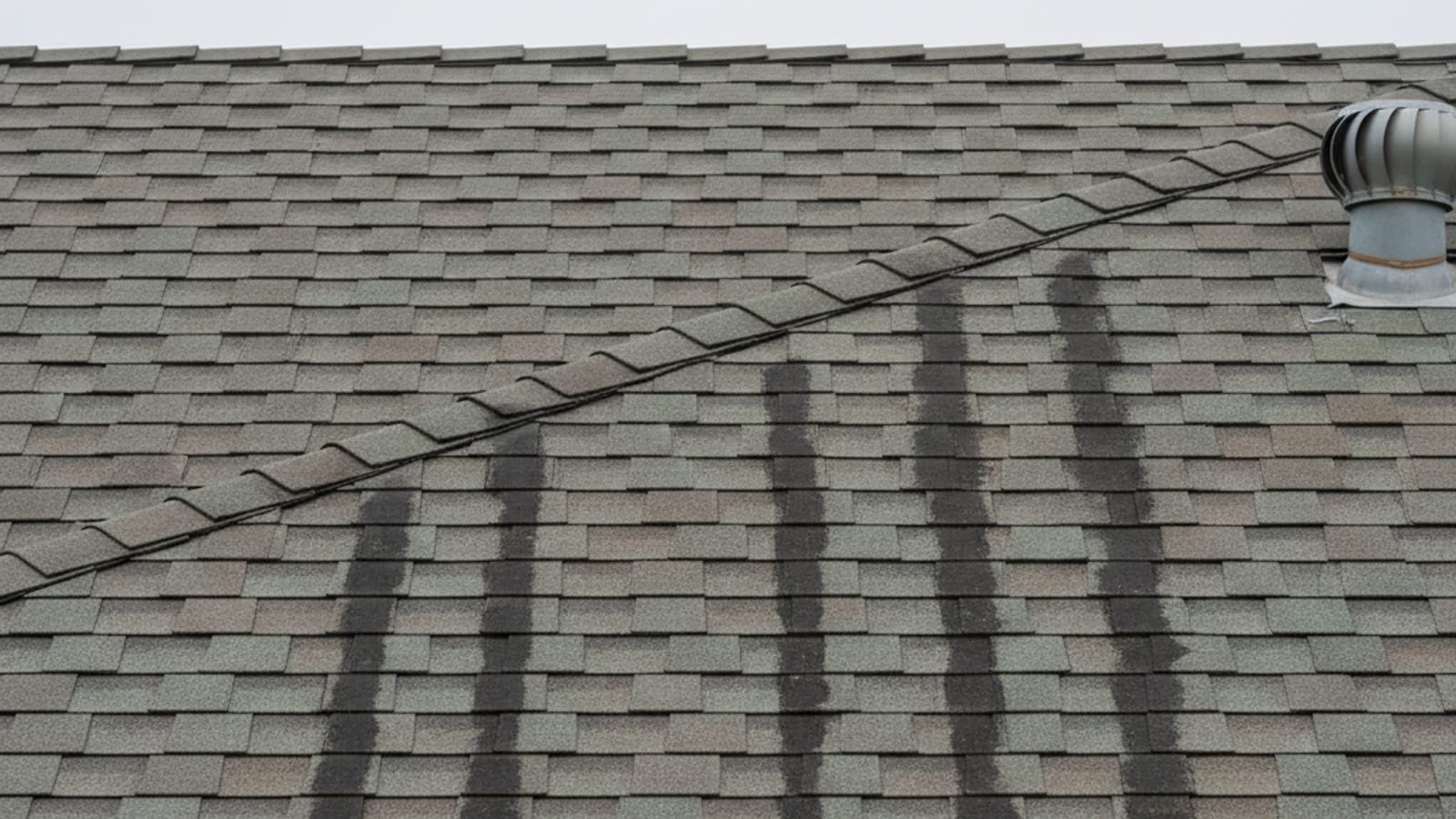
Those dark streaks on Encinitas and Oceanside asphalt roofs are not soot and they are not “just weathering.” They are Gloeocapsa magma, a cyanobacterium that lives on limestone filler in the shingle mat. It holds water, sheds granules sooner, and makes a still-functional roof look neglected to buyers and inspectors.
Top Pro Roofing SD is a referral marketplace. We connect San Diego County homeowners with CSLB-licensed C-39 roofers. We do not pressure-wash roofs, we do not sell a cleaning price list, and we are not an electrician. Call (760) 750-5557. You pay the contractor.
Coastal material context: best roof material for coastal climates. What else eats asphalt here: what deteriorates asphalt shingles in San Diego.
What Gloeocapsa magma is
It is a cyanobacterium (often called blue-green algae). Spores ride the air, land on a damp shingle, and feed on calcium carbonate filler in the mat. The dark pigment is the colony. Marine-layer streets within a few miles of the water (Encinitas, Carlsbad, Oceanside, Del Mar, Imperial Beach) stay wet longer after dew and May gray. That is why half the composition roofs on those blocks look striped from the ridge down.
Inland tracts in Escondido or El Cajon still get it, just slower, unless the plane is shaded by trees.
Why it is not only cosmetic
It shortens shingle life. The colony breaks down the filled asphalt. Granules leave earlier. The sheet gets brittle sooner than a clean neighbor on the same product.
It holds moisture. Colonies stay damp after rain or overnight fog. Wet-dry cycling plus UV ages the shingle and the underlayment under it.
It reads as deferred maintenance. Home inspectors flag heavy streaking. Carriers looking at photos can treat it as neglect even when the nails still hold. Cleaning before a listing or a renewal photo is a practical move, not a miracle repair.
How to remove it without wrecking the roof
Do not pressure-wash. High-pressure water strips the granules that are the UV shield. The roof looks brighter for a week and ages faster than the algae would have.
The usual professional method is low-pressure chemical cleaning: a biocide (often sodium hypochlorite or an oxygen-based cleaner), dwell time, then a gentle rinse. No scrubbing. Pressure stays in garden-hose territory, not a wand on “concrete” mode.
Ask the cleaner, in writing, what they will use, what PSI they will not exceed, and how they will protect plants and stucco below. A C-39 who will re-roof you is not automatically a roof-cleaning specialist. Some roofers subcontract that step. That is fine if both names and licenses are on the paper.
We do not publish a San Diego cleaning invoice range. Size, stories, access, and plant protection change the bid. Get it in writing for this address.
Regrowth on standard shingles in marine air comes back. Budget another clean, or change the product at replacement.
DIY, if you insist
A pump sprayer, diluted pool chlorine mixed to the product label, no scrubbing, short dwell, hose rinse at low pressure. You are on a wet, chemical-slick roof. Landscaping below can burn. Foot traffic on brittle shingles creates the leaks you were trying to avoid. Most homeowners are better off hiring someone who does this weekly.
Algae-resistant shingles at replacement
When the roof is due for replacement, ask the C-39 for copper-granule algae-resistant lines. Common labels:
- GAF StainGuard Plus (algae-related warranty length is on the current spec sheet, not on this blog)
- Owens Corning StreakGuard on Duration-family products
- CertainTeed StreakFighter
Copper granules leach slowly in rain and discourage the colony. Warranties are manufacturer documents. Read the one that ships with the bundle, including coastal and cleaning exclusions.
The extra cost versus a non-AR architectural shingle is a line on the bid, not a cents-per-foot figure we invent here. For coastal asphalt, AR is the default ask.
Zinc or copper strips
Strips near the ridge oxidize and rinse downhill. They only treat the plane below the strip. They are visible. They fade as the metal weathers. They can help on a roof you are keeping. They are not a substitute for AR shingles on a tear-off.
If you still see original zinc strips on a 1970s-1980s tract house, look at the electrical equipment in the same visit. Federal Pacific (Stab-Lok) and Zinsco panels show up in that vintage. Ask your carrier and a C-10 electrician what they want in writing. This brand will not restate an underwriting rule. A C-39 cannot “fix” a panel. Do not mix those licenses.
How often to clean
Coastal, heavy streaking, keeping the existing roof: on the schedule the inspector names, or sooner if north slopes stay wet.
Inland, light film: only when it is actually there. Do not buy an annual wash on a baked Mira Mesa plane that barely stains.
A roof inspection tells you whether you still have granules enough to clean, or whether you are polishing a roof that needs replacement.
Will it come back?
Yes on standard shingles. Faster on shaded, foggy planes. Slower inland in full sun. AR shingles stretch the interval if the copper is still doing its job. Ask the inspector what they see, not a year count from this page. Cleaning is maintenance. It is not a new roof.
Frequently asked questions
Can I pressure wash algae off my roof?
No. You will strip granules. Use low-pressure chemical cleaning, or leave it and plan replacement.
How much does removal cost?
It depends on squares, stories, access, and plant protection. We do not quote cleaning from this site. A specialist or your C-39 should bid this house.
Do algae-resistant shingles work?
Copper-granule products slow the colony. They do not make Encinitas dry. Read the manufacturer’s algae warranty and what voids it (including harsh washing).
Will algae drop my sale price?
Inspectors and buyers treat heavy streaking as a punch-list item. Cleaning is cheaper than arguing about remaining life in escrow. It does not repair a roof that is already at the end of its granules.
Service area
We connect homeowners with C-39s (and, when needed, specialty cleaners those roofers use) across San Diego County. Demand is highest on marine-layer streets in Encinitas, Carlsbad, Oceanside, Del Mar, and Imperial Beach.
Remaining life by material: how long roofs last in San Diego. If cleaning shows bald spots or open laps: repair vs replacement.
Call (760) 750-5557 or see asphalt shingle roofing.