The calendar has two clocks. Permits, material lead time, and crew scheduling happen before anyone tears off a shingle. On-site work for a typical San Diego County house is often a few working days once the crew starts, longer for tile, steep roofs, extra layers, or bad decking. Nobody can quote your house from this page.
Top Pro Roofing SD refers you to independent C-39 roofers. We do not run the crew or set their schedule. Ask for a written sequence for your address. For age and replacement pressure, see whether a 20-year-old roof is too old.
The short answer: on-site vs the whole project
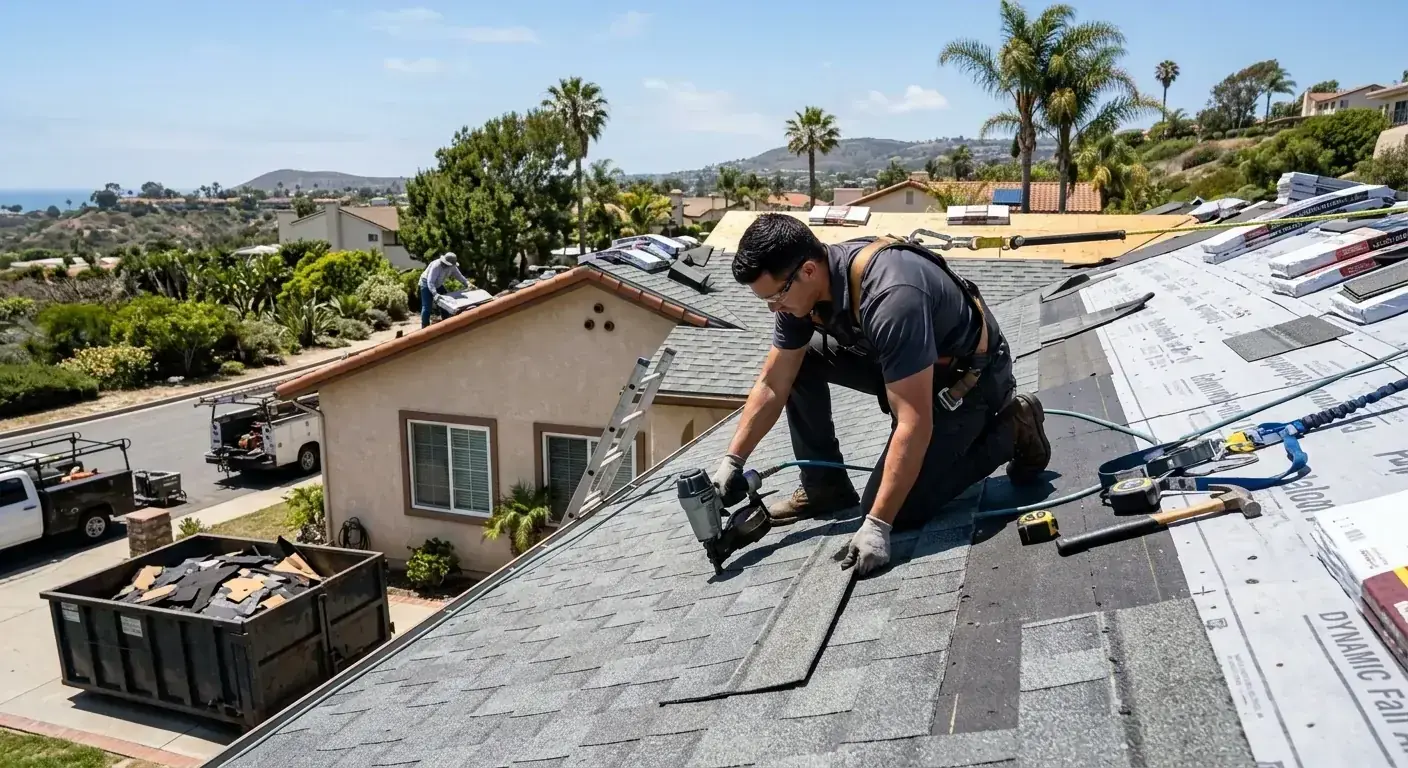
Simple asphalt-shingle tear-offs on modest one-story homes can finish in a day or two of on-site work when the deck is sound and the weather holds. Larger plans, multiple hips and valleys, tile, metal, or hidden rot stretch that. The overall project, from first visit to closed permit, is longer because review and inspections sit outside the tear-off days.
Treat any “we always finish in N days” pitch as marketing until it is written for your roof. A good written plan names tear-off, dry-in, material, cleanup, and who calls the inspector.
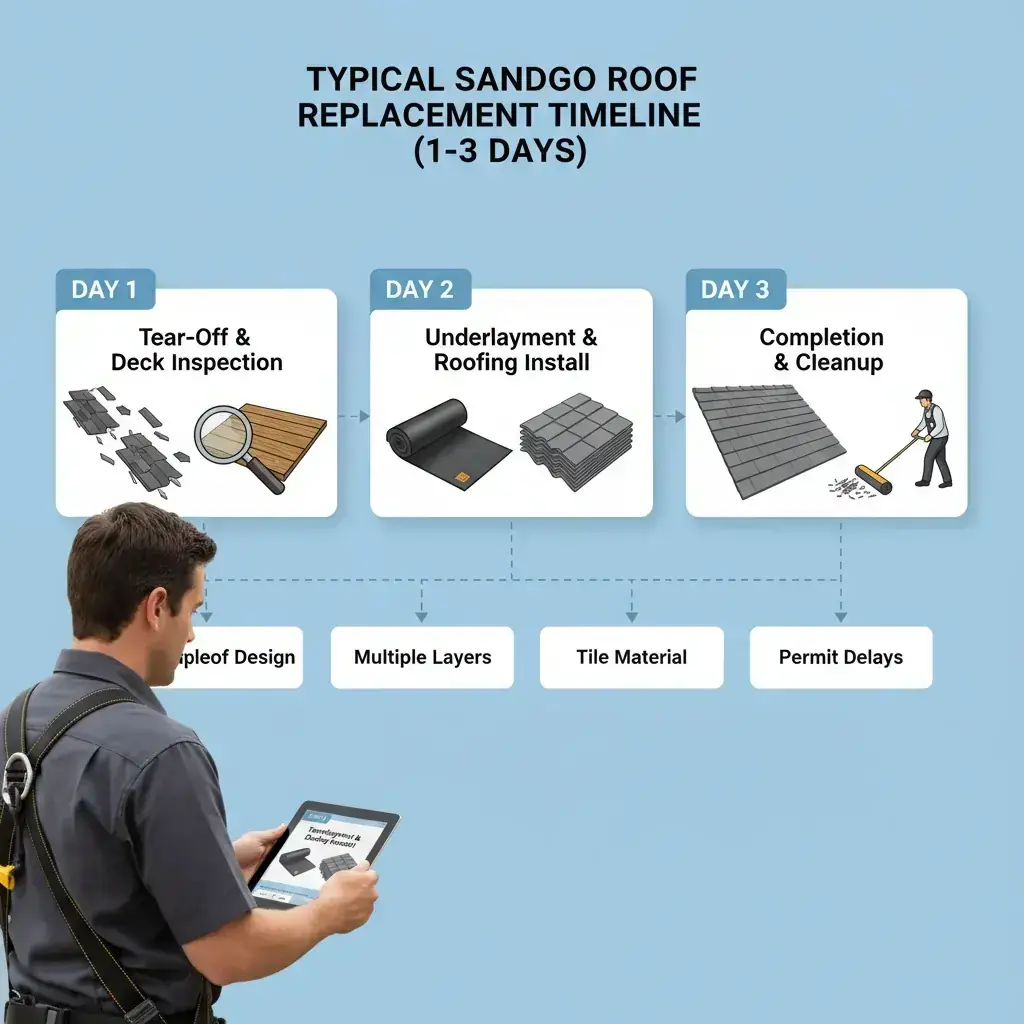
What usually happens once the crew is there
Sequence is more useful than a fake day-by-day promise. Weather and deck findings move the hours.
Site prep, tear-off, and deck look
The crew sets fall protection, covers plants and walkways, and keeps nails off driveways. Then they strip the old covering to the deck. That phase is loud. Plan to be out or upstairs-light if you work from home.
Once the field is open, they look for rotten plywood, wet sheathing, and failed flashing substrates. In the City of San Diego, start with Information Bulletin 123. Read the current bulletin. Do not treat this page as the trigger list. Other cities and the unincorporated county write their own rules. Your permit packet should match the AHJ on the address.
If they find rot, they should stop and show you before they cover it. That conversation is why some jobs spill into extra days.
Dry-in, then the new covering
Dry-in means the deck is under underlayment and the house can take a night of weather. New flashing at chimneys, skylights, walls, and valleys belongs in this window, not as an afterthought on the last afternoon.
Then the specified covering goes on: shingles in courses, tile unit by unit, or metal panels by system. Manufacturer laps and local code, not speed, should set the pace. Tile almost always takes more field time than shingles on the same footprint. Cost context lives in 2026 tile roof replacement cost in San Diego. Scope lives on roof replacement.
Finish, magnet sweep, and inspection
Ridge, hips, ventilation, and edge metal close the system. Cleanup is not optional: debris off the lot, several magnet passes for nails, walkways cleared. Then the city or county inspector, if the permit required one, has to sign off. That visit can be the same week or later, depending on the building department, not the crew’s optimism.
What actually stretches the on-site days
Size and geometry. More squares and more valleys mean more cuts and more flashing. A simple gable in Kearny Mesa is not a La Jolla turret.
Pitch. Steep work needs more setup and slower movement. That is safety, not padding.
Layers. Extra shingle layers add tear-off time and dumpster volume. Ask the AHJ and the matched C-39 whether existing layers have to come off. For City of San Diego jobs, read the current IB 123.
Material. Asphalt shingle work is usually the fastest field install. Clay and concrete tile is slower per square. Metal time depends on panel type and flashing quality. See metal vs shingle in San Diego.
Hidden wood. Deck and rafter repairs are the honest delay. See roof decking replacement.
Weather and permits in this county
San Diego is easier than a snow market, not weather-proof. Winter and early-spring rain can stop open-deck work. Santa Ana winds make tear-off unsafe. Extreme heat slows crews and some adhesives. Confirm current climate normals on NOAA’s published tables if you need a number. That is why a January start and a July start are different calendars.
Permits are local. The City of San Diego, Carlsbad, Chula Vista, Oceanside, and the unincorporated county do not share one queue. A reroof that needs a permit cannot start until that city issues it. Inspections close it. The C-39 on the job should pull the permit. You should still look them up at CSLB license check.
How to prep the house without getting on the roof
Stay off the roof. Prep is indoors and in the yard.
Inside: take fragile frames off upstairs walls. Cover attic stored goods from below if you use that space. Expect tear-off noise.
Outside: move furniture, grills, and toys away from the walls. Trim branches that interfere with access from the ground, or hire a tree service. Keep the driveway open for debris and delivery. Keep kids and pets out of the work zone.
Do not pre-walk the field “to see the old shingles.” That is how homeowners get hurt and how tile gets extra cracks before the crew arrives.
Cleanup and the last official look
A finished roof with nails in the lawn is not finished. Magnetic sweeps, hauled debris, and a walk-around with the project lead are part of the job. Municipal inspection, when required, is separate from any extra quality walk the roofer offers. We do not certify roofs. If you want a third-party look, that is a separate inspection conversation: roof inspection.
When to call us
If you need a realistic sequence for a San Diego County house, a C-39 who will write it down is the next step. Call (760) 750-5557. We will connect you with a vetted local roofer. You contract with them directly. Ask for permit responsibility, dry-in plan, and what happens if they open the deck and find rot.