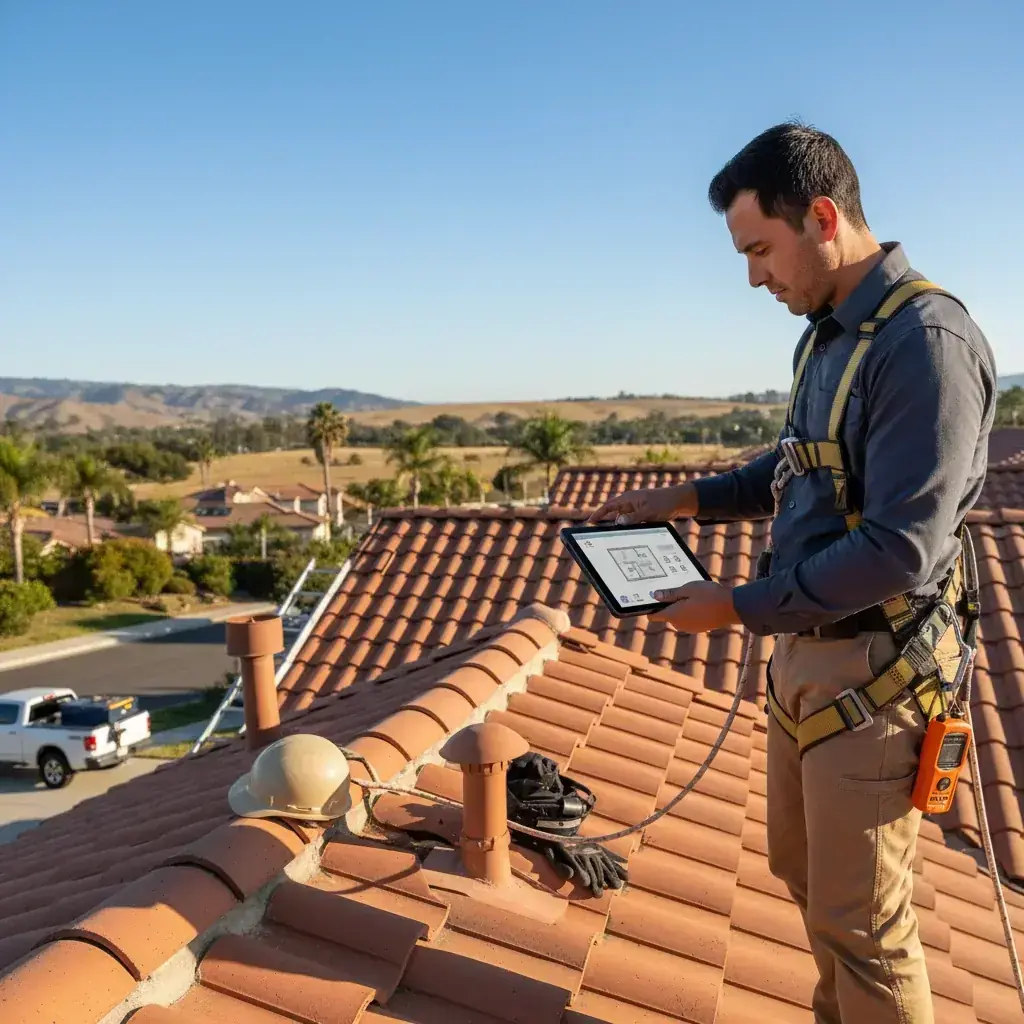
Physically, a 20-year-old roof in San Diego can be fine, borderline, or past due. It depends on what is on top and where you live. Coastal clay tile is often still middle-aged. Coastal asphalt is often past prime. Inland metal with intact finish still has years left. A 20-year roof with leaks, bald shingles, or a chalky field is done.
Financially, many California carriers treat a 20- to 25-year roof as a renewal problem, an Actual Cash Value flag, or a certification demand. That is a 2026 market pattern, not a single published cutoff. Ask your agent. Read your declarations page.
For resale, a 20-year roof is a negotiation item. FHA and VA appraisers look at remaining useful life. Buyers’ agents ask for certifications. Conventional lenders often defer to the appraiser.
If you are staying and the roof passes a real inspection, you can hold. If you are selling, refinancing, or shopping insurance, plan around the cliff.
Top Pro Roofing SD refers licensed roofers. We do not inspect or replace roofs ourselves. Call (760) 750-5557.
National “20 to 30 years for asphalt” guides skip the three things that decide it here: material, microclimate, and which decision you are making.
Three questions, three answers
Physical. Does it still shed water through the next atmospheric river? Is the underlayment intact? Are flashings sealed? That is an inspection. Material, microclimate, and maintenance decide it.
Insurance. Will the carrier renew? Will a claim pay replacement cost or depreciated value? Will a new carrier quote? That is a California market question. See insurance non-renewal over roof age.
Resale. Will a buyer’s agent flag it? Will an FHA, VA, or conventional appraiser require certification or replacement? Will the deal survive inspection? Loan type and the buyer’s risk tolerance decide that.
A 20-year concrete tile roof in Carlsbad can be physically sound, a problem for a new policy, and a closing credit all at once. Same roof. Three verdicts.
Physical age: material and microclimate
San Diego County is not one climate. The coastal strip from Imperial Beach to Oceanside lives in marine fog and salt. Inland valleys from El Cajon to Escondido take summer UV. East County from Alpine toward Julian sees freeze cycles at elevation. Each zone ages roofs on a different clock.
Typical pattern at year 20, not a warranty:
| Material | What year 20 usually means here |
|---|---|
| 3-tab asphalt | Past due in every microclimate |
| Architectural asphalt | Borderline on the coast, often past due inland |
| Longer-warranty asphalt | Inspection decides; UV still shortens real life vs the label |
| Concrete tile | Tile often fine; felt underlayment is the clock |
| Clay tile | Tile often barely middle-aged; underlayment still ages |
| Standing seam metal | Mid-life inland if the finish and fasteners are intact; closer to past prime in salt air |
| TPO or similar single-ply | Past prime on many flats |
| Modified bitumen | Borderline to past due without recent maintenance |
| Built-up | Borderline |
Asphalt in San Diego rarely lives the brochure. Warranties say 25, 30, or 50 years. Real life is shorter because UV is harder here than the test deck, and the last decade of a warranty is often prorated to almost nothing. Roofs from the mid-2000s often show granule loss, curled tabs, and exposed mat.
Tile at 20 is two parts. Concrete and clay last decades. The sheet under them does not. Standard felt is often the 25- to 30-year problem, faster inland. At year 20 many tile roofs are still fine. By the mid-20s the underlayment is the issue. See common causes of tile roof leaks.
Coastal salt hits metal at edges and fasteners, not as a single percent off a catalog life. A standing-seam roof in Poway and one in Cardiff are not the same inspection. More in how long a roof lasts in San Diego.
The curb view misses the failure
Granule loss. From the street the field can still look like shingles. In the gutter you see grit. On the roof the bald patches are obvious.
Tile underlayment. The field can look perfect while the sheet is cooked. The first indoor stain is often at a wall or a pipe, months after the sheet started failing.
Flashings. Chimneys, skylights, walls, and pipe jacks often fail before the field. Chimney flashing is a common year-15 to year-20 item.
Sagging deck. Moisture from a slow leak shows in the attic before it shows from the street.
A year-20 inspection means a licensed roofer on the roof, in the attic, and on the ground. Not a drive-by. Verify the C-39 at the CSLB license check.
Insurance: age as an underwriting tool
A sound 20-year roof can still be a policy problem. After the 2022-2024 California homeowners market squeeze, carriers still writing here often use roof age and aerial or drone condition as a clean reason to non-renew, restrict, or switch the roof line to Actual Cash Value. The California Department of Insurance explains what carriers may do. Your declarations page is the document that matters.
Carriers do not always publish a single age cliff. Two patterns show up often:
- New policies on 20-plus-year asphalt often need a current certification, or they are declined.
- Existing policies get reinspection. The letter cites age or condition, not claims history.
RCV vs ACV. Replacement Cost Value pays to replace with new materials, subject to the rest of the policy. Actual Cash Value pays depreciated value. On an aged roof that gap is the whole fight. Endorsements sometimes appear quietly at renewal: “Roof: ACV,” “Roof Surface: Actual Cash Value Loss Settlement,” or a cosmetic-damage exclusion. Read the dec page every year.
We will not invent claim payouts or premium math. Run that with your agent and a written roof bid. Related: does homeowners insurance cover roof leaks and does insurance cover roof replacement.
The hold-vs-replace question turns on leak history, visible wear, whether you still have RCV, and whether you expect to file. A sound roof with no claims and RCV can be the cheaper hold. A roof with leaks, bald shingles, or an ACV endorsement is the worse hold.
Resale and remaining useful life
The HUD Single Family Housing Policy Handbook (4000.1) and VA Pamphlet 26-7 both require a roof with remaining useful life and no leaks. Neither sets a hard age cap. Appraisers in this market are conservative around year 20. A “subject to” repair note can stop funding until work is done.
| Loan type | Typical roof filter |
|---|---|
| FHA | Remaining useful life (often discussed as at least two years) and weather-tight |
| VA | Weather-tight, free of leaks |
| USDA | Similar visible-condition standard |
| Conventional | Lender usually follows the appraiser |
| Cash | Negotiation only |
A 20-year asphalt roof on an FHA deal often triggers a certification from a licensed roofer. Many crews will not certify aged asphalt for a long remaining life. Tile at 20 often photographs better. The underlayment question still shows up in escrow.
A certification is a written remaining-life statement, not a full inspection report. The roofer is putting a license on it. Price belongs on the quote. If they will not certify, the buyer can walk, demand replacement, or ask for a credit.
When holding can make sense
- Coastal clay tile, intact underlayment, no leak history, you are staying several years
- Standing seam more than a mile from the coast, intact finish, no fastener corrosion
- Longer-warranty asphalt on the coast with good attic ventilation, no granule loss, and a passing inspection
- Modified bitumen with a current surface in good shape, no ponding, recent maintenance
- You are not selling, not refinancing, not shopping insurance, and the policy is still RCV
Then a year-20 inspection plus flashing and gutter work can be the plan. See annual roof maintenance.
When replacement is the cleaner move
- Coastal asphalt with granule loss, curled tabs, or any prior leak
- Inland 3-tab or tired architectural shingle with UV damage
- Tile with felt and an active leak (field patches rarely beat a lift-and-relay)
- Single-ply past its prime with seam or ponding issues
- Any 20-plus roof with prior roof claims
- You plan to sell or refinance in the next few years
- You already have an ACV endorsement or a carrier inspection notice
Pricing belongs on bids, not this page. Start with how much roofing costs in San Diego and asphalt shingle replacement.
Five checks before you decide
- Licensed inspection, roof plus attic and gutters. Not a curb glance.
- Attic on a sunny day. Daylight at penetrations, stains on rafters or insulation, mold or efflorescence on the deck underside.
- Gutters on asphalt. A thin film of grit is normal. Piles of black granules after year 18 are not.
- Declarations page. Ask the agent: roof-loss settlement type, any ACV endorsement, and how the carrier treats age at renewal.
- If you might sell. Ask a local agent what nearby deals did with certifications, credits, or replacements.
Get a matched inspection
The first useful move at year 20 is a licensed local roofer who knows coastal vs inland roofs and will put remaining life in writing.
Call (760) 750-5557 or contact us. We will connect you. If replacement is the call, see roof replacement and best time to replace. If you only need eyes on the roof, see roof inspection. Warning signs: signs you need a new roof.
FAQ
Will insurance drop me at year 20?
It can. Many carriers use the 20- to 25-year window, often after a reinspection, not on the birthday of the roof. They may also switch the roof line to ACV. Read the dec page. Do not treat a named carrier list on a blog as your underwriting file.
Does a 20-year roof hurt resale in San Diego?
Asphalt almost always becomes a certification or credit conversation. Tile photographs better and still draws underlayment questions. Cash buyers can accept as-is. We will not invent a typical credit amount.
Will insurance pay a repair on a 20-year roof?
Sudden accidental damage can be a claim. Wear, age, and maintenance usually are not. ACV vs RCV still changes the check. The fight is often “sudden” vs “already worn.”
Can I get an FHA loan on a 20-year roof?
Possibly. FHA does not set a hard age cap. It wants remaining useful life and no leaks. An appraiser flag can force repair or replacement before closing. Tile in good condition often fares better than tired asphalt.
How do I stretch a 20-year roof?
Annual inspection, flashing work before the field fails, and attic ventilation on asphalt. Tile: plan underlayment (lift and relay) when the sheet is the problem. Flat: a recoat only when the membrane still qualifies for one.
When does too old become hard to insure?
For asphalt, many standard-market quotes get difficult in the mid-20s. Tile often later, still not forever. The California FAIR Plan is the residual market; a Difference in Conditions wrap is a separate product. Costs vary. Confirm with a broker, not a blog multiple.
Is it worth replacing if I am not selling?
If the roof is sound, still RCV, no leak history, holding can be rational. If you have ACV, prior leaks, granule loss, or a reinspection notice, replacing while you still control the timeline is often cleaner than a surprise claim. Get both a roof report and your agent’s written coverage type before you decide.