A modified bitumen proposal can look like one line: “mod-bit, two ply, torch.” The roof underneath decides whether that is a recover, a tear-off, or a drain project with a membrane attached. San Diego County owners need those conditions written down before they compare “mod-bit” to TPO.
Top Pro Roofing SD does not manufacture or install roofing. We connect property owners with licensed, independent local roofing professionals. The matched roofer evaluates the roof, recommends the assembly, and performs the contracted work. Call (760) 750-5557. We will not invent a square price.
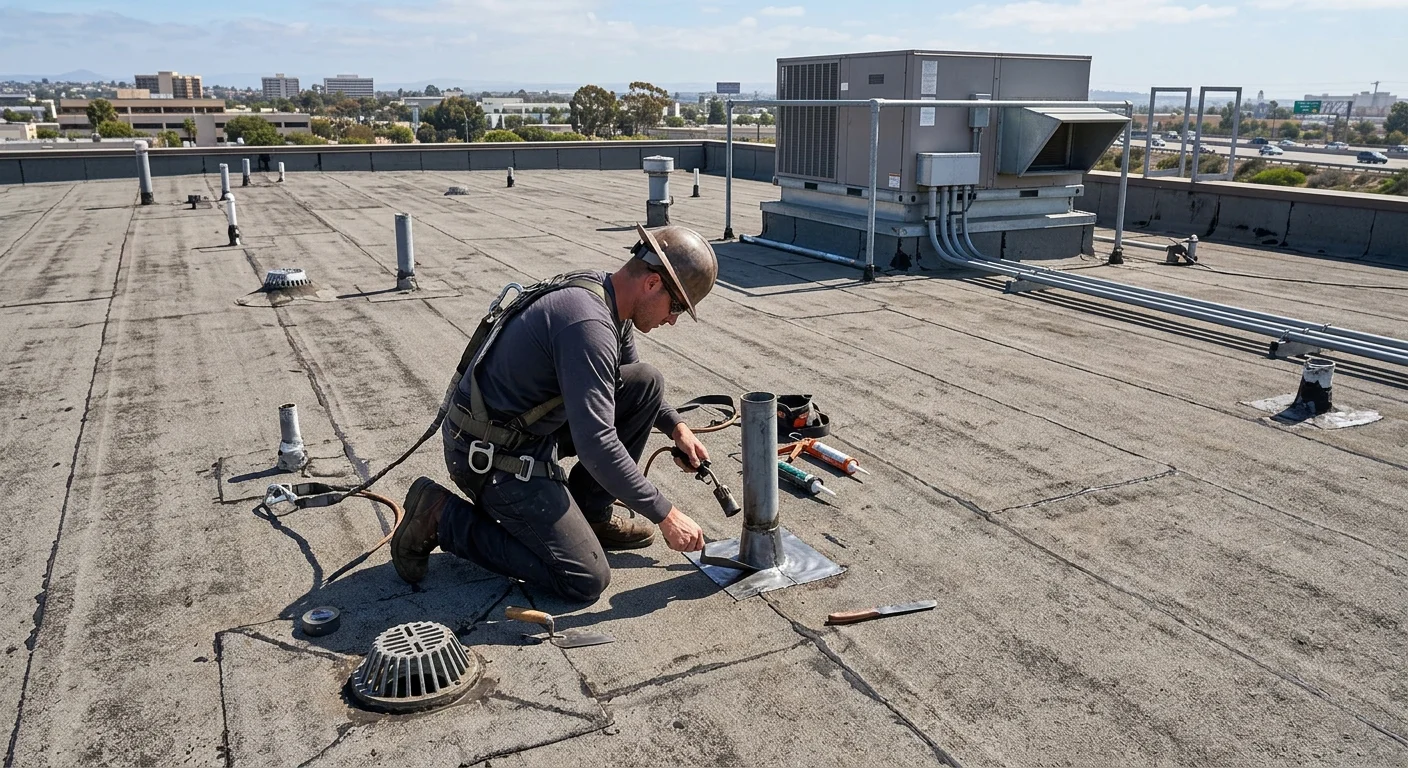
What modified bitumen roofing means
Modified bitumen is an asphalt membrane with polymer added so the sheet flexes instead of going brittle. Two common families:
- SBS (styrene-butadiene-styrene): more rubber-like. Often specified where the roof moves and where a cold-adhesive or torch cap is in the manufacturer’s details.
- APP (atactic polypropylene): more plastic-like. Often associated with torch application. Confirm the SKU. The letters on a bid are not a complete spec.
A “mod-bit roof” is still an assembly: deck, vapor/retarder if used, insulation, cover board if used, base sheet, cap sheet, and every flashing. The name of the chemistry does not tell you whether the existing roof stays, whether wet insulation comes out, or how drains are rebuilt.
Treat the label as the start of a specification. The proposal should name manufacturer and exact product, every layer, and how existing coverings are handled. Two bids that both say “modified bitumen” can be different jobs: one with deck investigation and scupper work, another that leaves those as extras.
Ask which documents control: current data sheets, published details, and the written project spec. If a salesperson uses a family name that does not appear on those sheets, ask for the SKU.
Membrane vocabulary: membrane roofing guide. Head-to-head: TPO vs modified bitumen.
Which roof conditions need inspection first
A material decision follows an inspection of this low-slope roof. Record what is visible, what is concealed, and what needs cores or a moisture survey. Photos should map to roof areas, not a gallery of random close-ups.
Ask for notes on:
- Deck type (wood, concrete, metal) and any soft spots
- Existing coverings and how many layers
- Edges, parapets, and wall flashings
- Drains, scuppers, overflows, and dirt rings from ponding
- Equipment curbs, pipes, skylights, and other penetrations
- Interior stains matched to exterior zones when access allows
Application method matters here. Torch work needs fire watch, combustible-deck precautions, and a crew that actually holds that method in their procedures. Cold-applied and self-adhered systems exist for buildings where open flame is a poor idea. The product bulletin, not a habit, should pick the method.
Jurisdiction. For City of San Diego parcels, read current Information Bulletin 123. Ask the AHJ whether this covering renewal needs a permit. Do not treat this blog as the exemption list or the layer-count rule.
Those are City of San Diego rules. Unincorporated county and other cities have their own handouts. Confirm with the property’s permitting authority before you approve a recover vs tear-off. We will not invent a countywide exemption.
How seams, drains, and penetrations shape the plan
The field is the easy part. Seams, drains, curbs, pipes, walls, and edges leak first.
Start with a roof plan or marked photos: drains, scuppers, overflows, parapets, curbs, vents, skylights. The proposal should say what happens at each.
Seams. Layout should follow roof geometry and the manufacturer’s current lap details. End laps, side laps, and torch vs adhesive are not interchangeable across SKUs. If a repair uses a different detail, get that detail in writing.
Drains. Document water paths and standing-water marks. Ask whether the bid changes drain bodies, clamping rings, or nearby taper. If drainage needs another trade or a designer, the proposal should say so. Coating is not a substitute for slope. Ponding water.
Penetrations. Count pipes, curbs, and vents. A lump-sum “flashings” line hides a missed curb. Quantities and locations belong in the bid wherever the roof can be inspected safely.
San Diego microclimates beat a countywide story. NOAA normals for Lindbergh Field are not El Cajon or Julian. Coastal fog and salt stress flashings. Inland heat cooks dark cap sheets. The matched roofer evaluates the actual property. Service path: flat and low-slope roofing.
How it differs from a TPO proposal
Compare both options against the same inspection record: deck, existing coverings, insulation, drainage, edges, curbs, penetrations.
Do not compare only the membrane names. Check whether both bids include the same known work. One may list drain details and deck allowances. Another may leave them as “as needed.” That gap is larger than SBS vs TPO branding.
Repair culture differs. An asphalt cap often patches with materials a C-39 already carries. A welded TPO sheet needs compatible membrane and a welder. Neither is “better” in the abstract. The inspection, the details, and the documents decide.
Energy-code review belongs in the comparison when the work is a recover or reroof that triggers Title 24. San Diego-Lindbergh is California Climate Zone 7; inland parcels can sit in other CEC zones. Low-slope cool-roof criteria in the current cycle are published by the California Energy Commission. Do not infer compliance from a white granule or a product family. Ask for the CRRC listing for the exact cap or coating in the bid. Local walkthrough: cool roof Title 24.
What product documents should confirm
Request a package tied to this proposal, not a generic brochure.
- Manufacturer, product name, current data sheet
- Full component list: field, seams, edges, drains, walls, curbs, penetrations
- Installation details for those locations, plus how non-standard conditions get approved
- For cool-roof jobs: the rating documents that apply to this SKU
- Warranty: provider, covered work or materials, exclusions (ponding, ponding-adjacent, owner maintenance), claim process
Top Pro Roofing SD does not provide warranties. Any warranty comes from the party named in the final contract or product documents.
California’s C-39 classification covers roofing and membrane work. Owners can check status through the CSLB license lookup. Broader property work: commercial roofing. The independent roofer remains responsible for evaluation, proposal, permits, and contracted work.
When to call us
Call when a low-slope roof needs inspection before you choose a membrane, plan drain work, or compare proposals. Call (760) 750-5557 and we will connect you with a licensed local roofer. You contract with them.