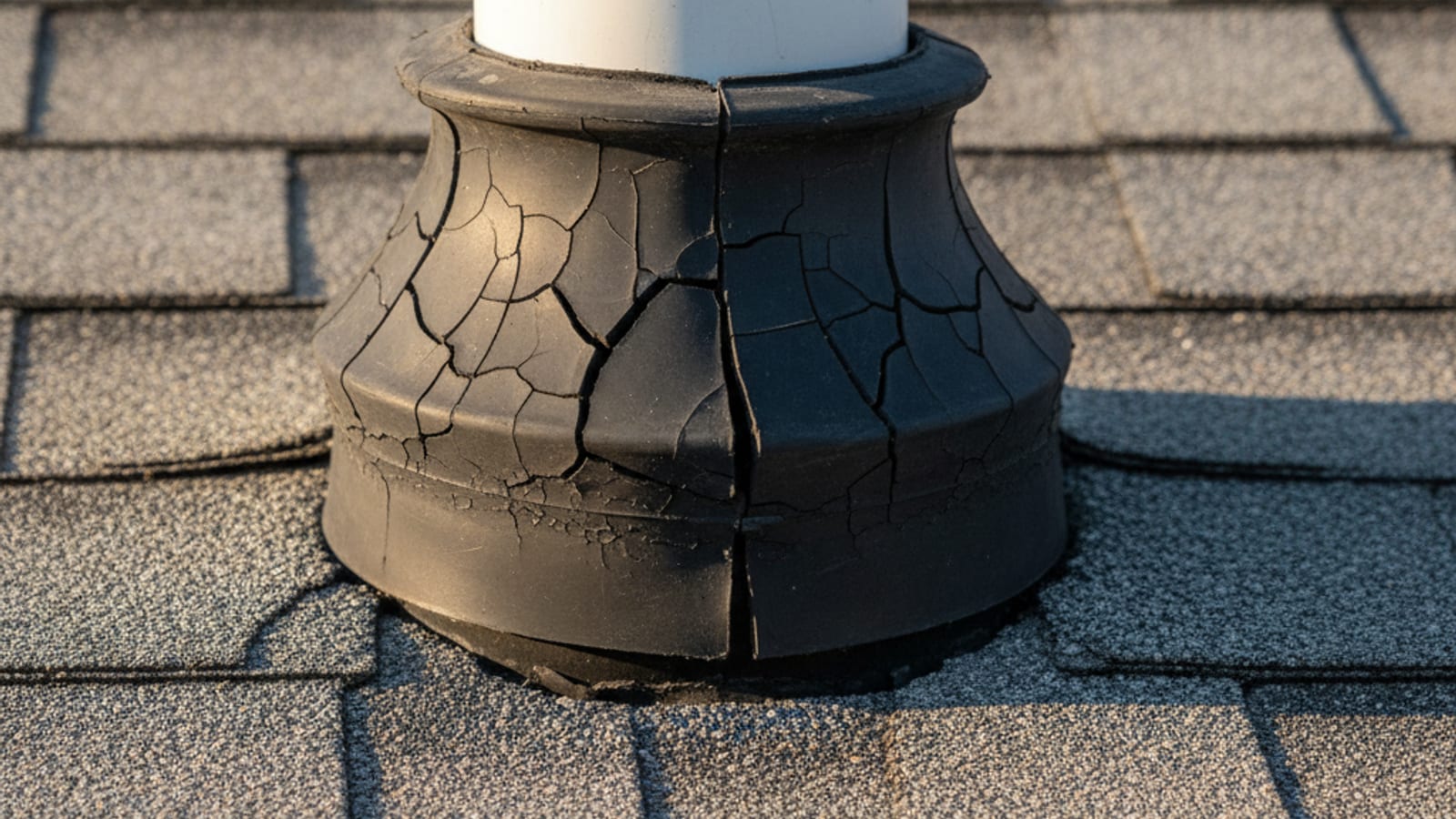
A stain on the ceiling under a bathroom, kitchen, or laundry is often a pipe boot, not a mystery hole in the field. Top Pro Roofing SD is a referral service. We connect San Diego County homeowners with CSLB-licensed C-39 roofers. We do not replace boots ourselves. Call (760) 750-5557.
Do not climb to confirm it. Use binoculars or phone zoom from the ground. A wet roof in El Cajon or a steep tile field in Encinitas is a fall and a second leak waiting to happen.
What a pipe boot is
Every bath, kitchen sink, laundry, and water heater needs a plumbing vent that exits the roof. You see those as short PVC or cast-iron pipes above the cover.
The pipe boot (vent boot, plumbing-vent flashing) seals the gap between that pipe and the roof. It has two parts:
- A metal base flange that laps under the cover uphill and over it downhill
- A rubber or lead collar that hugs the pipe
The collar is what fails first in this sun.
Why rubber boots age out in San Diego
Standard EPDM rubber sits in UV all year. Inland and East County (El Cajon, Santee, Escondido) cook it. Coastal marine layer plus salt in Pacific Beach, Ocean Beach, and Coronado ages gaskets and nearby galvanized metal.
A typical pattern, not a warranty:
- Early years: flexible, tight to the pipe
- Mid life: surface checks, still mostly sealing in light weather
- Later years: visible splits, leaks in a real rain, then in any wet weather
When the rubber splits, water runs down the outside of the vent, into the attic, and shows up on the ceiling hours or a day later. That delay is why people blame the last storm instead of the boot.
Lead collars last much longer in this climate and hold up better near salt air than a cheap rubber ring. Whether a lead upgrade is worth it on your roof is a quote question, not a number we invent. Ask the matched roofer to name rubber vs lead on the written scope.
A typical house has several vents. If one rubber boot has opened at mid-life or later, the others are the same age. It is reasonable to ask for all of them in one visit so you are not repeating access. That is logistics, not a rate card.
Schedule a roof inspection if the roof is older and the boots have never been changed. Coastal metal questions: will salt damage a metal roof.
How to spot it from the ground
From the yard:
- Cracks in the rubber collar
- A gap where the collar no longer hugs the pipe
- Daylight between collar and pipe on a clear day
- Dark tracking on the cover just below the boot
Any of those can leak before the stain shows.
From inside: stains or damp drywall under (or slightly offset from) a wet room. Offset happens when water follows a rafter before it drips.
What replacement actually involves
A C-39 lifts the uphill courses, swaps the boot, nails the flange to the deck, and reseats the cover so water sheds over the flange. Caulk smeared on a cracked collar is not that detail. It fails in this UV.
On asphalt shingles, the risk is broken tabs if someone yanks courses. On tile, the risk is cracked neighbors. Stay off both.
We do not publish a per-boot price, an “additional boot” discount, or a supply-house part cost. Access, tile vs shingle, lead vs rubber, and whether the deck is still sound change the invoice. Get a written source and material line.
Manufacturer warranties can be sensitive to unlicensed work. Insurance can argue about a leak that traces to a homeowner patch. Hire the C-39. Check them at cslb.ca.gov.
Other failures found on the same visit
While the roofer is at the vents, they often see:
- Bathroom or range exhaust caps with the same rubber aging
- Dryer roof caps
- An electrical mast boot at the weatherhead (live service: that is an electrician, not a roof patch)
- Chimney cricket or saddle problems on the same storm
- Valley metal lifting at the eave
Ask them to photograph extras. You decide what to add. Flashing and vent repair.
Time on site is usually a short visit for one boot, longer if several vents and tile lift are involved. No invented minute clock. Ask for an ETA when you book.
Frequently asked questions
How do I know if my pipe boot is leaking?
Ceiling stain under a wet room, plus a cracked or gapped collar you can see from the ground. Do not get on the roof to be sure.
How much does it cost to replace a pipe boot?
We will not publish a dollar band. One rubber boot on a one-story shingle roof is a different job than lead boots on two-story tile. Written scope from the roofer you hire.
Should I replace all pipe boots at once?
If one has failed and the others are the same age, doing them in one access visit is often the saner maintenance plan. That is still their bid, not ours.
Why would someone specify lead instead of rubber?
Lead collars last much longer than rubber in San Diego UV and handle coastal corrosion better than a thin EPDM ring. Confirm material on the estimate. Coastal assemblies: best roof material for coastal climates.
Can I replace a pipe boot myself?
Do not climb. The part is small. The fall, broken tile, and a flange nailed wrong are not. Stay inside if it is raining. Emergency tarping is also not a DIY climb.
Service area
Pipe boot and flashing diagnosis across San Diego County. Older shingle stock in El Cajon, Escondido, Santee, and Chula Vista shows this a lot.
Call (760) 750-5557. We will connect you with a vetted local roofer. You hire them. Roof leak repair. If the rest of the roof is the real question, repair vs replace.