Top Pro Roofing SD is a referral marketplace. We connect San Diego County homeowners with CSLB-licensed roofers. We do not diagnose leaks on your house, we do not perform the repair, and we do not publish a 2026 leak price list. Call (760) 750-5557. You pay the contractor.
A ceiling stain means water already traveled. The job is to find the entry, name the cover type, and write a scope you can check. Cost sits on that paper after the source is known. It is not a number this page can invent.
Fee factors without a rate card: roof leak repair cost in San Diego. Service path: roof leak repair.
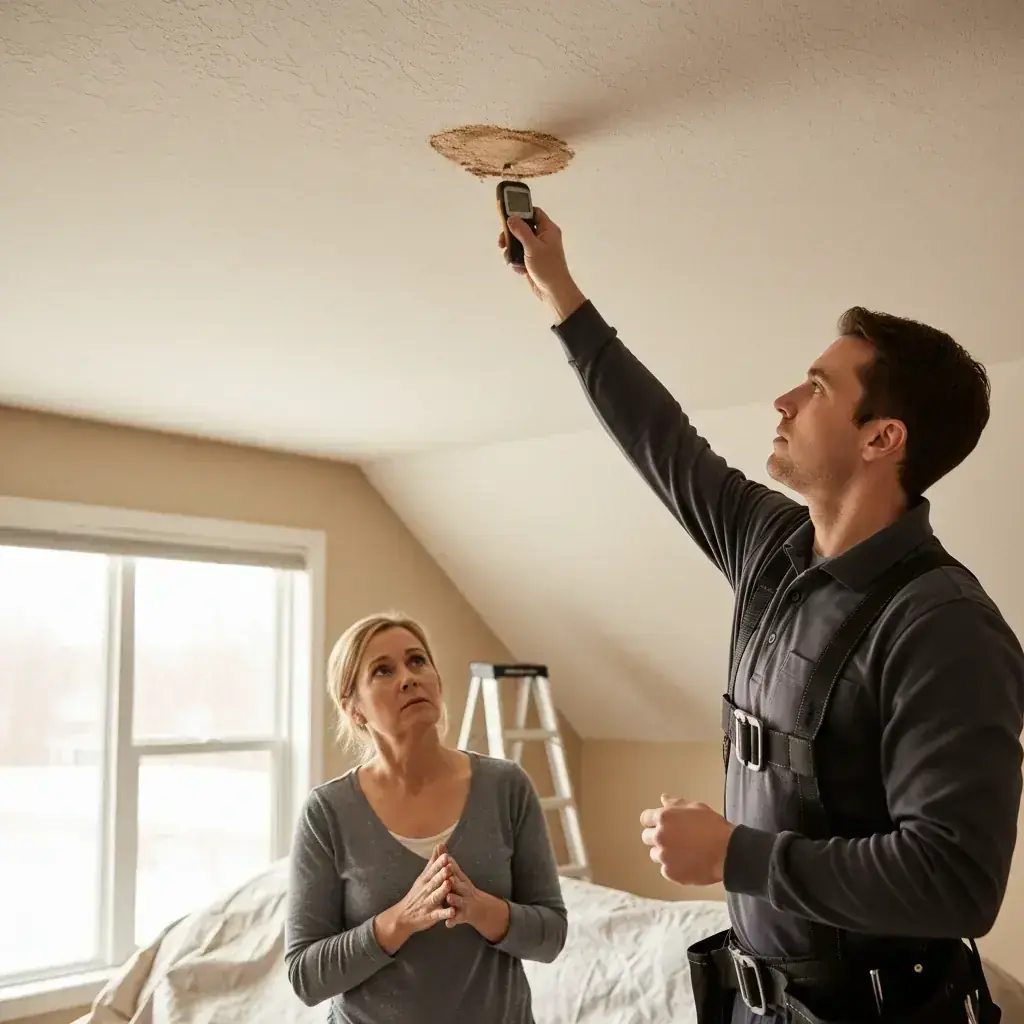
The first call: facts that change who shows up
The first conversation is intake, not a booked “fix.” A C-39 who knows the roof type and access arrives with the right ladder and a real hypothesis.
Expect questions like these:
- Where is the stain? Room, flat ceiling, sloped ceiling, or wall. A first-floor stain under a second story is a different path than a stain under an attic.
- How long has it been there? A new stain after a storm points to a fresh opening. A slow mark over months can be flashing, a boot, or even condensation.
- What is on the roof? Tile in Rancho Bernardo, shingles in Clairemont, and a low-slope TPO addition in Ocean Beach are different toolkits.
- About how old is the roof? A young leak is often a component or a workmanship miss. A late-life leak can be a system.
- Can someone get in the attic? Underside stains are the fastest map. If there is no attic access, the rooftop search is slower and should be described that way.
Vague answers still get a visit. Precise answers cut misdiagnosis.
Diagnosis: the stain is not the hole
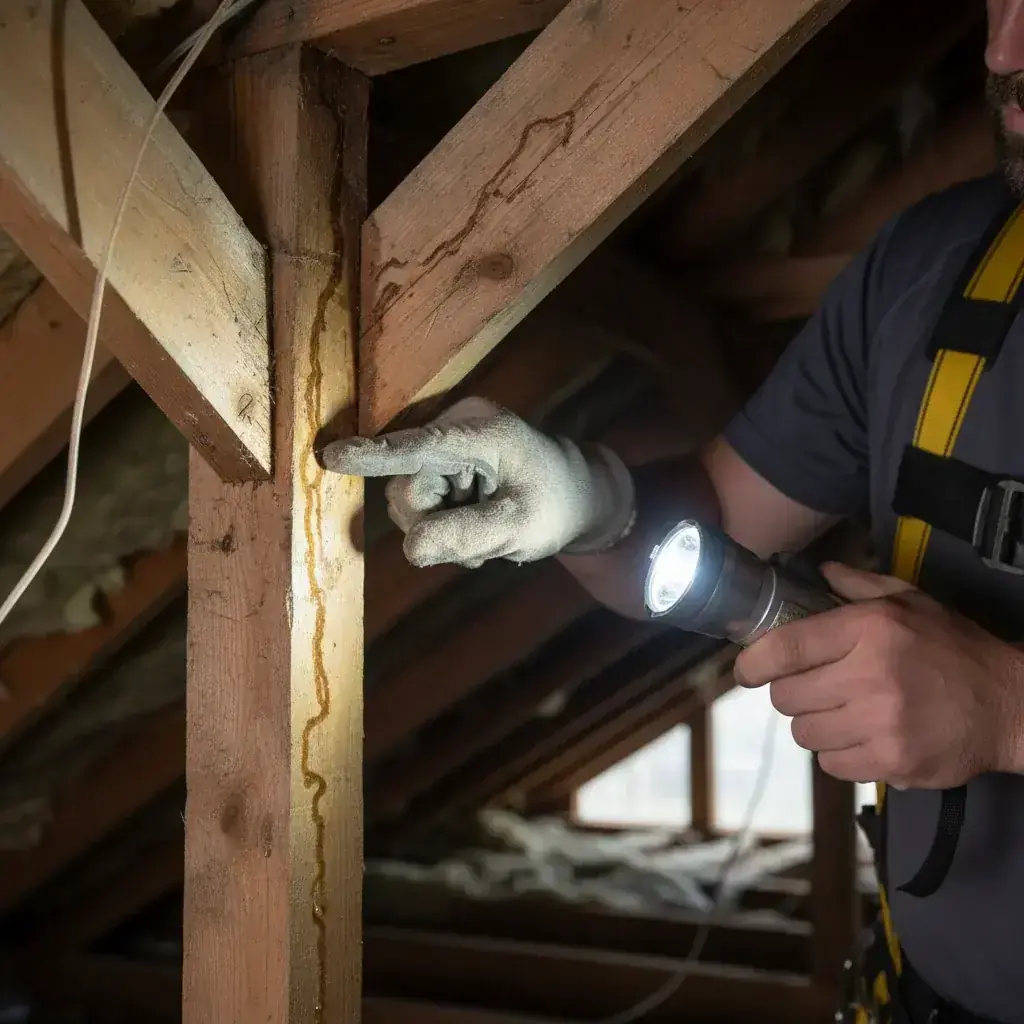
Water runs along decking, rafters, and pipes. The mark is the last stop.
A methodical visit usually has three layers:
- Interior. Moisture meter on the stain and nearby drywall. How wide is the wet, and is there a second faint mark you had not noticed.
- Attic. Flashlight on the underside of the deck, rafters, and insulation. Wet, compressed, or stained batts. Trace the water marks uphill to where they first hit wood.
- Roof. Work upstream from that point. Cracked or missing tiles or shingles. Failed sealant at vents, skylights, or chimneys. Damaged flashing. Clogged valleys or gutters forcing water under the cover. Punctures or open seams on a low-slope membrane. Flat roof replacement cost is a different job if the membrane is at end of life.
Hard leaks that only show in a certain wind or duration sometimes need a controlled hose test, section by section. That is slow on purpose. Repair starts after the entry is confirmed.
Common San Diego fixes by cover type
Tile (clay and concrete)
Tiles themselves often still shed. The usual failure is the underlayment after years of UV, especially felt. The repair is lift tiles in the wet bay, replace the failed membrane, reset the same tiles when they are sound. Cracked or slipped pieces are a shorter version of that. Tile roof replacement cost if the felt is gone across the field.
Asphalt shingles
Penetrations first: dried pipe-boot gaskets are a frequent single-point leak. Pipe boot leaks. Also lifted tabs, cracked pieces, failed valley or wall flashing.
Low-slope (TPO, modified bitumen)
Ponding that sits more than a couple of days finds a seam, a puncture, or flashing at an A/C curb. The patch has to match the membrane. Sealant alone on a split weld is not a system repair.
Across cover types, flashing at joints and penetrations is the most common class of leak. A fair San Diego leak repair names the flashing, not “roof leak.”
What a fair repair invoice looks like (no dollar bands)
You should see the problem and the work in plain English before anyone starts. Example of a useful line: “Remove concrete tiles over the garage, replace the compromised underlayment in that bay, reset the tiles.” Not “fix leak.”
Look for:
- Labor as a job for a known repair (boot, flashing run) or as estimated hours with a cap in writing
- Materials named: boot size, sealant product, shingle product and color, tile match
- Warranty on workmanship and on the materials used for this repair, in writing
- Interior work excluded or listed separately. Drywall and insulation are other trades unless the same company writes them
Diagnostic time should appear. Some contractors apply it to the repair if you hire them. Get that in writing.
We will not invent a typical boot price, an hourly rate, or a “complex flashing” band. Those numbers only exist on a bid for your roof, access, and city.
When the repair becomes a bigger conversation
A patch is the wrong honest answer when:
- Systemic underlayment. Opening one bay shows brittle felt in the next bay too.
- Several active leaks. Chasing them one by one on a late-life roof spends money without a remaining-life plan. Repair vs replace.
- Soft or delaminated deck. The cover cannot sit on that. Deck replacement is its own line.
- Age versus remaining life. A large repair on a covering that is already late can be money toward a replacement that carries a useful warranty instead.
A good C-39 still quotes the targeted roof repair you called about, then explains the larger finding with photos. You choose. They do not get to skip the small quote to force a tear-off.
Ask the building department that covers the address whether this scope needs a permit. For City of San Diego covering work, read current Information Bulletin 123. We will not paraphrase exemption classes or invent a fee.
When to call
Stay off wet tile and steep slopes. Contain the water inside. Then get a licensed diagnosis.
Call (760) 750-5557. We connect you with a licensed independent local roofer.