Top Pro Roofing SD is a referral marketplace. We connect San Diego County homeowners with CSLB-licensed C-39 roofers. We do not wash roofs and we do not sell a cleaning package. Call (760) 750-5557.
Green clumps and black streaks are not the same problem. Algae is often cosmetic. Moss can lift shingles and hold water against the deck. Pressure washing is the usual way homeowners make it worse. Get a roof inspection before you hire a general pressure-wash crew.
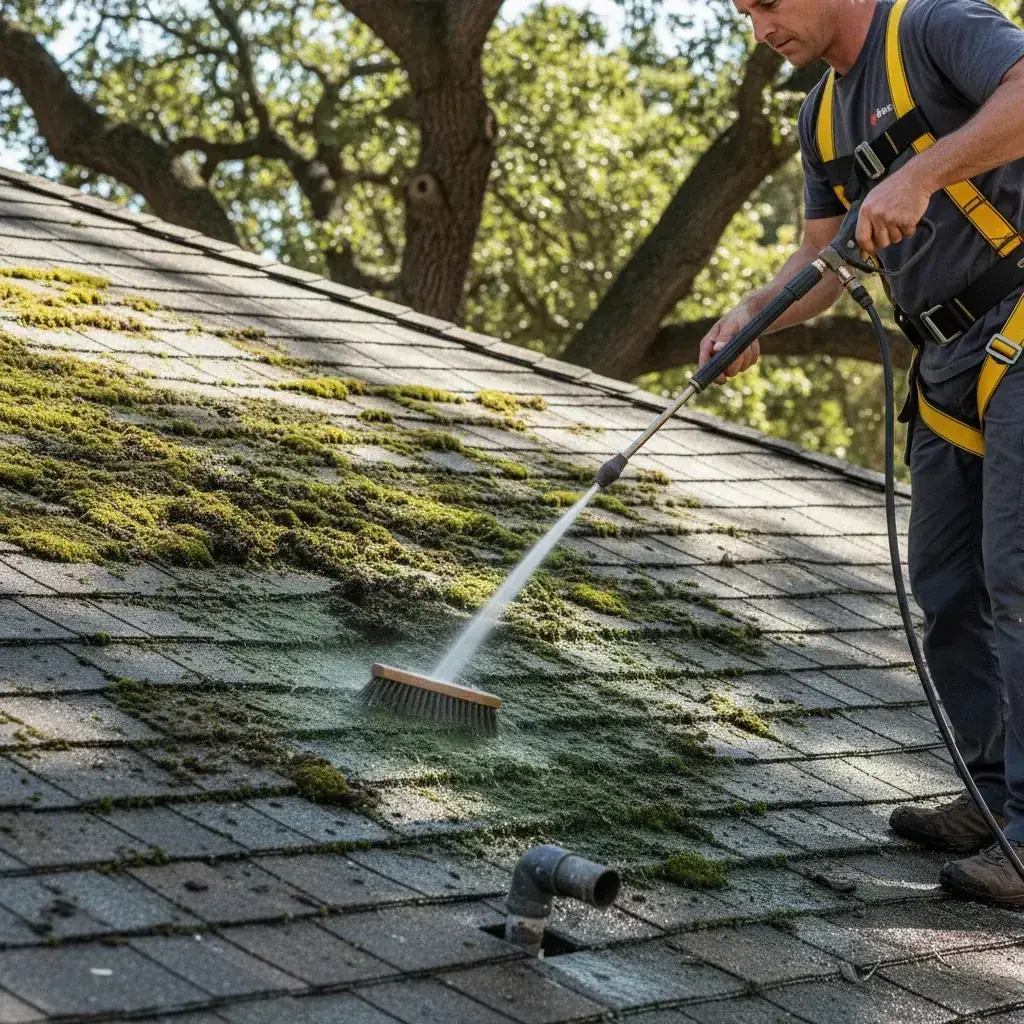
Why coastal fog and north slopes grow this stuff
The marine layer over La Jolla, Point Loma, Ocean Beach, and similar coastal streets keeps dew and fog on the covering. Inland, Poway, Escondido, and canyon lots do it with tree shade on north-facing planes. Spores arrive on wind. They need moisture, shade, and a food source: limestone filler in older asphalt, plus dust, pollen, and leaf litter.
Once moss is established it holds more water. That cycle is why a patch can spread across a plane over a few winters. Best roof material for coastal climates and what deteriorates asphalt shingles fastest.
Moss vs algae vs lichen
Algae (often Gloeocapsa magma / cyanobacteria streaks). Dark vertical stains. No roots. Mostly a look issue on asphalt, though it flags a damp plane. Some shingle lines include copper or zinc granules meant to slow it. See algae streaks on Federal Pacific roofing if that brand is on the house.
Moss. Thick green mats. Rhizoids can get under shingle edges, lift the seal, and feed water onto underlayment. The mat stays wet after the rest of the roof has dried. That is the structural conversation, not a stain.
Lichen. Crusty or leafy patches, sometimes gray, orange, or yellow. It bonds harder than algae. Scraping it can take granules with it. Treat it as a professional cleaning or replacement decision, not a broom job.
Why pressure washing is the wrong tool
Asphalt and tile are built to shed rainfall, not a wand from below. High pressure strips granules (the UV shield), drives water under laps, cracks tile, and can void the manufacturer warranty. The NRCA and most shingle makers tell owners not to pressure-wash steep-slope roofs.
A “roof cleaning” bid that only lists PSI is incomplete. Ask for chemistry, dwell time, rinse pressure, plant protection, and who is licensed for the roof access. Soft wash uses low pressure, about garden-hose force, plus a cleaner the roofer or a qualified applicator specifies for that covering. We will not name a mix, a dilution, or a DIY recipe.
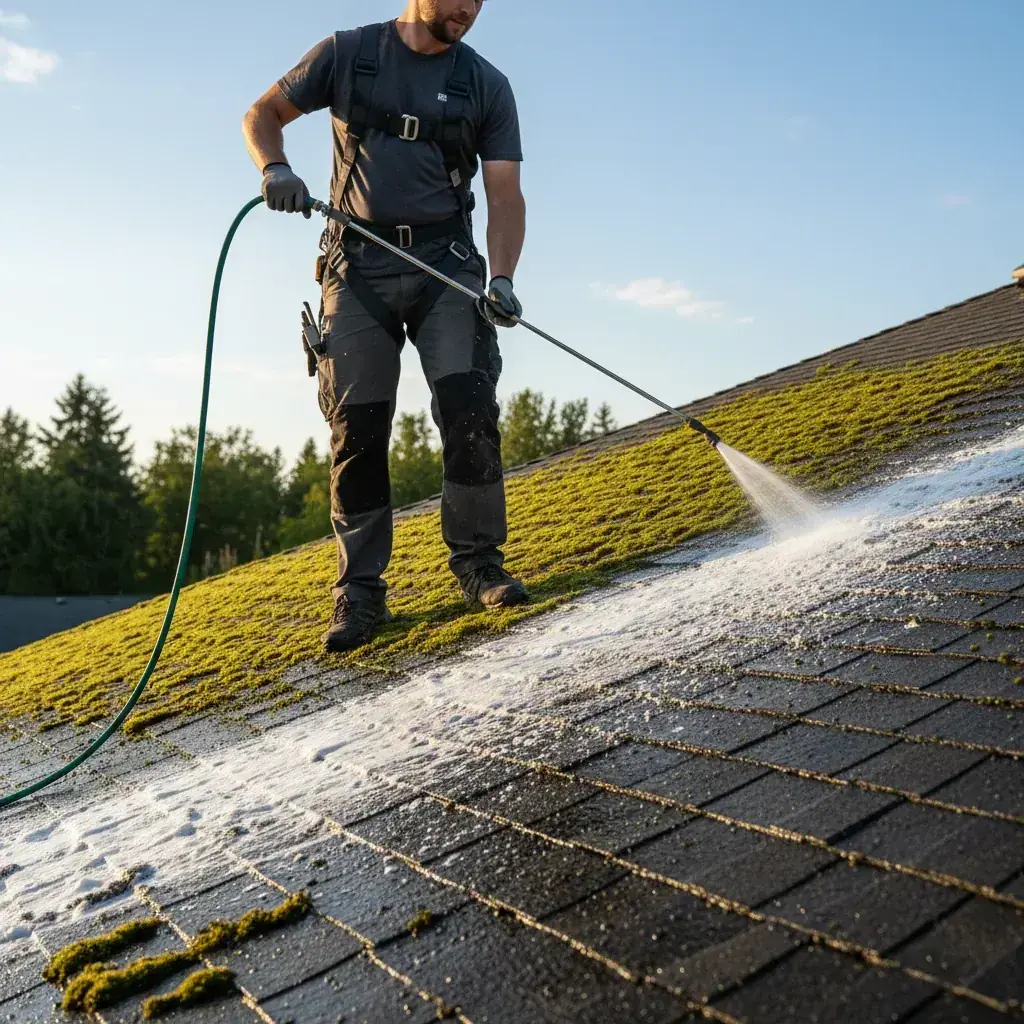
Safe professional sequence
- Inspect first: growth type, granule loss, lifted shingles, soft deck, leaks inside.
- Soft-wash application if the covering still has life and the manufacturer allows that method.
- Dwell, then a low-pressure rinse. Thick moss may need gentle brushing by someone who will not tear shingles.
- Dead film often sheds over later rains. That is expected, not a failed wash.
Zinc or copper strips near the ridge are a prevention conversation after cleaning, not a substitute for removing established moss. Ask the roofer whether they are appropriate on your metal, tile, or shingle and whether runoff will stain.
Stay off the roof. Soft spots and wet moss are fall and puncture hazards. The matched C-39 decides whether cleaning is even rational.
When the honest next step is a reroof
Cleaning does not restore bald shingles, curled tabs, or rotten deck. Skip the wash and talk replacement if you already have:
- Widespread lifting or open seals where moss has been for years
- Bare asphalt and heavy granules in the gutters
- Spongy deck (the roofer finds this, not a homeowner stroll)
- Ceiling stains or attic mold under the same plane
Book a roof inspection before a cleaning company. If the system is done, roof replacement is the spend that stops leaks. We will not invent a cleaning price or a “you still have X years” remaining-life number.
When to call us
If you see thick moss, lifting shingles, or years of black streaking and you are not sure which, get a licensed look. Call (760) 750-5557 and we’ll connect you with a licensed local roofer.