The roof field gets the attention. The overhang is where water, sun, pests, and embers often enter. Name the parts before you approve “eave repair.” Top Pro Roofing SD refers. We do not install. Call (760) 750-5557.
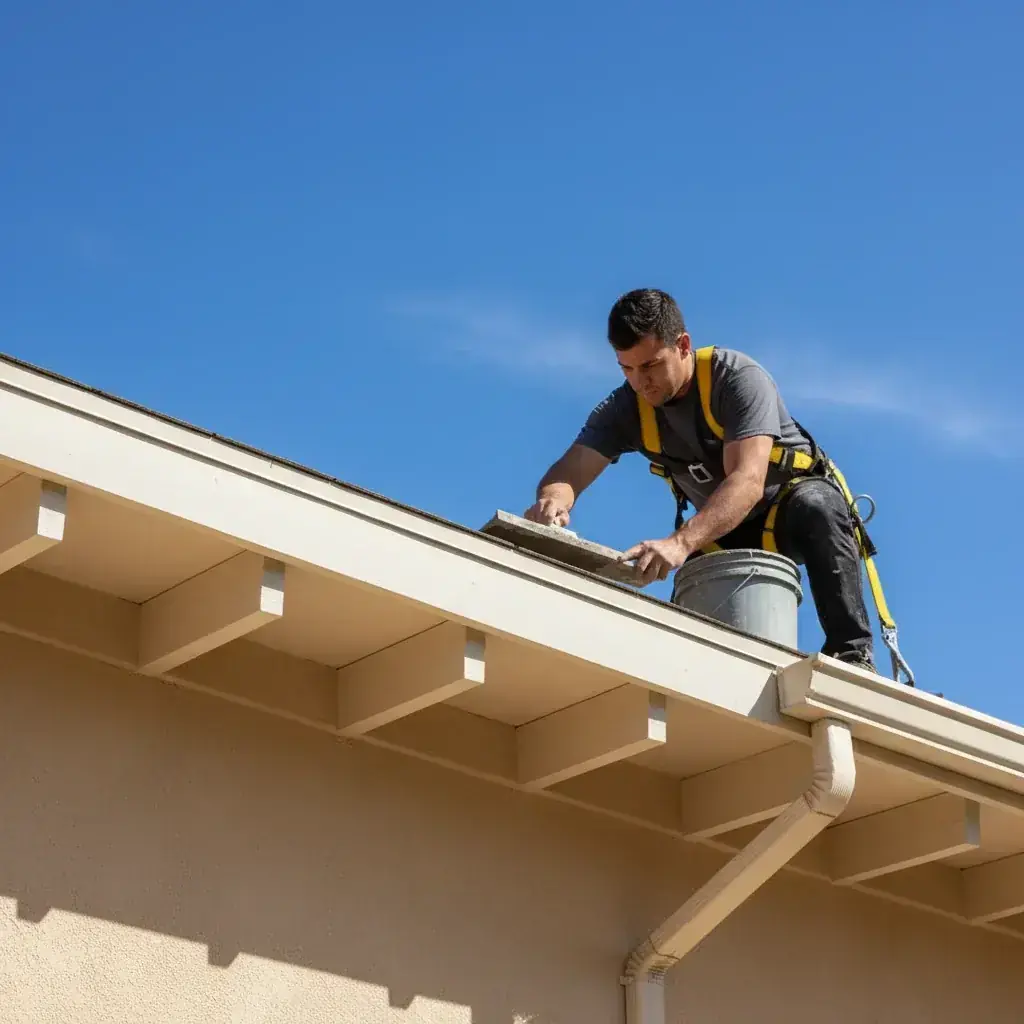
What people mean by overhang, eave, soffit, and fascia
The overhang is the roof that extends past the exterior wall. The eave is that lower edge zone. The soffit is the underside. The fascia is the vertical board at the edge, usually behind the gutter. Rafter tails are the exposed rafter ends on some ranch and craftsman houses.
Those labels are not interchangeable on a proposal. Replacing paint on fascia is not the same as enclosing an open eave, changing overhang depth, or adding ember-resistant vents.
California C-39 roofing work can include related waterproofing at the roof edge. Check the independent contractor at the CSLB license lookup. Some pest, stucco, or framing work may sit outside that classification. The proposal should say who is responsible for each trade.
What the overhang is for
The overhang throws rain past the wall and, when gutters are working, into a controlled outlet. It also shades wall and window from high sun. Soffit vents, when present, are part of attic airflow, not decoration.
Confirm current climate normals on NOAA’s published tables if you need a number. A deeper eave does not replace a sized gutter and downspout. It does change how much sun and splash hit the wall.
Coastal lots still see salt on metal drip edges and fasteners. Inland lots see more heat on the same painted wood. Neither fact sets a single “correct” overhang width for the county. Depth is a design and structure decision for that house.
How eaves fail in this climate
Gutter overflow is a common path. Water that goes over the back of the gutter wets fascia, then soffit. Soft wood, peeling paint, and staining at the eave line are reasons to look at gutter attachment and slope, not only at the field tiles. See roof fascia and soffit repair and gutter repair. Storm-only indoor leaks at the eave can be the same path: roof leaks only in heavy rain.
Gaps in soffit, torn vent screens, and open rafter bays are pest paths. Roof rats use trees and eave gaps. For pest work that is not roofing, hire a licensed pest contractor for that scope. Bees in stucco voids are a removal and repair sequence. Do not treat honeycomb as a roofing sealant problem. The roofer and the bee specialist should not be the same vague line item.
Stay off the roof for this check. Photograph from the ground. Do not probe rot from a ladder unless you are equipped for that access.
Ember and Chapter 7A detailing
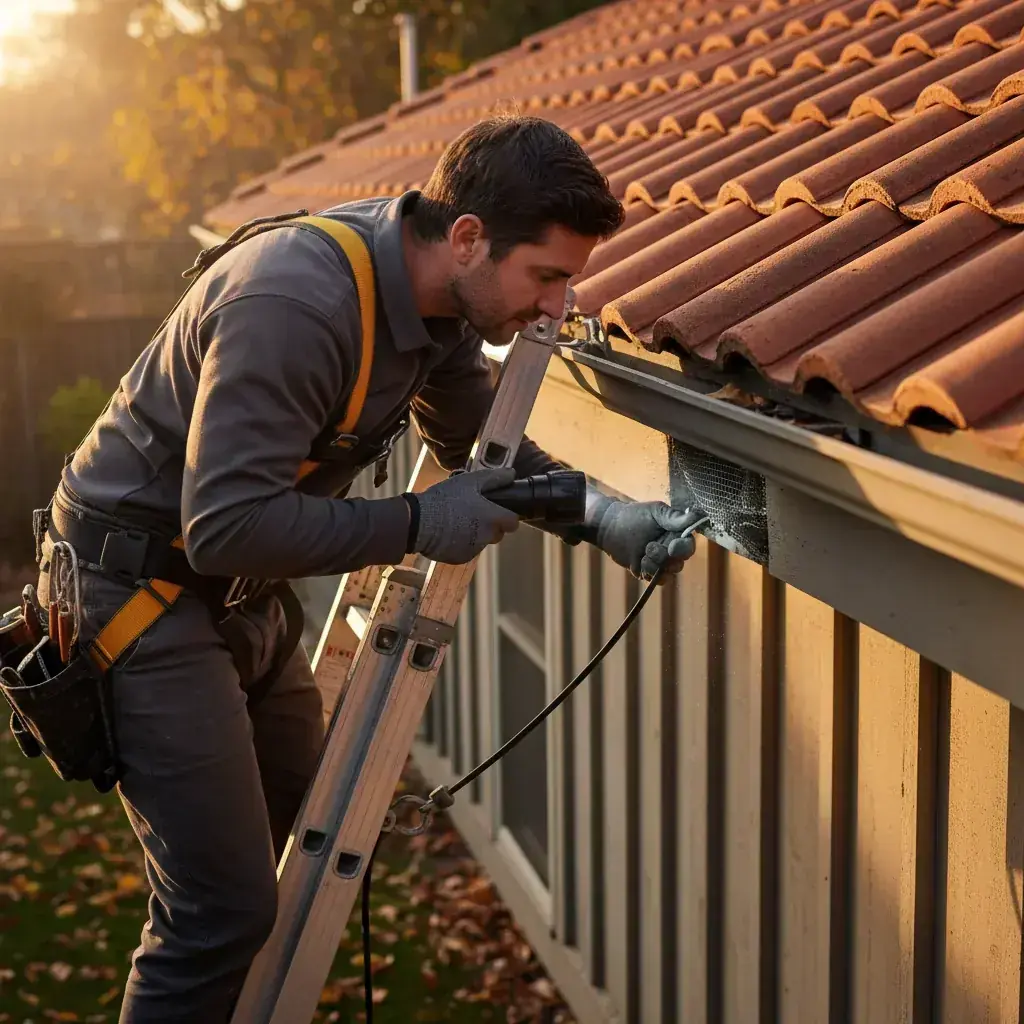
In mapped wildland-urban interface areas, eaves are a known ember-entry zone. Open eaves with exposed rafter tails, unscreened vents, and combustible soffit materials are different details from an enclosed soffit with listed ember-resistant vents.
California Building Code Chapter 7A addresses ignition-resistant construction where it applies. Check the address on the CAL FIRE Fire Hazard Severity Zone map. Mesh size, labyrinth vents, and noncombustible soffit or fascia products are specification items. This page does not pick a brand or a mesh dimension for your lot.
Enclosed versus open eaves is a design change, not a paint job. See wildfire roof ember data for the broader roof conversation.
Extending an overhang during a reroof
A roof replacement can be the moment someone proposes a deeper eave. That is framing and weatherproofing, not a trim upgrade. Rafter or truss changes, new fascia, soffit, and drip edge all need to be in the written scope.
Within the City of San Diego, start with current Information Bulletin 123. Ask the AHJ whether this overhang or framing change needs a permit. Other jurisdictions differ. Extending an overhang can also affect setbacks and appearance review. The independent roofer should name the authority. Do not treat this blog as the bulletin.
Do not treat “more shade” as a reason to skip structure. Ask what was inspected, whether the existing tails can be extended, and what happens if concealed rot is found.
What a useful proposal names
- Which parts: overhang depth, fascia, soffit, rafter tails, drip edge, gutters
- What was observed versus recommended
- Materials by product name when known
- Vent type if airflow or ember listing is part of the job
- Exclusions: stucco, pest treatment, electrical, or framing by others
- Permit path for this address
Top Pro Roofing SD does not warrant work. Warranties come from the independent roofer and any product documents.
When to call us
Call when eave rot, staining, pest entry, or a proposed overhang change needs a licensed roofing professional to inspect and write a scope. Top Pro Roofing SD will match you with an independent local pro. You contract and pay that professional directly. Call (760) 750-5557 and we’ll connect you with a licensed local roofer.