A new skylight should start with a roof framing review, not a hole in the ceiling drywall. The review says what sits around the proposed opening and who must approve any structural change. The roofer then has a basis for covering, underlayment, and flashing.
Top Pro Roofing SD is a referral service. We do not cut openings, we do not engineer trusses, and we do not pull permits. Call (760) 750-5557. We will introduce a licensed independent C-39 for the roofing side. Structural decisions stay with the professional who is actually responsible for them. You contract with those people directly.
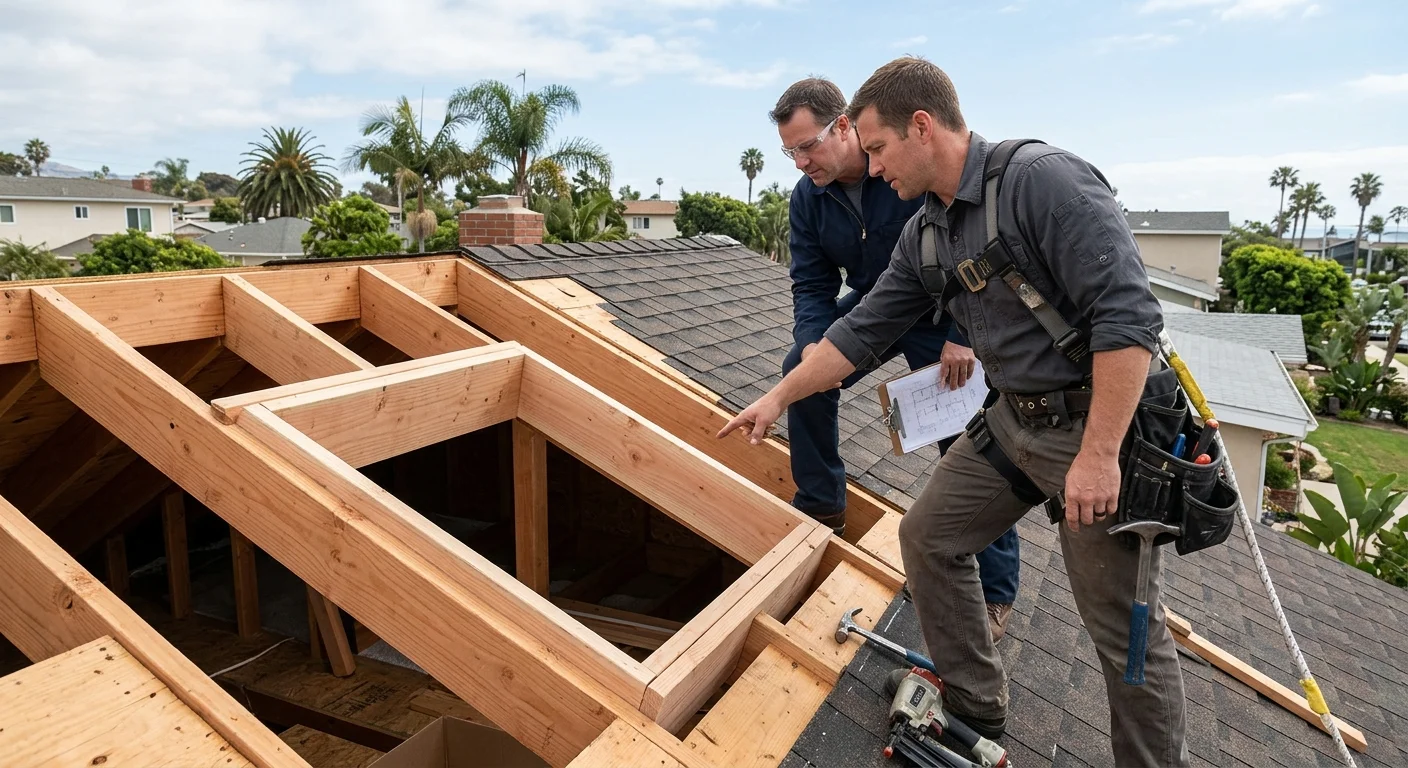
Why the opening starts with framing
A skylight is not only a unit in the ceiling. The location has to work with framing, deck, underlayment, and the exterior covering. An attractive interior spot can sit on a valley, a ridge, a vent, or a truss web that is a poor cut.
The first review should photograph the existing members near the proposed opening and name what is still unknown. A roofer can evaluate the roofing side. Unresolved structure is not a line that says “install skylight.”
A coastal Encinitas tile roof and an inland El Cajon shingle roof are different proposals. Low-slope membrane is another set of details. The city name does not describe the roof.
A framing review is not permission to cut. It is a record. If the covering type or layout is unclear, start with a roof inspection. Ask for notes that connect the ceiling location to the matching roof location so every trade is talking about the same opening.
How rafters and trusses change the questions
The review should say whether the roof uses rafters, engineered trusses, or something else. The label is the start. The members around this opening still need a look.
Rafters. The proposal should place the opening relative to nearby members and name who decides if any header or change is acceptable.
Trusses. The scope should identify the system and flag any structural question. A roofing bid is not truss-manufacturer approval.
Roof rafters versus trusses explains the terms. For a skylight, the useful question is which system is over this room and who signs off on a change.
Do not trust an interior tape measure alone. Connect the room, attic, and exterior. Vents, valleys, and ridges in the same bay belong in the notes. If framing type cannot be confirmed on the first visit, the proposal should say so and name the next review.
This page is not a cutting or reinforcement guide.
Roof system and flashing belong in the same packet
Ask the roofer to name the covering, any deck condition they could see, underlayment in the work area, and the flashing kit or method. Tile, asphalt, metal, and low-slope membrane are not interchangeable scope words.
Flashing needs its own line: where the curb meets the roof and what metal or kit they will use. Separate new skylight work from unrelated existing defects.
Ask how the location sits relative to a valley, wall, vent, or ridge. You are not approving the geometry yourself. You are checking that someone addressed it.
Interior finishes, paint, and electrical are not assumed in a roofing proposal. Each contract differs. The written page must say included or excluded.
Skylight installation is the service path for a roofing match. Cost categories without treating this page as a price: skylight installation cost in San Diego. Confirm numbers with the pro who sees the roof. Related leak path if you already have a unit: skylight leak repair.
When a broader structural review is needed
Send it out when the roofer cannot resolve a framing question inside a roofing scope: unclear layout, an opening that fights existing members, or conditions that need another professional. The roofer should document the concern, not guess a header size.
A skylight during a reroof, solar, or remodel needs a named coordinator. Ask who holds each approval.
Permit rules are local. This page cannot state one skylight permit rule for every San Diego County address. Ask the city or county desk that actually covers the parcel.
The City of San Diego’s Information Bulletin 123 addresses roof-covering renewal inside that city. Read the current live bulletin. This page will not restate exemption classes, framing triggers, or fee tables. It is not a countywide skylight rule and it is not a rule for Chula Vista, La Mesa, or unincorporated land.
A San Diego mailing address does not settle jurisdiction. The proposal should name the desk they used. Confirm with that authority before you treat the design as final.
If structure or permits are still open, the proposal should not read as a settled cut list.
What the written proposal should identify
Look for:
- Room and roof area
- Framing type observed
- Covering around the opening
- Roofing, underlayment, deck, and flashing included
- Structural questions still open
- Who is responsible for those decisions
- Interior work in or out
- Who confirms permits with the right jurisdiction
- Product or kit named
- Existing defects excluded from this scope
- The contractor who will perform the roofing work
California’s C-39 classification covers roofing, waterproofing, and weatherproofing with listed roofing materials. Check the named contractor: CSLB license lookup.
Do not assume “skylight” includes headers, drywall, or a custom curb. Ask for a revision before you sign.
When to call us
Call when a new skylight needs a licensed roofer to evaluate framing as it affects covering and flashing, and to write that scope. Structural approval stays with the responsible project professional. Permits stay with the property’s jurisdiction. Call (760) 750-5557 and we will connect you with a licensed local roofer.