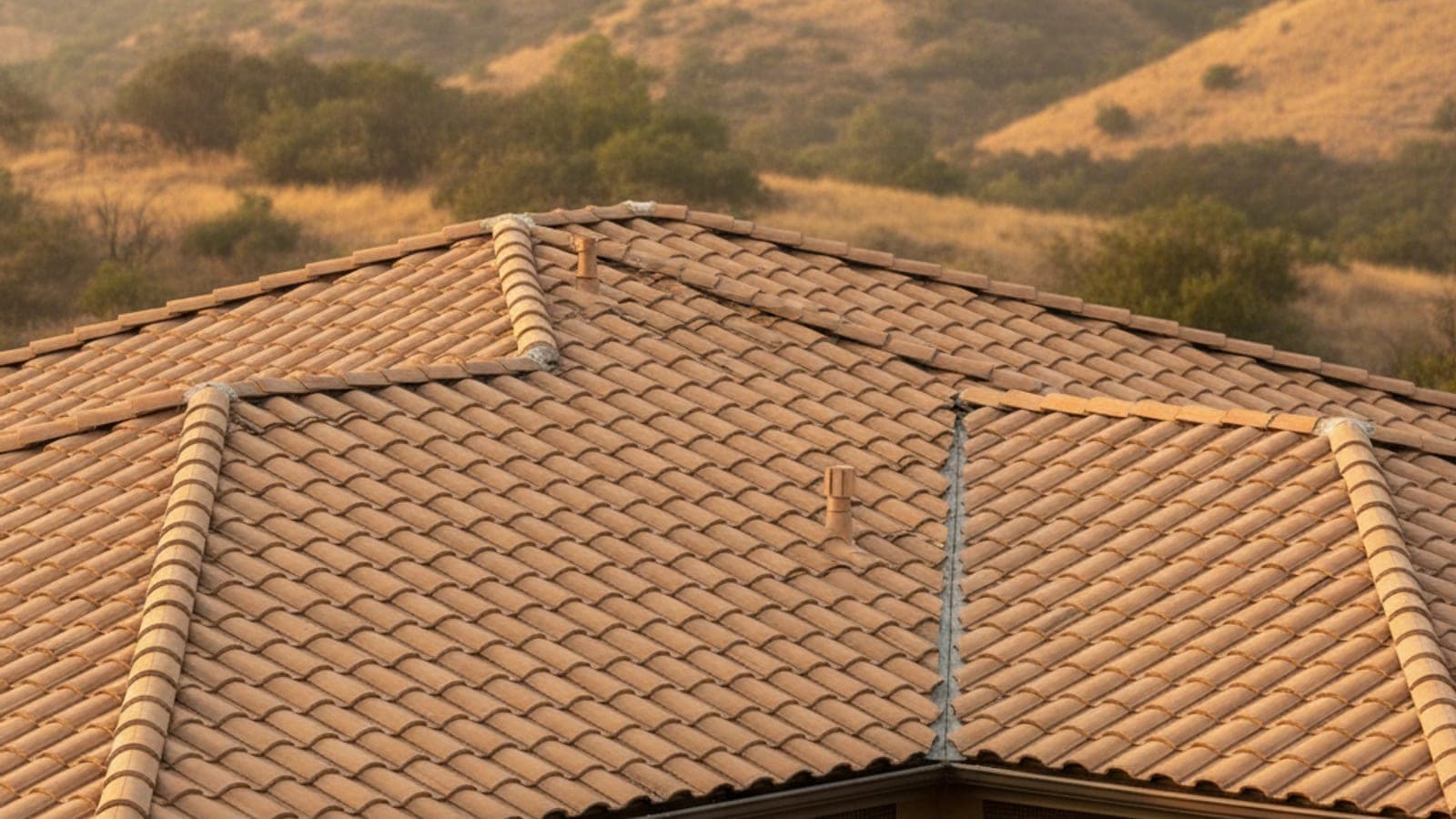
Windblown embers can ignite a house even when the flame front is still far off. That is the point of California’s WUI roof rules, not a private study on this site. Check your address on the CAL FIRE Fire Hazard Severity Zone map, then read the Class A assembly and vent rules that apply to a reroof. Top Pro Roofing SD is a referral service. We do not inspect for insurers, rate premiums, or install roofs. Call (760) 750-5557 if you want a match with a licensed independent C-39.
We will not invent county loss percentages, FAIR Plan claim counts, or premium discounts. Ask your carrier in writing. Ask the bidder to name the tested assembly.
For material context, see wildfire-resistant roofing materials in San Diego.
Why embers, not a wall of flame, drive the roof conversation
The Insurance Institute for Business and Home Safety (IBHS wildfire research) treats embers as a primary ignition path in the wildland-urban interface. CAL FIRE’s public Ready, Set, Go materials say the same thing in plain language: firebrands can travel ahead of the front and land on roofs, in gutters, and at vents.
That is why a Class A field can still fail if vents, eaves, bird-stop, and debris are ignored. The covering is one layer. The openings are another.
Typical landing spots on San Diego roofs:
- Ridge, gable, and turbine vents without a listed ember-resistant product or corrosion-resistant mesh that meets the current code
- Open eaves and exposed rafter tails
- Gaps at pipe boots, skylight curbs, and wall flashings
- Missing or crumbled bird-stop on tile hips and ridges
- Needle and leaf piles in valleys and gutters
Do not treat a blog as a substitute for the map or the permit notes. Ramona, Alpine, and a canyon-edge lot in Rancho Peñasquitos are not the same file as a Pacific Beach bungalow.
What you can check without a made-up dataset
Use primary records. If a contractor quotes a loss share, an insurer withdrawal rate, or a dollar discount, ask for the document. If they cannot produce it, drop the number.
| Check | Where to look | What it settles |
|---|---|---|
| Is this address in a mapped hazard zone? | CAL FIRE FHSZ viewer and the county or city planning counter | Whether mapped WUI roof rules are even on the table |
| What roof class is required? | California Building Standards Commission WUI construction rules, plus the local building department | Read the current chapter. Do not treat Class A as a countywide fact |
| How is Class A proven? | ASTM E108 or UL 790 listing for the assembly, not a shingle brochure | Underlayment, deck, and covering as a system |
| Last-resort insurance | California FAIR Plan and your current carrier letter | Market access, not a discount we can quote |
| Defensible space | CAL FIRE / LegInfo defensible-space rules and CAL FIRE guidance | Read the live statute and Cal Fire text for distances. We will not restate those feet |
San Diego County has large Very High Fire Hazard Severity Zone (VHFHSZ) coverage in the foothills, inland valleys, and backcountry. Coastal grid streets often sit outside that overlay. Confirm the parcel. Do not guess from the neighbor’s roof.
Communities where the overlay commonly shows up include Poway, Ramona, Lakeside, Santee, Alpine, eastern Escondido, and canyon edges of Rancho Bernardo and Rancho Peñasquitos. Julian, Pine Valley, Descanso, and Campo sit in mountain and backcountry designations. Eastern canyon pockets of Oceanside, Carlsbad, and Vista can too.
When a reroof permit is pulled in a mapped Very High zone, the department typically wants documentation that the proposed materials meet the fire classification they name. A bid that only says “tile” or “Class A shingles” without the underlayment and vent schedule is incomplete. Ask. Do not assume WUI overlay rules as automatic on every inland street.
Class A, B, and C: what the labels mean
Roof fire classes come from ASTM E108 / UL 790 tests. The label belongs on the assembly paperwork.
| Rating | Plain meaning | Common San Diego coverings |
|---|---|---|
| Class A | Highest tested resistance among the three classes | Concrete tile, clay tile, many standing-seam and stone-coated steel systems, many modern fiberglass shingle assemblies with a qualifying underlayment |
| Class B | Moderate tested resistance | Some older or specialty assemblies. Confirm, do not assume |
| Class C | Light tested resistance | Some older roll and single-ply products |
| Unrated | No tested classification | Untreated wood shake and untreated cedar shingle |
Shingles: The granule surface is not the whole rating. A Class A shingle over a non-qualifying underlayment may not deliver a Class A roof. Ask the independent roofer for the listed pairing.
Tile: Clay and concrete are noncombustible at the surface. Embers still enter at open eaves, unscreened vents, and failed bird-stop. The tile can look fine while the attic takes brands.
Wood shake: Fire-retardant-treated shake can carry a Class A listing when new. Treatments age in sun. Read the current WUI construction text, the product listing, and the AHJ notes for whether the rating must still be documented. Re-treatment versus replacement is a product-and-condition call for the licensed roofer and the building department, not a blog lifespan.
What the WUI construction chapter is actually asking for
The California Building Standards Commission publishes materials and construction methods for wildfire exposure. Local amendments can add detail. Read the current chapter. New work and many reroofs in mapped zones are reviewed against it when the AHJ says so. Do not treat the chapter as automatic on every San Diego reroof.
IBHS also publishes a separate Wildfire Prepared Home voluntary standard. That is an IBHS program, not a substitute for the permit. Mesh size, listed vents, enclosed eaves, and gutter rules should be read from the current code section and the product listing. Do not copy a “1/16 inch versus 1/8 inch” rule from memory. The written standard at bid time wins.
Existing houses are not automatically forced onto new-construction vent details until a permit path says so. Carriers and the FAIR Plan can still ask for photos of vents, roof age, and condition. That is underwriting, not a number this page can invent.
Materials versus openings
IBHS ember work looks at systems, not only the field. A noncombustible covering still needs a path that keeps brands out of the attic.
Coverings that are noncombustible at the surface: clay tile, concrete tile, standing-seam metal, stone-coated steel. Vulnerability is at edges, hips, ridges, and penetrations.
Coverings that depend on the listed assembly: Class A asphalt shingles. Aged sealant strips, open valleys, and dried underlayment change real-world performance even if the original carton said Class A.
Higher vulnerability: untreated or expired-treatment wood shake, and very old composition roofs with open edges and failed boots.
Related: tile roof versus metal roof and how long a roof lasts in San Diego.
Insurance: what we will not quote
Carriers have narrowed new business in some mapped zones. The FAIR Plan exists as a residual market. None of that lets this site publish a typical premium, a credit percent, or a savings figure against a reroof price.
Ask your agent, in writing:
- Whether the current roof class and age affect renewal
- Whether they recognize an IBHS Wildfire Prepared Home designation on this policy
- What photos or contractor letters they want before they will quote
- Whether wood shake is surcharged or declined, treated or not
A FAIR Plan inspection can turn on roof condition. Meeting their checklist keeps you eligible to be considered. It is not a branded discount.
Frequently asked questions
Is Class A roofing required in San Diego?
It depends on the parcel’s fire-hazard designation and the scope of work. WUI overlay rules and local permit rules can apply in mapped Very High zones for new construction and many reroofs. Verify the address on the CAL FIRE map and with the building department that will stamp the permit. Neighboring streets can differ. Do not treat Class A as a countywide requirement.
Do I have to reroof to change how an insurer looks at the house?
Not always. Some carriers ask about vents, gutters, and defensible space without a full tear-off. If the covering is wood shake or a deteriorated field, the independent roofer may still tell you the covering is the limiting piece. Get that in writing. Do not treat a blog discount range as the reason to tear off.
Does concrete tile need ember-resistant vents?
Yes, if you care about attic entry. Tile will not burn like wood. Brands still go through ridge vents, gable vents, and open bird-stop.
How long does fire-retardant treatment last on wood shake here?
The listing and the manufacturer own that number. UV and heat in inland San Diego are hard on treatments. When the rating is no longer documented, the roof is no longer a listed Class A wood system. The building department and the licensed roofer decide re-treat versus replace.
What is the difference between a Class A shingle and a regular architectural shingle?
Many modern architectural shingles are sold as part of a Class A assembly. The difference is the tested pairing with underlayment and deck, not the marketing name. Ask for the evaluation report, not the color chip.
Considering a reroof on a mapped fire-hazard lot? A roof inspection through a matched independent roofer can document the covering, vents, and flashing. Compare materials in metal versus shingle. We do not attach a price to either path.
Service area
Top Pro Roofing SD refers work across San Diego County, including Poway, Ramona, El Cajon, Escondido, Lakeside, Santee, and Alpine. Call (760) 750-5557 to be matched with a licensed local roofer. We do not send a company crew.