Selecting a roof replacement contractor for an HOA is not a lowest-total contest. The board needs matching scopes, named exclusions, verified C-39 records, and a file the next board can read. Top Pro Roofing SD refers. We do not install, warrant, or set association prices. Call (760) 750-5557 when you want introductions to licensed independent roofers.
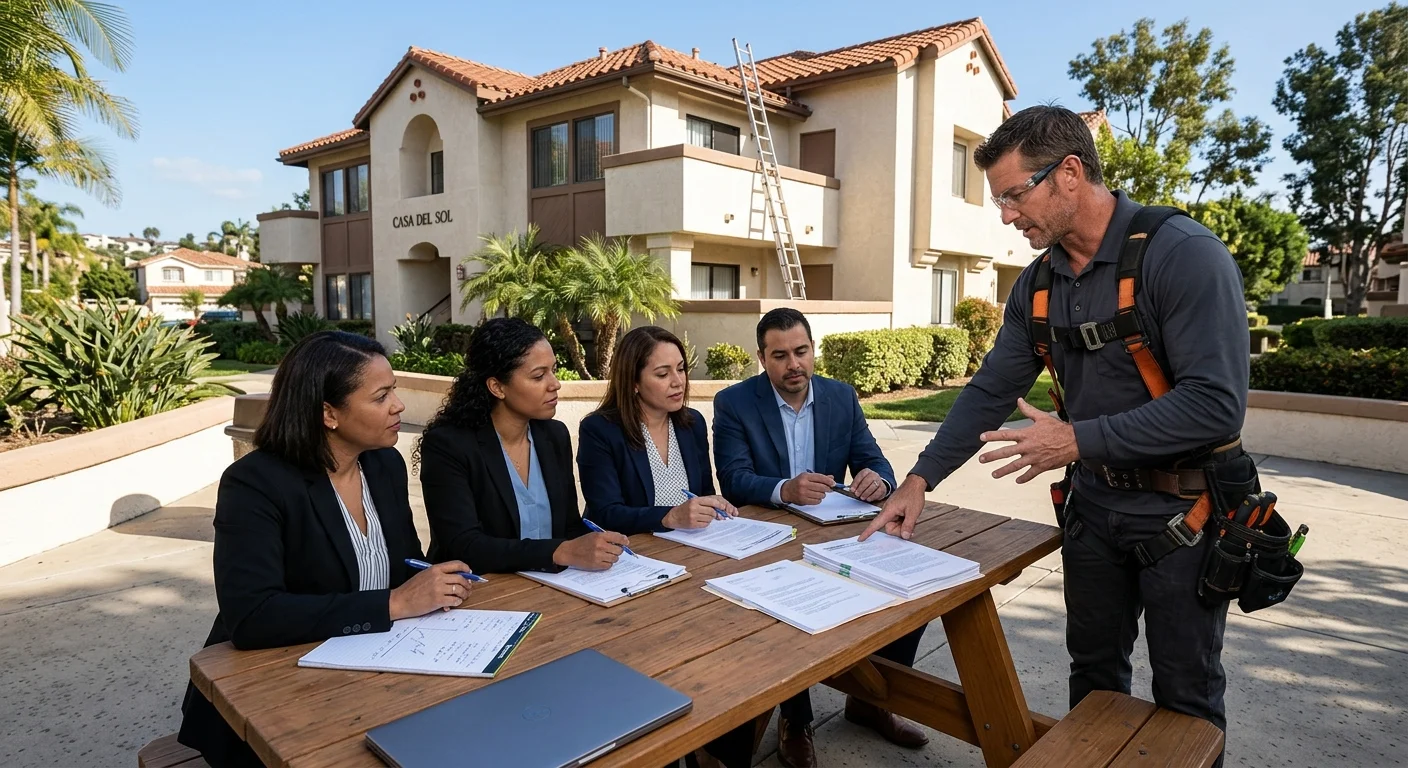
Define the shared roof and project scope
Start with what the association actually owns. A shared roof may cover several buildings, attached homes, garages, common structures, or mixed pitches. Governing documents should say which portions are association responsibility. If that line is fuzzy, ask the association’s adviser before you bid it.
Give every contractor the same written scope. Name each building and roof area. Note pitched vs low-slope, attached garages, patio covers, and common structures. Do not let one proposal include a wing another left out.
Ask each bidder to describe the existing system as observed: covering, underlayment, flashing, penetrations, drainage, visible deck clues. Then the proposed assembly in plain language. Product names alone are not a scope.
Ask how unknown conditions will be handled after tear-off. Decking and concealed details are not fully visible from the ground. The proposal should say how discoveries are documented, priced, and approved. An open-ended “as needed” line is not measurable.
San Diego County is not one climate or one permit counter. Attach address, jurisdiction, building type, and roof layout to the bid package. A coastal complex and an inland tract are different jobs even with the same covering name.
A professional roof inspection can give the board a shared starting description. It does not replace competing roof replacement proposals.
Compare the same exclusions
The lowest total can hide the longest exclusion list. One comparison sheet. Same rows: scope, removal, disposal, decking, flashing, ventilation, penetrations, drainage, permits, access, cleanup, records.
Do not compare the label “roof replacement” to a line-item assembly. Make both bidders write the same components. The board should trace every major worksheet row to proposal language.
Shared buildings add attachments. Ask who handles satellite gear, solar, rooftop mechanical, skylights, gutters, and resident-owned items. Ownership depends on the CC&Rs. Get advice for this property.
Ask how concealed damage is approved, and which association role can sign a change. That authority is the association’s process, not a roofing custom.
No verified regional average tells an HOA what replacement “should” cost. Building count, access, geometry, materials, and discoveries move the number. Compare the written bids. We will not invent a per-building or per-square association rate.
A clear exclusion is easier to price later than a silent assumption. If one local roofing company omits an item another includes, ask for a revised scope or a separate line. Fair comparison is the goal.
Verify the contractor and permit role
California’s C-39 classification covers contractors licensed to install and repair roofing, waterproofing, and weatherproofing systems. Ask for legal business name and license number. Verify at the CSLB license check.
The public record can show status, complaint history, and bond information. Ask the matched C-39 to show current workers’ compensation evidence and a current CSLB record. Save a dated copy of the lookup with the board file.
That lookup does not replace the association’s insurance review. Limits, endorsements, and additional insured language are for the association’s insurance professional. We will not prescribe coverage limits.
Permit responsibility belongs in the proposal: who confirms the jurisdiction, prepares documents, submits, answers corrections, and closes the permit. Do not assume every county address uses City of San Diego rules.
Inside the City of San Diego, start with Information Bulletin 123. Ask Development Services and the matched C-39 whether this covering renewal needs a building permit. Do not treat this blog as the ordinance.
Ask the AHJ and the matched C-39 whether this covering renewal needs a permit. Read the current Information Bulletin 123 for City of San Diego parcels. That is not a blanket HOA exemption.
Unincorporated county and other cities use their own counters. Direct questions to the authority for the address. Put the selected contractor’s permit role in the contract.
More on license checks: CSLB contractor guide.
Separate product documents from workmanship terms
Manufacturers and contractors issue different papers. A product PDF is not the installer’s workmanship commitment. A contractor letter is not a factory warranty.
Ask for every document offered with the system. Record title, issuer, what it covers, when it starts, how to claim, exclusions, and transfer rules. If a proposal mentions coverage without attaching terms, get the document before the board votes.
Do not turn a product label into an expected lifespan. Universal year charts for shingle, metal, or tile were not confirmed for this page. Installation, maintenance, and exposure change outcomes. Compare the attached documents.
Ask who the board calls for a product issue vs an installation issue. Record the path the contractor states. Do not add a remedy we did not write.
Specified underlayment, flashing, fasteners, vents, and coverings should be identifiable. Alternates need their own descriptions. Do not compare a complete assembly to an unnamed substitute.
Scripps Ranch boards can start with HOA roof requirements. Still confirm this association’s documents, jurisdiction, and project.
Top Pro Roofing SD does not issue product or workmanship warranties. Property owners and managers contract with the selected licensed professional directly.
Record the decision
Keep the request, every proposal, clarifications, license checks, insurance papers the association required, product documents, permit mail, meeting materials, and the signed contract together.
Use a dated comparison sheet. Same categories. Note missing cells. Keep revisions instead of silently replacing old versions.
No single voting rule was confirmed for every San Diego HOA. Who may sign depends on governing documents. Send that question to the board’s adviser before approval.
The minutes should name proposals reviewed and criteria used: scope completeness, verified license, exclusions, permit role, submitted documents, written terms. “They seemed better” is not a trail.
Before signing, reconcile the final contract to the sheet: buildings, roof areas, materials, exclusions, change process, permit role, documents. Flag drift from the version the board reviewed.
During the job, save authorized changes, jurisdiction notices, progress photos, and closeout papers. Ask up front which closeout set they will deliver. The next manager should understand what was compared, what was selected, and which questions went to advisers.
When to call us
Call when the HOA needs introductions to licensed independent roofers for a shared-roof replacement. Call (760) 750-5557 and we will connect you. We do not bid the association’s work.