Some roof leaks announce themselves. A brown ring on the ceiling, a drip in the first real rain, a soft spot underfoot. Others hide. Water enters, travels along decking, and shows up in a room nowhere near the breach. You patch the stain, the rain returns, and the stain returns. That is the leak thermal imaging is built to find.
Top Pro Roofing SD is a referral service. We connect San Diego County homeowners with independent C-39 roofers. We do not climb roofs, run cameras, or publish a scan price list. Call (760) 750-5557.
If you have already chased a leak the hard way, you know a blind search is expensive in the wrong way. Thermal imaging is one diagnostic tool. Here is how it works, what it cannot do, and when a licensed roofer still needs eyes and a moisture meter.
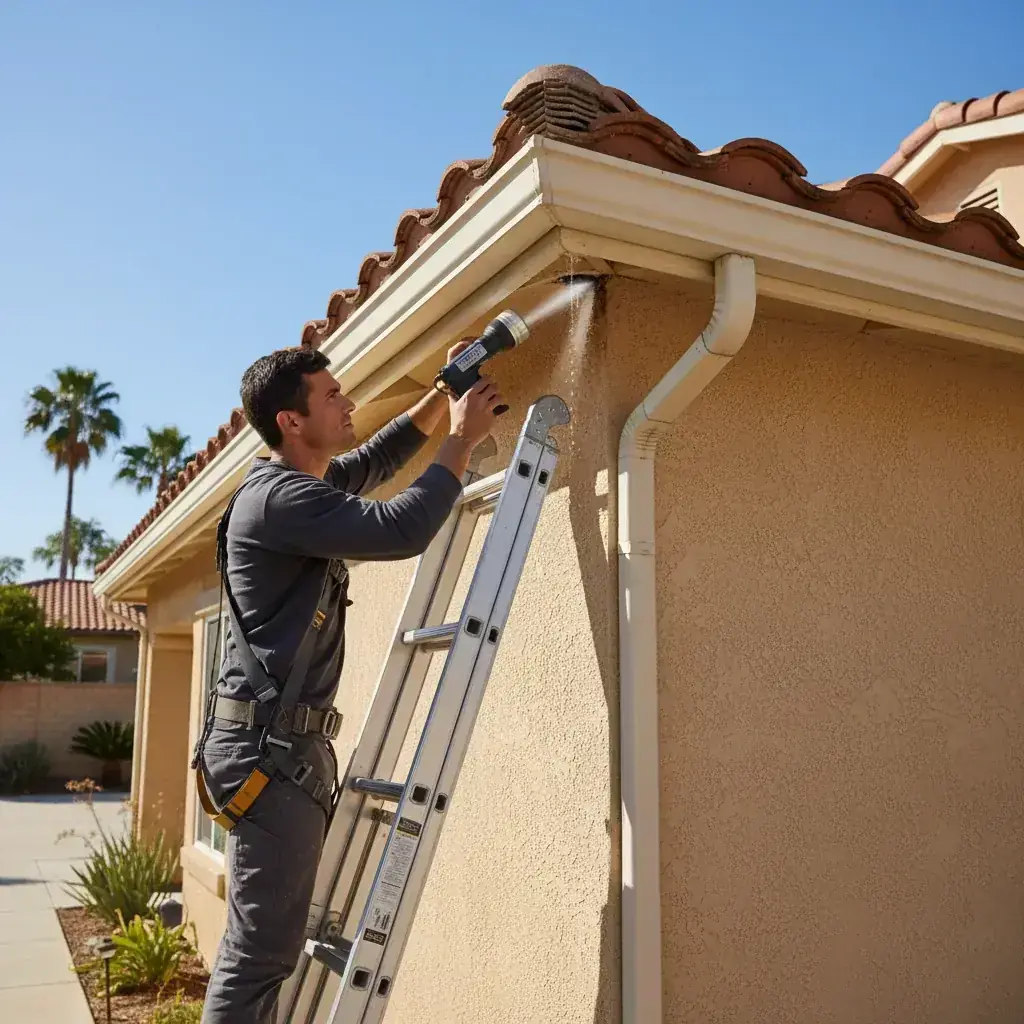
How thermal imaging finds a roof leak
A thermal camera does not see water. It sees heat. Surfaces give off infrared energy based on temperature. The camera turns that into an image where warmer and cooler areas read as different colors.
Dry roofing materials heat and cool relatively quickly. Wet insulation and saturated decking hold heat longer because water has high thermal mass. After a sunny day, when the sun drops and the roof starts shedding heat, dry sections cool faster while wet sections stay warmer. That difference is the signature. On the camera, trapped moisture often shows as a warm patch in cooler, dry field.
Timing matters. The useful read is often dusk after a sunny day, when the roof has taken heat all afternoon and is starting to release it. Scan too early and everything is still hot. Scan on an overcast day and there may not be enough contrast. A real survey is scheduled around weather and time of day, not squeezed into whatever hour is open.
What it catches that a visual inspection misses
A good roofer with a ladder will find a lot: cracked tiles, lifted shingles, failed flashing, clogged valleys. A visual pass cannot see under the surface. That is where infrared earns a place.
The biggest difference is subsurface moisture. Water can sit in the assembly, soaking insulation and rotting decking, long before a ceiling stain appears. By the time paint browns, the wet zone underneath is often larger than the stain. A thermal scan maps that zone so the repair can target the wet area, not only the drip.
It also separates stain from source. A leak rarely drops straight down. Water enters, runs along a rafter or seam, and drops where the path ends, sometimes feet from the hole. Thermal imaging maps the wet field so you repair the entry, not only the exit.
On flat and low-slope roofs this is even more useful. Membrane roofs can trap water under a failed seam. Saturation can spread across the deck with little to see from above. A thermal survey outlines the saturated section so you know how much membrane actually has to come up. For the conventional search first, see how to find a roof leak in San Diego.
When a thermal scan is worth the extra visit
Thermal imaging is not something every roof needs. For a single obvious leak with a clear source, a standard inspection is enough. The scan helps in specific situations:
- A recurring leak with no obvious source. You have patched it more than once. The real entry is often somewhere you have not looked.
- A flat or low-slope roof. Trapped membrane saturation is hard to confirm from the surface alone.
- A pre-purchase inspection. Hidden moisture is not always under fresh paint.
- Claim documentation. After a covered event, dated images can support a file. They do not decide coverage. Confirm with the carrier. Read the current live California Department of Insurance residential claims guide. This page will not restate photo duties or notice windows.
- After a heavy rain. Moisture can be in the assembly before it stains a ceiling.
If water is coming in right now, do not wait on a dusk survey. Get the active intrusion handled first, then diagnose. See active roof leak emergency response.
What thermal imaging costs
We will not invent add-on, standalone, or commercial moisture-map totals. Cost depends on roof size, access, whether the scan is part of a larger inspection, and how much written reporting you need. Ask the matched licensed roofer to price the diagnostic as its own line. Compare that to opening the wrong ceiling or replacing the wrong section of membrane.
The limits of thermal imaging
This is a diagnostic tool, not magic.
It needs the right conditions. Weak sun load, rain, or the wrong hour means weak contrast. It detects temperature difference, not water specifically. A skilled operator has to interpret the image and rule out other heat sources: a warm vent, a recently shaded plane, standing rooftop water that is evaporating.
Most important, it confirms location. It does not replace the hands-on find. A thermal scan tells you where moisture is. A visual inspection tells you why: failed flashing, cracked tile, open seam. Pair the scan with a real roof inspection rather than treating it as a standalone answer.
Thermal vs. visual vs. moisture meter
| Method | What it does well | What it cannot do |
|---|---|---|
| Thermal imaging | Maps subsurface moisture and the extent of a wet area without opening the roof | Needs heat load and timing; shows heat, not water, so it needs interpretation |
| Visual inspection | Finds the physical cause: cracked tile, failed flashing, lifted shingle, clogged valley | Cannot see under the surface or always trace water that traveled before it stained |
| Moisture meter | Confirms wet vs. dry at a specific spot with a direct reading | Tests one point at a time; needs contact and will not tell you where to look first |
Used together they cover each other’s blind spots. Thermal points to the wet zone. The meter confirms it on the spot. The visual inspection identifies the fault to repair.
Frequently asked questions
Does thermal imaging work on tile roofs?
It can, with a caveat. The camera reads surface temperature. On thick tile or barrel tile, the heat signature from moisture under the tile is muffled compared with a flat membrane. It still helps on larger saturated areas. It is usually most precise on flat and low-slope roofs where the wet layer sits closer to the surface.
How long does a thermal roof scan take?
It depends on roof size, access, and whether a written moisture map is part of the job. The bigger constraint is timing. The useful window is after a sunny day as the roof releases heat. We will not invent an on-roof minute count. Ask the matched licensed roofer how they schedule.
Can you do a thermal scan in the rain or on a cloudy day?
Usually not well. The method depends on the roof absorbing heat from the sun and then releasing it. Overcast or rain flattens contrast. Scans get scheduled around weather for that reason.
Will a thermal scan find every leak?
No tool finds every leak every time. Thermal imaging is strong on trapped moisture and extent. A very small or brand-new leak that has not saturated anything yet may not show a signature. That is why it is paired with a hands-on inspection.
Is it worth it for a small leak with an obvious source?
Usually not. If a leak has a clear cause, a standard inspection and roof leak repair handle it without the extra diagnostic. Infrared earns the extra visit on leaks that hide: recurring ones, flat roofs, and stains that sit far from the source.
When to call
If you have patched the same spot more than once, or you have a flat roof and a leak you cannot pin down, a thermal scan can show where the water actually is before you open the wrong area. The matched licensed roofer schedules around usable conditions and still walks the roof.
Call (760) 750-5557 or request a quote. We match you with an independent C-39. Top Pro Roofing SD does not perform the scan or the repair.