Alpine sits in San Diego County’s mountain and backcountry zone. Small commercial strips along Alpine Boulevard and near the I-8 corridor see a roofing environment that is different from the coast and from the flatter inland valleys. Daily temperature swing and wildfire exposure both shape what a commercial roof here has to do.
Top Pro Roofing SD refers. We do not install commercial roofs. We do not invent assembly premiums. Call (760) 750-5557.
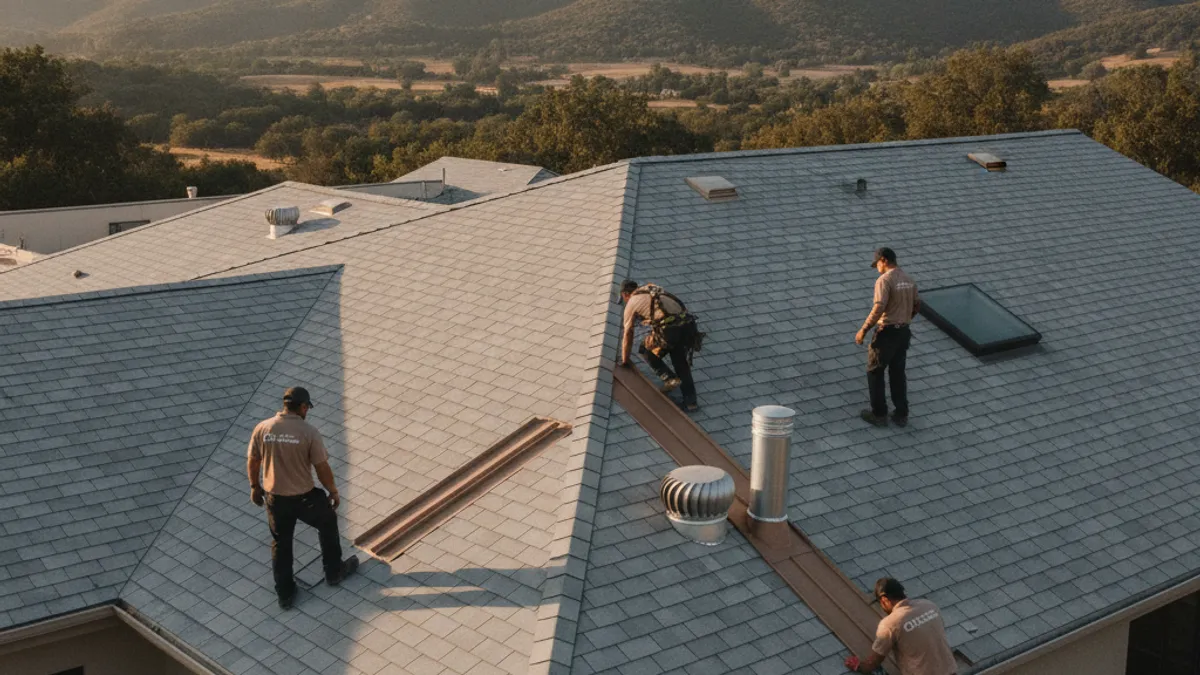
Service match: commercial roofing. City landing: roofing in Alpine.
Temperature swings drive material fatigue faster here
Alpine’s elevation means hotter days and cooler nights than coastal San Diego, and often a wider swing than Mission Valley or Kearny Mesa. That daily expansion and contraction stresses membranes, seams, and flashings. Flat commercial systems, TPO included, need movement details that a crew used only to mild coastal work may underspecify.
If the roof was installed without that conversation, a leak-free year is not proof the seams will last. Have a local independent commercial roofer inspect even when the interior is still dry. Ask how they handle perimeter flashings, penetration pitch pans, and membrane attachment for thermal movement.
Related mountain context: mountain roof considerations.
Wildfire exposure is a design factor, not a formality
Alpine sits close to Cleveland National Forest. Many parcels fall in mapped fire hazard severity zones. California Building Code Chapter 7A governs materials and construction methods for exterior wildfire exposure in designated Wildland-Urban Interface (WUI) areas. Confirm this building’s designation with San Diego County. Do not assume a coastal strip-mall spec applies.
Where Chapter 7A applies to a reroof or new covering, the roof covering must be a fire-retardant covering that is at least Class A (ASTM E108 or UL 790) when the replacement thresholds in the code are met. Asphalt shingles, concrete or masonry tile, and metal sheets can qualify as Class A products. Wood shake does not. Class A is a tested assembly conversation, not a brand slogan. Ask whether the installed assembly (membrane plus cover board plus attachments as specified) is the rated system, not whether a roll of TPO is Class A in a catalog by itself.
Defensible space around the building is part of risk. It is not a substitute for a rated roof. Product listings: OSFM Building Materials Listing. Material overview: wildfire-resistant roofing materials.
What to put on the bid besides a square-foot number
Fire-rated cover boards, listed assemblies, and extra documentation can raise a commercial bid relative to a non-WUI job of the same footprint. How much is the contractor’s number, not a percent we publish. Ask each bidder to separate:
- Membrane type and thickness
- Cover board and whether it is part of a listed Class A assembly
- Insulation, taper, and drain plan (ponding is a leak and a debris problem in this climate)
- Flashings at walls, HVAC curbs, and skylights
- Who produces the fire-rating submittal the County or fire reviewer wants
- Staging, crane or lift access, and after-hours work if tenants stay in the building
Compare those lines, then the totals. Top Pro Roofing SD does not set commercial prices.
Permits and inspections
Alpine is unincorporated. Commercial permitting runs through San Diego County PDS building, not a city roofing counter. Properties in designated fire hazard severity zones may need additional documentation: roof assembly rating, vent screening where required, and related wildfire-construction items. Confirm zone and submittal list before you assume a coastal commercial timeline.
Verify the contractor at CSLB. You contract with and pay the licensed independent professional.
Access and scheduling
Rural layout means material delivery and crew staging can take longer than a dense urban corridor, especially if a crane or lift is required. Build calendar buffer into the lease and tenant notice. Do not copy a Mission Valley start date onto an Alpine Boulevard building.
Maintenance in a backcountry climate
Wider temperature swings and wildfire-adjacent debris (dry leaves and needles in drains and valleys) mean a neglected flat roof here can fail earlier than the same membrane on a milder coastal box. Inspection timing should match fire season and the winter rain window, not a generic “annual if we remember” note. Put roof inspection into the lease or property-management calendar so it is not tenant folklore.
Catching open seams and clogged drains early is cheaper than an emergency interior loss. We will not invent a twice-yearly fee or a savings percent.
Choosing a contractor with backcountry experience
Ask how many commercial roofs they have installed or repaired in Alpine, Descanso, or nearby backcountry communities, not “San Diego” in general. A crew whose book is mostly coastal and urban may miss thermal movement details or fire-assembly paperwork. Local experience is a screening question. It is not a ranking we award.
FAQ
Does my Alpine commercial building need a Class A roof?
If the property is in a designated WUI or fire hazard severity zone and the job meets Chapter 7A replacement or new-covering rules, Class A covering is the code path. Confirm the parcel with the County. Do not guess from a neighbor’s building.
How much more does a fire-rated commercial assembly cost?
The matched contractor prices the listed assembly. We do not publish a 10 to 20 percent adder or any other invented premium.
Do temperature swings really affect a flat commercial roof?
Yes, over time. Daily expansion and contraction in a wider mountain range stresses seams and flashings more than a stable coastal climate. That is why movement details belong on the spec, not in a punch-list after the first hot week.
Who handles permitting for a commercial reroof in Alpine?
San Diego County’s building department, because Alpine is unincorporated. Fire-zone properties may need extra documentation beyond a standard commercial permit.
When to call us
If the roof was specified without mountain thermal movement or a documented fire rating, get an inspection before the next fire season and before the next heat-and-cold week finds the weak seam. We connect Alpine business owners with licensed, insured independent commercial roofing crews. Call (760) 750-5557 and we will match you with a vetted local roofer.