Start with the document you need, not with who answers the phone first. An inspection, a repair proposal, and a roof certification are different deliverables. Get scope, report sample, credentials, and recipient rules in writing before you book. Top Pro Roofing SD refers licensed local roofers. We do not inspect roofs, issue certifications, or set prices. Call (760) 750-5557.
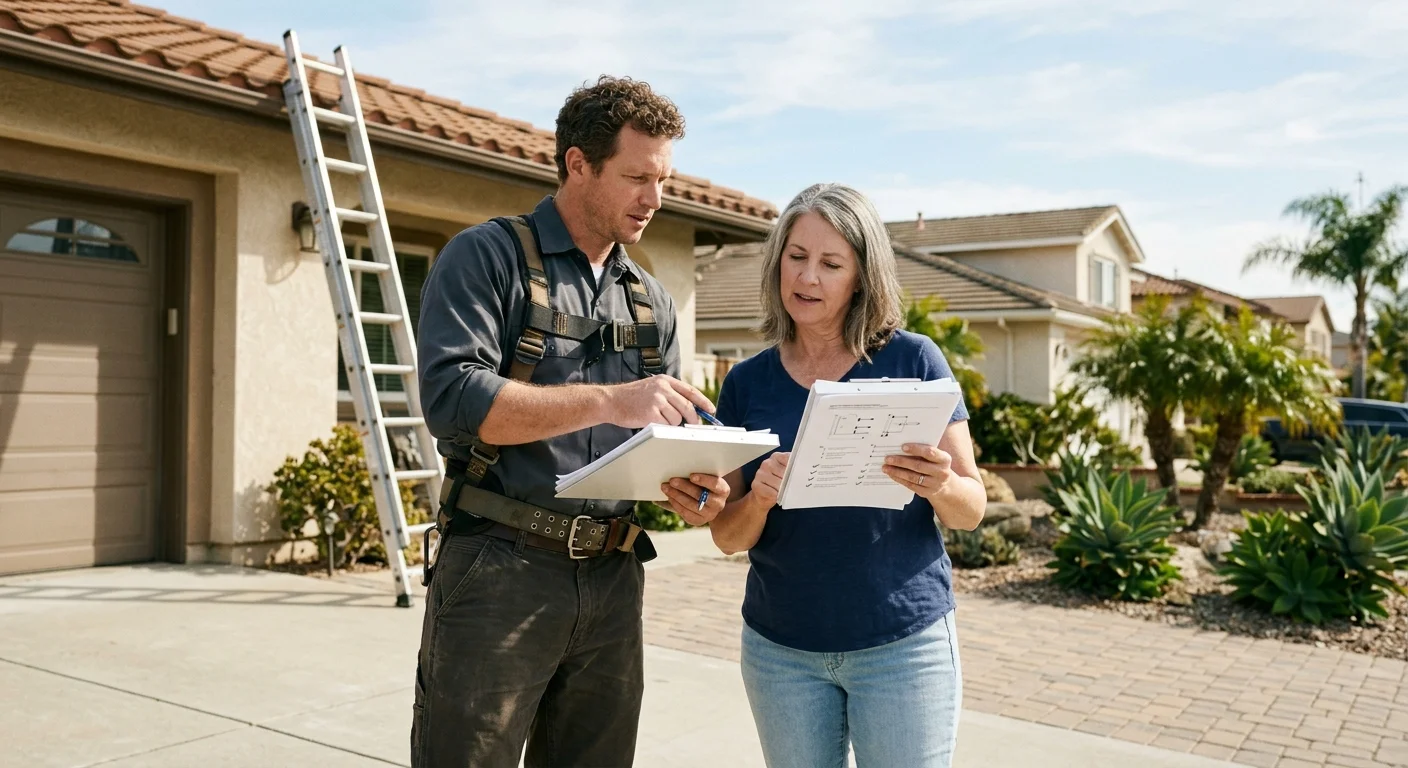
What service the buyer actually needs
A general condition review, a repair estimate, a roof certification, an insurance file, and an escrow request are not interchangeable. Each can produce different documents and follow-up work.
Ask the person requesting the inspection what they will accept. For a home purchase, that may be your escrow professional or another transaction contact. For an insurance matter, ask the insurer directly. If you are planning repairs, say that goal out loud so the provider does not sell you a different product.
Write down five details before you compare providers:
- The property address and every structure to be reviewed
- The roof sections, materials, and accessible areas included
- Whether interior or attic observations are requested
- Whether you need photos, repair recommendations, or a certification
- The person or organization that will receive the final document
A provider may inspect the roof while preparing a repair proposal. Another may offer a condition report without bidding on work. Neither description tells you whether the deliverable meets the recipient’s need.
Our guide to a roof inspection versus a free estimate explains that practical difference. You can also review our roof inspection and certification service before requesting a match.
San Diego County’s coast, inland valleys, and mountain areas have different microclimates. Neighborhood still does not reveal a roof’s condition. Ask the provider to document conditions at your specific property, including areas they could not access.
We will not invent a standard San Diego inspection price. Ask each provider for its current charge and included deliverables. Confirm whether follow-up visits, certifications, or added structures are separate before agreeing.
Inspection versus roof certification
An inspection is the process of observing and documenting roof conditions. A certification is a separate document. Its wording, purpose, and acceptance depend on its issuer and recipient. Do not assume an inspection automatically includes one.
There is no one universal California roof-certification format we can publish as binding on every escrow company or insurer. If someone requests a certification, ask that recipient for its current requirements. That is the question behind most “roof certification San Diego” searches: who will accept the paper, not who used the word certified.
Get clear answers in writing:
- Does the quoted scope include a signed certification?
- Who issues and signs the document?
- What property address and roof sections will it cover?
- Does the recipient require specific wording or attachments?
- What happens if the roof cannot be certified as requested?
- Will the issuer identify repairs needed before reconsideration?
Words such as “certified,” “approved,” and “inspected” are not substitutes for the actual document. Read its findings, limitations, exclusions, and issuer details.
Our guide to roof certification during a San Diego home sale offers more questions for transaction-related requests. Your escrow professional should confirm what belongs in your specific file.
A certification is not a warranty unless its issuer expressly provides one. Top Pro Roofing SD gives no warranties. If an inspection leads to replacement planning, compare the written findings with the proposed roof replacement scope.
What the written report should include
Compare sample reports before comparing sales language. A useful sample shows how the provider records observations, photographs conditions, and explains access limits. Page count matters less than clear property-specific documentation.
Ask whether the final report will identify:
- The property address, inspection date, and provider
- Each roof surface or structure included in the scope
- Visible roof coverings, penetrations, flashing, and drainage components
- Interior or attic areas reviewed, if included
- Photographs tied to clear locations
- Observed damage, deterioration, or areas needing further evaluation
- Areas hidden, inaccessible, or excluded from the inspection
- Recommended next steps and who should evaluate them
- The signer’s name, company, and relevant credential details
The report should separate direct observations from recommendations. It should also identify what could not be confirmed. A provider should not present the condition of a hidden layer as an observed fact when that layer was not visible.
San Diego properties can combine pitched and low-slope sections, attached covers, roof-mounted equipment, or separate structures. Do not assume every section is included. Mark each one on a photo or property document, then ask the provider to confirm the scope.
If a report recommends repair or replacement, request location-specific findings. “Roof needs work” gives you little help when comparing proposals. A labeled photo and written description create a clearer starting point for a licensed roofer.
Do not ask the inspector to invent a remaining lifespan or future performance promise. We will not publish standard lifespan claims for asphalt shingles, metal systems, or tile roofs. The report can document current visible conditions and state its limits.
Confirm the delivery format. Ask whether you will receive a downloadable file, separate photographs, and any signed certification requested by the recipient. Save the original version rather than relying on screenshots.
How to verify the inspector or roofing contractor
First determine what role the provider will fill. California does not give us one license rule that covers every inspection-only provider. Ask the provider to identify its role, credentials, report issuer, and whether it will contract for roofing work.
California’s C-39 classification covers contractors licensed to install roofing products and repair surfaces that seal, waterproof, and weatherproof structures. If a provider proposes or contracts for that work, verify the contractor through the CSLB license-check tool.
Match the lookup record to the company and person presented to you. Review the listed classification and current status. CSLB records also provide publicly searchable license, complaint-history, and bond information.
California Business and Professions Code Section 7125 requires C-39 contractors to maintain a workers’ compensation insurance certificate or self-insurance certificate with CSLB. Check the current CSLB record rather than relying on a logo, business card, or verbal statement.
A license lookup does not define the inspection scope. Continue comparing the report itself. Ask for a blank or redacted sample, then check whether it identifies roof sections, photos, findings, exclusions, and signer details.
Also ask whether the provider may bid on any recommended repairs. That relationship does not automatically invalidate the findings, but you should understand it before choosing. An inspection-only opinion and a repair proposal serve different decisions.
Top Pro Roofing SD is a referral service, not a roofing contractor. We match homeowners with licensed, independent local roofing professionals. We do not inspect roofs, perform repairs, set contractor prices, or issue warranties.
Which records to keep for escrow or insurance
Create one folder for the inspection and keep the original files. Do not rely on a message thread that may lose attachments. Use clear filenames that include the property address and document date.
Keep these items together:
- The agreed inspection scope and appointment confirmation
- The provider’s current contact and company details
- The complete report and original photo files
- Any signed certification or recipient-specific form
- The invoice, receipt, and payment record
- Emails explaining exclusions, corrections, or added findings
- Repair proposals and completed-work documents, if applicable
- A copy or screenshot of the relevant CSLB lookup
That list is an organization guide, not a universal escrow rule. Ask your escrow professional which documents are required, who must sign them, and how they should be submitted.
Insurance records also depend on the carrier and claim. The California Department of Insurance advises homeowners to report property damage promptly, document it with photos or video, keep a communication log, and retain records of temporary repairs. Its guidance also recommends documenting damage before and after those temporary measures.
If the inspection relates to a claim, ask the insurer what report format it accepts. Confirm whether it wants the inspection report, photographs, repair proposal, certification, or another form. Do not assume an escrow document will satisfy an insurer.
Preserve revised reports alongside the original. If the provider corrects an address, photograph label, or finding, ask for a dated revision. That makes the document trail easier for you and the recipient to follow.
When to call us
Call when an inspection identifies roofing work or when you need a licensed roofer to evaluate specific findings. Top Pro Roofing SD will match you with an independent local professional who can discuss the property and requested scope. Call us at (760) 750-5557 and we will connect you with a licensed local roofer.