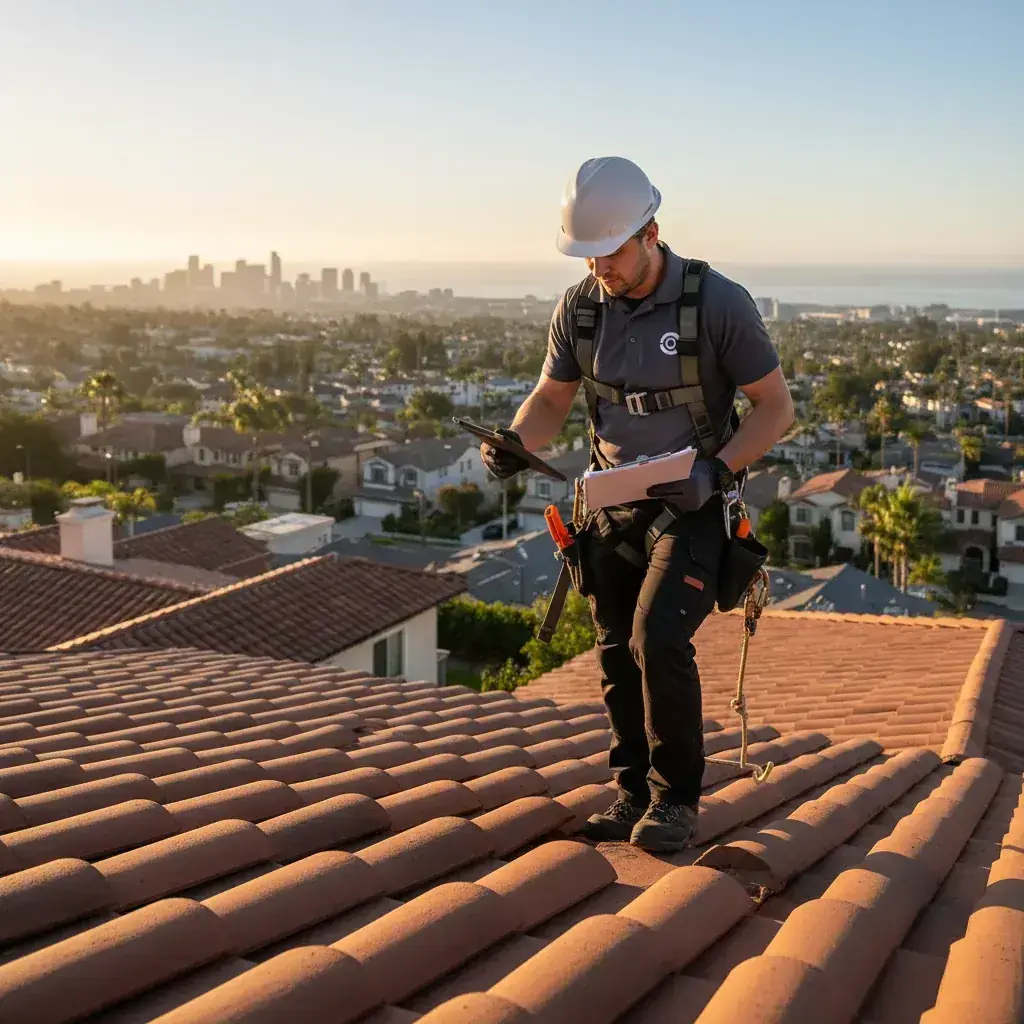
A roof certification is a written, signed statement from a specific licensed issuer, usually a C-39, about remaining usable life or visible condition at a named address. It is not a warranty. It is not a general home inspection. Top Pro Roofing SD does not certify roofs, stamp remaining life, or set certification fees.
We connect San Diego County sellers and buyers with licensed independent roofers. We do not inspect, we do not sign, and we give no warranties. Call (760) 750-5557. Ask the person who requested the paper (escrow, lender, insurer, or buyer) what wording they will accept. Then ask each roofer what they charge for that deliverable on this roof.
Related: roof certification cost, inspection vs free estimate, roof inspection service.
Three documents people mix up
| Product | What it is | What it is not |
|---|---|---|
| Roof inspection | Dated photos and a condition report | Automatically accepted as a “cert” |
| Roof certification | Signed remaining-life or condition language the recipient asked for | A warranty from this site |
| Warranty | A contract from a manufacturer or the installing contractor | A sale-day remaining-life stamp |
The legal weight, if any, sits on the signer’s license, not on our referral. A C-39 who certifies a roof that visibly should not have been certified can face a CSLB complaint. That is why honest issuers walk the roof and sometimes refuse to sign until repairs are done.
Who asks for one in a San Diego sale
There is no statewide law that every San Diego sale must include a roof cert. The requirement comes from a lender, an insurer, a buyer, or escrow following those instructions.
Ask, in writing, before you book:
- Conventional, FHA, or VA: what remaining-life or condition language the loan officer needs this year
- Homeowner’s insurer: what they need to bind on a purchase
- Buyer or buyer’s agent: inspection report vs a signed cert
- Escrow: who they will accept as the issuer
Do not take a blog’s memory of HUD or VA handbooks as the current file. Loan and bind rules change. Get the current checklist from the people who can kill the close.
California carriers have gotten stricter about roof-condition paperwork on older homes. That is a carrier decision, not a certification this brand issues. California Department of Insurance. Claims vs maintenance: does homeowners insurance cover roof leaks.
Why we will not publish a San Diego cert price table
We will not invent dollar bands, tile premiums, or “bundled with a small repair” packages. Tile takes longer to walk carefully than a simple composition field. Two-story access, steep pitch, and ponding flats take more time. Coastal complexity is access and architecture, not a secret coastal certification surcharge we can quote.
A number far below other written quotes for the same signed scope is a reason to ask whether they will walk the roof, enter the attic if required, and sign what the recipient asked for. A high number may include repairs or a return visit. Ask. Verify the signer at CSLB license check.
What a certification usually covers, and what it cannot see
A cert is an opinion on visible condition on the inspection date.
Often in scope if the issuer walked it:
- Visible field (shingles, tiles, low-slope)
- Flashings, vents, boots, valleys, gutters where they looked
- Visible leak history at the roof
- A remaining-life estimate they are willing to sign
Often not covered unless they say they opened it:
- Interior drywall
- Hidden tile underlayment (the classic San Diego miss)
- Structural deck under a covering they did not lift
- Future storms, future code, or a future carrier rule
- Anything they could not see from the surface or attic
On tile, honest notes look like “underlayment age unknown, recommend further evaluation.” A glowing cert on a decades-old tile roof with no underlayment note is a flag. Lifespan context: how long roofs last here. Signs that tend to block a signature: signs you need a new roof.
How long the paper is good for
The issuer sets the window they will sign, often a short remaining-life statement tied to that date. It does not auto-renew. If the sale slips past the window, expect a new visit and a new fee from that contractor. We do not set either.
What usually stops a signature
Issuers commonly refuse until they see repairs when they find volume tile damage, end-of-life composition, active leak staining, failed flashings, ponding on low-slope, obvious storm damage, or caulk-only prior repairs.
Their options: refuse, condition the cert on listed repairs, or quote repairs and re-inspect. Get that sequence in writing. Repairs are a separate contract unless the proposal says otherwise.
Repair-and-cert vs as-is vs replace
Repair then sign. Seller (or whoever hired the roofer) completes listed work. Issuer returns. Paper is issued if the roof then meets what they will sign. Cleaner for a close that needs bindable insurance.
As-is with a credit. The price or credit absorbs the roof problem. The trap: a buyer who waives a cert can still fail to bind insurance, and a lender may not fund without proof of insurance. Push the recipient’s actual requirement to the front of escrow.
Replace. If no honest remaining-life statement is possible even after repairs, the deal becomes a reroof negotiation. Timeline is construction and permits, not a cert form.
This is real-estate strategy with your agent. It is not a remaining-life stamp from Top Pro Roofing SD.
How to vet the issuer
- Active C-39, workers’ compensation filing on the live CSLB record, and liability you can confirm with the carrier. Read current Business and Professions Code Section 7125 rather than this blog. Lookup: cslb.ca.gov
- They walk this roof. A cert with no walk is paper, not an inspection.
- They write what they did not see (no attic access, underlayment not lifted).
- Independent of the listing agent’s preferred “always certifies” relationship when you are the buyer.
Quality of the walk: roof inspection cost and compare inspection services.
If the cert comes back unfavorable
- Complete listed repairs and re-cert with the same issuer if they will return.
- Get a second licensed opinion. Conservatism is not automatically a scam, and it is not automatically right.
- Negotiate a credit, watching the insurance-bind problem.
- Replace if that is the only honest path.
- Walk away if the roof is one symptom of wider deferred maintenance. If you are staying: annual roof maintenance.
FAQ
Is a roof cert legally required to sell in San Diego?
No statewide sale mandate. The people funding or insuring the deal may still require one.
Can the buyer or the seller hire the roofer?
Either. Buyer-paid is usually seen as more independent. Local custom often has the seller pay. Get the recipient’s issuer rules first.
How long is the visit?
Ask the contractor. Single-story composition is usually shorter than tile, steep, or a required attic. Document turnaround is their policy, not ours.
Does a cert mean the roof is new?
No. It means that issuer signed a remaining-life or condition statement. A mid-life roof in good visible condition can still get a short window. New work is usually documented with permits, invoices, and manufacturer or workmanship warranties instead.
I just replaced the roof. Do I still need a cert?
Often permit close-out, invoice, and manufacturer documents are enough for a lender. Some carriers still want their own form. Ask them.
Will any C-39 cert be accepted?
Often yes if the license is active. Some carriers keep vendor lists. Ask before you book.
Can a future buyer reuse this cert?
It is tied to a date and an address. Most buyers want a visit at their purchase. Plan on one transaction.
Can Top Pro Roofing SD certify my roof?
No. We are a referral marketplace. We do not hold a C-39, and we do not issue certifications.
For San Diego sellers
If you are listing a home with an older covering, do not wait until day 25 of escrow to learn the roof will not sign as written. An earlier licensed inspection, with or without a certification depending on what you were asked for, gives you time to bid repairs on your calendar.
If you were asked for a cert, call (760) 750-5557. We will connect you with a licensed local roofer who can say whether they will inspect, repair, and sign what the recipient asked for. You contract with that roofer. We do not certify roofs.