You’re three days into escrow on a house in Santee. The inspection report lands. One line says “roof covering: composition, fair condition.” Composition means asphalt shingle. It does not tell you remaining life, layer count, or whether you should renegotiate. Top Pro Roofing SD refers licensed C-39 roofers. We do not inspect or install. Call (760) 750-5557.
Why the term shows up at all
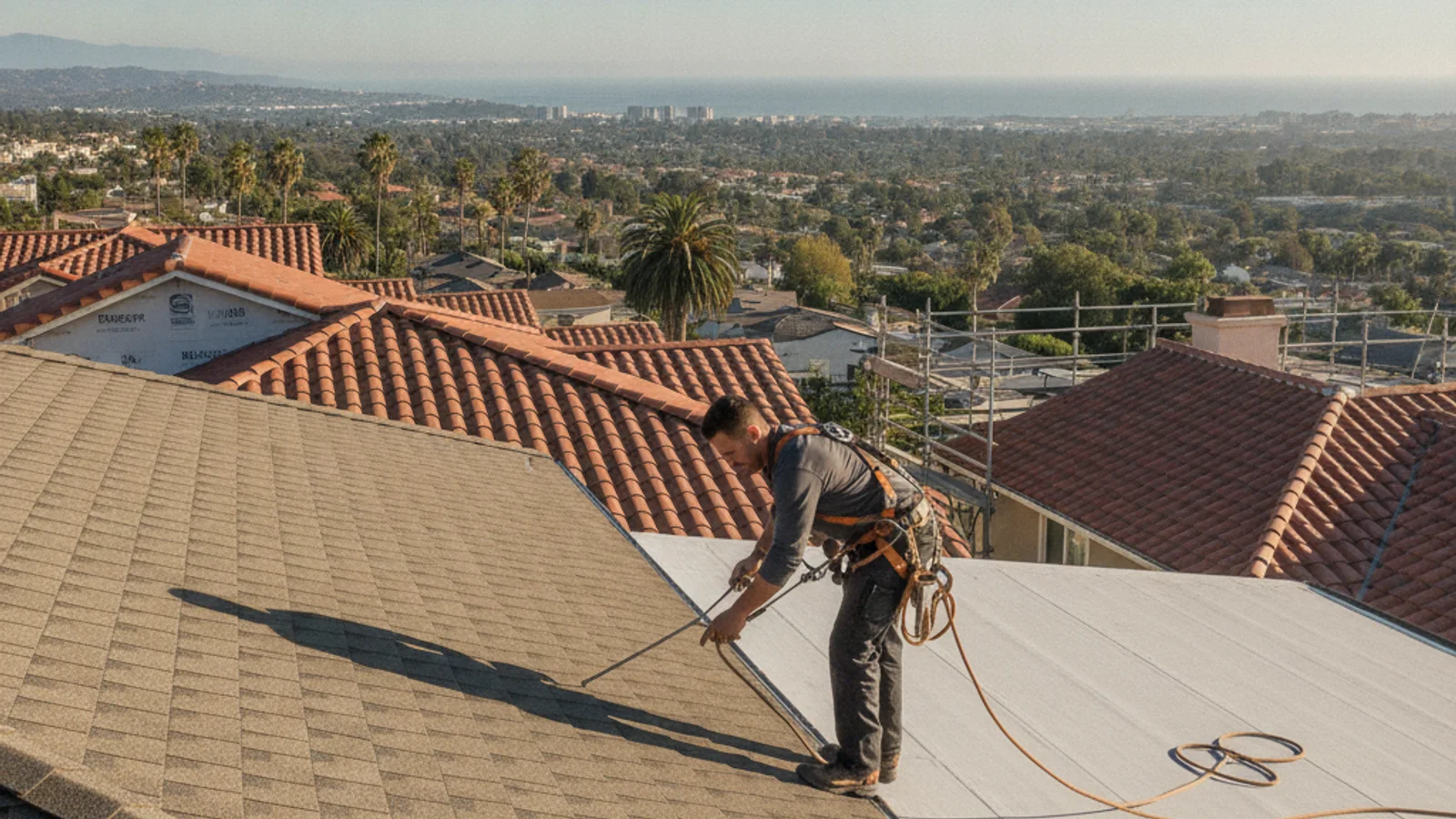
Composition, short for composition shingle, is trade shorthand for an asphalt shingle. That is it. It describes a shingle built up from layers rather than cut from a single natural material: a fiberglass or organic mat, saturated and coated with asphalt, surfaced with ceramic-coated mineral granules. The name distinguishes it from wood shake and slate, which were one substance all the way through.
The term stuck in real estate and inspection language because it is the category label an appraiser or inspector can apply from the ground without identifying a manufacturer. Wood, tile, metal, and composition are the four buckets most San Diego County listings use. When a listing agent writes “comp roof, 2016,” they are telling you the material family and a year they may or may not have verified.
The CSLB’s C-39 Roofing classification lists the materials a licensed roofing contractor works with. Asphaltum, felt, glass fabric, shakes, shingles, tile, and slate all appear on it. The classification treats them as different materials with different assemblies. That is a useful reminder that “composition” is one branch of a larger tree, not a description of quality. Two composition roofs on the same street can be built to genuinely different standards.
Three-tab versus architectural, and how to tell
Within composition there are two shapes you will see across the county. The difference is visible from the driveway once you know to look.
Three-tab shingles are a single layer, cut with two slots so each strip reads as three separate tabs. The finished roof looks flat and uniform, with a repeating pattern of vertical gaps in straight rows. They are thinner and lighter. They were the default on tract housing for decades. Drive through the older single-story neighborhoods of El Cajon, Lakeside, Spring Valley, or the pre-1980 South Bay tracts and you will see a lot of it.
Architectural shingles, also sold as dimensional or laminated shingles, are built from two or more layers bonded together. The result has visible depth and an irregular, shadowed pattern meant to suggest wood shake. No straight rows of slots. Heavier, thicker, and the standard on most newer construction and most reroofs since roughly the 2000s in this county.
If your inspection report just says composition, look at photos of the roof plane. Straight repeating gaps mean three-tab. Random shadow lines and a chunky bottom edge mean architectural. Our asphalt shingle types comparison goes deeper on the four tiers. The two-product fork is 3-tab vs architectural.
That distinction matters for the next decision more than the word composition does. The two products carry different weights, different fastening patterns, and different manufacturer specifications for the assembly underneath them.
What the label does not tell you about age or remaining life
“Composition” tells you nothing about how long the roof has left. Neither does the marketing name on the bundle.
Shingles are sold with warranty terms that get spoken about as lifespans: “30-year shingles,” “50-year architectural.” Those are warranty periods. Roofing warranties are prorated and conditional on specific installation and maintenance requirements. We will not publish a figure for how long a given shingle lasts on a San Diego roof. No primary manufacturer or government source we could verify supports a single number. Actual service life moves with climate exposure, installation quality, ventilation, and maintenance history. The only people who can speak to a specific product’s warranty terms are the manufacturer and whoever holds the paperwork.
The label also tells you nothing about the parts of the roof that fail first. Underlayment, flashing at chimneys and sidewalls, valley metal, and pipe boots all have their own service lives. None of them are visible in a photo of the shingle field. A roof can have sound-looking composition shingles and a corroded valley that has been wetting the decking for two seasons.
And it says nothing about layers. Ask the AHJ how many existing applications must come off before new covering. If your inspection notes multiple layers, that changes the cost and scope of the next reroof. We will not invent that cost. Our overview of San Diego roof types puts composition in context against the tile and metal you will see elsewhere in the county.
Where composition sits in San Diego County
The county’s housing stock splits along lines that matter for this. Inland north county (Poway, Rancho Bernardo, Escondido, San Marcos, and the Rancho Santa Fe corridor) is heavily concrete and clay tile, a legacy of Mediterranean-revival tract building from the 1970s through the 1990s. If a listing there says composition, that is worth a second look, because it may mean a previous owner converted from tile.
East County and the South Bay carry much more composition, particularly in the older single-story tracts. Along the coast, from Oceanside down through Encinitas, Del Mar, Point Loma, and Coronado, composition is common. The marine environment is harder on the metal in the assembly than on the shingles themselves, so flashing and fastener condition deserve more attention than granule wear.
Fire rating is a separate question from the composition label, and in some parts of the county it is the deciding one. Ask the AHJ, your insurer, and the matched C-39 whether this parcel needs a listed Class A covering, and which trigger applies to a reroof versus a small repair. Do not treat a blog as Chapter 7A. Asphalt shingles can qualify as Class A when the listed assembly is what gets installed. Wood shake generally does not. Confirm the parcel’s designation rather than assuming.
What to ask before you sign
Ask for the roof’s documented install date and any permit record, not the seller’s recollection. Ask how many layers are on the deck. Ask whether the report covered the attic side, because interior staining and daylight at penetrations tell you things the shingle surface will not. Ask specifically about flashing at every chimney, sidewall, valley, and skylight. Those are the details that leak first.
Then get someone on the roof. A ground-level or drone review of the shingle field is a starting point, not a condition finding. An asphalt shingle roofing specialist can tell you which profile is up there, whether the fastening and exposure look correct, and whether the assembly beneath it is sound. A roof inspection is also the document a lender or insurer may ask for later. It is cheaper to have in hand during your inspection window than after close. We will not invent that inspection fee.
If any part of the answer depends on a warranty, get the transferable warranty paperwork from the seller during escrow. Verbal warranty claims do not survive a closing.
One more question is worth asking, and sellers rarely volunteer the answer: has the roof ever had a leak, and was the repair documented. A single repaired flashing detail with an invoice behind it is useful. A roof with a history of spot-sealing and no paperwork tells you the previous owner was managing symptoms. Ask for invoices, not recollections.
Then decide what you want out of escrow. A condition finding gives you three options: ask for a price reduction, ask for the repair before close, or accept the roof and budget the replacement yourself. Which one makes sense depends on whether the finding is a component repair or a full reroof. That distinction belongs to someone who has been on the roof. Getting that answer inside your inspection window is the whole point of asking early.
When to call us
If your inspection report says composition and stops there, that is the point to bring in a roofer instead of guessing at remaining life. Anything involving flashing, decking, layer count, or a fire-rating question in a WUI parcel needs a licensed C-39 contractor who has actually been on the roof. You can verify any license through the CSLB license check before you hire. Call us at (760) 750-5557 and we will connect you with a licensed local roofer.