Architectural means laminated, dimensional shingles. Three-tab means a single-layer strip with cutouts. On a full San Diego reroof, keep those two products on the bid as two named lines. Do not collapse them into “just shingles.” Top Pro Roofing SD refers licensed C-39 roofers. We do not install. Call (760) 750-5557.
If you need the wider four-tier map (designer and Class 4 included), use asphalt shingle types compared. This page is only the 3-tab versus architectural decision.
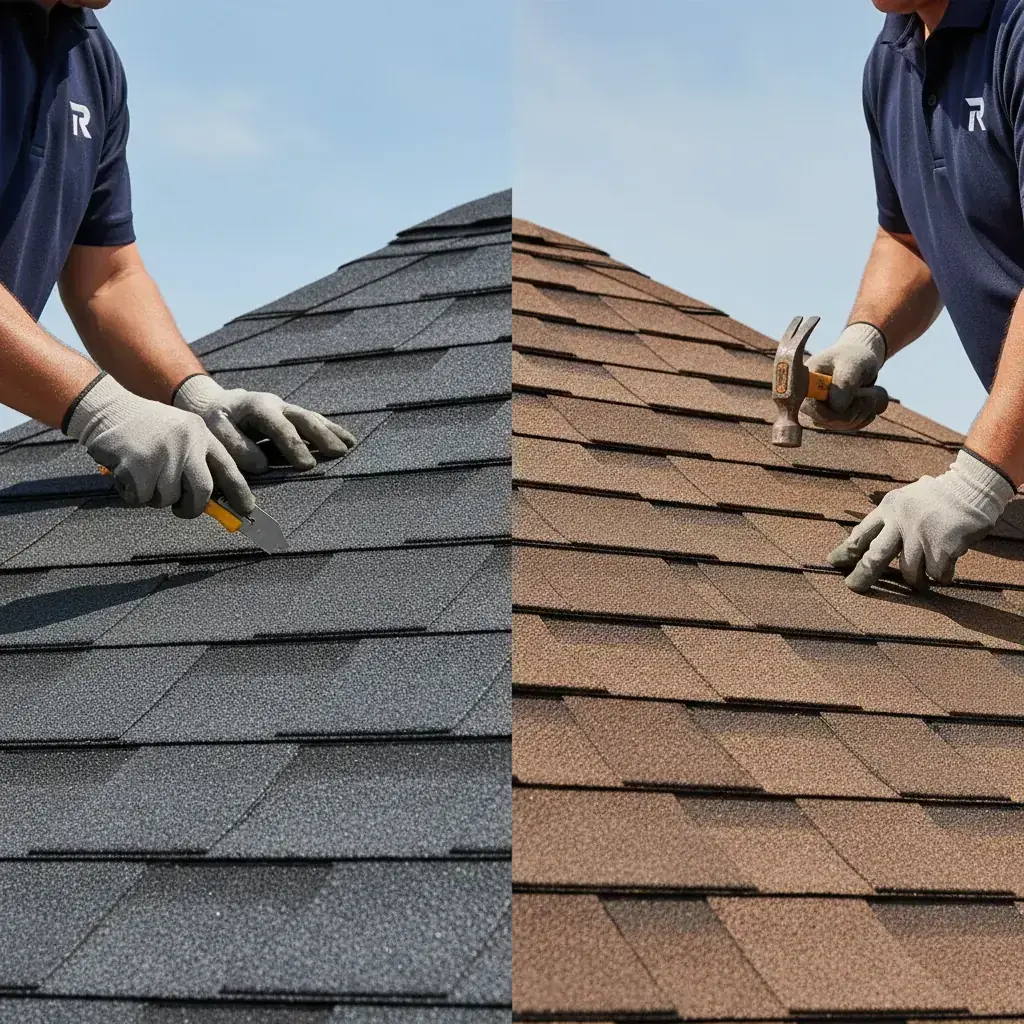
What changed: why 3-tab is rarely the new-install default
Three-tab shingles were the default for most of the 20th century. They are flat, lightweight, and a single layer of asphalt with three cutouts per strip. They still exist in manufacturer catalogs. Distributors around San Diego County stock them less often for residential reroofs. Installers quote them less often. That is a market shift, not a proof that 3-tab is illegal.
Three reasons the conversation moved:
- The material gap shrank relative to the rest of the job. Tear-off, underlayment, flashing, access, and permits sit on both quotes. Ask for both products on the same measured roof and read the delta. We will not invent a per-square or whole-house number.
- Wind listings and fastening patterns differ. Architectural laminates usually publish higher wind ratings than 3-tab when installed to the spec sheet. Your insurer’s actual rule is on your policy, not in a blog. Ask the carrier what they require for a new covering.
- Courses show mistakes. A 3-tab roof needs straight lines. Architectural tabs hide deck waves. That is a look and workmanship issue, not a reason to skip nailing details.
Architectural vs 3-tab at a glance
“Architectural” means the shingle is made from two layers laminated together. That thickness creates shadow lines and varied tab sizes. It is also what makes the product heavier and stiffer than 3-tab.
| Attribute | 3-tab | Architectural (laminate) |
|---|---|---|
| Construction | Single layer, cut tabs | Two or more layers bonded |
| Street look | Flat, repeating slots | Dimensional, irregular shadow |
| Typical conversation | Match an existing field, garage, or short-hold | Default on most current residential reroofs |
| Wind listing | Lower published mph on many lines | Higher published mph on many lines |
| Algae resistance | Often limited or skipped | Often built in on flagship lines |
| Warranty language | Shorter class on many remaining SKUs | Longer limited or lifetime-limited language on many lines |
Those rows are how to read a spec sheet. They are not a lifespan table. We will not publish years-on-a-San-Diego-roof as if they were measured for your street.
Named mid-range architectural examples you will see on bids: GAF Timberline HDZ, Owens Corning Duration, CertainTeed Landmark. Premium architectural examples: CertainTeed Landmark Pro, GAF Timberline UHDZ. Always match the exact SKU on the proposal to the current manufacturer sheet.
If you are choosing between brands, the GAF vs. Owens Corning comparison covers mid-range and premium lines. For wrapper years versus real product tiers, see 30-year vs 50-year shingles.
Wind, fire, and impact: ask for the listing, not a blog number
San Diego is not tornado country. Santa Ana winds still load inland valleys and foothills. Ember events have moved through neighborhoods. Ratings matter when they are on the product page and in the nailing pattern.
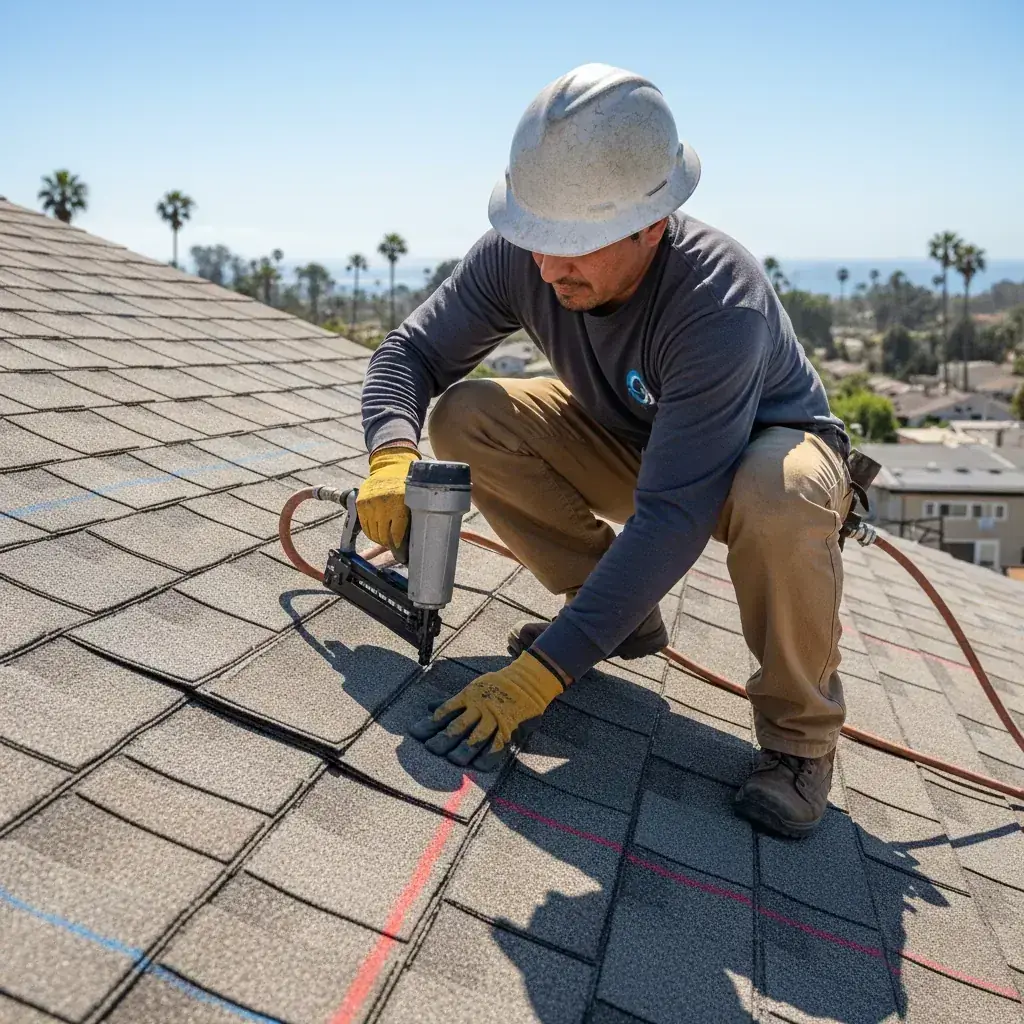
Wind listings
Shingles are commonly tested under ASTM D3161 or D7158. Class H under D7158 is the 150 mph listing. Many architectural products land at Class F (110 mph) or Class H when installed as specified. Three-tab products often list a lower class. For anything near the coast or in Santee, El Cajon, or the foothills where Santa Anas funnel, ask the matched roofer to put the published class and the nailing pattern on the proposal. The listing only counts if the pattern on the roof matches the page. For more on high listings, see 150 mph wind-rated shingles.
Fire ratings
Ask the AHJ, the insurer, and the matched C-39 whether a listed Class A assembly applies to this parcel and this scope. Do not treat Class A on any covering as a countywide fact. Both 3-tab and architectural shingles from major manufacturers can carry Class A when the listed assembly is what gets installed. That is not a reason to pick one type. If you are in a mapped fire-hazard severity zone, check that the specific product on the quote matches the listing. The wildfire and ember data for San Diego is worth reading before you finalize a material choice in those areas.
Impact ratings
Hail is not a regular San Diego threat the way it is in Texas or Colorado. Class 4 products (UL 2218) exist inside the architectural family. If your carrier credits that listing, get the credit in writing before you pay for it. Do not treat a brochure discount as your policy.
Coastal exposure: what actually ages the roof
Manufacturer warranties are written for controlled conditions. San Diego’s coast is not. Salt air, year-round UV, and marine-layer wet-dry cycling hit granules, adhesive strips, and metal first. The full breakdown on the best roof material for coastal climates goes deeper. For the failure modes, see what deteriorates asphalt shingles fastest in San Diego and coastal salt damage.
We will not invent a 15-year versus 28-year table for Ocean Beach versus Escondido. Ask the matched roofer what they expect for this ventilation, this slope, and this exposure, and to show it against the warranty PDF.
Ventilation still matters. A poorly ventilated attic bakes shingles from underneath. If you are reroofing, it is the right time to audit ridge vent and soffit coverage.
How to compare the two bids without a made-up price
Pricing moves with neighborhood, slope, tear-off, layers, and how booked the crew is. We will not invent per-square ranges.
Ask for two columns on one proposal:
| Line | 3-tab | Architectural |
|---|---|---|
| Product name | Exact SKU | Exact SKU |
| Installed square count | Same measured roof | Same measured roof |
| Underlayment | Named | Same, unless they upgrade it and say why |
| Wind listing and nailing pattern | On the page | On the page |
| Algae feature | Included or extra | Included or extra |
| Workmanship vs manufacturer | Separate | Same, plus any system-plus paperwork |
A square is 100 square feet. Ask them to show how they counted yours. The upgrade decision is the delta between those two columns, not a typical-home figure on this site. For how whole-roof scopes get built, see the roof replacement service page rather than a blog price.
When a shingle upgrade makes sense
If you are doing a full reroof, price architectural as the default line. The rest of the job (tear-off, underlayment, flashing, permits) sits on both quotes. 3-tab can still be a real match for a remaining field, a garage, or a short-hold where you are not buying later years.
On a repair rather than a replacement: if you need to patch a section and the existing 3-tab still has useful life, matching it is the honest repair. If a large share of the field is already failing, that is the moment to talk replacement instead of chasing color match.
Our asphalt shingle roofing service covers how referred roofers scope repair versus replacement. They should tell you if matching 3-tab is the right call. For the broader fork, see roof repair vs. replace.
If you are pulling permits through the City of San Diego or unincorporated county, replacement roofing has to meet the current energy and fire rules that apply to that address. Architectural lines often have more cool-roof color options than remaining 3-tab SKUs. Applicability depends on slope, climate zone, and the current permit. Ask the matched roofer to name the values they will submit. See the San Diego County building page and current ENERGY STAR roofing product criteria as starting points, not as a substitute for the permit review.
When to call us
Choosing between shingle types is one decision. Nailing patterns, starter strip placement, and underlayment decide how long either product performs. Those details need a licensed contractor who will work to San Diego’s applicable codes. If you are seeing granule loss, curling edges, or daylight in the attic, get someone on the roof before the next rain. Call us at (760) 750-5557 and we will connect you with a vetted local roofer.