Top Pro Roofing SD is a referral marketplace. We connect San Diego County homeowners with CSLB-licensed roofers. We do not install roofs and we do not publish a 2026 installed-price card. Call (760) 750-5557.
Picking a covering here is not the same decision as Phoenix or Portland. Salt, UV, Santa Ana wind, Title 24 cool-roof rules on the assemblies that trigger them, and inland fire-severity maps all shorten the honest list. This page is which type fits the house. Coastal depth: best roof material for coastal climates. Southern California ranking with HOA and WUI first: best roof types for Southern California homes.
We will not invent installed dollars per square foot or a whole-house total.
Which roof type fits a San Diego home?
Tile is the default on Spanish and Mediterranean tracts, and on many HOA design books. Architectural shingle is the common budget reroof on ranch stock where the book allows it. Standing seam metal is the long-life and wildfire-assembly conversation. Low-slope TPO or modified bitumen belongs on additions, mid-century flats, and commercial, not on a steep main roof that was built for tile. Wood shake is usually out inland because the required assembly is Class A.
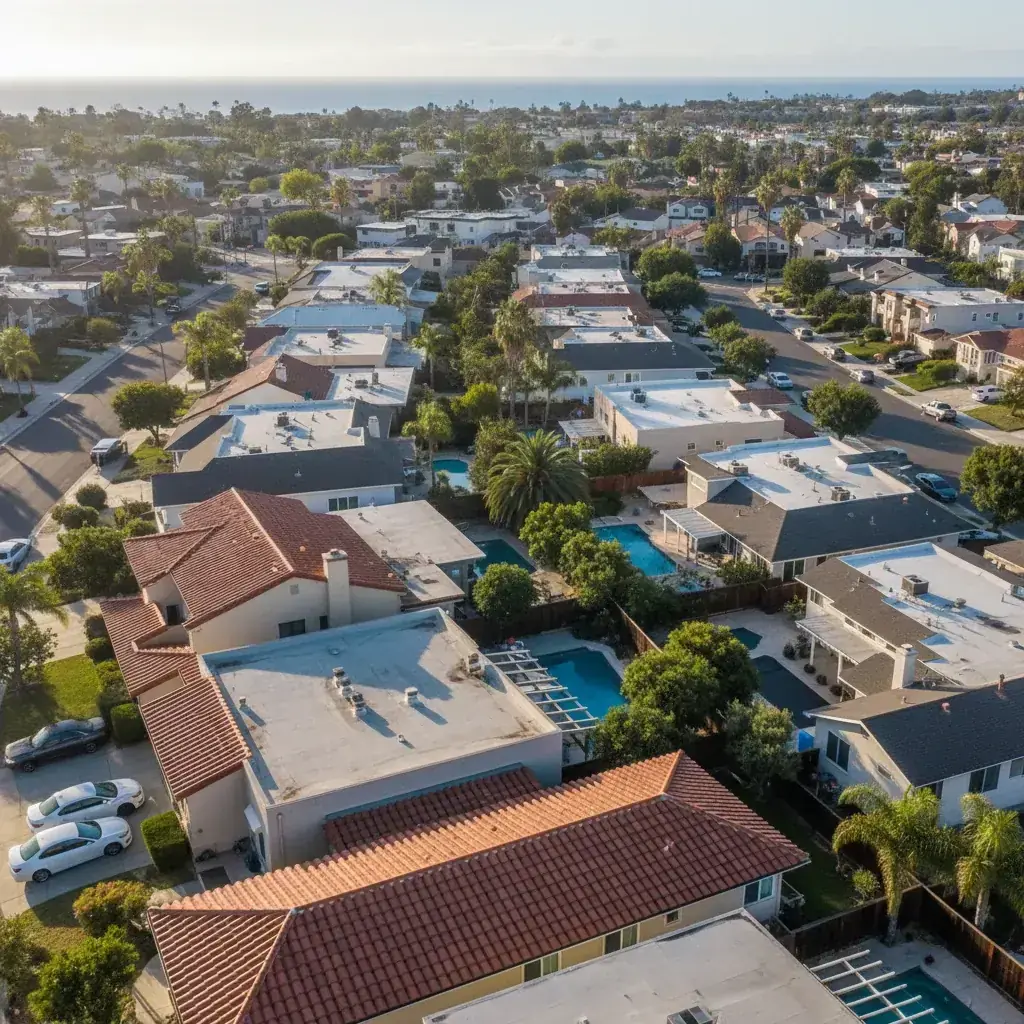
Why San Diego’s climate narrows the list
No snow load on most lots. Rain arrives in short bursts. Inland heat and coastal UV still age coverings. Cheap three-tab shingles lose the race here faster than a brochure lifespan. Salt air within a few miles of the water attacks fasteners, flashings, and mortar under tile. Ocean Beach through Encinitas is that marine strip. Data: coastal salt damage.
Title 24 sets cool-roof reflectivity for the low-slope applications that trigger it, and some steep-slope reroofs in listed climate zones. Your matched C-39 should name the current product listing, not wave at “energy code.” If they cannot, that is a red flag.
Fire rating matters on mapped inland and backcountry lots (Santee, El Cajon, parts of Poway, Ramona, Alpine, Julian). Those jobs need a Class A assembly, not a covering nickname. Untreated shake is the usual miss. Ember context: wildfire roof ember data.
Spanish tile and concrete tile
Tile is the county’s default look. Mission Hills, Rancho Santa Fe, and large stretches of Chula Vista read as barrel profile from the street.
Clay vs concrete
Clay is fired ceramic, usually barrel or S. It holds color. It does not like careless foot traffic. It is heavy. Older frames built for shake or composition may need an engineer before anyone adds that dead load. We will not invent a weight table or an installed total.
Concrete is the tract workhorse. It can mimic barrel from the curb. It is also heavy. Color coat can fade while the body is still sound, which is why a tired-looking roof is not automatically a new-tile job.
Both fail first at underlayment and flashings when a tile cracks or walks. Tile roof lift and relay is the repair when the covering is reusable. Tile roofing. Cost-reading without a fake invoice: tile roof cost and tile cost per square foot.
Asphalt shingle: inland value pick when the book allows it
Shingles get undersold because tile photographs better. Inland (El Cajon, Santee, Lakeside, Escondido, parts of Chula Vista) they are often the honest economic covering if the HOA is not a tile book and the slope is steep enough.
Modern architectural laminates are not 1985 three-tab. Ask for the named GAF, Owens Corning, or CertainTeed product, wind listing, Class A assembly, and algae resistance. GAF vs Owens Corning. Asphalt shingle roofing.
UV still shortens service life versus the brochure year. Inland sun is harder on asphalt than a marine lot is on well-detailed tile. How long a roof lasts in San Diego. Do not assume you “got” the full rated term.
Shingles are the wrong conversation below the manufacturer’s minimum slope. That is when you are in membrane territory.
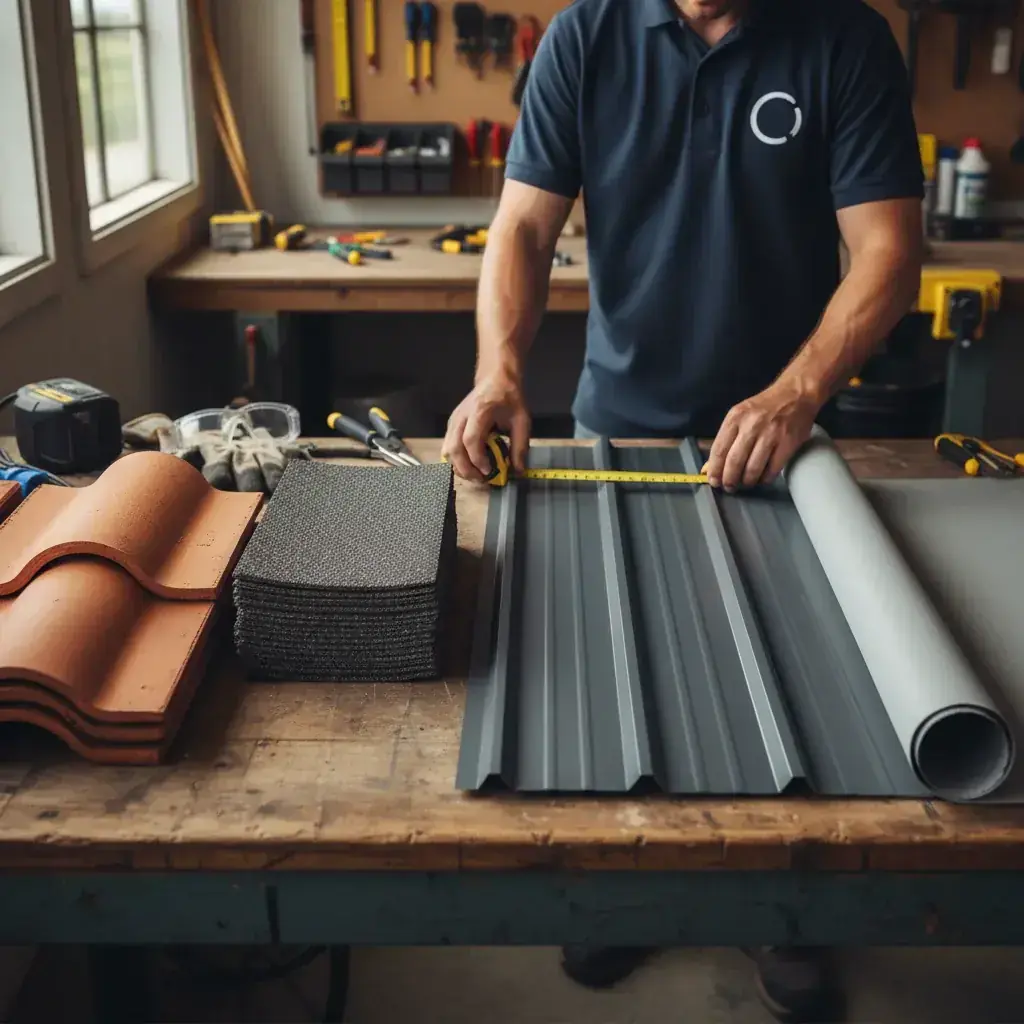
Metal and flat roofs
Metal
Standing seam shows up on contemporary houses, additions, and fire-zone reroofs that want a Class A metal assembly. Aluminum and well-coated steel (including Galvalume conversations) are the coastal metals. Bare galvanized is the salt-air miss. Fastener and flashing metal have to match that story. Metal roof cost (bid reading), metal vs shingle, metal roofing.
Standing seam moves with heat. Attachment and oil-canning are installer skill, not a panel brochure.
Flat and low-slope
Mid-century mains, additions, ADUs, and commercial decks: TPO (heat-welded, reflective, often the Title 24 low-slope path) and modified bitumen (more forgiving around messy penetrations). Ponding water is the failure mode when drains and taper are wrong. TPO vs modified bitumen. Flat roofing.
Match the covering to the architecture
A standing seam roof on a Spanish Colonial fights the street. Three-tab on a Craftsman that could have carried dimensional shingle or tile reads cheap next to the neighbors.
Spanish Colonial and Mediterranean. Clay or concrete barrel is the language the house was drawn in. Changing away from tile in a tile neighborhood is a resale conversation, not only a technical one.
Craftsman and ranch. Architectural shingle or flat-profile concrete, if the book allows it.
Mid-century and contemporary. Standing seam or a well-drained membrane. Many of these roofs were always low-slope.
Coastal cottage. Architectural shingle can work if you accept a shorter covering life in salt and UV. Marine-grade metal is the hold-the-house-long conversation.
Before you change systems, pull permit history. Layered roofs and unknown decks change load and underlayment. County PDS building or City of San Diego Development Services.
When to call
Material is decision one. The second is a C-39 who will name permit, Title 24 listing, and coastal or WUI assembly in writing. Verify them on CSLB. Call (760) 750-5557. We will connect you. We do not nail the covering.