Hip vs gable is a shape decision, not a style quiz. Two planes vs four. That geometry changes wind, shade, attic room, and how hard a reroof is. We will not invent a percent cost gap or a year table. Top Pro Roofing SD refers. We do not install. Call (760) 750-5557.
If you searched California hip roof, you may mean a full hip common on Spanish and ranch stock, or a Dutch gable: a hip body with a small triangle at the ridge. Those are different drawings. Ask the estimator which one they mean before you compare bids.
How many planes does each roof have?
A gable roof has two sloped planes and two vertical end walls. A hip roof has four sloped planes and no tall triangular ends. Wind, shade, and attic space follow from that.
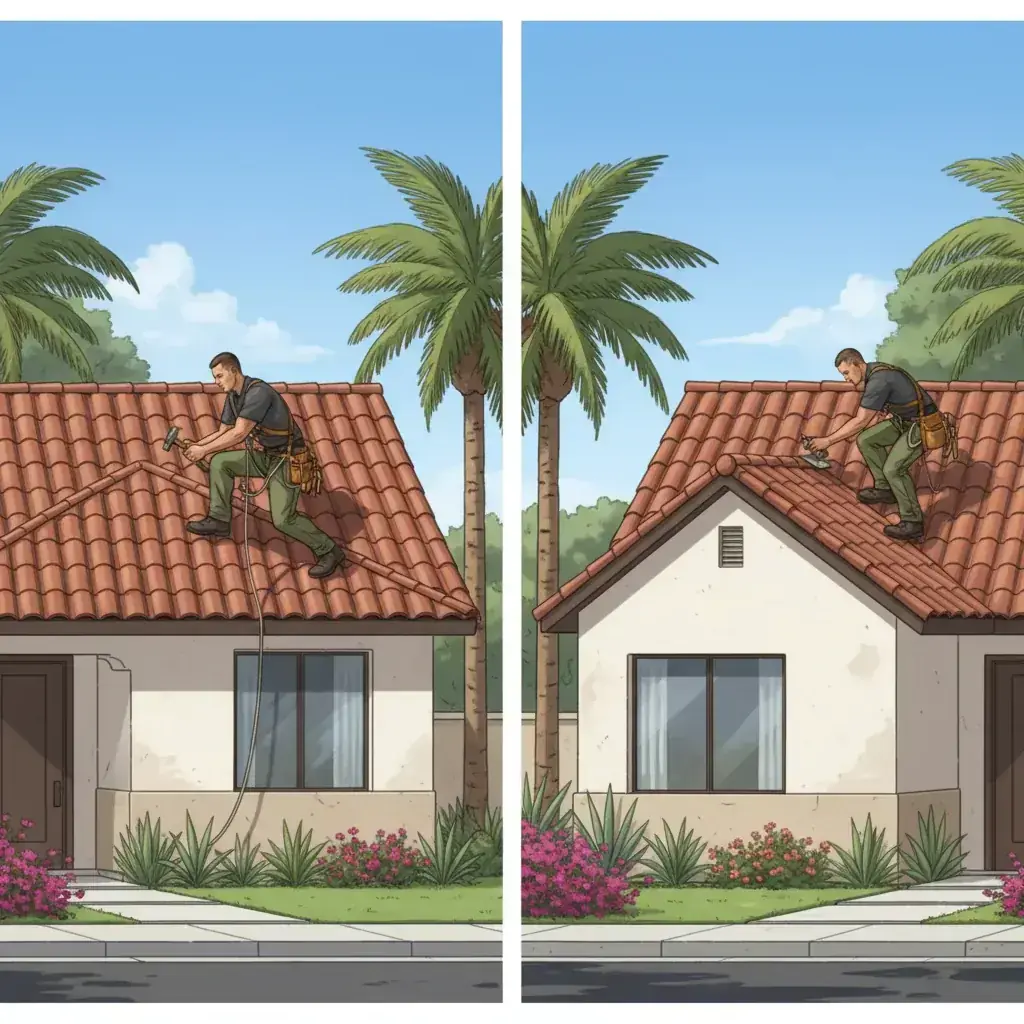
What each shape actually is
Gable
Two slopes meet at a ridge. The ends are vertical triangles. Clairemont and La Mesa ranch streets are full of them. Craftsman and farmhouse stock use the same bones.
Pros: simpler framing, fewer hips and valleys, more usable attic, easy gable-end vents. Cons: those end walls can take wind like a sail if bracing and wall ties are weak.
Hip
All four sides slope. Square plans meet at a peak. Rectangular plans meet at a short ridge. Mediterranean and ranch houses across the county use this a lot.
Pros: wind can hit from more than one direction without a tall flat end. Eaves wrap the house, so more wall shade. Cons: more surface, more hip and valley cuts, less headroom in the attic.
A Dutch gable / California hip hybrid keeps most of the hip and adds a small gable for light or a look. Treat it as its own drawing, not “basically a gable.”
Wind, sun, and rain in this county
Santa Ana wind, long sun, and short hard winter rain are the three loads. 150 mph wind-rated shingles is the covering conversation. This page is the shape under that covering.
Wind. A hip is self-bracing. Load can travel around the four slopes. A gable’s vertical end is a large surface. Modern San Diego code wants that wall tied and braced. Physics still favors the hip when the wind can hit that end. “Catastrophic” is not a typical outcome on a code-built house. It is the reason the end needs real framing, not a shrug.
Sun. Hip eaves shade all four walls. Gable eaves shade two. East and west gable walls take more afternoon heat. Material and Title 24 cool-roof listings often move energy more than shape. A listed cool covering on a gable can beat a dark covering on a hip.
Rain. Gable water runs two ways. Gutters and valleys stay simple. Hip roofs add hips and often valleys. Those joints work when flashing is done right. They leak when it is not. Shape is not the leak. The joint is.
Cost to build and to reroof, without a fake percent
A hip usually costs more than a gable on the same footprint. More surface, more angled cuts, more ridge and hip cap, slower labor. A gable is the simpler two-plane job. We will not print “15-30%” as if it were a county bid. Ask for both shapes only when you are actually changing the structure. On a straight roof replacement, you almost always keep the shape you have.
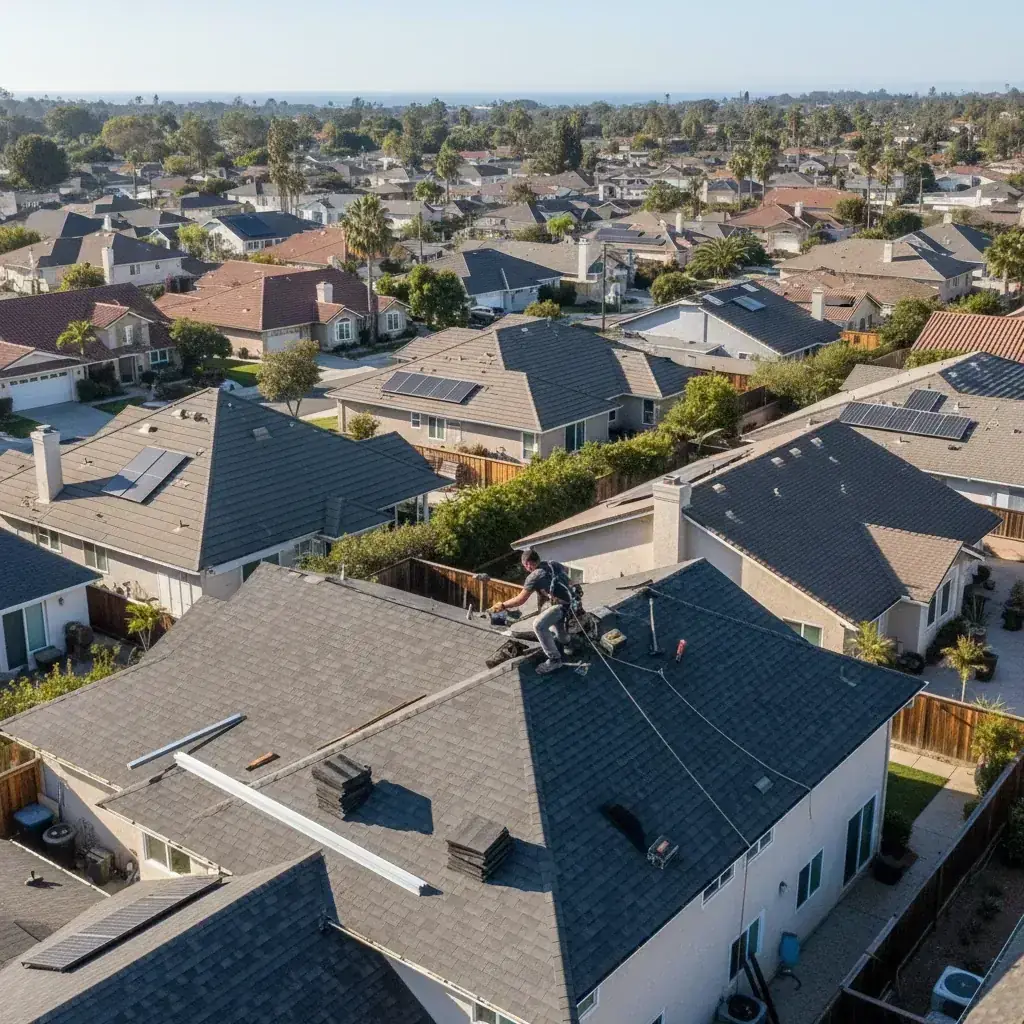
Attic space, ventilation, and energy
Attic. Gable ends give volume and a place for windows or vents. Hip slopes eat headroom fast. Storage and bonus rooms are a gable story unless the hip is a high, custom frame.
Ventilation. Gable-end vents plus soffits are the simple cross-breeze. A hip has no gable wall, so intake at the soffit and exhaust at the ridge or boxes has to be designed as a system. Either shape fails if the attic cooks. That heat ages the covering from below. See how long a roof lasts in San Diego for climate aging, not a calendar.
Energy. Shape is one input. Ventilation, color, and a listed cool product are others. Do not pick a hip only to “save on A/C” without those.
When converting from one to the other makes sense
Changing shape is a structural remodel, not a reroof. You remove the old frame, engineer a new one, and pull permits. Gable to hip is sometimes sold for wind or a second-story look. Hip to gable is usually for attic volume. Both are expensive relative to staying put.
If you are only replacing the covering, keep the existing shape. Convert when you are already opening the house for an addition or a full second story. Age of the current covering is a separate question: is a 20-year-old roof too old.
When to call
You want a covering recommendation on the hip or gable you already have, or you are drawing an addition and need the roofing implications in writing. We connect you with a licensed local roofer. Verify the C-39 at cslb.ca.gov. Top Pro Roofing SD does not frame roofs, set prices, or hold a contractor license.
Call (760) 750-5557.