The best roofing contractor in San Diego is the one who shows you an itemized estimate, recommends the right material for your coast or inland location, and gives you time to decide. Skip anyone who pressures you or hides line items. This guide covers real local pricing, the coastal-vs-inland material question, how to read an estimate, and what to ask before you sign. It works whether you’re in Poway, La Jolla, or anywhere in the county.

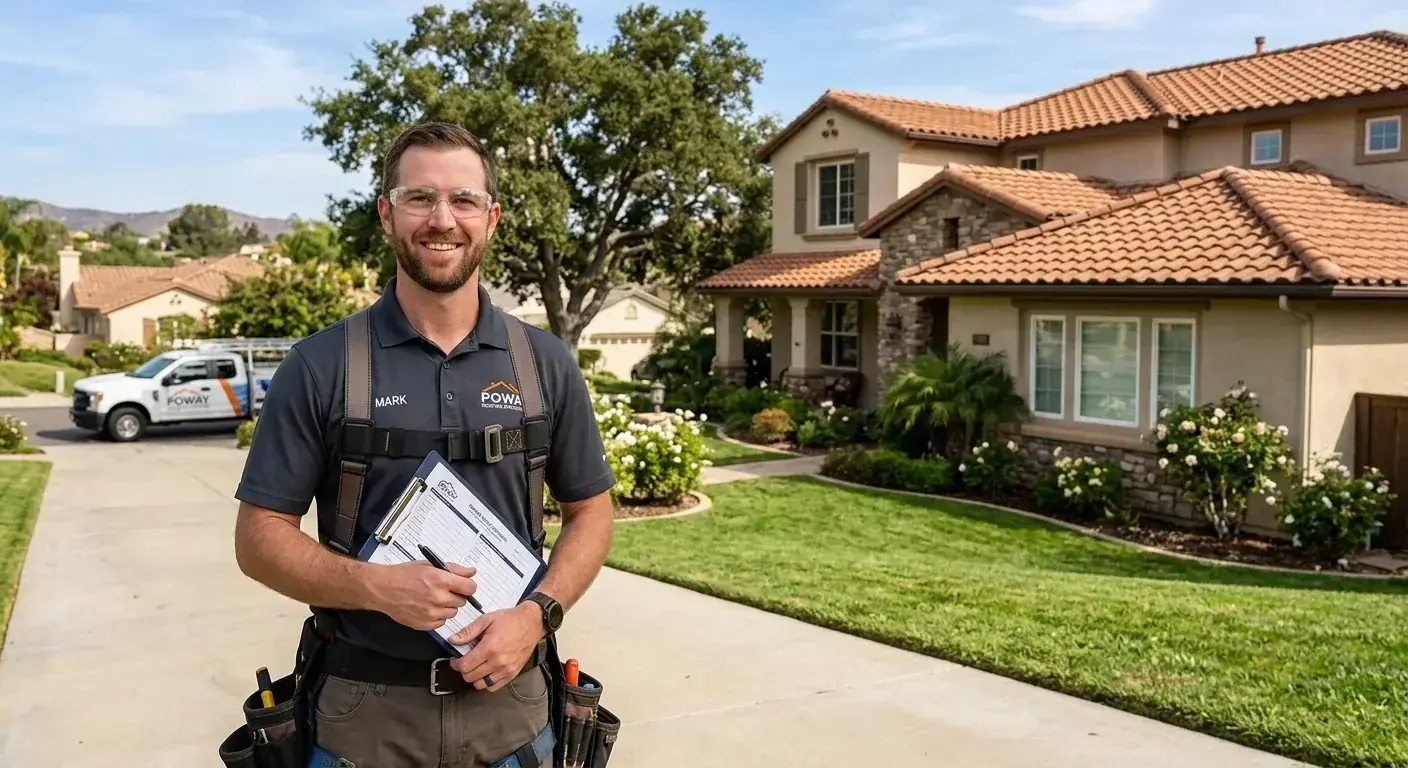
A friendly, professional roofing contractor in a branded polo shirt standing in front of a beautiful suburban home in Poway, CA, holding a clipboard and smiling.

What’s unique about roofing for Poway homes?

Poway, often called “The City in the Country,” offers a distinct living environment, and that extends to its roofing needs. Unlike coastal San Diego areas, Poway experiences warmer summers and colder winters. This temperature swing puts specific stress on roofing materials. You’ll need durable options that can withstand both intense sun exposure and occasional cooler, wetter periods. Fire safety is another major consideration here. Given Poway’s proximity to wildland areas, especially in neighborhoods bordering open spaces, fire-resistant roofing materials aren’t just a good idea; they’re often mandated by local building codes and fire departments. Materials like Class A fire-rated asphalt shingles or specific types of tile roofing offer superior protection against embers.

Many Poway communities also have Homeowners Associations (HOAs) that maintain architectural guidelines. Before you plan a major roofing project, it’s essential to check with your HOA for any specific requirements regarding material types, colors, or even installation schedules. Ignoring these can lead to costly delays or fines. For instance, some HOAs might only permit certain shades of tile or shingle to maintain neighborhood aesthetic. A roofing contractor with deep experience in Poway will understand these local nuances, including fire safety regulations and common HOA stipulations. They can help you navigate these requirements, ensuring your new roof isn’t just structurally sound but also fully compliant. This local knowledge saves you time, money, and potential headaches down the line. The full breakdown on how to maintain a tile roof in San Diego goes deeper.

What a roof actually costs in San Diego County

Most roofing sites won’t show you numbers. Here’s a real range so you can spot a quote that’s way off. These are ballpark figures for a typical single-story San Diego home, tear-off and install included. Your actual price depends on roof size, pitch, layers to remove, and material.

Asphalt shingle is the most common and the most affordable. A standard architectural shingle replacement runs roughly $9,000 to $18,000 for an average home. Concrete or clay tile costs more, usually $18,000 to $40,000, partly because tile is heavy and the labor is slower. Flat or low-slope roofs, common on mid-century and modern homes, often use a single-ply or torch-down system and land around $12,000 to $25,000. Standing-seam metal is the priciest, often $25,000 and up, but it lasts decades.

A few San Diego specifics push the number. Steep pitches and two-story access cost more in labor. If a contractor finds rotted decking during tear-off, expect a per-sheet add-on, often $70 to $120 per sheet of plywood. Permit fees in most county cities run a few hundred dollars and should be a separate line, not buried in labor. If a quote comes in far below this range, ask what’s missing. Cheap usually means thin underlayment, skipped flashing, or no permit.

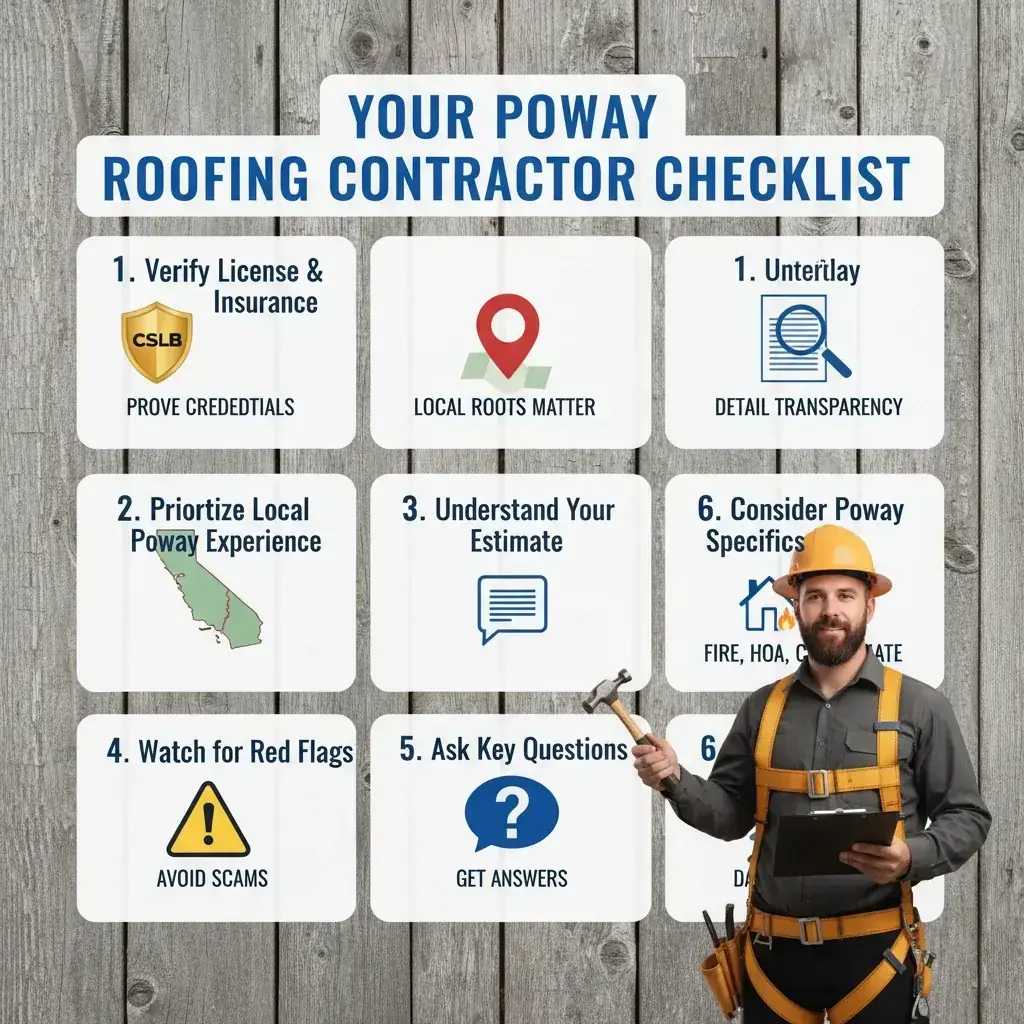
Infographic detailing essential steps to choose a roofing contractor in San Diego, including local experience, coastal vs inland materials, understanding estimates, and red flags.

Why local Poway experience matters more than a big name

While a national chain might have a recognizable name, local Poway experience often trumps broad recognition in the roofing industry. A local contractor lives and works in your community. They understand the specific challenges and opportunities that Poway’s environment presents. This includes familiarity with common architectural styles, regional weather patterns, and even local supplier networks. They’re more likely to recommend materials that genuinely perform well under Poway conditions, not just what’s cheapest or most readily available elsewhere.

Furthermore, local contractors have a vested interest in maintaining a good reputation within the community. Their business relies on word-of-mouth referrals and positive reviews from neighbors, not just mass marketing. This often translates to a higher level of accountability and customer service. They’re also usually more responsive to post-installation issues because they’re right around the corner. A contractor from outside the area might not grasp the urgency of getting a specific permit from the Poway city planning department or understanding specific HOA rules about material disposal. Choosing a local expert means choosing someone who’s already part of your community, invested in its well-being, and equipped with specific knowledge that can make or break your roofing project. The full breakdown on finding roof replacement near you in San Diego goes deeper.

Coastal vs inland: the material choice that matters most

San Diego County isn’t one climate, it’s several. The right roof in La Jolla is not the right roof in Poway or Ramona. A good contractor asks where you live before recommending anything. Here’s the logic.

Near the coast, from Ocean Beach to Encinitas, salt air is the enemy. Salt corrodes cheap metal fasteners, flashing, and vents fast. If you want metal roofing by the water, it needs to be aluminum or a high-grade coated steel, never bare galvanized. Marine fog also keeps roofs damp longer, so quality underlayment and good ventilation matter more here to fight mold and rot. Tile and quality asphalt shingle both do well coastal as long as the flashing metal is corrosion-rated.

Inland, in Poway, Escondido, El Cajon, and Ramona, the problem flips to heat and fire. Summer attic temps climb high, which ages asphalt shingle faster, so a lighter color and good ventilation extend its life. Fire is the bigger factor. Inland neighborhoods near open space sit in fire-hazard zones, and California code there requires Class A fire-rated assemblies. Concrete and clay tile are naturally strong here, and Class A fire-rated asphalt shingle works too. Ember-resistant vents and boxed eaves are often required in those zones. A contractor who knows your specific area will bring this up first. If they recommend the same roof for a beach condo and a backcountry home, that’s a sign they don’t know the county. For tile owners, our guide on how to maintain a tile roof in San Diego covers upkeep by region.

How to read a roofing estimate: line by line

Understanding your roofing estimate is crucial for making an informed decision. Don’t just look at the bottom line; dive into the details. A good estimate will be itemized, clearly breaking down costs. Here’s what to look for:

Materials

This section should list all materials by type, brand, and quantity. This includes shingles (asphalt, tile, metal), underlayment, flashing, vents, and any other components. For example, if you’re getting an asphalt shingle roofing system, it should specify the shingle manufacturer, product line, and color. Watch for vague descriptions; clarity is key.

Labor

This covers the cost of the crew performing the work. It might be broken down by man-hours or presented as a lump sum. Ensure it includes tear-off of the old roof, installation of the new, and cleanup.

Project Scope and Timeline

The estimate should clearly define what work will be done (e.g., full roof replacement, repair, new installation) and an estimated start and completion date. It should also mention disposal of old materials and site cleanup.

Permits and Fees

Legitimate contractors will include the cost of obtaining necessary permits from the City of Poway. This ensures the work meets local building codes and passes inspection.

Warranty Information

Look for details on both material warranties (from the manufacturer) and workmanship warranties (from the contractor). Understand what’s covered and for how long.

Contingency and Unexpected Costs

While not always explicitly listed, discuss how unexpected issues (like discovering damaged decking during tear-off) will be handled and priced. A transparent contractor will have a clear process for this.

Comparing multiple itemized estimates allows you to see where costs differ and why. It helps you ask targeted questions and avoid surprises.

Red flags to watch for when getting quotes

When you’re gathering quotes for your roofing project, be on the lookout for several red flags that can indicate a less-than-reputable contractor. Avoiding these can save you from significant headaches and potential financial losses.

High-Pressure Sales Tactics

If a contractor pressures you to sign a contract immediately, offers “today-only” discounts, or insists on cash payments, walk away. Reputable businesses give you time to consider your options.

Unsolicited Door-to-Door Offers

While some contractors do marketing, be wary of those who show up unannounced, especially after a storm, claiming to have noticed damage. This can be a common tactic for storm chasers who do shoddy work and disappear.

No Written Contract

Never agree to work without a detailed, written contract that outlines everything from materials and labor to payment schedules and warranties. A verbal agreement isn’t legally binding or protective.

Demanding Full Payment Upfront

A legitimate contractor will usually require a reasonable down payment (often 10-30%), but never the entire sum before work begins. This protects both parties.

Lack of References or Portfolio

If a contractor can’t provide references from recent clients in Poway or show a portfolio of their completed work, they might lack the experience they claim.

A Quote Far Below Everyone Else

If one bid comes in thousands below the rest, it’s not a deal, it’s a warning. The savings usually come from thin underlayment, skipped flashing, no permit, or a crew that vanishes if something fails. Compare what’s in the estimate, not just the total.

Trust your gut feeling. If something feels off, it probably is. It’s always better to take extra time to find the right professional than to rush into a costly mistake.

Questions to ask every contractor before you sign

Before you commit to a roofing contractor, arm yourself with a list of essential questions. These queries help clarify their process, experience, and commitment to quality.

  1. “What specific materials do you recommend for my home, and why?” Listen for answers that consider your location, the coastal-vs-inland factors above, fire safety needs, and any HOA requirements. Ask about options for your roof replacement or a roof inspection.
  2. “How much experience do you have in my specific area?” Someone who works your neighborhood knows the codes, the common roof types, and the local permit office.
  3. “Can you walk me through how you’d handle my coast or inland conditions?” A real answer shows they understand salt air near the water or heat and fire risk inland, not a one-size-fits-all pitch.
  4. “Can you provide a detailed, itemized estimate?” Ensure they break down costs for materials, labor, permits, and waste disposal.
  5. “What warranties do you offer, both for materials and workmanship?” Understand the length and coverage of both manufacturer warranties and the contractor’s guarantee on their installation work.
  6. “Who will be supervising the project, and what’s the communication plan?” Know who your main point of contact will be and how they’ll keep you updated on progress.
  7. “How do you handle unforeseen issues or changes during the project?” A clear process for change orders and unexpected discoveries is a sign of professionalism.
  8. “Can you provide references from recent Poway clients?” Follow up on these references to hear about their actual experiences.
  9. “What’s your estimated timeline for the project?” Get a clear understanding of when they can start and when they expect to finish.
  10. “What’s your clean-up process during and after the project?” A good contractor will ensure your property is kept tidy and safe throughout the work.

Asking these questions empowers you to choose a contractor who is transparent, skilled, and the right fit for your Poway roofing project. Don’t hesitate to take notes and compare responses.

When to call us

Deciding on a new roof or a major repair is one of the bigger calls you’ll make for your home. When you want a local team that understands San Diego’s coastal and inland conditions, call Top Pro Roofing. We connect you with a vetted local roofer for itemized estimates and straight answers, so your project is handled cleanly from start to finish. Call us at (760) 750-5557 for a same-day estimate.