Top Pro Roofing SD is a referral marketplace. We connect San Diego County homeowners with CSLB-licensed C-39 roofers. We do not fabricate panels and we do not publish a 2026 metal price list. Call (760) 750-5557.
You can get two metal quotes that look like different planets. Both can be real jobs: corrugated on a simple garage is not standing-seam aluminum on a cut-up coastal house. The only way to know whether a number is fair is to line up system, gauge, tear-off, and flashing on the same measured roof.
We will not invent per-square-foot rates, whole-house totals, a 30-year cash outlay, or a cooling-load percent.
Metal roofing installation is the service page. County bid structure: new roof cost in San Diego.
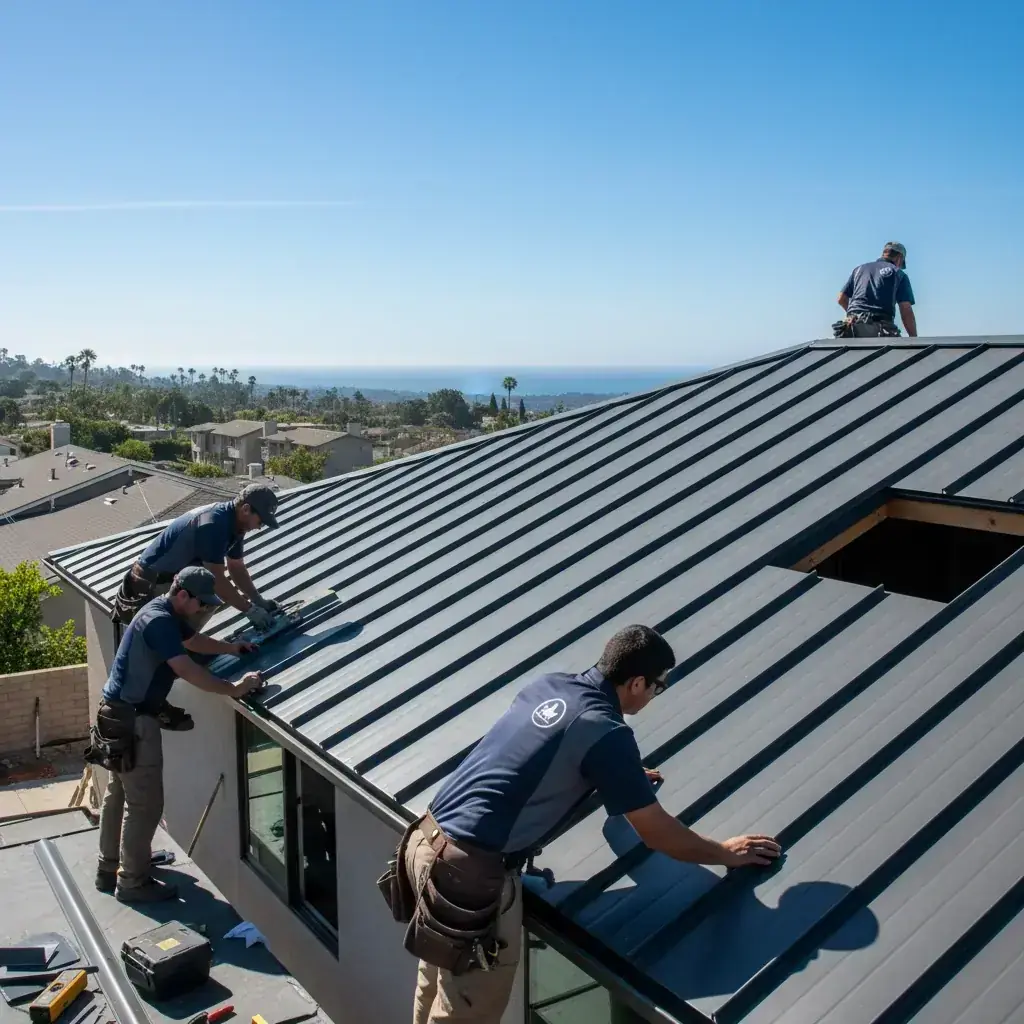
What to compare: system first, then the bid
Put every quote into one of these buckets. If two contractors used different buckets, you are not comparing price.
| System | What you are buying | Ask on the bid |
|---|---|---|
| Corrugated / exposed-fastener steel | Fast install, visible screws, washer maintenance later | Gauge, screw spec, washer replacement plan |
| Stone-coated steel | Tile or shingle look, lighter than concrete tile | Weight, fire listing, HOA, underlayment |
| Standing seam steel | Concealed clips, floating panels | Gauge (often 24 residential; 22 is a thicker conversation), clip type, finish |
| Standing seam aluminum | No rust, coastal case | Thickness (often .032 residential vs .040), paint system |
| Copper | Architecture-driven, long life | Gauge, patina expectations, flashing match |
A typical San Diego house is often in the 20-to-28-square range of roof area, not living area. Convert living area before you multiply anything. We will not multiply a blog rate by 22 squares.
Totals should include labor, underlayment, flashing, and the tear-off they assumed. Two layers of shingle or a tile tear-off is extra. See flashing and vent repair.
What drives the swing (panel, gauge, pitch, tear-off)
Panel type. Standing seam costs more labor because clips, seams, and oil-canning control take time. Corrugated screws down faster and leaves every fastener as a future leak or maintenance point.
Gauge / thickness. Thicker steel dents less. Inland hail (Barona, Alpine, and similar) is a reason to ask about 22-gauge vs 24-gauge, not a reason for us to invent a per-foot adder. Aluminum is specified in inches, not gauge.
Pitch. Above about 6:12, staging and fall protection slow the crew. A 10:12 or 12:12 in Tierrasanta or La Mesa is a labor line. We will not invent a 20 to 30 percent adder.
Tear-off and deck. Shingle tear-off is a per-square labor and dumpster line. Rot is per-sheet after they see the deck. City of San Diego and county permits have inspection holds at this stage. Budget calendar, not a blog dollar.
Custom flashings at walls and pipes are easy to omit on a cheap metal bid. If the roofline is complex, that material is not a rounding error.
Standing seam vs corrugated vs stone-coated
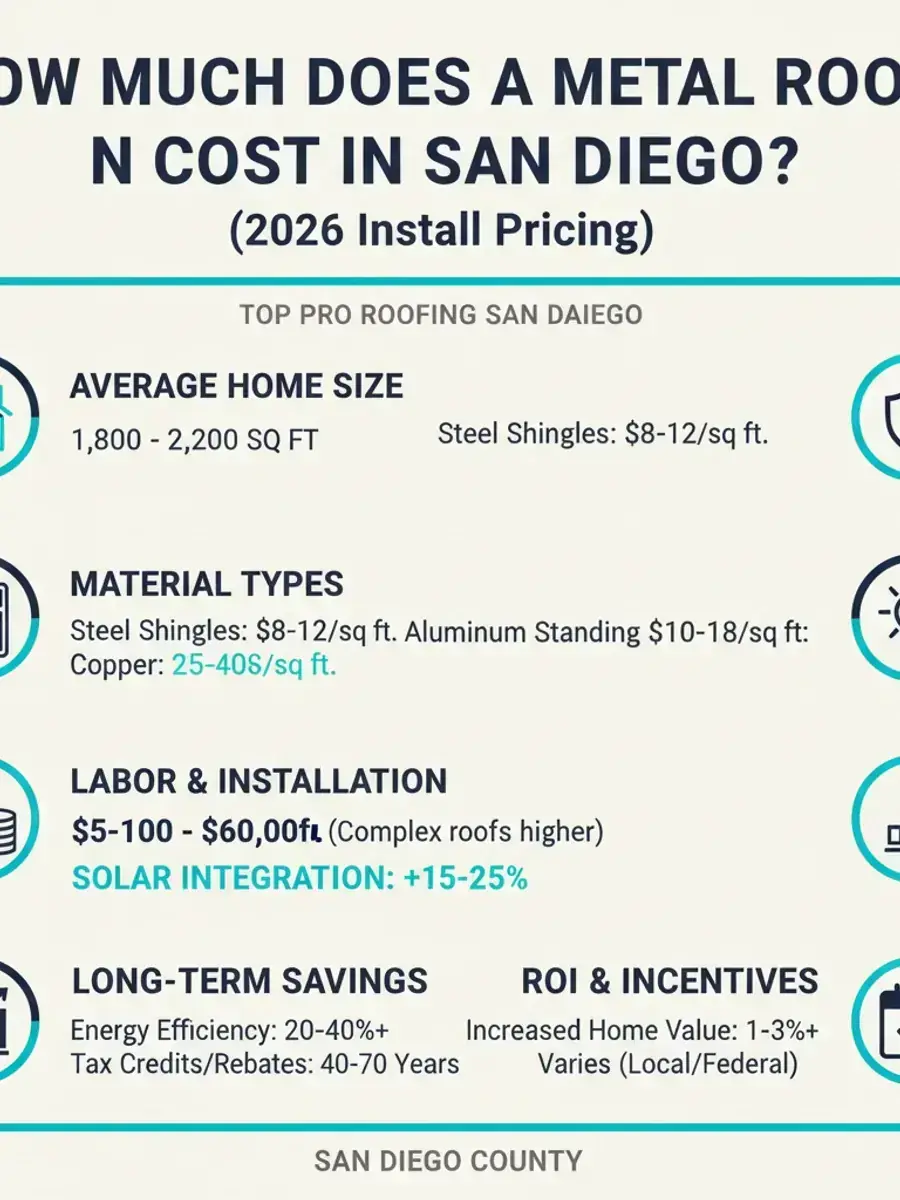
Standing seam is the usual primary-residence system. Concealed fasteners do not back out the way exposed screws do. Panels can move with heat. Near Coronado, Ocean Beach, and Pacific Beach, fewer holes also means fewer salt paths. Steel with a quality PVDF (Kynar-family) finish can work on the coast. Aluminum is the “will not rust” conversation. Confirm the paint warranty for that color.
Corrugated steel fits sheds, ADUs, garages, and simple accessory roofs. The tradeoff is washer aging. Coastal UV and salt shorten washer life. On a rental garage that may be acceptable. On the house you sleep in, ask what year-15 maintenance looks like.
Stone-coated steel sits between them on look and, usually, on bid rank. It reads as tile or dimensional shingle from the street and weighs much less than concrete tile. That is why it shows up when framing was never sized for tile. Stone coating also changes rain sound vs bare standing seam (acoustic underlayment is the other path). Confirm weight with the structural conversation, not a blog pounds-per-foot table.
Durability vs asphalt: metal vs shingle.
Metal vs shingle over decades (without fake payback math)
Architectural shingle and standing seam are not the same first check. Shingle often needs another full cycle inside a metal warranty period. Metal still needs debris kept off and flashings checked.
We will not invent a year-0 shingle install, a mid-life repair band, a second replacement, or a break-even year. Ask two named bids on the same roof, then ask the shingle warranty PDF and the metal paint/weathertight PDFs what they actually cover (finish chalk, perforation, workmanship). Inflation and labor in 2045 are not something this page can price.
Energy. Cool-roof-rated metal finishes can matter under California Title 24 when the slope and climate zone require it. ENERGY STAR listings exist for some products. Reflective panels reduce attic heat gain when insulation and ventilation are already competent. We will not invent a 15 to 20 percent cooling-load cut. Read the CRRC aged values and the permit set.
Coastal vs inland: different failure modes, not a county multiplier
Coastal (about the first miles inland). Salt, marine layer, moderate temperatures. Asphalt often loses granules and flashing metal earlier than the brochure. Compare systems on the bid. We will not invent a coastal shingle lifespan. Coastal salt damage and best roof material for coastal climates.
Aluminum standing seam is the usual coastal metal case because the substrate does not rust. Steel plus PVDF can still be specified. The premium over steel is a bid delta, not a number we invent.
Inland (El Cajon, Santee, Alpine, Escondido, Ramona). UV and thermal cycling dominate. Fire and ember exposure east of I-15 are a Class A assembly conversation. Metal with a listed assembly and a PVDF finish is a common long-life and wildfire discussion. Shingles last longer here than on the salt line, so metal’s payback, if you run it at all, is slower. We will not invent inland vs coastal break-even years. A 26-gauge panel vs 24-gauge is a dent and oil-canning conversation with the manufacturer sheet, not a blog temperature rating.
License check: CSLB. Permits: San Diego County PDS building.
When to call
Metal is not a DIY clip-and-screw weekend. Fabrication, clip spacing, and flashings need licensed hands and the right brakes. If you are comparing quotes or deciding whether metal fits the house and HOA, call (760) 750-5557. We will connect you with a vetted local roofer. We do not install.