Salt does not age a coastal roof the same way inland heat does. Coronado, Imperial Beach, La Jolla, Pacific Beach, and Point Loma sit in onshore flow. The field covering can still look decent while nails, drip edge, and step flashing rust through.
This is the slow metal story. Coastal leaks vs inland is the faster moisture story: marine layer, condensation, and wind-driven fog. Both can be true on the same house. A useful estimate names which one they are chasing.
Top Pro Roofing SD is a referral service. We connect you with CSLB-licensed C-39 roofers. We do not inspect attics ourselves and we do not hold a roofing license. Call (760) 750-5557.
We will not invent a 30 percent lifespan cut, a dollar-per-square upgrade table, or a carrier surcharge. Ask the matched roofer to spec metals for your distance from the water.
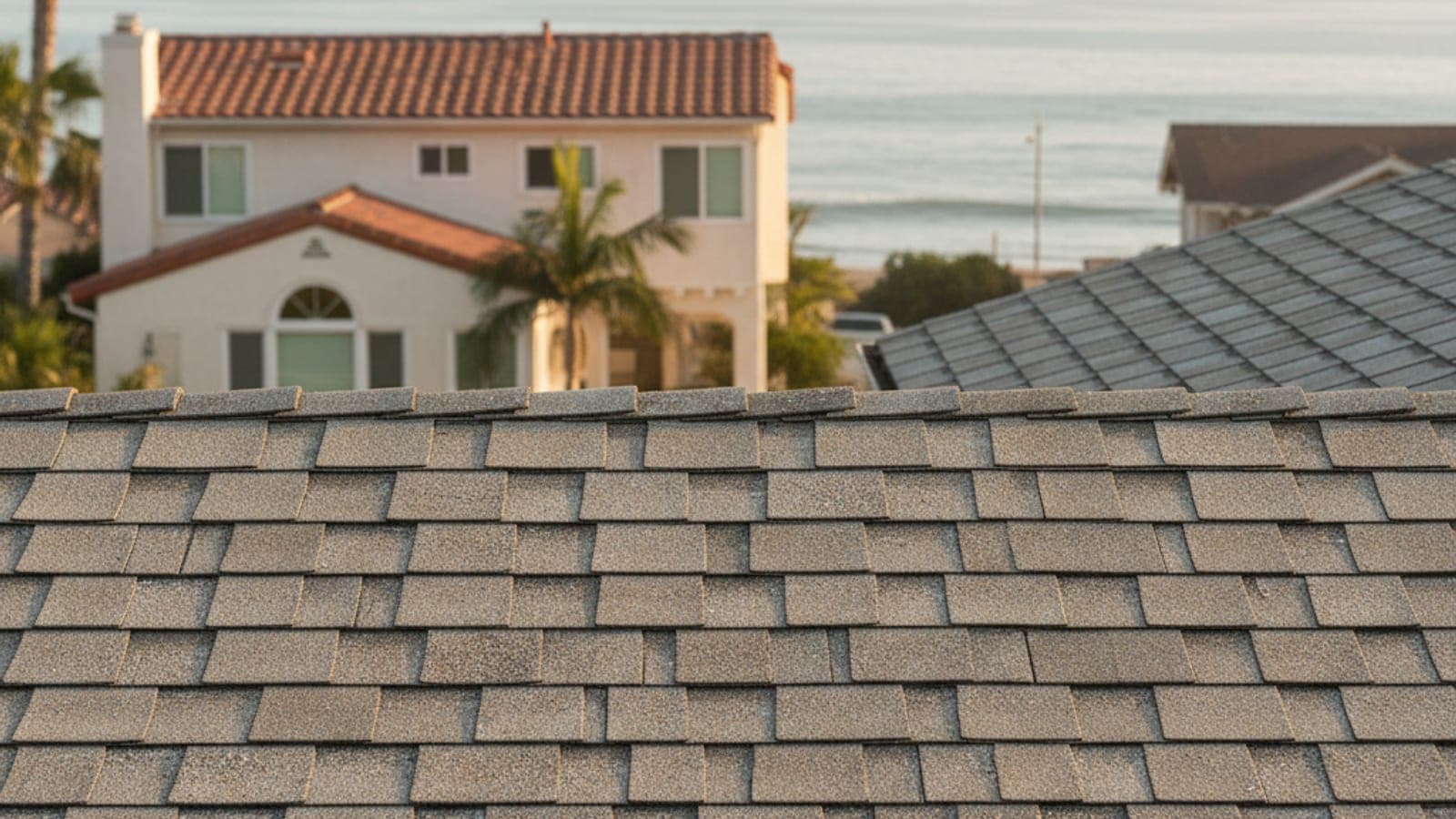
Distance from the water is a gradient, not a fake zone chart
There is no substitute for standing on this roof. Homes in the first few blocks of Coronado or Imperial Beach take more salt aerosol than a house a mile inland on the same street grid. Canyons and west-facing slopes can pull marine air farther. Encinitas and Oceanside still see it. El Cajon and Escondido usually do not in the same way.
NOAA National Weather Service San Diego publishes the onshore pattern. Manufacturer and NRCA guidance treats marine exposure as a specification problem for metals and fasteners, not a reason to guess a county-wide year count.
What actually fails first
Fasteners
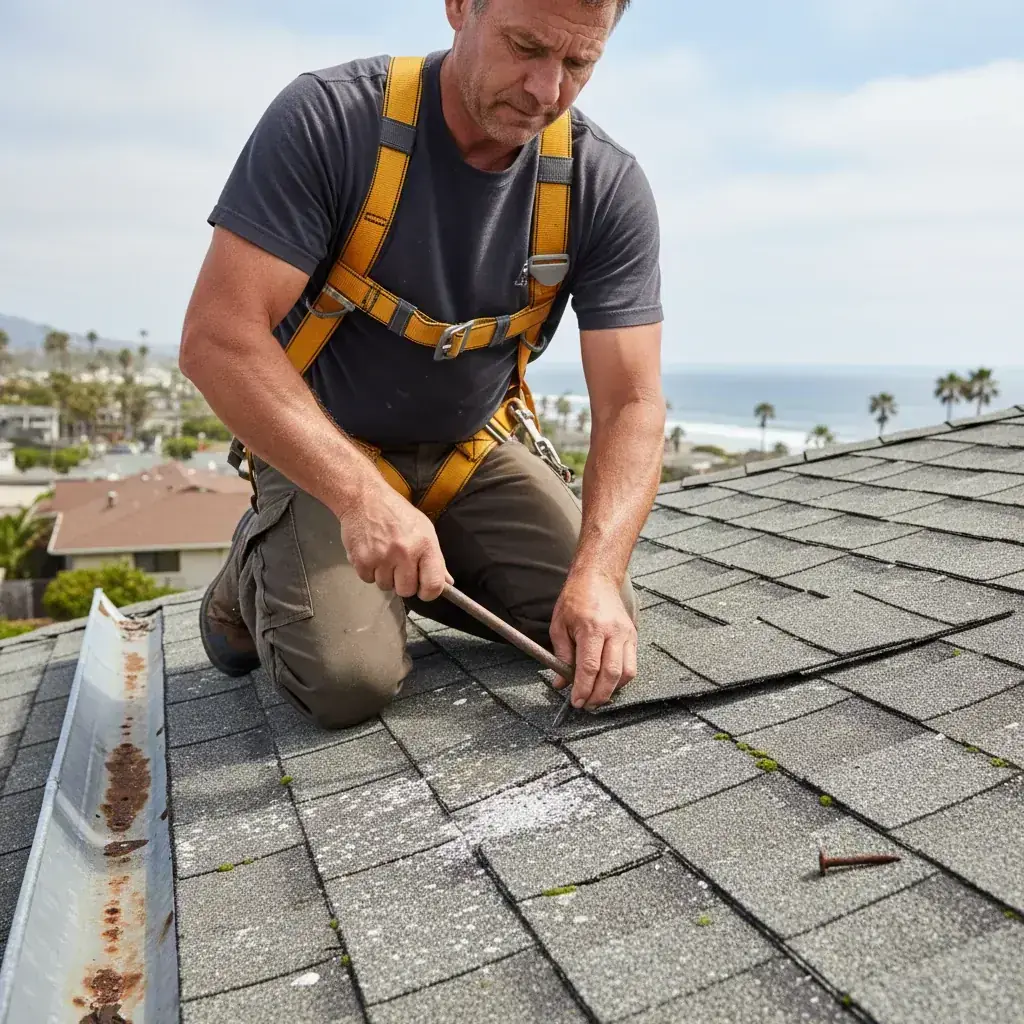
Standard galvanized roofing nails lose their zinc in salt air, then the steel rusts and the heads weaken. Shingles can still have granules while the attachment is gone. Wind then lifts edges at ridges and rakes. Stainless or copper fasteners are the usual coastal spec. The bid should name the metal, not “roofing nails.”
Shingle mat and granules
Coastal humidity plus UV plus salt on the surface speeds granule loss on asphalt. Bald spots show the mat earlier than the same product inland. Polymer-modified (SBS) shingles are often specified for that exposure. See what deteriorates asphalt shingles fastest in San Diego.
Flashings
Valleys, chimneys, vents, and wall junctions are thin metal in the wind. Galvanized drip edge and step flashing often fail before the field. Aluminum, stainless, or copper last longer in salt if they are installed so dissimilar metals and wet masonry do not eat them. Chimney flashing. Related: whether salt will damage a metal roof.
Insurance: verify with the carrier, do not trust a blog number
Coastal roofs sit in a tighter insurance market than they did a few years ago. Carriers treat corrosion and failed fasteners as maintenance more often than as a named storm. Inspection requirements and how they classify “coastal” vary by policy.
We will not name a premium surcharge or a denial rate. Read your declarations, ask the agent whether marine-rated hardware is documented, and confirm current rules with the California Department of Insurance. Policies change.
How to compare coastal bids without a price table
On a house that sits in salt air you can smell from the porch, asphalt with inland galvanized hardware is usually the weak spec. Tile and standing-seam metal still need coastal metals at every penetration. The covering does not save a rusty nail.
Ask each written scope to name:
- Fastener metal (stainless or copper vs galvanized)
- Flashing metal at valleys, walls, chimneys, and drip edge
- Underlayment product, including high-temp if the system needs it
- Whether pipe boots and sealants are rated for salt and UV
- WUI items if the parcel is in that overlay. Read the current chapter at OSFM. Ask the AHJ. Do not treat WUI overlay rules as automatic on every coastal lot.
Best roof material for coastal climates is the material conversation. This page is the salt-and-hardware conversation. Tile roofing and roof replacement are the service paths.
FAQ
How do I know if salt is my problem?
Rust streaks from nail heads, lifting shingles in wind, discolored or perforated flashing, and a house in the first mile or two of coast. A C-39 lifts a few courses. Do not diagnose from the sidewalk.
Will my insurer call the house coastal?
Ask the agent. If they apply a coastal class and you are well inland, ask what map they use. We cannot contest a policy for you.
Are stainless fasteners always required?
On the first stretch of coast, they are the usual honest spec. Inland, galvanized is still common. The matched roofer should say which and why for this zip.
Does solar mounting make salt worse?
Stainless or aluminum mounts, flashed correctly, are not the salt problem. Unflashed penetrations and mixed metals are. Ask the solar crew and the roofer who owns the roof how the two systems meet.
When to call
If the roof is on the coast, the metal looks aged, and you see lift, rust, or a leak after ordinary wind, get a licensed inspection before a storm claim. Call (760) 750-5557. We will connect you with a licensed independent local roofer. You hire them. Confirm the C-39 at cslb.ca.gov. Roof inspection.
Sources: NOAA NWS San Diego · NRCA · California Department of Insurance · OSFM wildfire building codes
Insurance, product listings, and exposure class are specific to the policy and the roof. Verify with the carrier and the contractor. We do not publish fabricated county failure rates.