Yes. Two product families cover almost every San Diego quote: stone-coated steel (granule-coated panels in shingle, shake, or tile profiles) and stamped metal shingle panels (painted or coated steel or aluminum with a tab look). HOAs that ban vertical-leg standing seam often allow one of these. Standing seam is a different look and a different bid. Ask for the named line, matching trim, and who is trained on that system. Top Pro Roofing SD refers. We do not install. Call (760) 750-5557.
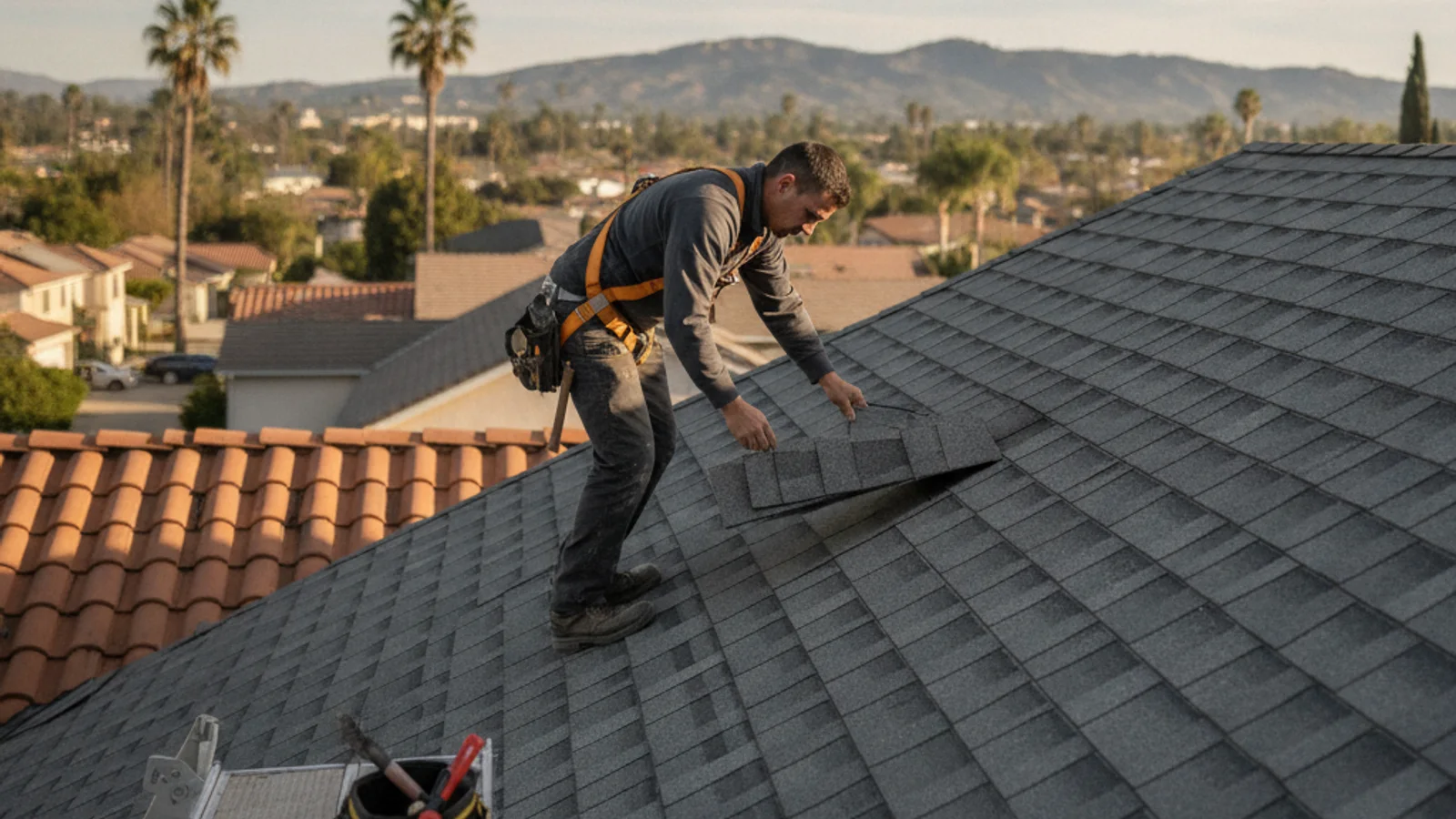
What shingle-look metal roofing actually is
The category is metal formed, textured, and finished to imitate another material. It is not a painted standing-seam roof that “kind of looks traditional.”
Stone-coated steel is a formed steel panel with an acrylic-bonded stone granule surface. The granules scatter light the way asphalt or tile does. Makers sell shake, dimensional shingle, and barrel or S profiles. From the street it can be convincing. On San Diego bids the named stone-coated lines are often DECRa or similar, in shingle, shake, or tile profile. The name on the bid matters because hips, ridges, valleys, and flashing have to match that system.
Metal shingle panels are painted or coated steel or aluminum, stamped into a shingle or shake relief, usually in modules that cover several apparent courses. The finish is a paint system, so the look is crisper and more uniform. Ask for the exact SKU on the quote, not “metal that looks like shingles.” Do not assume a national catalog name is sold in San Diego. Confirm the product is specified for this climate and this installer.
Both families install as a system: underlayment, battens or direct-to-deck attachment per the product, hip and ridge, valley metal, rake and eave trim, and profile-specific flashing. Our metal roofing service page covers the systems independent roofers in our referral list install. Stone-coated metal roofing in San Diego is the deeper stone-coated page. Do not merge those two jobs.
How stamped panels differ from standing seam
Standing seam is long vertical panels joined by raised seams, fasteners concealed, panels free to move as they heat and cool. It is a clean, modern, deliberately metal look. It does not pretend to be asphalt. Our standing seam guide covers that system.
Stamped and modular panels go down in courses like a shingle roof. Each course overlaps and locks into the one below. Thermal movement is spread across many small joints. Attachment is usually hidden by the next course. Layout follows the panel module at hips, valleys, and penetrations. A damaged mid-field panel is a different repair than a damaged standing-seam run, because you work back through interlocked courses.
If the goal is metal performance with a modern look, standing seam is the direct route. If the goal is metal performance while the house still reads as a shingle or tile street, a stamped or stone-coated profile is the route. Decide that before you compare products.
Where the look fits San Diego architecture
Postwar and mid-century tracts across El Cajon, La Mesa, Clairemont, and Serra Mesa were built with three-tab and later dimensional shingle. A shingle-profile metal panel can sit in that street without announcing itself.
Homes with cedar shake have a fire problem worth naming: wood shake is not Class A. In a designated wildland-urban interface area, ask the AHJ, the matched C-39, and (if the policy cares) the insurer whether this reroof needs a Class A covering and what replacement-area test they apply. Metal shingles and metal sheets can qualify in listed assemblies. A shake-profile metal panel is how some homeowners in Alpine, Ramona, or Julian keep the shake read. Verify the parcel’s WUI designation with the local jurisdiction.
Tile-profile metal is the other strong fit. Stucco-and-tile subdivisions in Carmel Valley, San Marcos, Rancho Bernardo, and eastern Chula Vista were built with concrete or clay tile. A barrel-profile metal panel keeps that read at much lower weight. Ask the AHJ and the matched C-39 whether a covering change triggers structural review on this house. Dead load comes off the manufacturer’s data sheet, not a blog cutoff. Other cities and the unincorporated county set their own procedures. Confirm with the insurer if underwriting asks about the new assembly.
What to compare beyond appearance
Profile realism is not a two-inch sample. Ask for a full panel outdoors, at an angle, in low sun. Depth of relief sells the illusion. Shallow stamping shows in raking light. Ask how the product staggers so a repeating module does not print across a large roof. Then ask to see an installed roof of that product in the county, on a similar roofline.
HOA approval belongs on the checklist before anyone orders. Many San Diego associations wrote guidelines around specific materials and colors. Some name approved products. Submit the literature, profile name, and color, and get the approval in writing. HOA roof requirements in Scripps Ranch shows the kind of packet committees ask for.
Coastal exposure changes the spec. Salt air is hard on steel. Protection on a stone-coated or painted steel panel is coating-deep. A home in Encinitas or Ocean Beach should read the finish warranty’s coastal exclusion and ask whether an aluminum substrate is the better fit. Low-slope sections in San Diego’s Title 24 climate zones can carry rated reflectance and emittance requirements. Compare listed products; do not treat a color chip as the rating. We will not publish a per-square price. Metal versus shingle cost is the money conversation without a made-up square rate here. Your bid is the only number that applies to your roof.
The install details that make or break the look
The panels are the easy part. People notice the edges: eave and rake trim, whether hip and ridge caps are the manufacturer’s matching components, how valleys are formed, and how courses meet a wall or chimney. Improvised trim is what makes an expensive roof look wrong.
Ask three questions. First, is every accessory a matching component from the same manufacturer, including hip, ridge, valley, eave, rake, and transitions. Mixed accessories break the illusion and often the warranty. Second, is the installer trained or certified by that manufacturer for that product. Finish warranties commonly hinge on those instructions. Third, how are penetrations handled: vents, exhaust, skylights, and solar attachment need profile-specific flashing, not a generic boot in a stamped panel.
Ask the AHJ and the matched C-39 whether existing layers have to come off before new covering. For City of San Diego jobs, read the current IB 123. Ask whether the bid includes full tear-off, disposal, deck inspection, and an allowance for damaged sheathing. Roof replacement covers how that sequences. Confirm any contractor’s license with the CSLB license check before you sign.
When to call us
Shingle-look metal is a manufacturer-specific system. Flashing, trim, and penetrations are where a C-39 roofer earns the job. If you want metal performance without changing the character of the house, familiarity with the exact product matters as much as the product. Call (760) 750-5557 and we will connect you with a licensed local roofer. Top Pro Roofing SD refers. We do not hold the trade license, set the price, or issue the warranty.