You’ve seen them on modern houses in North Park and coastal remodels in La Jolla: long, clean lines from ridge to eave. Standing seam is that look. It is not corrugated barn panel, and it is not a shingle stamped to look like metal. The decision is whether the concealed-clip system, the substrate, and the finish actually fit your house, your slope, and your salt exposure. Top Pro Roofing SD is a referral service. We do not install. We will not invent a per-square-foot price. Call (760) 750-5557 and we’ll connect you with a vetted local roofer for a written bid.
Coastal substrate choice is a separate page: best roof material for coastal climates.
What a standing seam roof actually is
Standing seam is metal panels joined at raised interlocking seams. Fasteners sit on clips under the panel, not through the face. Water is meant to stay in the pan and run to the eave. The seam is the high point.
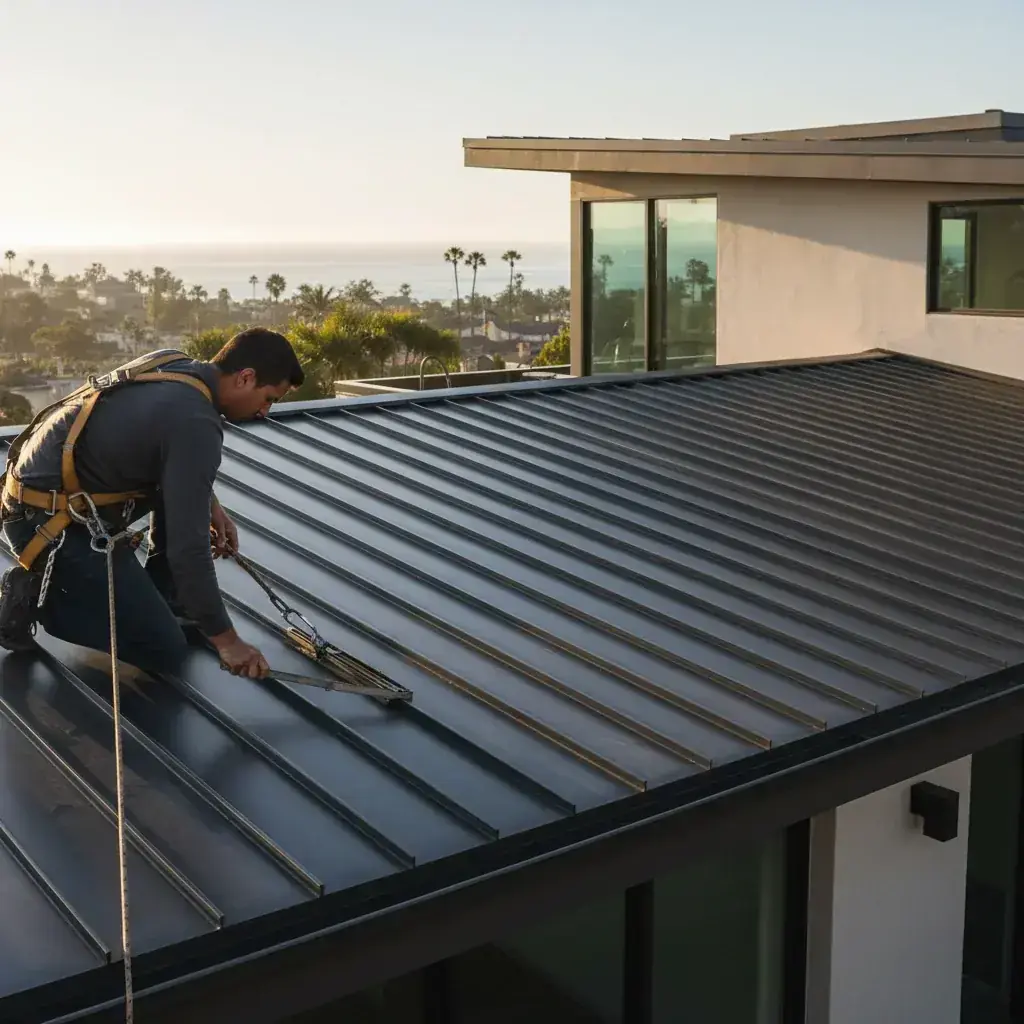
That is the whole product idea. If you can see a row of screw heads on the field, you are looking at an exposed-fastener system (corrugated, R-panel, many ag-style panels). Those washers age in San Diego sun. The hole in the pan is then a leak path. Standing seam is built to avoid that field of holes.
Standing seam vs corrugated and other exposed-fastener metal
When people say “metal roof,” they often picture wavy utility panel. That is a different system.
Exposed-fastener panels drive screws through the face into the deck. Every washer is a maintenance item. Heat, UV, and thermal cycling dry them out. Fastener back-out (elongated holes as the panel moves) is the usual long-term failure.
Standing seam hides the clips. The panel can expand and contract along its length without dragging a screw hole open. That thermal movement is not a theory. A long south-facing run on a Clairemont or Carlsbad house will move. The clip is how the system is supposed to live with that.
The look is different too. Standing seam reads modern or architectural. Corrugated reads industrial or shed. For most San Diego houses that want metal as a design finish, standing seam is the profile people mean. Tile-look metal is a different product: standing seam vs stone-coated steel.
Gauge, substrate, and finish to put on the bid
Do not buy “metal.” Put three things on the proposal in writing.
Gauge. Lower number is thicker. For residential standing seam, 24-gauge steel is the usual conversation. 26-gauge is thinner, cheaper, and more prone to oil canning (visible waviness in the pan) and denting. Oil canning is often a visual complaint, not a leak. Thicker metal, proper clip spacing, and a stiffer pan help. The matched roofer should explain how they control it on your roof, not promise a perfectly dead-flat pan.
Substrate. Inland and mid-county jobs often use Galvalume-coated steel (aluminum-zinc coated steel). It is not the same as old G-90 galvanized. Near the water, solid aluminum is the stronger coastal ask because it does not rust the way steel does. Salt, coatings, and fasteners are unpacked in will salt damage a metal roof.
Finish. PVDF (Kynar 500 / Hylar 5000) is the finish worth naming. SMP polyester chalks and fades faster in this UV. A long substrate warranty is not a color warranty. Ask for coastal exclusions, cut-edge rules, and whether the finish term survives a marine-layer house.
Many PVDF colors can meet California Title 24 cool-roof reflectance when the product is listed for that. Confirm the current listed product with the designer and the California Energy Commission. ENERGY STAR lists qualifying roof products; listing is not a substitute for Title 24 compliance on your permit.
What actually moves the bid (without a fake number)
Standing seam prices as a custom sheet-metal job, not a shingle dump. Expect the matched roofer to price these, not a round “per square” from a blog:
- Tear-off of the old covering, or a recover only if the AHJ and the manufacturer both allow it (see overlay vs tear-off in California)
- Deck repairs once the old roof is off
- Number of hips, valleys, dormers, skylights, and pipe penetrations
- Pitch and access (two-story, tight side yards in North Park, hillside lots)
- Aluminum vs steel, 24-gauge vs 26, custom colors
- Flashings matched to the panel metal so you do not set up galvanic corrosion
- Solar-ready clip layout if you want non-penetrating mounts later
Compare the lifetime conversation with metal vs shingle in San Diego and the metal roofing service page. A real number comes from measuring your roof, not from this page.
How standing seam behaves in salt air
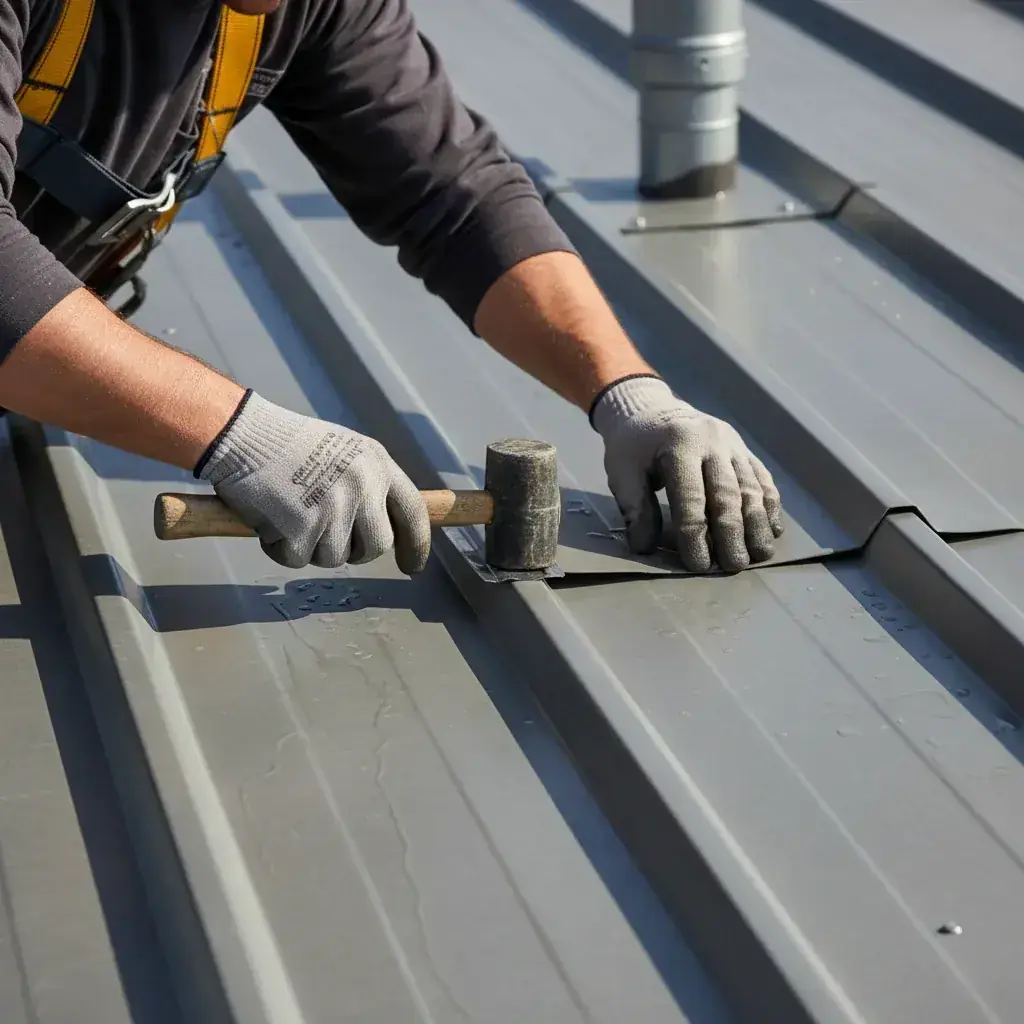
Marine air in Point Loma, Coronado, Del Mar, and Carlsbad attacks exposed steel first. Concealed clips remove the field of screw heads. They do not make a cheap steel panel immortal.
Galvalume still depends on the coating staying intact at cuts, fasteners, and scratches. Aluminum grows a passive oxide and does not rust like carbon steel. That is why waterfront lots so often spec aluminum standing seam with a PVDF finish and stainless or matching fasteners.
Do not mix metals. Copper flashing on aluminum, or galvanized screws through aluminum, is a galvanic cell in wet salt. Match the flashing and fastener metals to the panel, or isolate them the way the manufacturer writes.
When the premium is worth it, and when it is not
Standing seam is not the default for every San Diego house.
It is a strong fit when:
- You are staying long enough to care about a 50-year-class covering, not the next sale in three years
- You want low field maintenance: rinse, gutters, and inspections, not granule loss
- You want a cool, light-colored metal listed for Title 24
- The architecture is modern, mid-century, or a clean custom box that wants vertical lines
- You want clamp-style solar on the seams instead of a grid of roof penetrations
- You are in a wildland-urban interface conversation where a Class A metal assembly is on the table. Confirm the actual listed assembly, not the word “metal.” See wildfire-resistant roofing.
It is a weak fit when:
- The roof is a chopped Mediterranean with dozens of short panel runs (labor and flashing dominate)
- Slope is too low for the panel system the manufacturer allows
- The HOA or design review board will not approve a metal profile or color
- Budget only supports architectural shingle with marine-grade fasteners, and that is an honest trade
When to call us
Standing seam is fabricated and seamed on the house. It is not a weekend DIY. Top Pro Roofing SD matches homeowners with independent local roofers and does not perform the work. Call (760) 750-5557 and we’ll connect you with a vetted local roofer. Verify the C-39 license on the CSLB license check before you sign.