Top Pro Roofing SD is a referral service. We match San Diego County homeowners with licensed independent roofers. We do not install roofs or write the bid. Call (760) 750-5557 if you want a match after you can read the line items.
A roof is a stack, not one layer of tile or shingles. When a bid says underlayment, drip edge, or flashing, those words name different jobs. This page is the map so you can tell a complete scope from a one-line “new roof.”
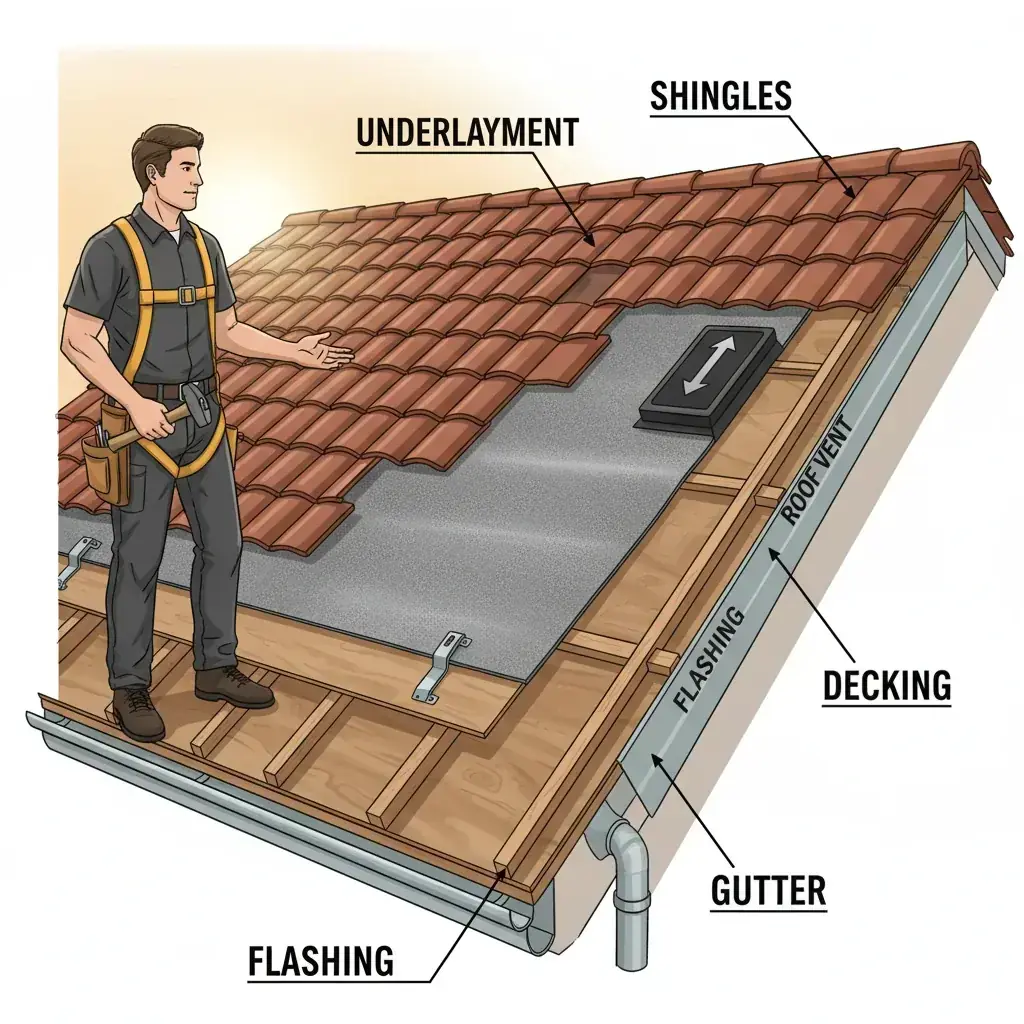
The three layers: deck, underlayment, surface
Work from the attic outward.
Roof deck (sheathing)
The deck is the wood surface nailed to rafters or trusses. On many San Diego houses it is plywood or OSB. You can often see the underside from the attic. Everything else fastens to it.
A long leak can stain, soften, or sag that wood. During a reroof, the contractor should inspect the deck after the old covering is off and write how damaged sheets will be handled before new underlayment goes down. That is a change-order conversation, not a surprise on the last day.
Underlayment
Underlayment sits on the deck under the visible roof. If water gets past tile, shingle, or metal, this layer is what the wood sees first.
Older work used asphalt-saturated felt. Many current specs use a named synthetic sheet, and valleys or eaves may get a self-adhering membrane where the product and the city require it. Ask for the product name and the instruction sheet, not “felt” as a personality.
Surface material
This is the layer you see from the street. It sheds most rain, takes sun, and has to match the structure and any HOA or fire-area rules.
Common San Diego County surfaces:
- Asphalt shingles. Several profiles and colors. Fast to read from the street. Heat and UV still age the binder.
- Concrete or clay tile. Common on Spanish and ranch stock. The field is the tile; leaks often start in underlayment, flashings, or broken pieces. See tile vs shingle.
- Metal panels. Standing seam and other profiles. Fastener finish and coating matter, especially nearer the coast. See metal roofing.
Each product has its own fasteners, edges, and valley details. All of them still need a sound deck and a named underlayment.
Flashing, drip edge, and pipe boots
Leaks cluster where the roof changes plane or a pipe, chimney, or wall interrupts the field.
Flashing
Flashing is formed metal that turns water at walls, chimneys, skylights, and valleys. Types you will hear:
- Step flashing. Small pieces woven with shingles at a sidewall.
- Chimney flashing. Several pieces around the chimney base, often with a counterflashing in the masonry.
- Skylight flashing. Usually a kit matched to the unit and the roof type.
- Valley metal. A channel where two slopes meet and water concentrates.
Damaged or missing flashing is a frequent San Diego leak source. Related: roof flashing leak repair.
Drip edge
Drip edge is the L-shaped metal at eaves (and often rakes). It helps kick water into the gutter and protects the deck edge. Many reroof inspections look for it. Confirm what the City or County inspector will require on your permit, rather than treating a blog as the code book.
Pipe boots
A plumbing vent through the roof needs a boot: a flashing plate plus a collar around the pipe. UV and heat crack rubber collars. A cracked pipe boot can drip for a long time before you see a ceiling stain.
Vents, soffits, and attic air
Intake and exhaust are supposed to work as a pair. In a hot San Diego attic, trapped heat ages the underside of the roof. In a damp winter, moisture can condense on cool wood.
Soffits and fascia
Fascia is the board at the eave that often carries the gutter. Soffit is the underside of the overhang. Vented soffits are a common intake path. Paint, pests, and blocked vents all change airflow. Fascia and soffit repair often travels with a reroof.
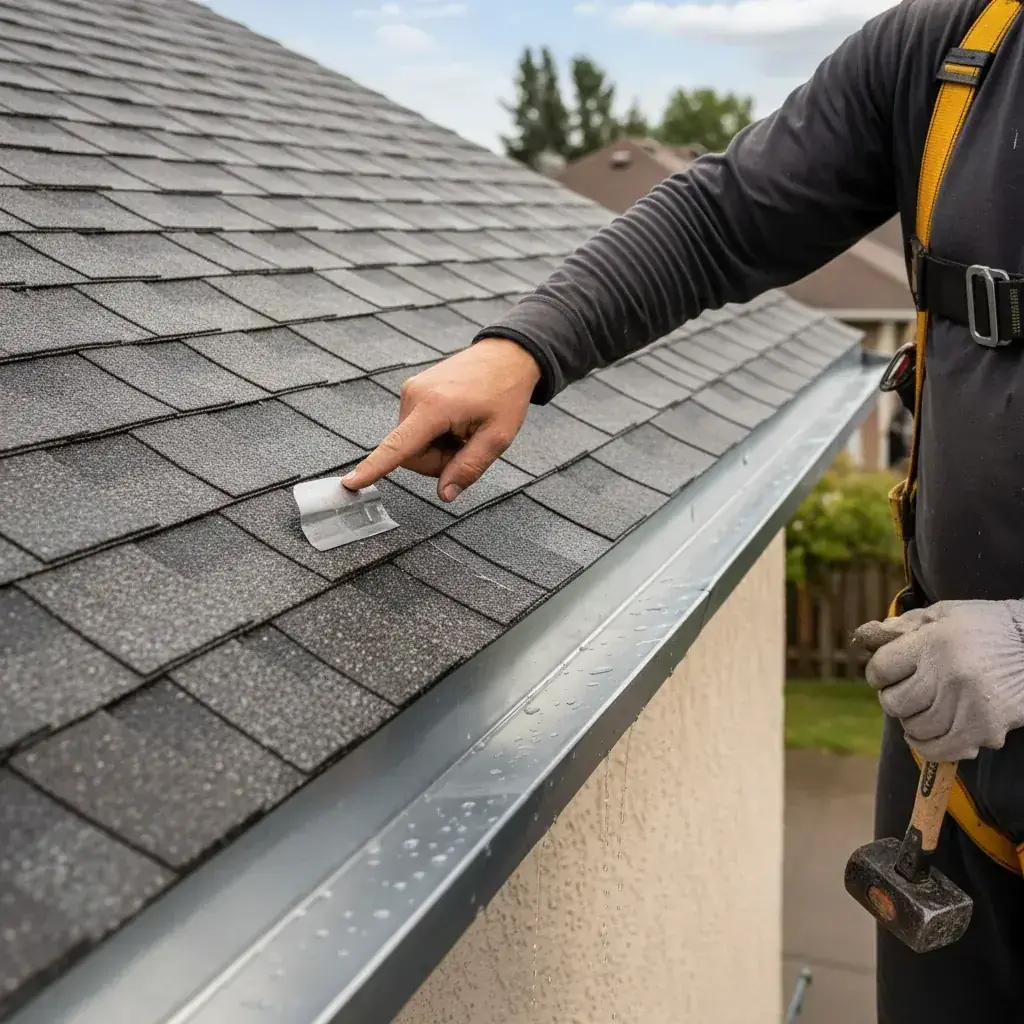
Roof vents
Exhaust usually sits high on the roof:
- Ridge vent. A slot along the ridge, often under a ridge cap.
- Box or static vents. Boxes over holes in the deck.
- Turbine vents. Wind-driven spinning caps.
California energy rules (Title 24) and local amendments can affect ventilation and cool-roof choices on a permitted reroof. Ask the contractor and the building counter what applies to this address. The California Energy Commission publishes the current standards. Do not treat Title 24 as a default. Do not treat a salesperson’s “attic will bake your shingles” story as a measurement of your house.
Ridges, valleys, hips, eaves, rakes
Valleys
Two slopes meet and dump water into a trough. That is why proposals mention extra membrane, metal, or a woven shingle method. Ask which method and which product.
Ridges and hips
A ridge is the high horizontal peak. A hip is the external diagonal ridge. Both get cap pieces. Those caps take sun and wind. Failed caps leak at the highest line on the house.
Eaves and rakes
Eaves are the horizontal overhangs where gutters usually hang. Rakes are the sloped gable edges. Both terminate the roof and usually include drip edge or comparable edge metal.
How this helps you read a bid
A useful roof replacement proposal names parts, not just a lump sum. Look for:
- Tear-off and disposal (how many layers)
- Deck inspection and how replacement sheets are priced if found
- Named underlayment (and any self-adhering at valleys or eaves)
- New drip edge, boots, and flashing (reuse vs replace)
- Surface product: brand, line, color
- Starter, hip, and ridge details
- Ventilation work included or excluded
- Who pulls the permit and who calls inspections
If two bids use different underlayment or keep old sidewall flashing, you are not comparing the same roof. Ask each contractor to put the same scope in writing. We do not publish dollar ranges here.
When to call us
If you have a leak, a bid you cannot parse, or you want a licensed independent roofer to walk the roof and name the parts in the estimate, call (760) 750-5557. You still run the CSLB number and you contract with the selected professional directly.