A new skylight is a roof opening, a flashing kit, and an interior shaft, not a window you drop in from a ladder. This page is how to read a San Diego County new-opening bid: fixed vs vented, tile vs shingle vs low-slope, framing, permits, and Title 24 glass. It is not a price list.
Top Pro Roofing SD refers. We do not install. We do not invent unit or labor totals. Call (760) 750-5557.
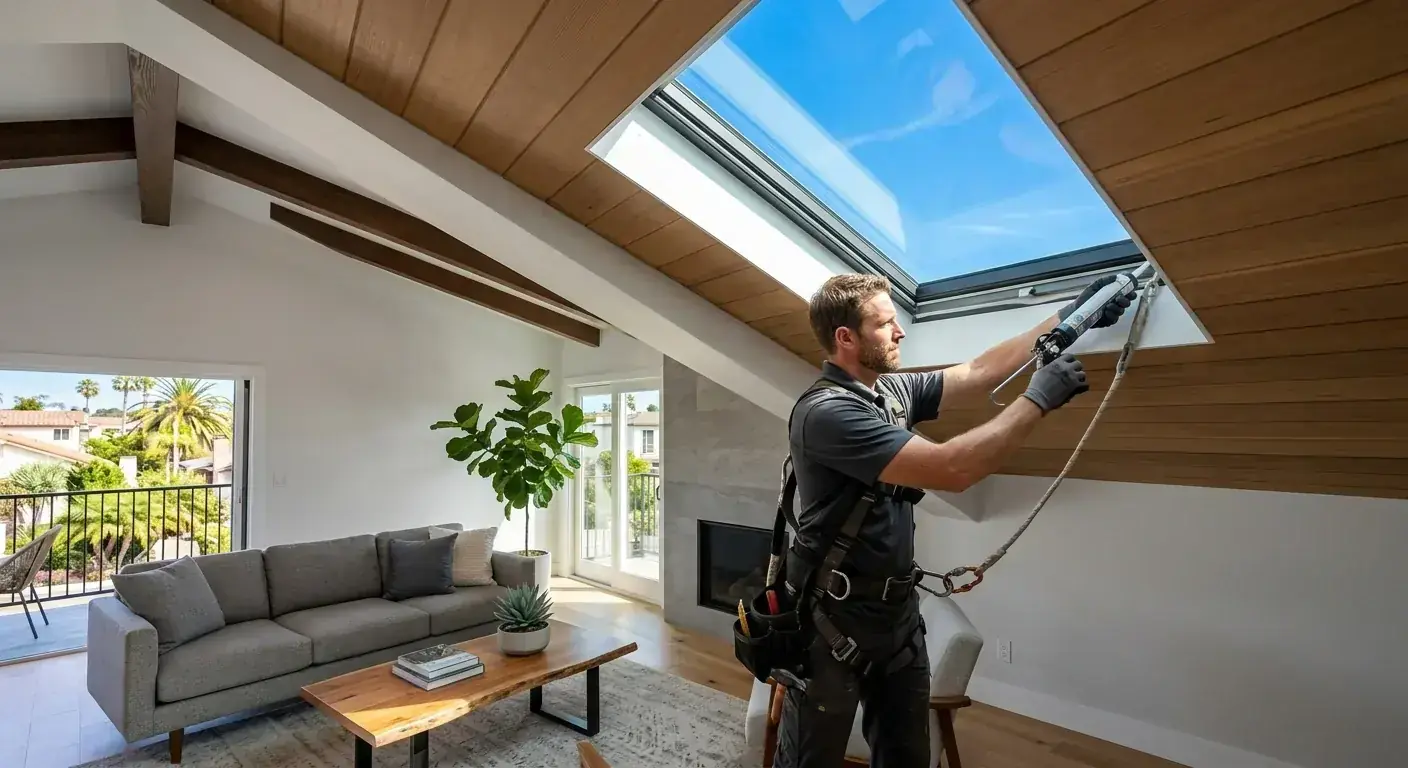
Replacing a failed unit in the same hole is a different job: skylight replacement cost. If the problem is water at an existing curb, start with skylight leak repair.
Fixed vs vented: what actually changes the bid
Fixed units do not open. You are buying light and a view of the sky. The quote should still name size, glass spec, and the flashing kit for this covering. Simpler mechanics do not mean a cheap flashing detail.
Vented (operable) units add a sash, operator, and usually a rain sensor on powered models. Ask the bid to separate:
- Manual. Pole or crank. No new circuit to the roof.
- Electric. Wall switch or remote, plus wiring. Electrical permit may apply. Confirm with the matched contractor and the building department.
- Solar-powered venting. A small panel and battery instead of a new homerun. Confirm the model, rain-sensor behavior, and who services the motor.
When you choose, name the room’s job. A hallway often only needs light. A kitchen or bathroom may want airflow. Do not buy a motor for a closet shaft that never needs to open.
We will not publish catalog-sticker bands or “typical installed” ranges. Those numbers are not this house, this roof, or this crew.
How roof type moves the work
The covering decides how the flashing weaves in. San Diego County mixes asphalt, clay and concrete tile, and low-slope membranes on the same street grid. Ask for the kit SKU, not “we flash it.”
Asphalt shingle
Shingle roofs are usually the most straightforward cut-and-weave if the deck is sound. Labor still depends on pitch, stories, and whether the opening hits a rafter or truss. A short, accessible ranch is not a steep two-story.
Tile (clay or concrete)
Tile work is lift, cut, and reset around the curb or deck-mount kit. Crews who rarely work S-tile leave a trail of broken units and a leak path. Neighborhoods with heavy tile (Kensington, Point Loma, Coronado, many inland Spanish roofs) need that skill on the proposal. Related covering context: tile roof replacement cost.
Flat and low-slope (TPO, PVC, modified bitumen)
Low-slope openings are usually curb-mounted so water can drain around the unit, not against a flush frame. The curb has to tie into the membrane the way that system is detailed, not with a tube of caulk. That is framing plus membrane work. Related: flat roof replacement cost.
Framing, shaft, and other lines that are not “the skylight”
A new hole is a small structural project when it cuts a rafter or truss. The independent C-39 should say whether an engineer is in the path, who frames the opening, and how discoveries at the deck are priced. We do not invent a carpentry adder.
After the roof is dry, the interior shaft still needs framing, insulation as required, drywall, and paint if that is in scope. A short, straight well is not a long, splayed shaft meant to spread light. Get that as a line, or get it explicitly excluded so you can hire finish work separately.
Flashing kit. Matched to shingle, low-profile tile, high-profile tile, metal, or low-slope. Site-bent flashing is how last decade’s opening becomes this decade’s stain. Do not treat the kit as optional.
Shades. Manual, electric, or solar. Comfort and glare control, not a leak detail. Price them as accessories.
Glass. Low-E, laminated or impact where the jurisdiction or insurer actually requires it, tint if you have a west-facing shaft that cooks the room. California Title 24, Part 6, applies to new fenestration. U-factor and SHGC depend on climate zone and the current code cycle. Ask for the values that apply to this address this year. We do not invent a glass upgrade fee.
Permits. New openings, powered venting, and structural cuts are permit conversations. Fees and plan-check paths differ by City of San Diego vs unincorporated County vs other cities. The contractor should say who pulls the permit. Verify the C-39 at CSLB. We do not invent a permit price.
Solar and “smart” units without a credit story
Solar-powered venting avoids a new electrical run. That can be worth the extra product complexity on a high, hard-to-wire ceiling. It is not automatically cheaper after incentives.
Federal tax credits for solar-related products change. Do not treat a skylight quote as a tax program. If a bidder leans on a credit to make the number work, ask for the program name in writing and confirm it with a tax professional and current IRS guidance. This referral brand does not enroll credits.
App or voice control is an accessory on electric or solar units. Convenience is real. Energy savings are not a number we can warrant from a blog.
What an all-in quote should name
Ask every bidder for the same list:
- Brand and model (Velux, Fakro, or named custom), size, fixed vs vented, glass spec
- Flashing kit for this covering, by name or SKU
- Roof work: cut, framing, underlayment tie-in, covering reset
- Deck repair if found: how it is authorized and priced
- Interior shaft: included or excluded
- Electrical if vented
- Permit responsibility
- Cleanup and interior protection
A one-line “install skylight” total with no kit and no roof type is not comparable. Compare written scopes, then totals. Top Pro Roofing SD does not set project prices. The homeowner contracts with and pays the licensed independent professional.
Service path: skylight installation. Framing questions when the opening hits structure: roof framing for a new skylight.
When to call us
Cutting a roof for light is not a weekend project. Wrong flashing or a skipped kit is a leak into the shaft and the rooms below. Call (760) 750-5557 and we will match you with a licensed independent local roofer who can walk the covering, the opening, and a written bid.