A tired San Diego flat or low-slope roof often presents two paths: restore the existing membrane with a surveyed coating, or tear it off and replace the assembly. Those jobs are not interchangeable. Restoration only belongs on a roof that still has a sound, dry substrate. Top Pro Roofing SD is a referral marketplace. We connect County owners with independent CSLB C-39 roofers. We do not coat or replace roofs, and we do not publish a restoration-versus-tear-off price card. Call (760) 750-5557.
Chemistry detail: silicone vs acrylic coatings. Coat-versus-replace framing: roof coating vs replacement.
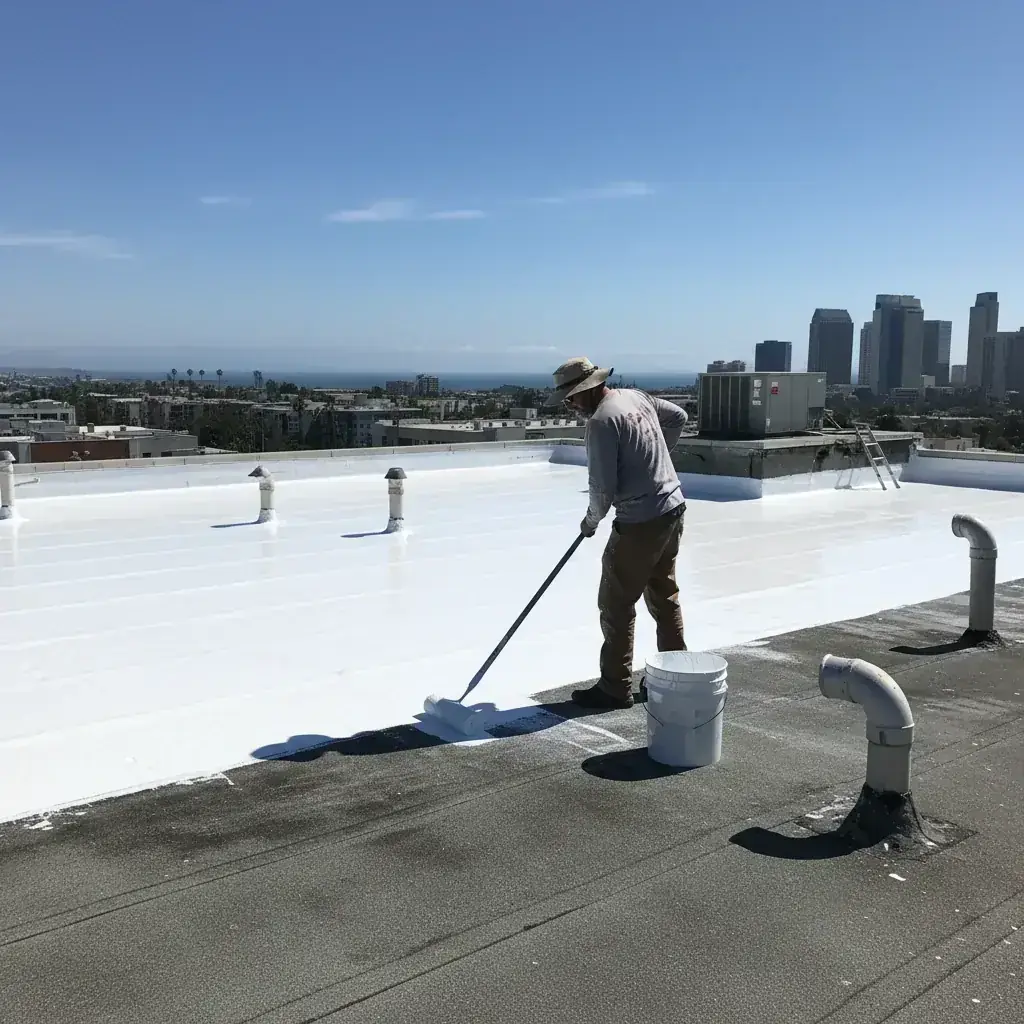
What roof restoration actually means
Roof restoration here means cleaning, repairing details, and applying a fluid coating over an existing system so the field keeps working without a full membrane tear-off. It is not paint. It is not a patch over a failed deck.
A legitimate restoration starts with inspection and moisture work. The contractor cores the membrane, maps wet insulation, and replaces wet board where the survey says it must come out. Open seams, blisters, and failed flashings get repaired. Then a named silicone, acrylic, or other elastomeric product is rolled or sprayed to the manufacturer’s dry-film thickness.
Restoration is the wrong conversation when the deck is structurally compromised, insulation is wet across large zones, or the membrane has lost adhesion in sheets. Coatings do not bridge large splits, fill ponded low spots, or fix failed drains. Those belong on roof repair or replacement.
An honest C-39 shows core photos and moisture readings before recommending either path. Skipping cores is a guess. San Diego’s low freeze-thaw count and high UV mean many commercial membranes weather from the surface first. That is when a coating can be a real option. It is still a survey result, not a remaining-life promise from this website.
Silicone, acrylic, and elastomeric coatings compared
The right chemistry follows the existing membrane and how the roof drains. The product bulletin still wins.
Silicone
Silicone is the usual first conversation on flats that pond after rain. Many acrylic warranties exclude standing water. Confirm ponding language on the named SKU. Silicone is also specified for UV on inland heat and still used on coastal salt if prep and thickness match the sheet. Trade-offs live on the bulletin: wet slip, dirt pickup, and recoat rules. Recoating silicone is usually silicone, not acrylic over silicone. Context: 2026 flat roof replacement cost.
ENERGY STAR and Cool Roof Rating Council listings apply to the listed product. We will not invent a cooling-load or utility-bill number.
Acrylic
Acrylics are water-based and often the lower material conversation on a dry, well-drained slope. They can soften or erode where water stands. If drains are dishonest, acrylic is the wrong call. Uncured acrylic can wash off in rain. The crew still needs a forecast window even in a dry county.
Elastomeric
“Elastomeric” describes stretch and recovery. Silicone and acrylic products can both be elastomeric. When a contractor says the word alone, ask for the resin family and the data sheet. East County swings (El Cajon, Santee) put more thermal movement on the film than a coastal zone. Coastal material context: best roof material for coastal climates. Substrate comparison: TPO vs modified bitumen.
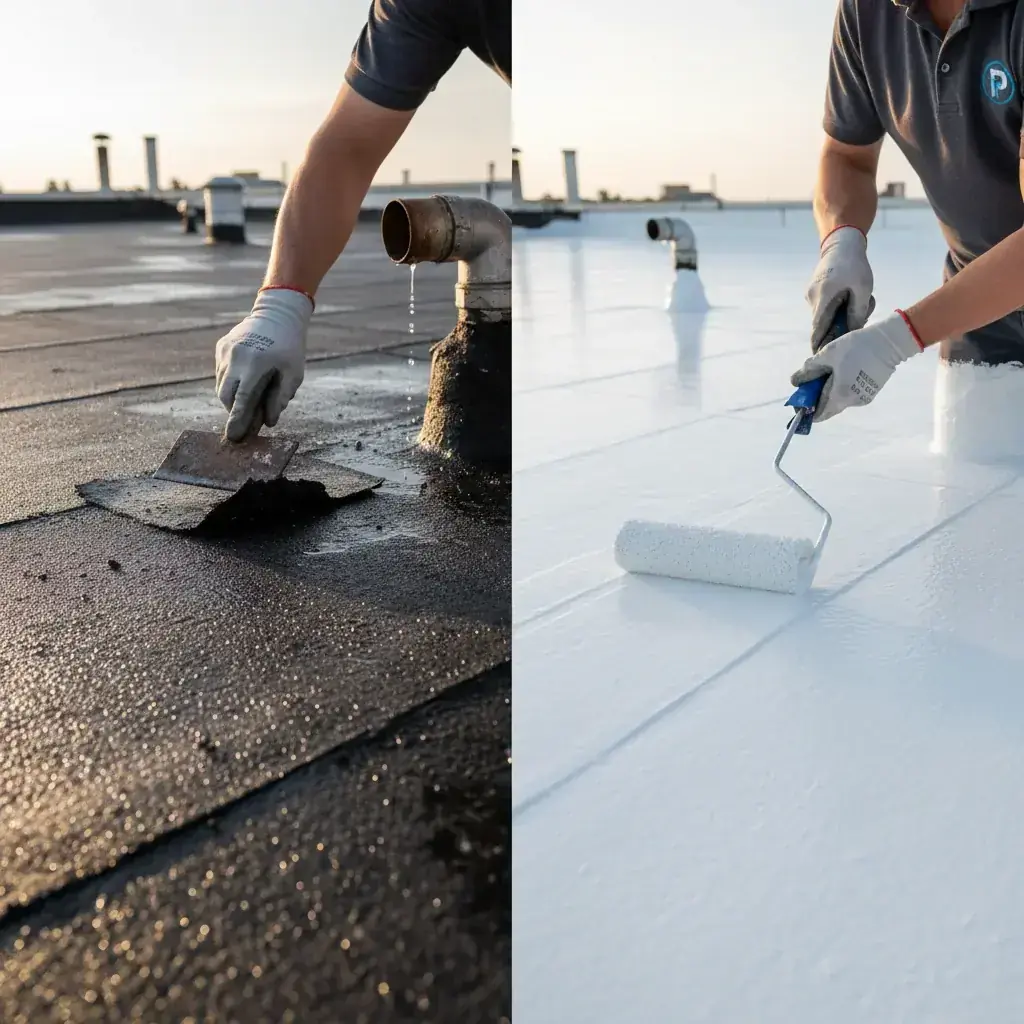
When restoration is the right call, and when it is a disguise
Restoration belongs when the bones are still a roof.
Restoration can make sense when:
- Cores and moisture mapping show wet insulation is limited and repairable
- The membrane is still adhered, not peeled in sheets
- The deck (steel, concrete, or wood) is structurally sound
- Active leaks trace to surface cracks or details the coating system is designed to cover after repair
Replacement belongs when:
- Cores show saturated insulation in multiple zones (water trapped under a new film damages the deck faster)
- The membrane has widespread alligatoring, shrinkage, or pull-away at walls and parapets
- Previous coating layers are already losing adhesion
- Leaks trace to failed substrate, not surface crazing
We will not invent a wet-area cutoff or a remaining-life window. Those numbers come from this roof’s survey. Full replacement path: flat roof TPO. On a campus, buildings can split: some coat, some replace.
Ponding is separate. A coating does not create slope. If water sits because of low spots, tapered insulation or fill comes first. See flat roof ponding water. Confirm drain and overflow rules with the inspector and the applicable plumbing or building code for that occupancy, not a blog percentage.
Cost: compare scopes, not a restoration spreadsheet
A coating job is usually a smaller check than tear-off, new insulation, and new membrane on a qualifying roof. That is not permission to coat a wet roof, and it is not a license to print San Diego installed rates.
Ask for line items: cores and moisture map, wet-area tear-out, cleaning, primer, fabric at details, specified mils, manufacturer inspection if any, and who pulls the permit. Compare those scopes. Do not use a blog ratio or a package total as a bid.
California building energy efficiency standards can apply when a re-roof triggers cool-roof rules. Look up the CEC climate zone. Do not treat the California energy standards as a default on every restoration or steep-slope job. A restoration that is not a covering replacement may follow a different permit path. Confirm with the jurisdiction. City of San Diego: Development Services. Unincorporated County: PDS Building. County cost method (still not a quote): new roof cost in San Diego for 2026. Commercial routing: commercial roofing.
What to put in writing before you sign
1. Will you pull cores and show the moisture data? Skip this and both of you are guessing.
2. What is included in surface prep? Coatings fail on dirty, chalky, or oily fields. Ask about washing, priming, and blister repair.
3. What warranty, and who backs it? Manufacturer terms on commercial coatings are product- and applicator-specific. Ask for the application spec and whether the contractor is an approved applicator for that SKU. We will not invent a term.
4. Is the contractor a C-39? Verify at the CSLB license lookup. This brand is not the licensee.
5. What happens if prep exposes more damage? Get a written change-order path before work starts.
NRCA publishes fluid-applied guidance. Ask whether the named system follows that manufacturer’s and NRCA application rules.
When to call us
If you manage a flat or low-slope building in San Diego County and need cores, a coating-versus-replace fork, and comparable line items, we make the match. We do not quote the job. Call (760) 750-5557.