If you are planning a reroof in San Diego County, color is not the first question. The first question is whether this parcel needs a Class A roof assembly, and who signs off.
Top Pro Roofing SD is a referral service. We connect you with a vetted CSLB C-39. We are not the building department, Cal Fire, or your carrier. Call (760) 750-5557.
Authority having jurisdiction (AHJ) means the city or county building and fire officials who issue your permit. California publishes statewide WUI and roof-covering rules. Local amendments and mapped hazard zones decide what applies on a street in Alpine versus a lot in Mission Beach. We will not invent 2026 section numbers, replacement-percentage triggers, or a county-wide “two-thirds of parcels” statistic. Look the parcel up. Then ask the AHJ and the insurer in writing.
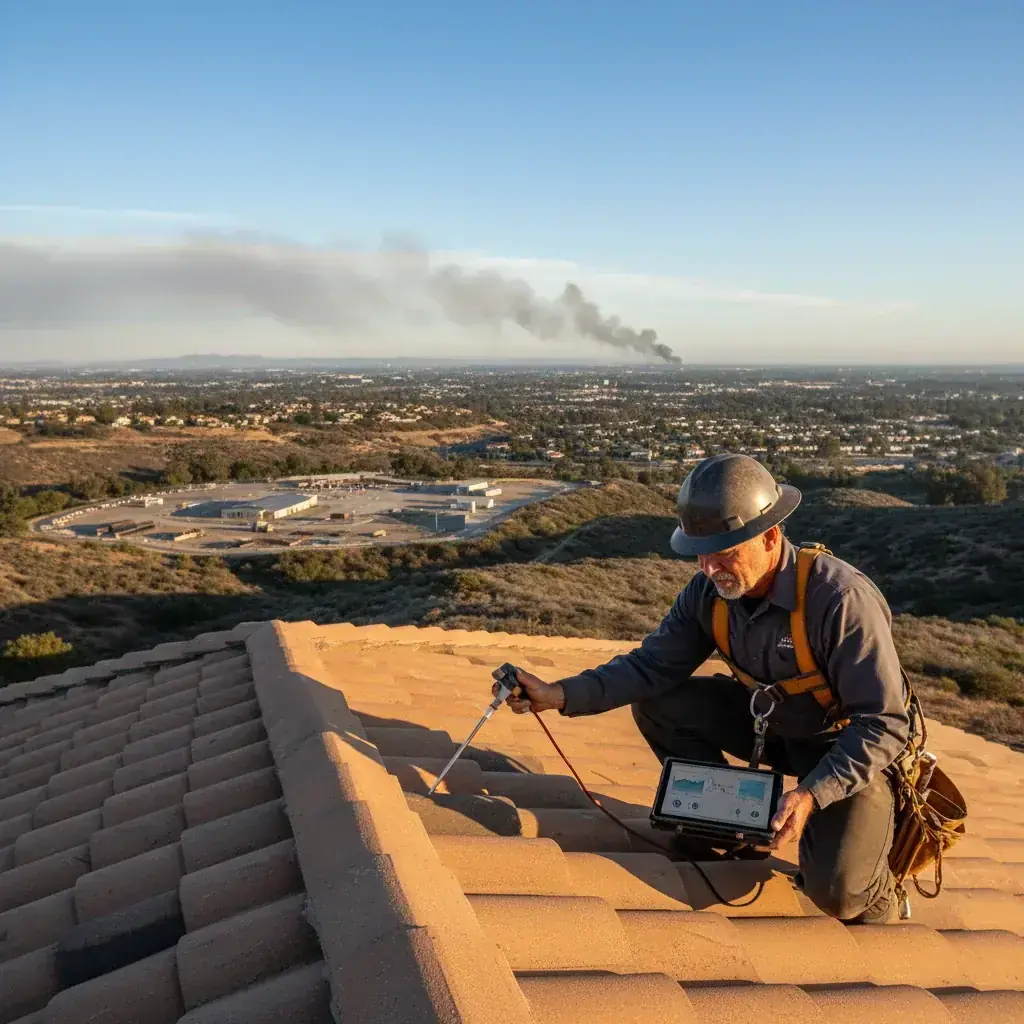
Do you need a Class A roof in San Diego?
Maybe. Class A is the top covering/assembly rating used in U.S. roof fire tests (think ASTM E108 / UL 790 language on the listing). Concrete and clay tile often reach Class A as a covering. Many asphalt products reach Class A only as a tested assembly with a listed underlayment and deck. Untreated wood shake is commonly rejected in mapped hazard areas. None of that replaces a permit review.
You need a mapped answer:
- Cal Fire Fire Hazard Severity Zone (FHSZ) maps and any local wildland-urban interface (WUI) overlay
- The building official for that address (City of San Diego, another city, or the County, plus fire)
- Your insurer’s underwriting rules, which can be stricter than the permit
Foothill and canyon-edge streets (the kind of search that shows up as “foothill fire zone roofing”) are where this comes up most. A ZIP code, including inland ZIPs, is not a zone. Two houses on the same street can differ.
How to look up the parcel (do this before you order material)
- Cal Fire Fire Hazard Severity Zones and the viewer they currently publish
- County or city GIS / building pages for WUI or brush maps
- The permit counter for that AHJ, with the APN
Your roofer should pull the zone as part of an estimate. You should still save a screenshot of the map dated the day you applied. Maps get remade.
What “the code” requires, without fake 2026 cites
California’s building and residential codes include WUI construction provisions (widely discussed as CBC Chapter 7A and parallel CRC language) plus roof-covering fire classification. Those chapters are real. The edition and local adoption on the date of your permit are what matter. A 2026 in a URL is a page date, not a section we are quoting.
In mapped fire-hazard / WUI areas, officials commonly require a Class A roof covering or assembly on new buildings and on reroofs that the local code treats as a reroof rather than a patch. The threshold that turns a repair into a reroof is a local call. We will not invent “once you replace X percent.” Ask plan check.
Class A vs B vs C describes resistance to flame and brands in the test standard. In Santa Ana weather, embers are the practical threat. A listing is still not a guarantee the house survives.
Class A material vs Class A assembly
The bundle can say Class A. The roof as built might not be.
Some coverings are listed Class A by themselves. Others need a specific underlayment and deck. Skip the listed underlayment to save a line item and you may have a roof that fails inspection or a later insurance question even if it looks identical from the curb.
| Material | Typical listing pattern | Still confirm |
|---|---|---|
| Concrete tile | Often Class A as a covering | Underlayment, edges, vents on older jobs |
| Clay tile | Often Class A as a covering | Same: assembly and penetrations |
| Metal | Often Class A with a listed assembly | Underlayment and attachments |
| Asphalt shingle | Many are assembly-only Class A | Listed underlayment and deck |
| Untreated wood shake | Generally not Class A | AHJ almost always has a say |
The listing, the permit, and the installed layers have to match. A C-39 who will not name the underlayment is not giving you a fire-zone spec.
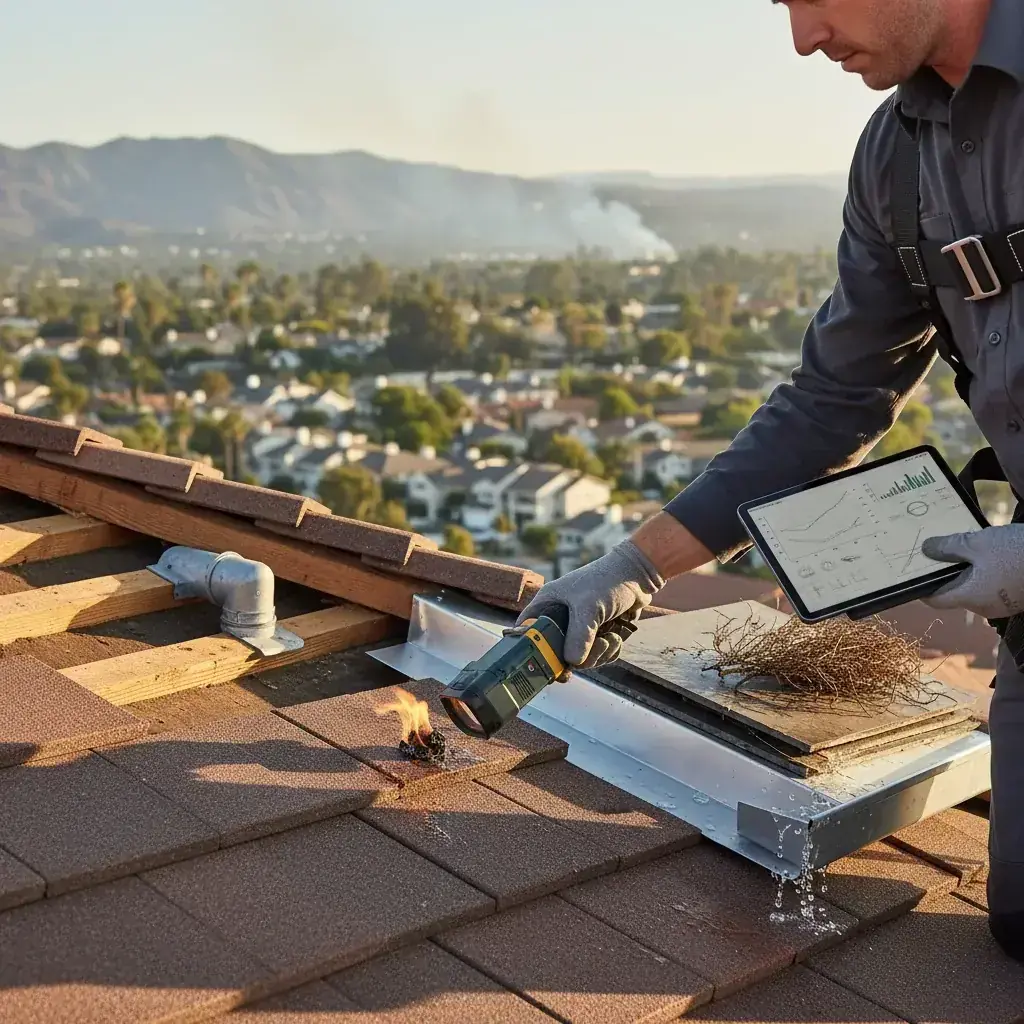
Ember-resistant edges, vents, and “Zone 0”
The covering is the headline. Embers also enter at vents, roof-to-wall joints, and the first feet of yard against the walls.
California has been tightening defensible space and near-structure ignition rules (often discussed as Zone 0, the non-combustible strip against the house). Distances, effective dates, and whether a reroof must include ember-resistant vents are AHJ and fire-authority questions. We will not publish a 2026 implementation calendar or a foot measurement as if it were this site’s measurement.
Practical ask list for the C-39 and the fire inspector:
- Listed Class A covering or listed assembly, named on the quote
- Metal or other listed edge/valley details they will actually install
- Ember-resistant vents if required on this permit
- Closed gaps at walls and penetrations
Build to the permit you can pull and to what the insurer will accept. Those can differ. Related materials: wildfire-resistant roofing materials and wildfire ember data.
How to tell if the existing roof complies
You can guess from the street. You cannot certify from the street.
Untreated shake in a mapped hazard area is a red flag. Tile covering may be fine while 20-year-old felt, bird-stop, and vents are not. Asphalt is the gray zone because the underlayment is hidden.
A written roof inspection is the path that produces photos. Buying, selling, or answering a carrier questionnaire is when that file matters.
What a fire-zone reroof quote should include
On a roof replacement in a mapped zone, compliance belongs in the scope:
- Named Class A covering or named listed assembly (including underlayment)
- Edge and valley metals as required
- Vents the AHJ will accept
- Who pulls the permit and which jurisdiction
Tile and metal are common Class A paths when detailed correctly. Class A asphalt is the budget path only as the listed assembly. We do not invent prices.
Insurance: ask the carrier, not a blog
California fire-zone owners have seen non-renewals and movement onto the FAIR Plan. Roof age and condition show up in those files. A documented Class A assembly can help a conversation. It does not guarantee a discount or a renewal.
See insurance non-renewal and roof age in California. Ask your agent what documentation they want before you tear off. We will not claim a premium savings.
Frequently asked questions
Does every San Diego home need a Class A roof?
No. Mapped hazard and WUI rules, plus the reroof trigger in that city or county, decide. Look up the parcel. Ask the AHJ.
Can I replace a few shingles without going Class A?
A small repair often stays a repair. The line where a repair becomes a reroof is not a number we will invent. Your permit desk answers it.
Is tile automatically compliant?
The covering often is Class A. Old underlayment, vents, and edges may still fail a current fire-zone inspection. Inspection sorts that.
Will a Class A roof lower my insurance premium?
Ask the insurer. Some hardening programs exist. We will not quote a discount.
What if I am not ready to replace?
Get a documented inspection. Prioritize what the fire official and the carrier actually asked for. Guessing is how people fail a renewal review.
Where do I confirm WUI roofing requirements for California?
Start with Cal Fire’s current FHSZ materials, the California Building / Residential Code as adopted by your AHJ, and the local information bulletin. If two sources disagree, the permit you are issued is the one that counts.
When to call us
Assume nothing from the ZIP. Pull the map, then have a C-39 write a spec the AHJ can stamp. Call (760) 750-5557 and we will connect you with a vetted local roofer. They still do not replace the building department or your insurance agent.