TL;DR
- Steel is stiff and common. It rusts if the metallic coating and paint are breached. Galvanized or Galvalume plus a named paint system is the actual product, not “metal.”
- Aluminum does not rust. The oxide film is the corrosion resistance. Paint is color and UV. It is softer, dents easier, and moves more with heat.
- Coast (Del Mar, Encinitas, Ocean Beach): chloride film sits on the roof through dry months. Aluminum removes a steel failure mode. Steel is only a fit if the maker’s coastal clause allows your address.
- Inland (El Cajon, Ramona, Alpine): heat, UV, debris, and often WUI Class A rules. Steel’s stiffness usually matters more than salt.
- We will not invent a price per square or a lifespan. Read the data sheet, finish warranty, and install instructions.
Top Pro Roofing SD refers licensed C-39 roofers. We do not fabricate panels. Call (760) 750-5557.
A roof half a mile from Encinitas surf and a roof in the hills above Ramona are not the same climate. The metal roofing service page is what crews in the network actually install. This page is steel vs aluminum.
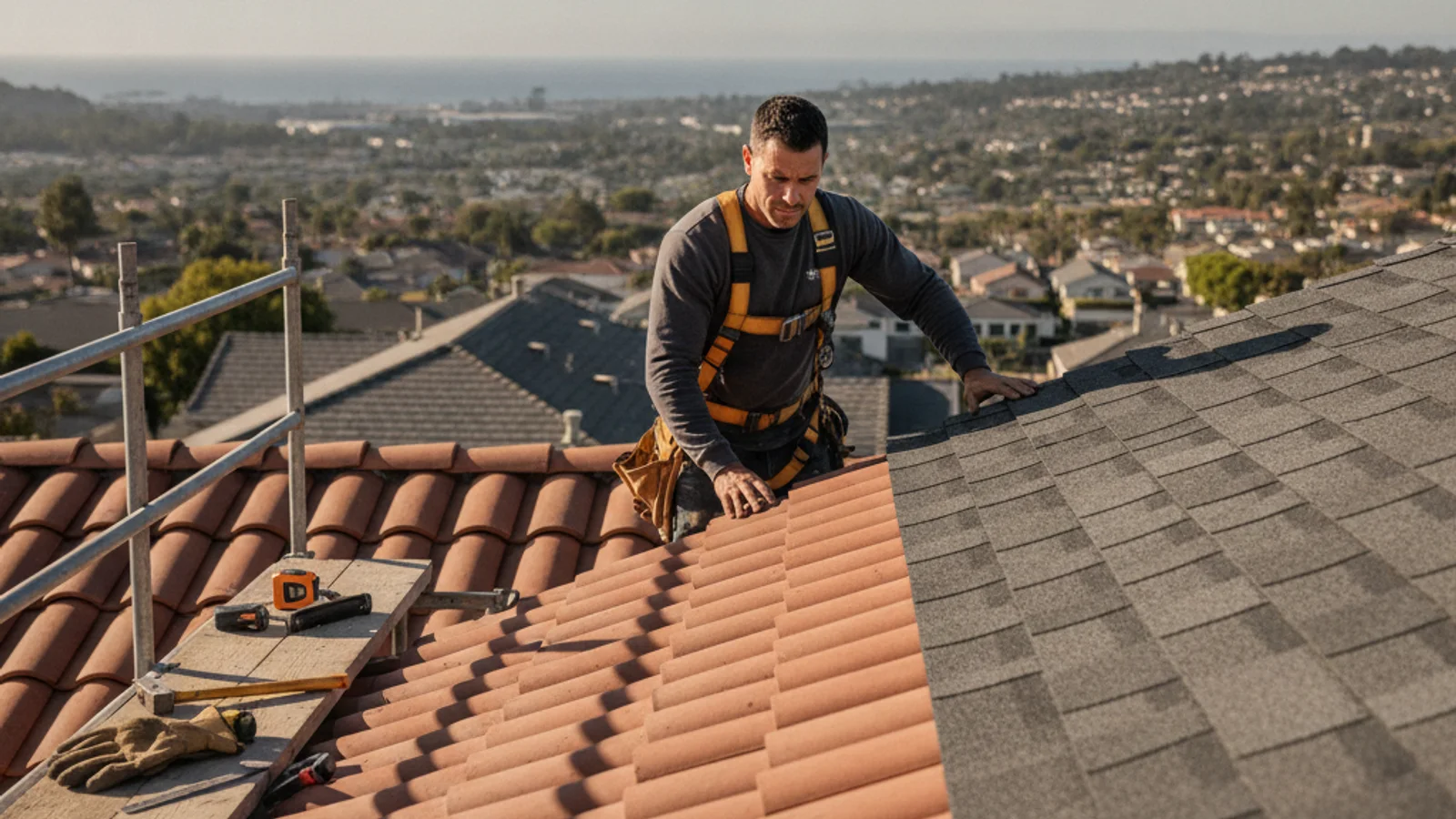
How the two metals fail differently
Steel is the structure. Bare steel rusts, so roofing steel is coated: zinc (galvanized) or aluminum-zinc (often sold as Galvalume), then paint. Scratch through to substrate at a cut edge, a dropped tool, or a fastener and the coating cannot protect what it no longer covers.
Aluminum forms an oxide in air. That film is the corrosion resistance. Paint still matters for fade. It is not the only barrier.
Trade-offs: aluminum is less stiff at the same thickness, so denting and oil canning (waviness in raking light) show more. Aluminum also expands more for the same temperature swing, so clip systems and panel length are part of the spec. Steel is sold by gauge (lower number is thicker). Aluminum is often a decimal thickness. Do not compare “26” on one quote to “0.032” on the other without the data sheets.
What the coast actually changes
Airborne chloride does not wait for rain. Salt is hygroscopic. It holds a damp film against the panel through the marine layer. That is why Del Mar, Cardiff, Encinitas, and Ocean Beach punish cut edges and cheap fasteners.
Read the finish warranty’s coastal exclusion first, measured as the maker defines distance to salt water, not as “we are two miles inland so we are fine.” Coastal material choice and will salt damage a metal roof cover how far that effect reaches.
Inland, chloride load drops. Heat, UV, and wind-driven debris take over. If the parcel sits in mapped wildland-urban interface, ask the AHJ and the matched C-39 whether a listed Class A covering applies to this job. Metal shingles and sheets can qualify as Class A when the listed assembly is what gets installed. Verify the parcel and the product listing. Do not assume.
Movement, fasteners, and mixed metals
Exposed-fastener panels put screws and washers through the face. Washers age. Thermal cycling works them. Concealed-fastener standing seam clips the panel and lets it slide. Long aluminum panels need that movement. Daily inland swing (hot deck at 4 p.m., cool after sundown, every day) is why. Standing seam is the clip primer. Profile vs stone-coated is a different choice: standing seam vs stone-coated.
Keep dissimilar metals apart. Aluminum against copper, or the wrong fastener, is galvanic corrosion. Salt accelerates it. Flashing, gutters, and solar racking have to match the panel metal. Site-cut steel edges get the maker’s edge treatment, not a bare shear.
What the bid should name
Ask for three documents: product data sheet, finish warranty with exclusions, installation instructions for that panel. Coastal exclusion lives in the warranty. Edges and penetrations live in the instructions.
We will not publish cost per square, corrosion year counts, or a universal lifespan. What moves your number: metal and thickness, coating and paint, exposed vs concealed fastener, hips and penetrations, tear-off, deck repairs, and any framing. Itemize so two bids describe the same roof.
If any plane is low slope, ask the AHJ whether aged solar reflectance and thermal emittance rules apply. Look up the CEC climate zone for this address. Do not treat typical steep-slope San Diego metal as a cool-roof default. Compare listed products on ENERGY STAR roofing.
Aluminum vs steel at a glance
| Question | Steel | Aluminum |
|---|---|---|
| Corrosion | Coating system. Fails at breaches | Oxide of the metal. No rust |
| Stiffness / dents | Stiffer at typical roofing thickness | Softer, more oil canning risk |
| Thermal movement | Less than aluminum | More. Clip design matters |
| Coast | Only if warranty and spec allow | Often the simpler salt answer |
| Inland / WUI | Stiffness plus listed Class A assembly | Still metal; check the listing |
| How it is sold | Gauge | Often decimal thickness |
Questions before you sign
Which metal is on the quote, named. Coating named, not “coated steel.” Distance to salt water vs the warranty map. Exposed or concealed fastener, and how movement is handled. Flashing, fastener, and gutter metals. Cut-edge treatment. What they would put on their own house at your address.
A coastal C-39 will talk aluminum and coating class. An inland C-39 will talk gauge, wind, and Chapter 7A. Both can be right. Full reroof sequence: roof replacement. License check: CSLB.
When to call us
Flashing, edges, and penetrations fail first. That is C-39 work on a named system, not a barn-panel leftover. Call (760) 750-5557 and we will connect you with a licensed local roofer.