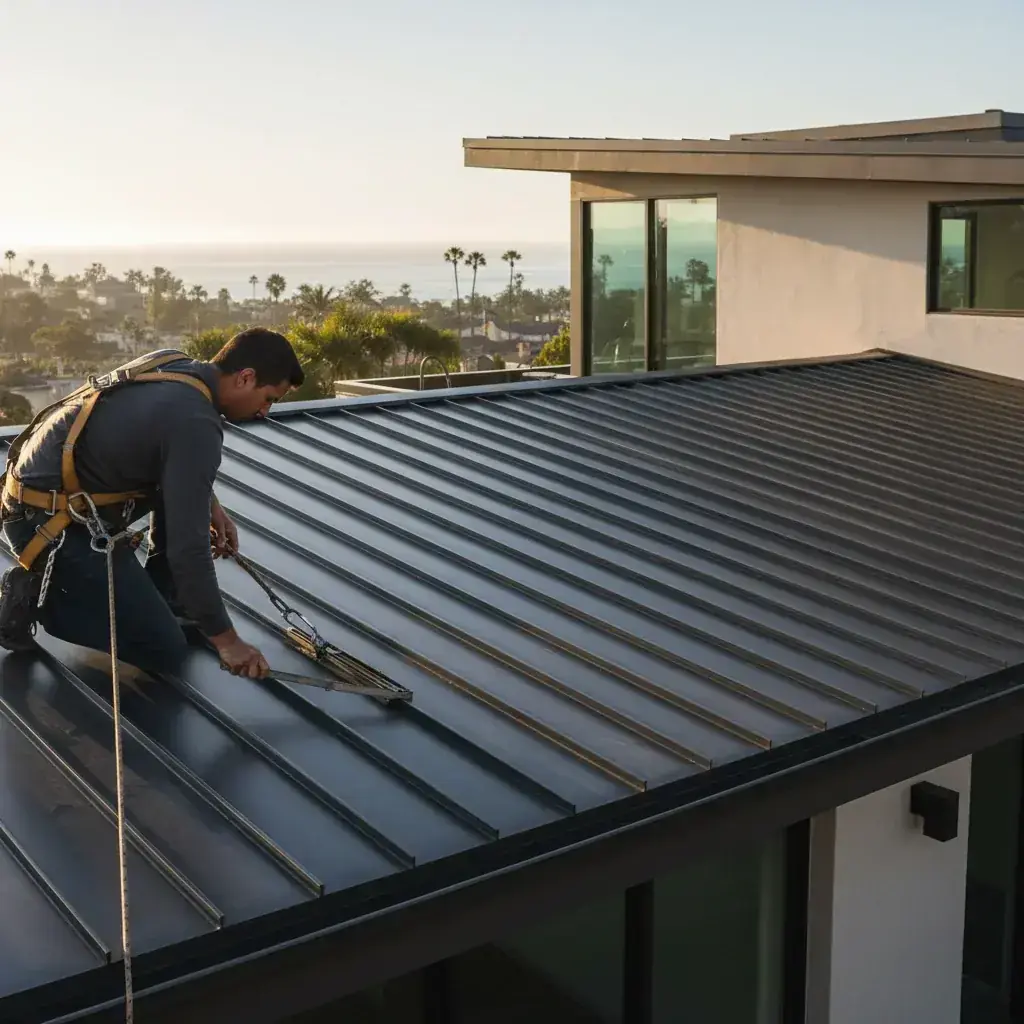
Yes, salt can damage a metal roof. The rate depends on the alloy, the coating, and the fasteners, not on the word metal. Aluminum, copper, zinc, and 316 stainless are the coastal conversation. Coated Galvalume can work when the finish stays intact and edges are sealed. Plain galvanized and bare carbon steel are the wrong ask near the surf. We will not invent year tables or 40-year cost spreadsheets. Top Pro Roofing SD refers. We do not install. Call (760) 750-5557.
Climate numbers live on coastal roof salt damage in San Diego. This page is the substrate decision.
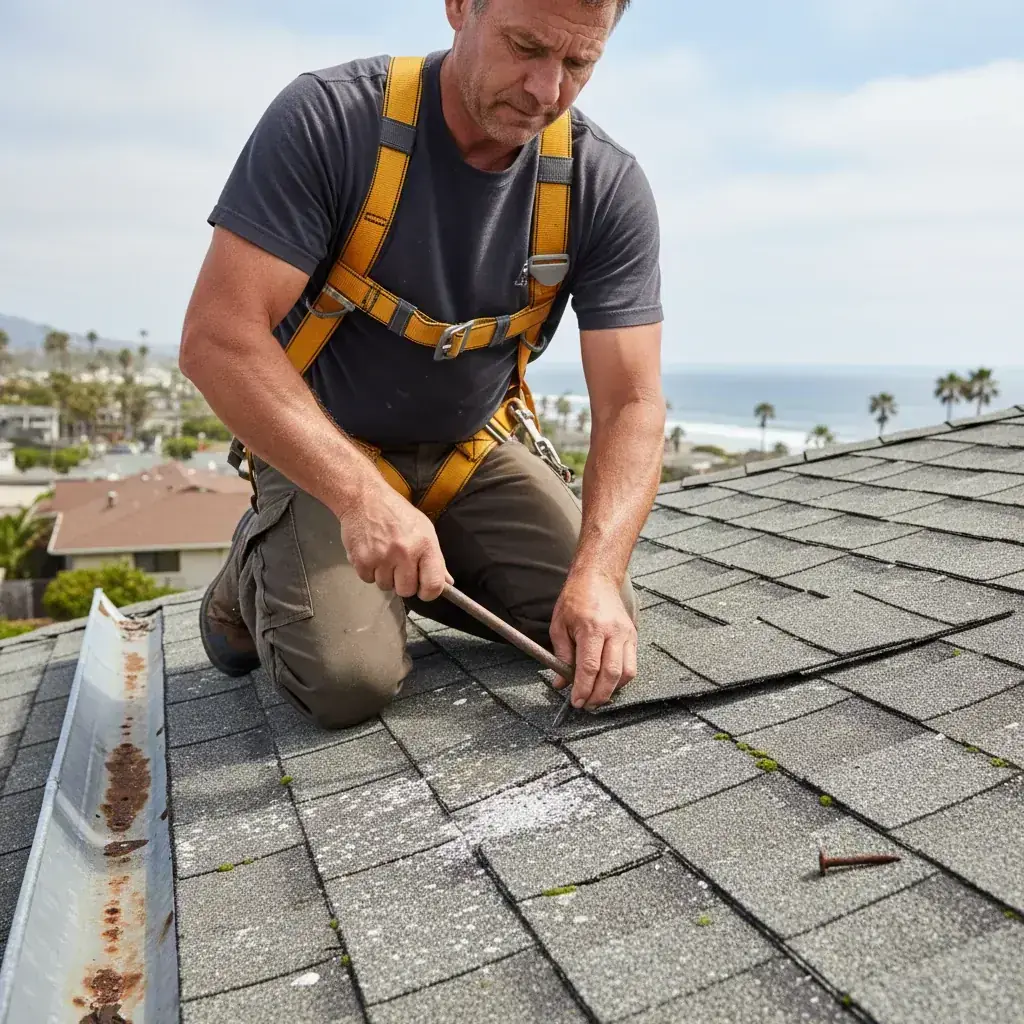
How salt actually corrodes metal
Chloride from the Pacific rides the onshore breeze and sits on the roof. Morning marine layer turns that dust into a wet film.
- It breaks oxide skins. Most metals grow a thin oxide that slows rust. Chloride disrupts that skin.
- It makes galvanic cells. Two different metals plus wet salt is a small battery. The more reactive metal is the one that disappears. Fastener-to-panel contact is the usual cell.
- It gets under paint. Coatings are not a perfect molecular wall. Chloride finds pinholes and cut edges.
Metals that last here either grow a chloride-tolerant skin (aluminum, some stainless), grow a patina (copper, zinc), or keep chloride off the substrate with a serious finish (PVDF over aluminum or steel).
Ranking metals without a year column
| Metal | Coastal San Diego role | Why |
|---|---|---|
| 316 stainless | Surf-adjacent, marine hardware | Molybdenum helps the passive layer against chloride |
| Copper | Architectural, long stay | Chloride-copper patina, if you want that look |
| Zinc | Architectural | Sacrificial patina is the design, not a defect |
| Aluminum (PVDF-coated) | Default coastal panel ask | Does not rust like steel. Finish is for color |
| 304 stainless | Inland-leaning or protected | Can pit in direct spray. Fine farther back |
| Galvalume (55% Al-Zn on steel) | Inland and mid-county, careful coast | Excellent until the coating is cut or scratched |
| Pre-painted galvanized (G90) | Weak coastal ask | Zinc depletes faster in salt. Paint is not a marine spec by itself |
| Light galvanized or bare steel | Do not use near the water | Red rust starts at cuts and fasteners |
The pattern: non-ferrous and 316 do not “kind of rust.” Steel products live or die on coating integrity.
Coating type vs metal type
On steel panels, the paint system is the salt barrier.
| Coating | What it is | Coastal ask |
|---|---|---|
| PVDF (Kynar 500 / Hylar 5000) | Fluoropolymer finish | The usual premium finish warranty conversation |
| SMP | Silicone-modified polyester | Cheaper. Chalks and fades faster in UV and salt |
| Polyester baked enamel | Generic “pre-painted” | Poor coastal finish. Avoid near the water |
A long substrate warranty is not a 40-year color warranty. Ask for the finish term, coastal exclusions, and whether cut edges void it. Metal Construction Association technical notes are the industry side of that talk.
At the coast, the spec to put on the bid is PVDF-coated aluminum or, farther inland, PVDF-coated Galvalume with stainless or matching fasteners. “Pre-painted steel” is not a spec.
Distance from the water: a rule of thumb, not a lab map
National sheets often say “coastal spec within a mile.” San Diego’s onshore flow carries salt farther up open valleys (Mission Valley, San Dieguito, San Luis Rey) and up west-facing hills. Treat a west-facing house with a clear shot at the water as harsher than a GPS mile.
| Rough band | What to ask for |
|---|---|
| Surf and first blocks | Aluminum, copper, zinc, or 316. Steel substrates are a hard sell |
| Still in regular salt air | Aluminum preferred. Galvalume only with PVDF, stainless fasteners, sealed cuts |
| A few miles inland | PVDF Galvalume is in play. Aluminum still wins on long stay |
| Well inland | Standard metal specs behave closer to the published inland story |
Neighborhoods where this decision is not academic: Coronado, Ocean Beach, Pacific Beach, Mission Beach, western La Jolla (Bird Rock, Windansea), Point Loma, Del Mar, Solana Beach, Cardiff, western Encinitas, western Oceanside and Carlsbad, Imperial Beach. Inland valleys still see episodic salt. Ask, do not guess.
Installer mistakes that wreck a good panel
Wrong fasteners. Carbon-steel screws in aluminum panels rust, stain, then lose the panel in wind. Stainless (305, 410, or 316 by exposure) is the coastal default.
Raw cut edges on Galvalume or galvanized. That is bare steel. Seal or detail it the way the manufacturer writes.
Mixed flashings. Copper runoff on aluminum is galvanic. Galvanized step flashing on copper is the same problem flipped. Match metals, or isolate them.
Contact with the wrong neighbor. Pressure-treated lumber (copper preservatives) against aluminum, mixed gutter metals, panels sitting on dissimilar brackets. Isolation washers exist for this.
We will not invent a fastener budget. The matched roofer prices the hardware that the panel warranty actually allows.
Maintenance that is real
Freshwater rinse. A garden hose, not a pressure washer, after marine-layer season. Salt that sits all year is the coating’s enemy.
Look at fastener heads, eaves, rakes, valleys, and penetrations. Rust streaks down from a screw are the early tell.
Touch chips soon. Chloride under a broken finish on steel does not wait.
Clear valleys and gutters. Wet debris holds salt against the panel.
Do not pressure-wash. You drive salt into seams.
A rinse-and-inspect agreement is a conversation with the roofer. We will not invent an annual fee.
Metal vs tile vs premium shingle on the coast
Metal is in play when pitch allows the profile, when the structure cannot take tile weight, when the look is modern, or when solar clamps on standing seam matter. Tile still wins on many Spanish houses and on rain noise. Premium asphalt wins on first check and on chopped roofs with too many metal seams. Side-by-sides: tile vs metal and best roof material for coastal climates.
When existing steel is already rusting
Isolated rust at fasteners: stainless swap and treat the spots. Scattered edge rust with finish still mostly there: recoating is a maybe, not a given. Rust through the panel, or wet attic: replacement planning, usually toward PVDF aluminum if you are still in salt air. Get both paths in writing. We will not invent a “30% of panels” break-even.
FAQ
Is galvanized steel ever okay for a coastal San Diego home?
Not as a default inside the first mile. G90 plus a real PVDF finish is a mid-county conversation, not a Coronado spec. Light galvanized should not be the coastal covering.
Is pre-painted steel the same as PVDF-coated steel?
No. Pre-painted includes cheap polyester. Ask for the resin name and the finish warranty.
Aluminum vs copper on the coast?
Copper is the patina and the custom bid. Aluminum is the usual durable coastal panel. Cost-per-year stories belong on a quote, not here.
Is 316 worth it over 304?
For panels in direct spray, often yes. For fasteners in the first blocks, 316 is the conservative ask. Farther inland, 304 or 305 fasteners are commonly used. The molybdenum is what you pay for in chloride pitting.
Do fasteners and flashings really matter that much?
Yes. A correct aluminum panel with steel screws fails at the screws. A Galvalume panel with copper flashing corrodes at the runoff. Match metals.
How often should I maintain a coastal metal roof?
Ask the matched C-39 what rinse and inspection schedule they will put in writing for this coast. Touch chips. Clear debris. That is the useful list.
What this means for you
Near the water, substrate is the job. Aluminum, copper, zinc, or 316. Galvalume is a coated-steel compromise with a meticulous install. Bare galvanized is the miss. Stainless fasteners and matched flashings are not optional.
Three-plus miles inland, the coastal premium is often not worth paying. Confirm distance, slope, and HOA on this house.
Call (760) 750-5557 or use the contact form. We connect you with a licensed local roofer. Top Pro Roofing SD does not install or warrant panels.
Related: standing seam metal, stone-coated metal, metal roof cost, metal roofing, roof replacement.
Sources: ASTM B117 (salt-spray test method, not a San Diego year forecast) · Metal Construction Association · NRCA · NWS San Diego · CSLB license check