If a tree just landed on your San Diego roof, look for downed power or cable lines before you take a photo, call a roofer, or touch a branch. Once the yard is confirmed safe, leave the tree where it is until a licensed tree crew and a licensed independent roofer can sequence the cut and the tarp. Top Pro Roofing SD is a referral service. We do not cut trees, climb roofs, or file claims. Call (760) 750-5557 if you want a match.
Many jobs look worse from the driveway than they are. A single eucalyptus or pine limb can shatter a run of tile without opening the attic. You cannot know that until the wood is off and someone qualified is on the slope. Stay off the roof.
The California Department of Insurance publishes a Residential Property Claims Guide. Read the current guide for notice, temporary repairs, logs, and photos. We will not restate those duties here.
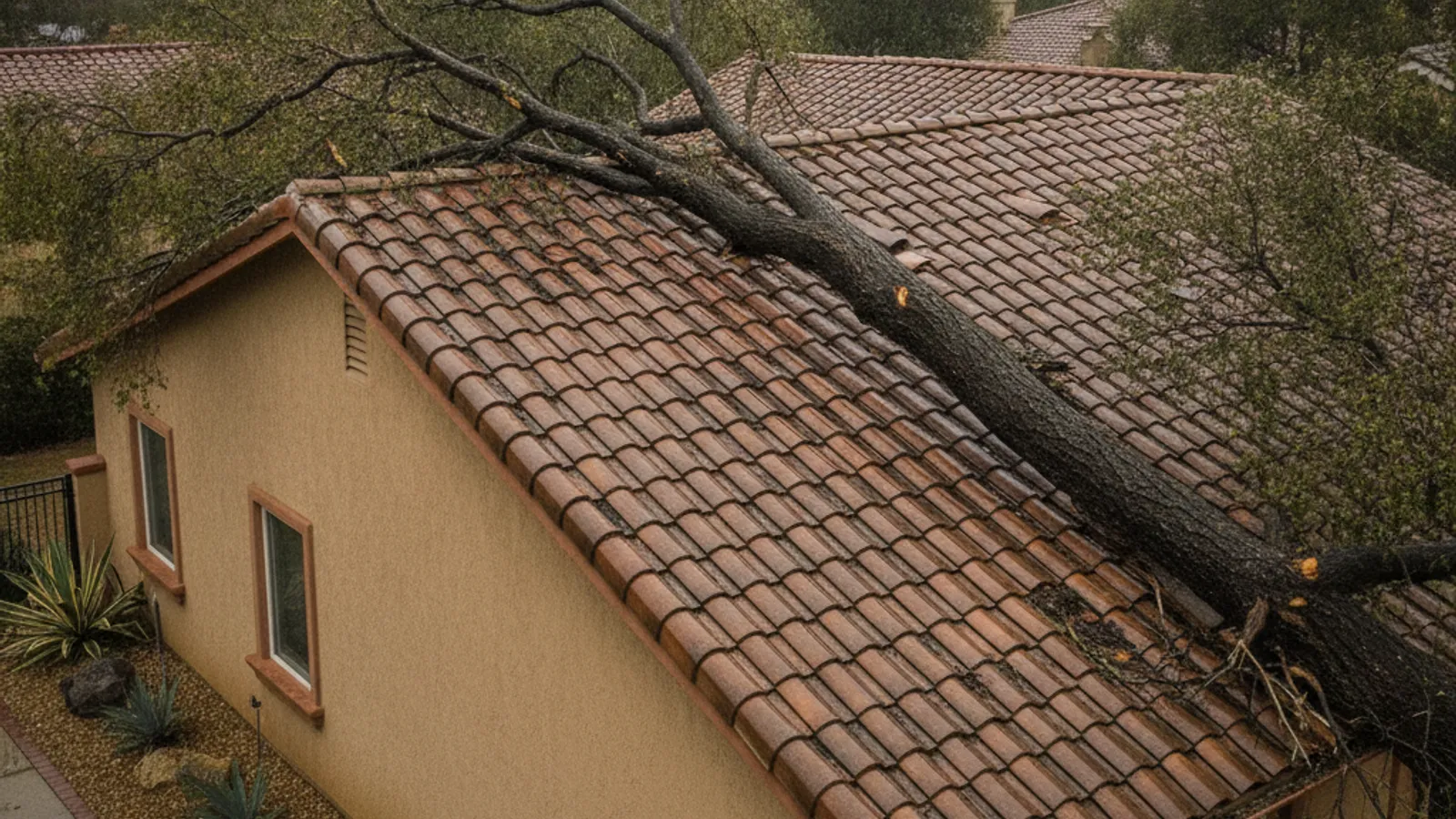
Is it safe to go near the tree right now?
Not always. If the tree is on a line, or a line is down, stay back and call SDG&E before anyone else. Wet decking is slick. A limb under tension can roll when weight hits the wrong spot.
Stay off the roof, even if you own a ladder. From the ground, and from the attic hatch if you can do that safely, you can see wet insulation, daylight, and whether water is in the living space. Move furniture and electronics. Put a bucket under a drip. Do not climb to “just look.”
Should you call a tree company or a roofer first?
Call both, and let them talk. A tree crew alone will not tarp. Pulling the limb first, with no roofer, can drop remaining weight through already-cracked decking.
Typical sequence: confirm the roof is safe to approach, cut the wood in sections from the top down, then tarp the real opening before the next weather if the opening is live. Tight yards, mature trunks, or a crane add calendar time on the tree side. This brand does not promise arrival times.
What if the tree is still resting on the roof?
Leave it. Weight is often spread across more of the roof than it looks. Cutting one branch in the wrong order can let the rest drop.
Professionals cut in sections and lighten the load. After the wood is gone, the independent roofer can see cracked tile versus broken sheathing. The tarp is sized to that opening, not to the silhouette of the canopy.
What does the repair usually include (no invented prices)
Three scopes usually stack: getting the tree off the house, emergency tarp, and permanent roof work. We will not publish limb, crane, tarp, or section-reroof dollar ranges. Those numbers are not measured on your house.
Ask the written documents to separate:
- Tree work versus roofing work, with each company’s license on its own contract
- Whether decking, rafters, or trusses are in play, versus covering only
- Tarp as mitigation, with photos and an invoice for the insurer
- Matching tile or shingle, especially on older clay
- A stop-and-approve step if hidden rot shows up once the limb is gone
If the section is large enough that replacement enters the conversation, use new roof cost in San Diego for process, not a copied price. Storm sequence: after storm damage.
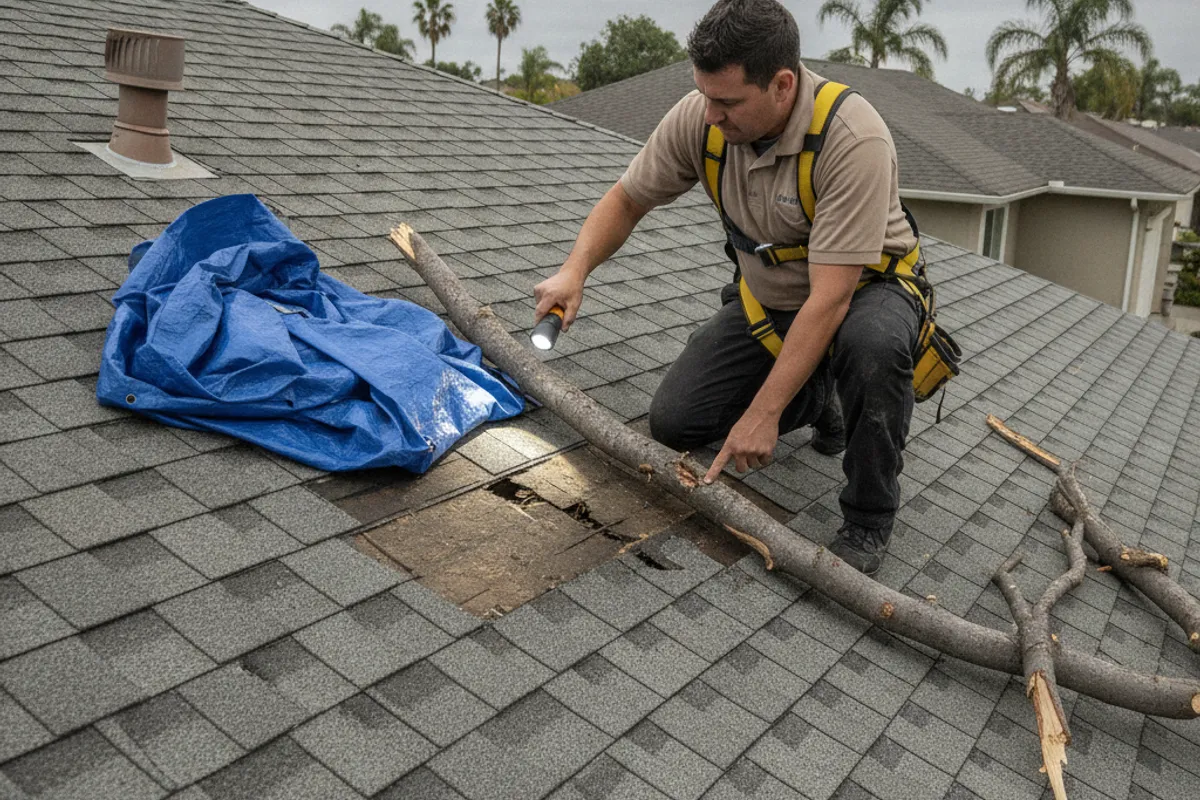
Does homeowners insurance cover a tree falling on your roof?
Often a wind or storm-driven tree is treated as a covered peril for the structure, but your policy and deductible control. Sudden failure after years of ignored decay can be argued as maintenance. Read the duties-after-loss section. Do not take this page as a coverage promise.
Whose yard the tree grew in matters less than people think for getting your roof dried in. Many California homeowners policies address damage to your house first. Subrogation against a neighbor, if anyone pursues it, is usually between insurers. A dead tree that was already the subject of written complaints is a fact pattern for the companies, not a reason to wait on mitigation.
Document before anyone cuts, if you can do it from the ground. Claim steps: California roof insurance claim guide and storm damage insurance claim walkthrough.
What should you document before the tree gets touched?
Photograph the tree, the roof, the yard, and any interior water from multiple angles. Wide shots give the adjuster the fall path. Close-ups show broken tile, dented metal, and split fascia. Phone timestamps help.
Keep every invoice: tarp, tree, later repair. Reasonable mitigation is often part of a claim. That is the insurer’s call. Save any written assessment from the roofer or tree company before permanent work starts, so pre-existing wear is not mixed with the strike.
Frequently asked questions
Does homeowners insurance cover a tree falling on your roof in San Diego?
Often yes when wind or storm brought it down. Coverage, debris sublimits, and the deductible are in your policy. We do not bind coverage.
Who pays if a neighbor’s tree falls on your roof?
Start with your own policy for the house. Neighbor fault, if any, is usually a later insurance conversation.
Can I remove a fallen tree from my roof myself?
Do not. Weight and tension are not obvious from the lawn. Leave cutting to a licensed tree crew. Let a licensed roofer see the deck once it is clear.
How fast do I need a tarp?
As soon as the wood is off and the opening is visible, especially if rain is forecast. A fastened commercial tarp is mitigation. A hardware-store sheet with bricks is not. See emergency roof tarp in San Diego.
Will a fallen tree void my roof’s warranty?
Manufacturer and workmanship warranties cover defects in material and install, not impact. A tree strike is an insurance event. Repairing it correctly should not void the rest of a valid warranty, but read the actual warranty language.
When to call us
If a tree is on a San Diego roof, call (760) 750-5557 for a referral match. Independent roofers in that match can coordinate with a tree crew on tarping and scope. We do not send a company truck. For a later, dry-weather look, roof inspection. Service pages: emergency roof repair and roof repair. City example: El Cajon. Contact if you prefer the form.
Related: Santa Ana wind roof damage and storm-damaged roof, next steps.