La Jolla, Del Mar, Coronado, and Ocean Beach do not get a lot more annual rain than El Cajon or Escondido. County totals are in the same ballpark. Coastal roofs still show active leaks sooner. The difference is the marine layer, onshore wind, and salt, not a secret extra storm total.
Top Pro Roofing SD is a referral service. We connect you with CSLB-licensed C-39 roofers. We do not diagnose attics ourselves. Call (760) 750-5557.
This is not the same story as rusted flashing
Coastal salt damage is the slow metal story: fasteners, flashings, and hardware eating over years. This page is the faster moisture story. Condensation and wind-driven fog can wet an attic in a single May-through-September stretch, before corrosion alone would explain a stain.
Both can be true on the same house in Pacific Beach. A good estimate names which one they are chasing.
What the marine layer does to a roof
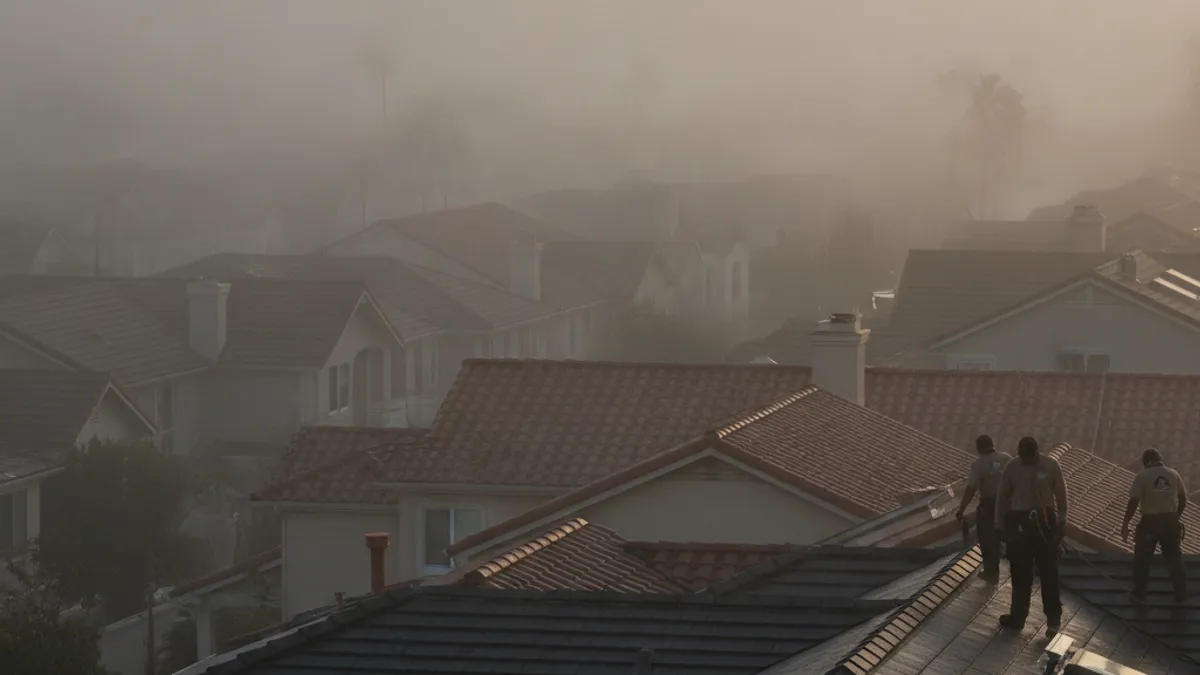
Attic condensation. May Gray and June Gloom are not just pretty fog. Saturated air sits on the coast most mornings, then off and on the rest of the year. It enters through vents and gaps. When it hits a temperature swing (cool deck at night, or a sun-heated deck over still-moist air), water drops out on wood and insulation. That is not one rain event. It is many damp mornings.
Faster gasket and sealant failure. Rubber pipe boots, skylight seals, and chimney sealant live in humidity plus salt. Inland they often last longer. On the first mile or two of coast they open earlier. A failed penetration is still one of the most common active leaks anywhere. Pipe boot leaks.
Wind-driven fog. Onshore wind pushes fine moisture into laps and joints that a straight-down shower never reaches. Leaks at roof-to-wall and at window heads that meet the eave show up more on the coast than on the same detail in Santee.
Slower drying. When the assembly does get wet, coastal air stays humid and the morning burn-off is late. Inland a slope can dry in a day. Near the water it can stay damp two or three days. Mold and rot get a longer clock before anyone smells it.
Where it shows up first
Attic insulation near vents and ridge: darkened, damp, musty, often before a ceiling stain. Chimney and skylight flashings next, because those joints depend on sealant and are in the wind. Attic ventilation is not only a summer heat tool on the coast. It is a moisture path. Chimney flashing.
Inland East County still leaks. Heat cooks boots and felt. Santa Anas lift edges. The pattern is different: more “after a real rain” and less “it just appeared in June.”
What actually helps
- Attic ventilation sized so moist air can leave instead of condensing on the underside of the deck
- Fasteners and flashings specified for salt (stainless or copper), not inland galvanized
- Boots and seals replaced on a coastal clock, not an inland assumption
- Inspection twice a year from the ground and, when needed, a C-39 in the attic, not a homeowner on the lid
Do not climb wet tile or dewy composition to “find the leak.” Photograph stains, smell the attic from the hatch if it is safe, call.
We will not invent a coastal surcharge or a “leaks X years sooner” dollar table. Ask the matched roofer to spec metal and underlayment for your zip, not a generic inland kit.
Why it feels like the leak came from nowhere
There is often no fallen branch and no named storm. The stain or the smell shows up suddenly. The moisture was accumulating through weeks of marine layer against a weak vent, boot, or under-ventilated bay.
A roofer who only looks for rain-entry holes can miss condensation that formed inside the attic. That is why coastal diagnosis is a different conversation than a Chula Vista one-story after a January cell.
FAQ
Does this mean I need a completely different roofing material?
Not always. You need coastal details: corrosion-resistant fasteners and flashings, ventilation that actually moves air, and products that tolerate humidity. Material still has to match HOA and structure. Coastal roof materials.
How can I tell if the attic has condensation before a stain?
Musty smell, damp or discolored insulation near vents, rust blooming on exposed fasteners. That is enough to have a C-39 look. Stay off the roof.
Is this only San Diego?
Most California coasts get marine layer. San Diego’s May-June pattern and onshore wind make a fairly regular version of it.
Does two miles inland fix it?
It usually eases. Strongest in the first mile or two. Canyons and some west-facing slopes can pull fog farther. Encinitas vs Escondido is still a real difference. Microclimates exist.
Should I tarp a coastal condensation leak?
If water is coming through the ceiling, that is an opening or a failed penetration, and a C-39 decides on a tarp. Do not climb. Emergency tarp.
When to call
Musty attic, damp insulation at vents, or a leak with no obvious storm: worth ruling out coastal moisture early. Call (760) 750-5557. We will connect you with a vetted local roofer who can separate rain entry from condensation. You hire them. Confirm C-39 at cslb.ca.gov. Roof leak repair.