Chimney flashing is not one strip of metal. It is step flashing woven into the courses up the sides, counter flashing into the brick, and on a wide chimney a saddle or cricket on the uphill side. In San Diego those layers fail in a local pattern: salt on galvanized steel, UV on surface-mounted sealant, and older homes with no cricket.
Top Pro Roofing SD is a referral service. We connect you with CSLB-licensed C-39 roofers (and a mason when the brick is the problem). We do not flash chimneys ourselves. Call (760) 750-5557.
We will not invent a repair menu in dollars. A smear of roofing cement on the top edge is not a repair. If the chimney has leaked through more than one storm, assume the metal you cannot see needs a look, not more caulk.
The coastal-materials context is best roof material for coastal climates.
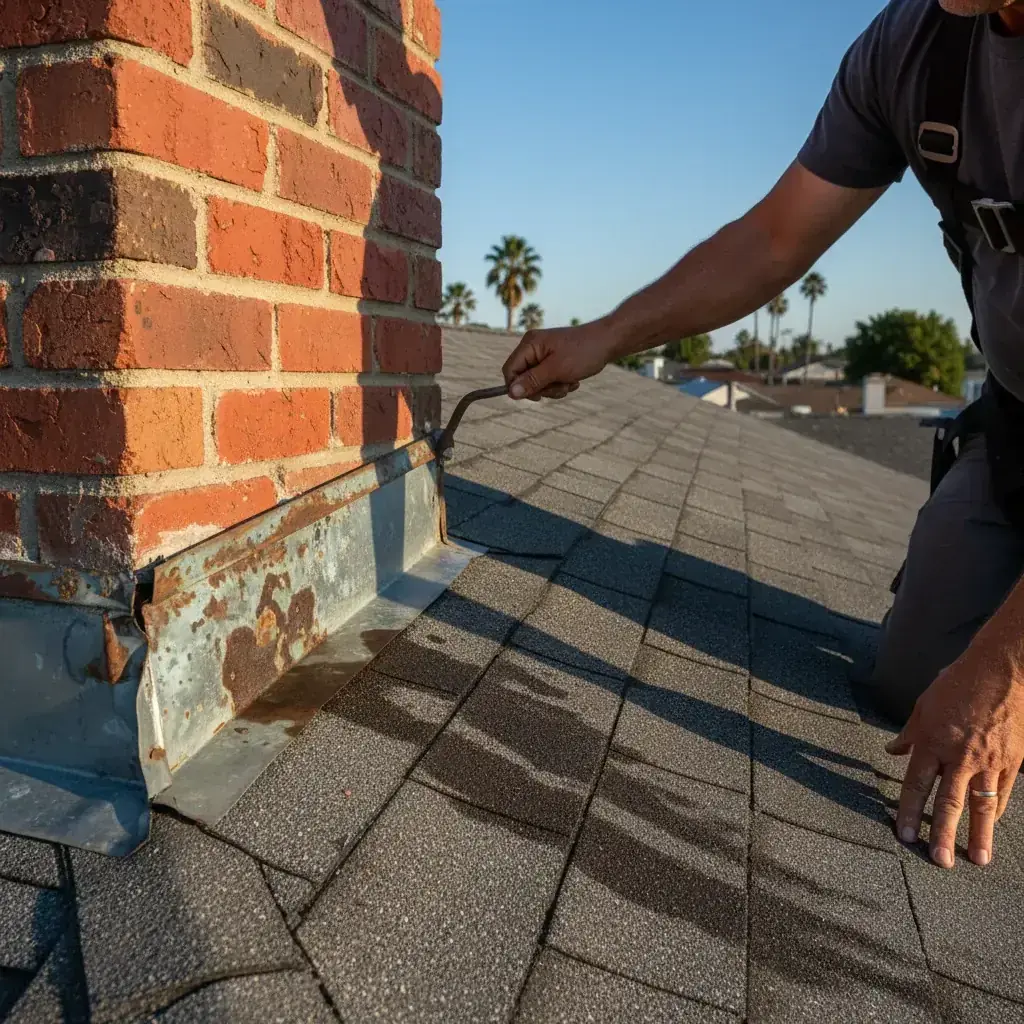
How the three layers work
Step flashing. Small L-shaped pieces woven between shingle (or tile) courses up both sides. Each piece overlaps the one below. Water that hits the brick is caught and shed onto the field.
Counter flashing. Covers the top of the step metal so water cannot get behind it. Either mortared into a saw-cut groove in the brick (a reglet) or surface-mounted with sealant and fasteners.
Saddle or cricket. On the uphill side of a wide chimney, a peaked diversion so water does not pond against the back wall. Ask the AHJ whether a cricket is required for this chimney width. Read the current adopted residential code rather than this blog. Many Mission Hills, North Park, and Kensington chimneys predate that detail.
When one layer fails, you get a leak. When two fail, the stain gets ugly.
Why San Diego chimneys leak
Salt on galvanized step flashing. Older G90 steel loses zinc, then rusts through. You often cannot see it from the ground. It shows when a C-39 lifts courses. Coronado, Imperial Beach, Ocean Beach, La Jolla, Cardiff, and Encinitas see this earlier than inland East County. Coastal salt damage. Will salt damage a metal roof.
Sealant on surface-mounted counter flashing. Polyurethane and silicone in this sun crack. The joint is the leak, not the brick color.
Reglet mortar. On older homes with a proper groove, the mortar joint opens from heat and small seismic movement. Water then runs behind the metal.
Missing cricket. A wide chimney with no diversion lets rain stack against the back wall. Upstream shingles and underlayment rot. The stain can show in the attic several feet from the chase.
If the stain is not obviously at the chimney, how to find a roof leak.
Signs you can see without climbing
- Rust streaks on the brick below the metal line: the galvanizing is gone.
- Ceiling stain near the chase. Within a few feet of the chimney path, flashing is the first suspect. Farther away, look for a missing cricket dumping water upslope.
- Gap, curl, or pulling sealant between metal and brick. Binoculars from the ground are enough to start.
- White efflorescence on interior chimney brick: water moving through masonry (reglet, cap, or both).
- Musty attic after rain before a stain. Framing can be wet for a long time first.
Do not walk wet tile or a steep lid to confirm this.
Scope, not a price list
A honest look usually lands in one of these:
- Reseal a sound surface-mounted joint (only if the metal is still intact)
- Cut and re-bed a cracked reglet, metal still good
- Lift the field, replace step flashing, reuse sound counter flashing
- Full strip: new step, counter, and reglet
- Same plus a framed cricket
- Chase or framing rebuild if the leak has been chronic
Tile and slate around a chimney take more care because units have to come off and go back without breaking. Roof flashing repair cost is a related page. We still will not print a chimney menu here.
Why cement on the top edge fails
The leak is usually behind or under the metal: perforated step pieces, or a cracked counter joint. A bead of black cement on the visible edge traps water against failing steel. The next hard rain finds a new path. The next C-39 then has to chisel the smear off before they can see the joint.
A self-adhered membrane over a known failure can buy time until a crew arrives. It is not a decade of flashing.
What to replace it with
When step metal has to come out, the bid should name the metal:
- Galvanized steel: common inland. Salt shortens it.
- Aluminum: does not rust the way steel does. Isolate it from wet mortar or concrete.
- Stainless: the long coastal spec.
- Copper: often chosen on Mission Hills or La Jolla restorations for look as much as life.
Aluminum against fresh mortar without isolation is a common cheap-job failure. NRCA flashing details are what a careful C-39 works from.
Cricket when the chimney is wide enough
If the uphill face is wide enough that water ponds against the chimney, ask the AHJ whether a cricket or saddle is required on this job. Read the current residential code section they cite. We will not restate a chimney-width number here. Adding one while the area is already open is the usual time to do it. A proper cricket is framed, decked, underlaid, step-flashed, and covered to match. Pre-formed metal saddles exist for smaller chimneys. Wider ones should be framed.
When flashing is not the real problem
- Cracked or missing crown. Water enters from the top and bypasses perfect step metal.
- Spalling brick. Water has been in the masonry for years. Repoint or rebuild may sit with a mason.
- Lean or pull-away. Do not reflash a structurally compromised chimney.
- Decorative-only chase. If the fireplace is gone for good, taking the chimney to the roofline and patching the field can be the cleaner path than rebuilding. That is a C-39 plus, often, a mason. Get it in writing.
What causes roof leaks in San Diego.
Who owns which piece
| Component | Trade | Notes |
|---|---|---|
| Step flashing | Roofer | Requires lifting the field |
| Counter flashing, surface-mounted | Roofer | Sealant and fasteners |
| Counter flashing, reglet | Roofer or mason | Mortar work |
| New reglet cut in existing brick | Mason | Diamond blade; roofers often sub this |
| Cricket framing | Roofer (or carpenter) | Most roofing crews do this |
| Crown, cap, spark arrestor | Mason or chimney specialist | Not a flashing-only job |
| Brick repointing | Mason | Not a roofer’s scope |
A C-39 who says the brick needs a mason is not dodging the flashing. Bring both trades when both systems have failed.
Flashing and vent repair. Roof flashing leak repair.
FAQ
How long should chimney flashing last here?
It lasts as long as the metal, the joint, and the salt. Galvanized on the first miles of coast fails sooner than inland. Aluminum and stainless last longer. Surface sealant is still the short link. Ask the bid for the metal, not a year guarantee from a blog.
Can I repair it myself?
A tiny sealant touch-up on sound metal, if you are safe on a one-story walkable roof, is the outer edge of DIY. Lifting shingles, cutting brick, or replacing step flashing is licensed work. Cement smear is the usual DIY miss. Can I patch a roof myself.
Will insurance pay?
Sudden damage (tree, hail) is the usual yes. Wear, rust, and sealant age are usually no. Your policy controls.
It only leaks in heavy rain.
Often a missing or small cricket. Light rain sheds. Volume ponds on the uphill side.
Does the contractor need a license?
Confirm on CSLB whether this flashing job needs a C-39, a C-29 mason, or both. Read the live classification pages. Do not take the pairing from this FAQ.
Cricket vs saddle?
Same idea. “Cricket” is the code word. “Saddle” is common on the West Coast and on pre-formed metal.
When to call
Rust, gaps, pulling sealant, or a stain near the chase: stop caulking. Call (760) 750-5557. We will connect you with a licensed independent local roofer. You hire them. Confirm the C-39 at cslb.ca.gov.