Tile in San Diego is not one product. Clay and concrete both shed water as overlapping units, but they start from different mixes, sit at different weights, and suit different houses. We will not invent installed per-square-foot prices or whole-roof totals. Ask two bids to name the tile profile, underlayment, flashing metals, and whether the structure was checked for the load.
Top Pro Roofing SD is a referral service. We connect homeowners with licensed local roofers. We do not install, we do not hold a C-39, and we do not certify roofs. Call (760) 750-5557.
For replacement context, see 2026 tile roof replacement cost in San Diego. When the tile is still sound and the sheet is tired, start with tile roof lift and relay.
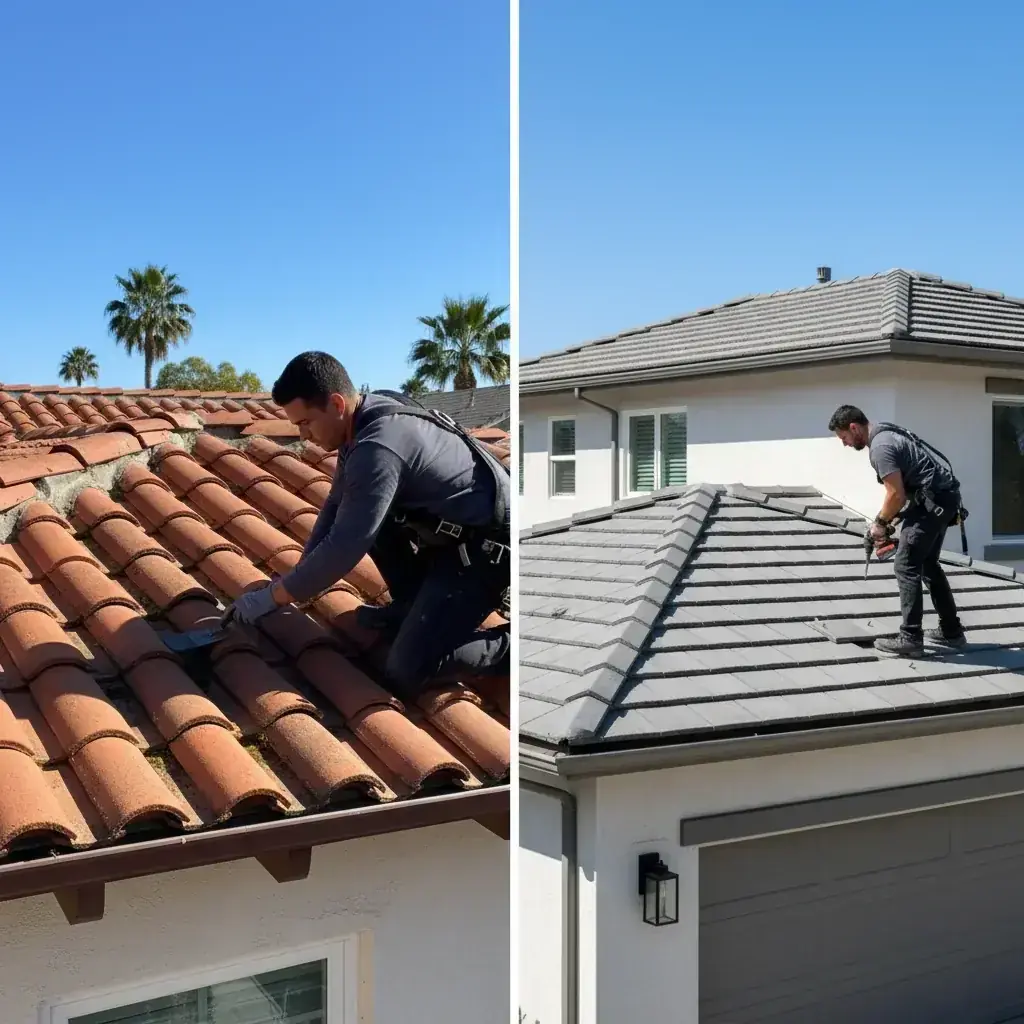
What concrete and clay tile actually are
Clay tiles
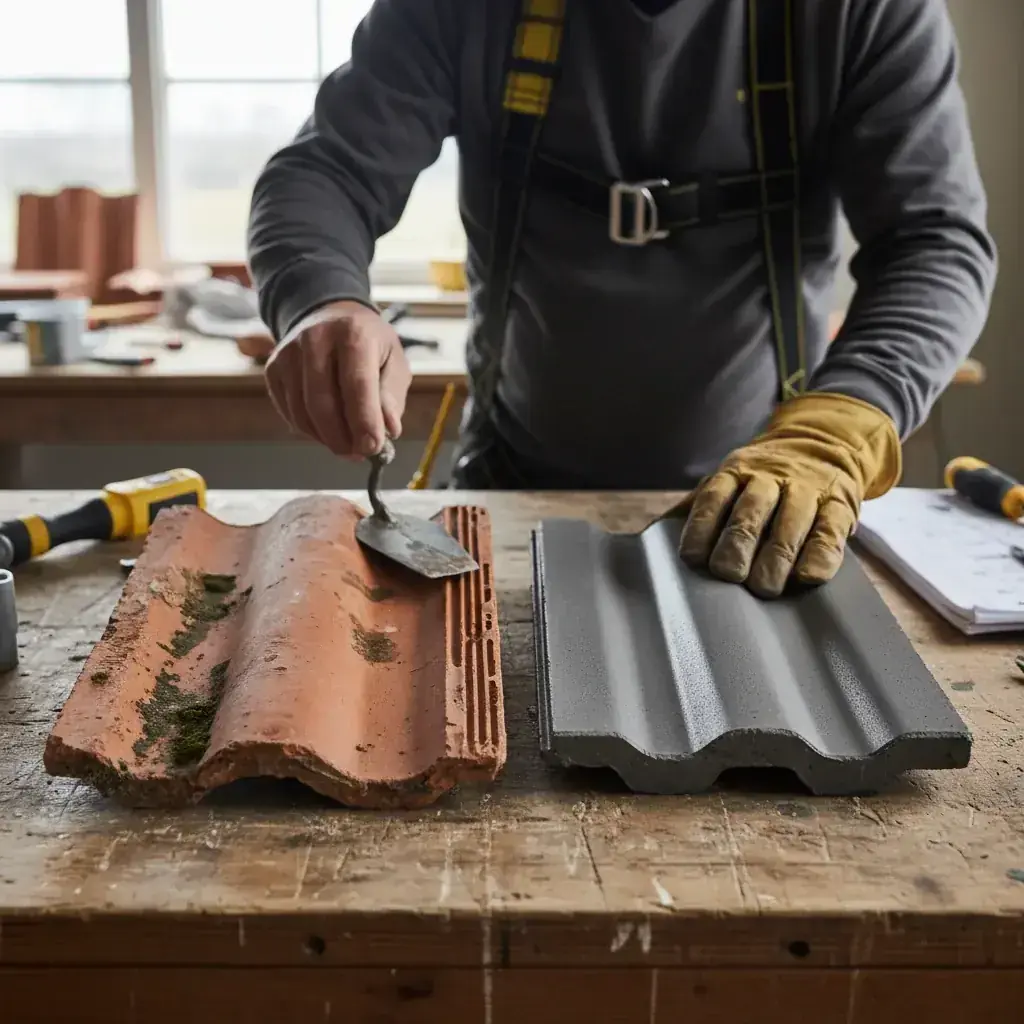
Clay tile is mined, formed (barrel, S, or flat), and kiln-fired. The common terracotta color comes from iron in the clay oxidizing in the kiln, so the color runs through the body rather than sitting as a thin paint. Glazes, when used, are fired on. Batch-to-batch color variation is normal.
Concrete tiles
A concrete tile roof is sand, cement, water, and pigment, extruded or molded, then cured. Profiles can copy clay barrels, wood shake, slate, or a flat modern plank. Color is in the mix and often in a factory surface coat. That coat can weather differently than the body. Ask the bid for the manufacturer, profile name, and whether the color is through-body, coated, or both.
Service context: clay and Spanish tile roofing.
Weight, structure, and what actually leaks first
Neither system is a light reroof over typical asphalt. If you are leaving composition shingles for tile, the framing check is not optional. A licensed independent roofer or a structural engineer should inspect rafters or trusses before anyone orders tile.
Typical published unit weights (a square is 100 square feet of roof area):
- Clay: often cited around 800-1,000 lb per square, depending on profile and whether it is one-piece or two-piece.
- Concrete tiles: often cited around 900-1,200 lb per square.
Those ranges are material class, not a bid. The matched contractor should use the actual product data sheet for this roof.
Tile bodies routinely outlast the waterproof sheet under them. Felt and tired synthetics open while the ceramic or concrete still looks fine. Inland attics (El Cajon, Santee, Escondido, Poway) cook underlayment faster than a shaded coastal slope. When the sheet fails, lift-and-relay reuses sound tile instead of buying a new field.
Ask the manufacturer sheet for that product’s service-life language. Treat the sheet as a product claim, not a promise for your house. Installation, underlayment, flashing, and walking damage decide the real life.
Clay is more brittle under a misplaced foot or a hard impact. Concrete usually takes more traffic before it cracks. Fire classification is a listed-assembly question. Confirm the listing with the contractor and the AHJ. Do not treat Class A as a countywide fact.
How to compare bids without a fake price table
Clay usually costs more than concrete on the same roof because of the fired body, handling, and breakage. Concrete is the default on many new tracts and reroofs because profiles and colors are easier to match. None of that is a number we can print.
Ask each bid to separate:
- Tile product and waste factor
- High-temperature underlayment rated for a tile assembly
- Ice-and-water or self-adhered at valleys, eaves, and penetrations
- Flashings (and whether coastal metals are specified)
- Battens, if the system uses them
- Structural work, if the load is new to the house
- Tear-off, dump, and permit
Two bids are only comparable if they name the same profile, the same sheet, and the same flashing spec.
Coastal salt vs inland heat
Coast (Coronado, Point Loma, La Jolla, Carlsbad)
Salt is harder on metals and fasteners than on the tile body. Clay, especially glazed, is a long-running coastal covering. Quality concrete also holds up when the factory finish and the flashings are specified for marine air. The weak points are still underlayment, nails, and uncoated steel. Related: whether salt will damage a metal roof.
Inland heat (Poway, Santee, Escondido, El Cajon)
Raised or lapped tile leaves an air channel over the underlayment. That stack runs cooler than a dark asphalt field on the same house. Cool-roof colors exist in both clay and concrete lines. The California Energy Commission publishes Title 24, Part 6. Read the current live standards for your address, slope, and project type. This page will not restate SRI cutoffs or climate-zone numbers. Do not treat Title 24 as a default. Confirm with the contractor and the California Energy Commission Title 24 pages. More: cool roof Title 24.
Spanish, Mediterranean, and contemporary houses
Spanish, Mission, and Mediterranean houses in Rancho Santa Fe, Mission Hills, and older La Mesa streets usually want real clay barrel, not a concrete look-alike. HOAs and design review boards often specify the profile. Ask before you order.
Contemporary, modern, and many ranch roofs often want a flat concrete plank in charcoal or gray. Shake-look and slate-look concrete exist when you want tile durability without a barrel skyline.
Walking on either system without knowing the load path cracks tiles. Repair is a matching-tile problem, not a smear of roof cement.
When to call us
If you are choosing clay vs concrete, switching off shingles, or chasing a leak on an existing tile field, you need a licensed independent roofer who will put the structure, the sheet, and the profile on one written scope.
Call (760) 750-5557 and we will connect you with a licensed independent local roofer. Verify any C-39 at cslb.ca.gov before work starts.