A copper roof can belong on a coastal San Diego house. The proposal still has to name the system, the roof map, the drainage, the mixed metals, and the papers behind the work. “Copper roof” by itself is not a spec.
Top Pro Roofing SD refers work. We do not install copper, set a market price, or issue a metal warranty. Call (760) 750-5557. The matched independent C-39 measures the roof and writes the bid.
This review matters from Oceanside and Encinitas through La Jolla and Coronado. We have no approved copper lifespan, corrosion rate, cleaning calendar, or installed total for San Diego County. Those figures, if they exist, come from the manufacturer’s current sheets and the written proposal for this address.
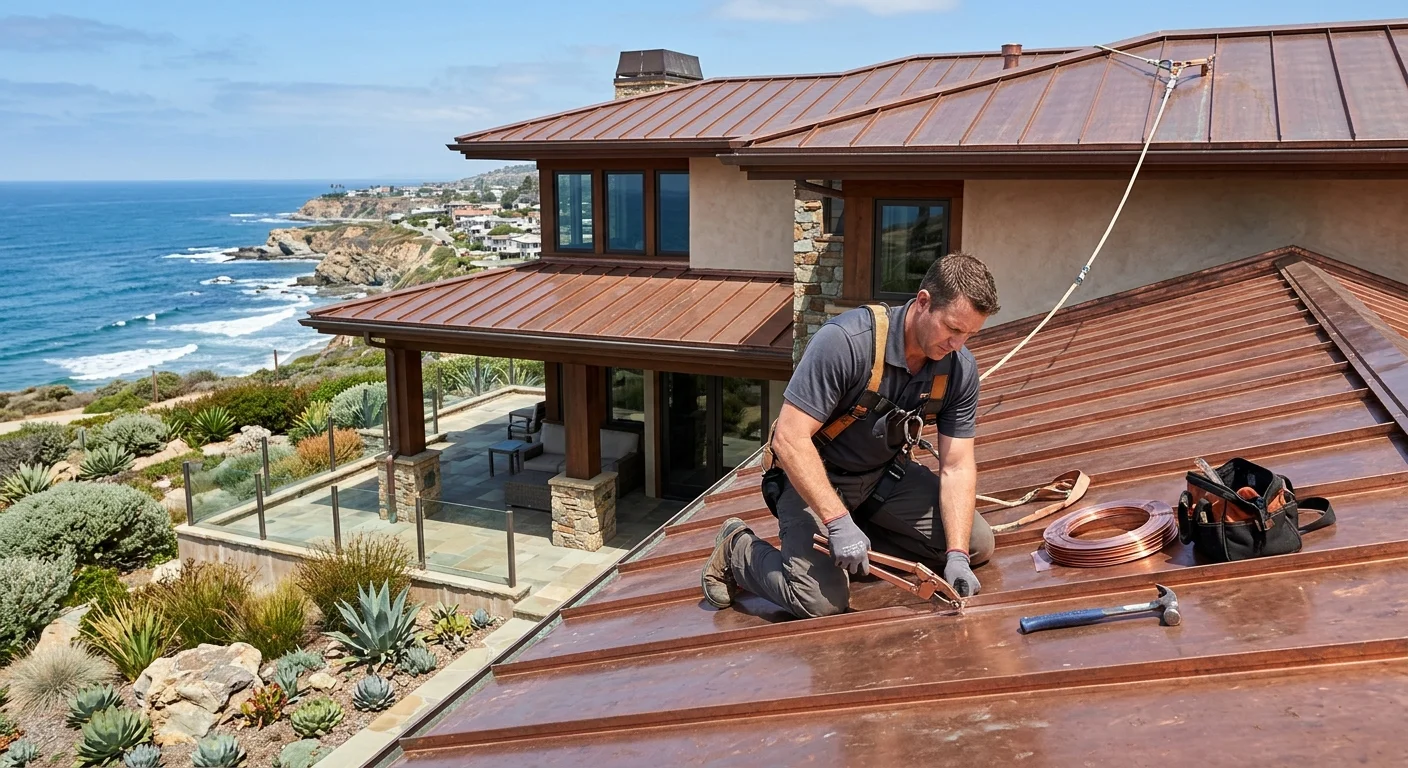
How copper differs from coated metal systems
Separate product identity from marketing language. A line that only says copper roof does not tell you enough. It should name the manufacturer, product, profile, material specification, thickness, finish, fastening method, and which roof areas get copper versus another covering.
Apply the same standard to a coated metal proposal. Ask for the underlying metal, coating name, color, profile, and accessory specifications. Metal roofing is a category, not a complete project description.
The California Contractors State License Board includes metal roofing systems in the C-39 classification. That classification covers products used to seal, waterproof, and weatherproof structures. Review the classification and check a contractor’s license through CSLB.
Ask each bidder for current product samples and completed-system photographs from the manufacturer. Confirm whether the sample is the proposed material and finish. A rendering or an unrelated project photo is not a specification.
The proposal should identify every non-panel component: clips, fasteners, flashings, valleys, edges, penetrations, and drainage connections. Ask whether each named piece belongs to the same tested or approved system. If substitutions are allowed, they belong in writing before installation.
How coastal exposure enters the material review
“Near the coast” is not a complete site condition. Give each roofer the property address and describe the immediate setting. A house near Mission Beach is a different site description than one a few miles inland with the same San Diego mailing address.
Ask the manufacturer and the roofer to address that location in writing. Documents should identify coastal limitations, required accessories, installation instructions, inspection steps, or exclusions that apply. If a proposal uses “coastal grade,” ask for the document that defines the phrase.
Do not accept an unsupported copper corrosion rate, distance-from-ocean cutoff, cleaning schedule, coastal service life, or copper-only warranty. Confirm those, if they exist, through current technical literature and written terms.
Details around the roof need the same review. Ask which metals sit at edges, valleys, walls, vents, skylights, gutters, and downspouts. Dissimilar metals that meet in salt air are a scope question, not something to settle after the panels go down.
For the broader metal conversation, read will salt damage a metal roof. Use it to prepare questions. Then require product-specific answers for this lot.
City boundaries matter. La Jolla is inside the City of San Diego. Coronado, Del Mar, Encinitas, and Oceanside run their own counters. City of San Diego reroof rules do not automatically apply next door. Ask the building department that issues the permit.
How roof form and drainage details affect the proposal
A useful copper proposal starts with a roof map. It should mark slopes, ridges, hips, valleys, walls, penetrations, drains, scuppers, gutters, and downspouts. It should show where copper starts, stops, and meets another covering.
Ask bidders to price the same defined scope. One proposal may include all flashings and drainage transitions. Another may carry vague allowances or omit them. Those bids are not comparable until every exclusion is written down.
The deck and supporting structure need attention during a replacement discussion. For City of San Diego jobs, start with Information Bulletin 123. Read the current bulletin. Ask the AHJ and the matched C-39 whether this scope needs a permit or structural review.
Heavier coverings can change the structural conversation. Ask the matched C-39 to document the proposed product weight and ask the AHJ whether structural verification applies. Read the current bulletin instead of a blog cutoff.
Those rules are for properties inside the City of San Diego. Unincorporated county areas and other cities differ. The applicable building department should confirm the permit path.
Roof slope belongs in the review. Look up the CEC climate zone for this address. Confirm with the AHJ whether a listed cool-roof product applies. Do not treat typical steep-slope San Diego work as a cool-roof default. Ask the matched C-39 to identify any required rating through the California Energy Commission.
If the project is a full roof replacement, request one coordinated scope. Panels, underlayment, penetrations, flashings, and drainage should not appear as unrelated decisions.
What product and installer documents should confirm
Collect the documents before comparing signatures and totals. A polished proposal is not a substitute for the records behind it.
The product package should confirm:
- Manufacturer and exact product name
- Material specification, profile, thickness, and finish
- Installation instructions for the proposed roof form
- Named clips, fasteners, flashings, and accessories
- Product approvals or listings required for the project
- Written coastal conditions, if the manufacturer publishes any
- Written warranty terms, exclusions, and responsible party, if offered
- Documentation supporting any energy or fire classification claimed
Do not assume a general metal rating automatically applies to the proposed copper assembly. Metal shingles or sheets can appear on WUI covering lists. That is not a Class A certificate for this copper assembly. Confirm the property’s WUI status on the CAL FIRE Fire Hazard Severity Zone maps. Ask the AHJ whether Chapter 7A items apply. Do not treat Chapter 7A or Class A as a countywide fact. Request the listing for the exact product.
The installer file matters as much. Ask for the contractor’s legal name and CSLB license number. Confirm the license is active and carries C-39. The public record also shows status, complaint history, and bond information.
Confirm workers-compensation status on the live CSLB record. Read current Business and Professions Code Section 7125 rather than this blog. Do not rely on a proposal logo.
Match the paperwork to the parties. Top Pro Roofing SD is a referral service. We do not issue the roofing contract or warranty. Agreement, payments, installation, and any warranty run with the independent roofer and other named providers.
How to compare copper with other metal options
Build a side-by-side sheet with identical headings: system name, covered roof areas, accessories, removal scope, deck assumptions, permit responsibility, product documentation, exclusions, payment terms, and any written warranty. Leave a blank where a bidder has not answered.
Do not rank copper, steel, or aluminum with an unsupported universal lifespan or corrosion claim. Compare the current documents attached to each proposed system.
Our steel versus aluminum roofing guide can organize a broader material discussion. Keep the final decision tied to the products quoted for this home.
Ask each bidder the same practical questions:
- What exact material and profile will be installed?
- Which roof areas and drainage details are included?
- What site conditions did the roofer evaluate?
- Which manufacturer instructions control the installation?
- Which permits or structural documents may be required?
- Which product claims are supported by current written records?
- Who handles future product and workmanship questions?
Price still matters. An unsupported total can hide different scopes. Ask for line items and written allowances. This page cannot supply a defensible San Diego copper market range. The independent roofer sets the project price after evaluating the property.
Historic status can change the review. Within the City of San Diego, ask Development Services whether work on a designated historical resource or historic district needs a permit. Confirm status with the city before locking a visible metal. Do not restate bulletin exemption classes here.
A strong comparison gives you traceable answers. You should be able to connect every major claim to the proposal, a manufacturer document, a CSLB record, or the building authority.
When to call us
Call when you are comparing a copper roof with other metal options or planning a replacement near San Diego’s coast. A licensed roofing pro should evaluate the roof, define the system, and confirm project-specific documents. Call (760) 750-5557 and we will connect you with a licensed local roofer.